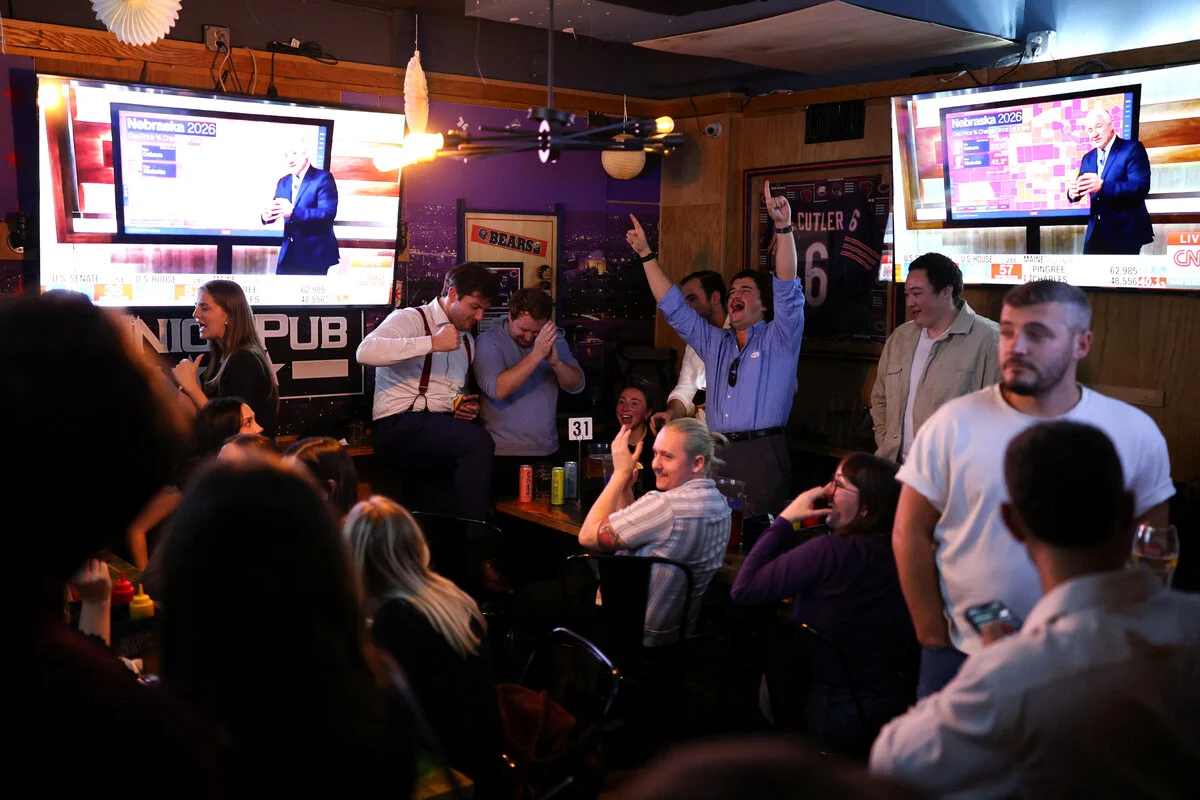
The American political landscape, long defined by the shadow of the Obama era and the reactionary populism of the Trump years, is undergoing a profound structural metamorphosis. For years, the Democratic Party has been plagued by a narrative of stagnation, defined by a leadership void and an over-reliance on figures from the past. However, recent electoral cycles—culminating in a wave of victories for a new, younger cohort of leaders—suggest that the party is finally breaking free from its “gerontocratic” tendencies.
From the halls of the Senate to state-level governorships, a new generation—the Millennials—has ascended. Figures like Jon Ossoff and Alexandria Ocasio-Cortez are no longer just rising stars; they are becoming the primary architects of a revitalized Democratic platform. This shift represents more than just a change in age; it is a fundamental reboot of the party’s visual, rhetorical, and ideological grammar.
The Chronology of a Political Transition
To understand the current surge, one must look back to the seminal moment of 2008. When Barack Obama was elected, a generation of future leaders was just beginning their professional or academic lives. Abdul El-Sayed was completing his undergraduate work in biology and political science, while Jon Ossoff was navigating his studies at Georgetown.
The "Obama Effect" was not merely about policy; it was about a new aesthetic of leadership—one that balanced intellectual depth with digital-native charisma. Following Obama’s departure from the White House, the Democratic Party struggled with a "lost generation." The 2012 transition and the subsequent rise of Donald Trump created a political vacuum. The 2020 election of Joe Biden was widely viewed as a "return to normalcy," but it lacked the transformative spark that many younger voters craved.
The real shift began in 2018. The surprise victory of Alexandria Ocasio-Cortez (AOC) in New York’s 14th District acted as a catalyst. Her ability to bypass traditional media gatekeepers and engage directly with a younger, progressive base via social media created a new blueprint for victory. This trajectory continued through 2024, as the Democratic resistance to the second Trump administration necessitated a new breed of fighter—someone who could match the populist fervor of the right without sacrificing democratic integrity.
Supporting Data: A Map of the New Guard
The recent electoral map reveals a diverse, energetic, and battle-tested group of leaders who have successfully navigated high-stakes environments:

- Jon Ossoff (Georgia): Often compared to the "Kennedy archetype," Ossoff has redefined how to communicate opposition to Donald Trump. His campaign videos, characterized by high production values and a sharp, composed rhetorical style, have set a new standard for viral political communication.
- Abdul El-Sayed (Michigan): El-Sayed has become a master of resilience. Facing intense personal attacks and attempts to marginalize his background, he maintained a platform of competence and community-focused policy. His ability to withstand political betrayal within his own ranks signals a new level of maturity in the progressive movement.
- Annie Andrews (South Carolina): The 46-year-old pediatrician’s victory in a historically difficult region serves as a case study in effective local messaging. By pivoting from healthcare expertise to a critique of populist figures like Robert F. Kennedy Jr., she successfully flipped a seat long held by Republican stalwarts.
- Gina Hinojosa (Texas): Her victory as the first Latina governor in Texas marks a historic turning point. She is the first Democrat to win a statewide race in Texas since 1994, signaling that the "Old South" and conservative strongholds are not immune to demographic and ideological shifts.
- Chris Pappas (New Hampshire) & Rob Sands (Iowa): These figures represent the geographical diversity of the new movement. Whether it is an openly gay senator in the Northeast or a corruption-fighting governor in the Midwest, the common denominator is a rejection of establishment "business as usual."
Theoretical Underpinnings: The "Steph Curry" Effect
Political scientist and analyst Nate Silver recently drew an insightful parallel between the Obama era and the current movement. He likened Obama to NBA superstar Steph Curry. Just as Curry revolutionized basketball by shifting the game toward high-volume, long-distance shooting—a strategy that became the gold standard for every youth player in the country—Obama revolutionized politics by pioneering the digital-native, grassroots-driven campaign.
The current cohort of Millennials are the "high school students" who grew up watching that revolution. They are not merely copying Obama; they are iterating on his design. They have integrated the "digital-first" mindset into their DNA. For instance, the rise of figures like Zohran Mamdani in New York is intrinsically linked to his mastery of Instagram-era storytelling. They are comfortable with populist language, yet they anchor it in tangible, often technocratic, policy solutions.
The Implications for 2028 and Beyond
As the party looks toward the 2028 presidential cycle, the conversation has shifted from "who is available" to "who is best suited to lead."

Jon Ossoff and Alexandria Ocasio-Cortez currently sit at the center of this discourse. Ossoff’s ability to weave the issue of systemic corruption into the daily struggles of inflation-weary families makes him a formidable contender for a national ticket. Meanwhile, AOC has expanded her influence far beyond her Bronx base. Her extensive travel and campaigning across diverse regions—from Virginia to Nebraska—suggest a long-term strategy to build a national brand that transcends the "progressive firebrand" label.
However, the path forward is not without risks. The transition from a local or regional hero to a national candidate is fraught with peril. The "Obama era" was also marked by the difficulty of translating electoral charisma into legislative success in a polarized Washington. The new guard will face the same institutional inertia that hampered their predecessors.
Furthermore, the "tragic failure" of the transition generation—best exemplified by Kamala Harris—serves as a cautionary tale. The Democrats have learned that seniority alone is no longer a currency of value. The electorate is demanding authenticity, and they are willing to reward those who can articulate a vision for the future rather than a defense of the status quo.

Conclusion: A Party Reborn
The Democratic Party of 2025 is fundamentally different from the party of 2012. The "late Boomers" and "early Gen-Xers" who dominated the party infrastructure have largely stepped aside, leaving the field open for a generation that views digital integration, progressive populism, and radical transparency as the baseline for political survival.
This is not a temporary surge; it is a structural realignment. As these new leaders settle into their roles in Congress and in statehouses across the country, their success or failure will be measured by their ability to change the culture of Washington itself. They have the energy, they have the digital tools, and they have the mandate. The question that remains is whether they can sustain this momentum long enough to rewrite the American social contract for the second quarter of the 21st century.
The "Obama generation" provided the spark, but the Millennials are building the fire. The 2028 race is not yet officially underway, but the names that will dominate it have already shown their hands. For the Democratic Party, the future is no longer a distant prospect—it is currently being sworn into office.