By Science Editorial Desk
The return of the grey wolf (Canis lupus) to the heart of Europe has been one of the most significant, and at times controversial, ecological developments of the 21st century. As wolf populations continue to rebound across Germany—with 46 confirmed territories in Saxony, 38 in Saxony-Anhalt, and a growing presence in Thuringia—the question of how these apex predators integrate into a landscape dominated by human infrastructure has become a focal point of intense scientific debate.
A groundbreaking new study, conducted by an international consortium of researchers from the Mammal Research Institute of the Polish Academy of Sciences (MRI PAS), the Doñana Biological Station in Spain, and the Leibniz Institute for Zoo and Wildlife Research (Leibniz-IZW) in Berlin, suggests that the "conflict" between humans and wolves is far more nuanced than previously thought. The key, it seems, lies not in physical distance, but in the temporal partitioning of the landscape.
The Framework of Coexistence: A Multi-Level Analysis
To understand how wolves, foxes, badgers, and martens navigate human-dominated spaces, the research team focused on a forested region in Northern Poland. Utilizing a massive, systematic network of camera traps, the scientists captured millions of images, documenting not only the movements of these predators but also human activity, prey availability, and the presence of invasive species like domestic cats.
"The core question we sought to answer was how predators manage to thrive in landscapes that are heavily influenced by human activity," explains Kathi Kasper, lead author of the study and a doctoral candidate across the three participating institutions.
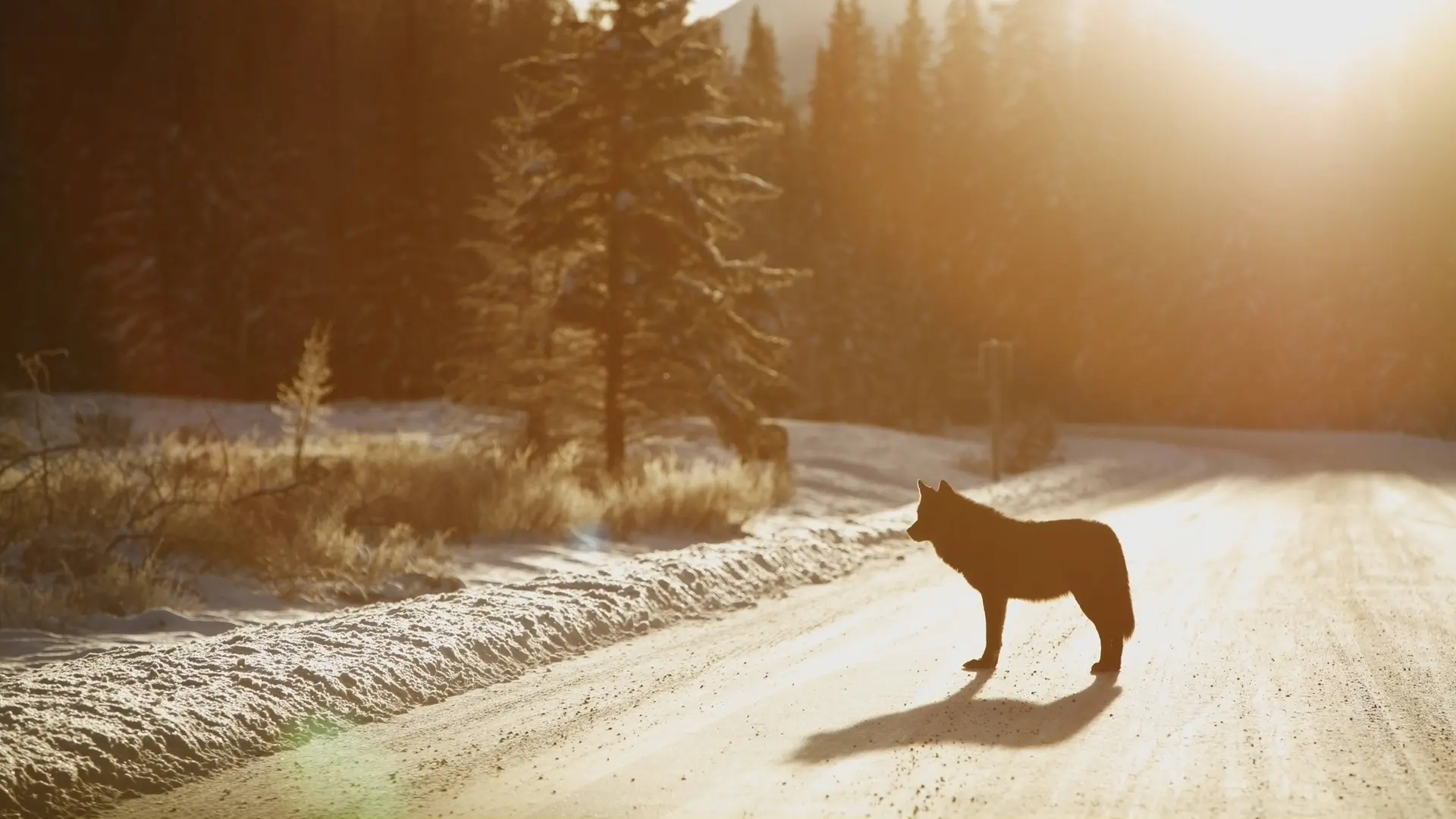
The researchers employed a sophisticated dual-layer analysis. On a "landscape level," they assessed broad, coarse-grained movements across a large geographic area. On a "local level," they utilized a finer grid of cameras to monitor micro-interactions. This dual approach allowed the team to differentiate between where species choose to live and how they choose to behave when they are in close proximity to human settlements.
Chronology of Discovery: From Avoidance to Adaptation
The study’s findings challenge the traditional narrative that wolves simply flee from human expansion. Instead, the data reveals a complex behavioral shift.
Historically, wolves in the 19th and early 20th centuries were hunted to near extinction, leading to an evolutionary selection for deep-forest isolation. However, the contemporary data shows a surprising level of adaptability. On the broad landscape level, wolves still demonstrate a clear preference for avoiding human-centric areas, often establishing territories in quieter, more secluded corridors.
However, once a territory is established, the local-level data shows a different reality: wolves frequently cross human infrastructure, such as roads, footpaths, and the peripheries of residential zones. The critical variable that allows this movement is time. The researchers observed a distinct "temporal niche partitioning," where wolves have shifted their primary activity cycles to the deepest hours of the night. By restricting their presence in human-adjacent areas to the hours of darkness, wolves effectively "decouple" their existence from human activity, allowing for a form of coexistence that is invisible to the average observer.
Supporting Data: The Opportunism of Smaller Predators
While wolves demonstrate a cautious, nocturnal strategy, the study highlights a starkly different survival mechanism among smaller predators, such as red foxes, martens, and badgers. These smaller carnivores show little to no aversion to human activity.
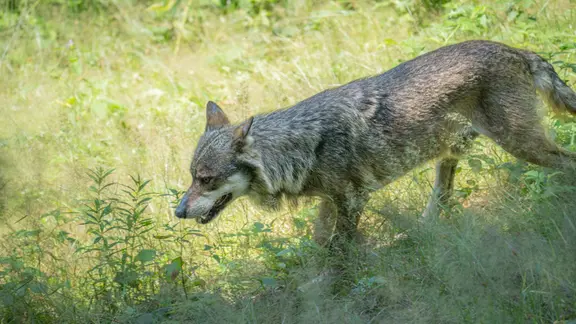
In fact, the study suggests that these species exhibit a form of "anthropogenic opportunism." They occupy niches similar to those of feral domestic cats, often benefiting from human-linked resources such as household waste, pet food, and the higher concentration of rodents around agricultural and residential buildings.
For these smaller animals, human-dominated spaces provide a "safety buffer." By living near humans, they often avoid the primary hunting grounds of the wolf, which tends to steer clear of high-activity zones. When these smaller predators do find themselves in the same territory as wolves, they practice a sophisticated form of temporal avoidance. For instance, the data indicates that badgers often complete their primary foraging activities before midnight, clearing the stage for wolves, which prefer the post-midnight window.
Official Perspectives and Ecological Implications
The implications of these findings are profound for wildlife management and conservation policy. Dr. Dries P. J. Kuijper of the MRI PAS, who co-led the research, emphasizes the importance of scale in wildlife monitoring.
"If we want to understand how wild animals interact with humans and each other, we cannot look at the landscape as a static map," Kuijper notes. "Just because a wolf’s territory overlaps with a hiking trail or a rural town on a map does not mean they are meeting humans. They are sharing the space, but they are not sharing the time."
Wildlife management agencies across Europe have historically relied on spatial management—fencing, buffer zones, and relocation—to manage predator-human conflict. This new data suggests that temporal management and the preservation of "quiet hours" in nature reserves may be equally, if not more, important.

The study also provides a valuable lens through which to view other emerging predators in Europe, such as the golden jackal. As these species continue to expand their range, their ability to mimic the "nocturnal adaptation" of the wolf or the "opportunistic behavior" of the fox will determine their long-term success in the European mosaic.
The Future of the European Wilderness
As the landscape of Europe becomes increasingly fragmented, the ability of large carnivores to adjust their behavioral patterns is a testament to the resilience of nature. However, scientists warn against over-interpreting these findings as an invitation to disregard the risks associated with apex predators.
"Coexistence is a fragile balance," Kasper cautions. "While the wolves are showing a remarkable ability to adapt, this behavior is a response to human pressure. The more we normalize their presence, the more important it becomes to respect the boundaries of the night."
The study concludes that the key to future conservation lies in a "layered approach." By maintaining large, undisturbed core zones for wildlife while simultaneously fostering a tolerance for nocturnal predators in peripheral areas, Europe can continue to support the return of the wolf without compromising human safety or agricultural interests.
As policymakers in Berlin, Warsaw, and Madrid review these findings, the scientific community is calling for a paradigm shift: moving away from the binary "conflict vs. harmony" model toward an understanding of "temporal coexistence." In the shadows of our forests, the wolf is learning to live alongside us—waiting for the lights of our cities to dim before reclaiming its path through the night.
Key Takeaways for Stakeholders:
- Temporal Partitioning: The primary mechanism for coexistence is the shifting of animal activity cycles to avoid human peak hours.
- Scale Matters: Policies must distinguish between landscape-level distribution and local-level interaction.
- Smaller Predators: Foxes, badgers, and martens are highly opportunistic and often benefit from human-associated food sources, acting as a buffer against wolf-human conflict in some instances.
- Management Strategy: Future conservation efforts should prioritize the protection of nocturnal silence and darkness, as these are critical habitats for the movement of large predators through human-populated areas.