

Executive Summary: An Unexpected Re-entry
In a dramatic conclusion to a distinguished scientific career, the NASA research satellite known as "Swift" has officially completed its final, unplanned mission: a descent through the Earth’s atmosphere. After years of peering into the deepest, most violent reaches of the universe, the satellite met its end over the Indonesian archipelago, marking a sobering moment for space agencies worldwide. While the vast majority of the satellite’s mass succumbed to the intense frictional heat of re-entry, NASA officials have confirmed that some durable components likely survived the journey to the surface. Fortunately, there have been no reports of casualties or property damage, bringing a quiet close to a celestial event that had kept global tracking agencies on high alert.
The loss of Swift is not merely the destruction of hardware; it is the premature end of a vital observation platform. Despite being in excellent operational health, the satellite lacked an onboard propulsion system capable of correcting its orbit. It fell victim to the sun’s unpredictable temperament, as intense solar activity increased atmospheric drag, dragging the satellite out of its orbit far sooner than mission planners had anticipated.
Chronology of a Cosmic Career
The Launch and the Mission (2004–2024)
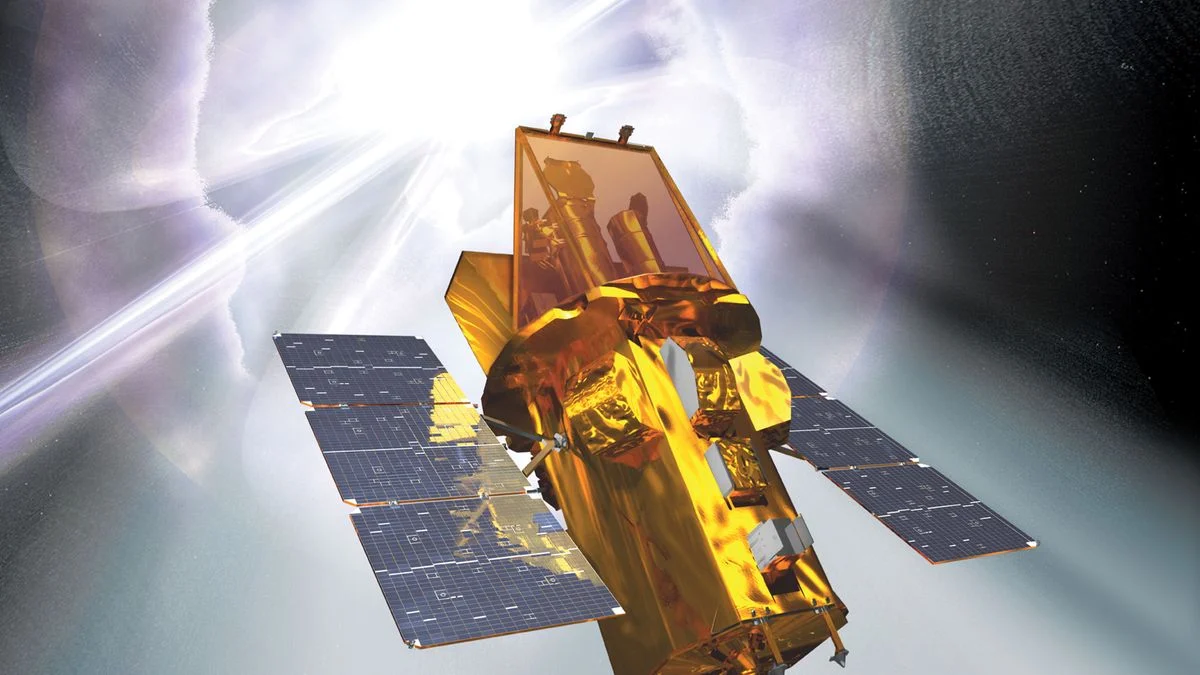
Launched in 2004 from the iconic Cape Canaveral Space Force Station in Florida, Swift was designed as a rapid-response powerhouse. Unlike traditional telescopes that take months to point at a target, Swift was built to pivot in seconds. Its primary objective was the study of Gamma-Ray Bursts (GRBs)—the most powerful explosions in the universe, occurring when massive stars collapse or neutron stars collide.
For two decades, Swift served as a sentinel. It provided astronomers with real-time data on these cosmic fireworks, allowing ground-based observatories to capture the "afterglow" of explosions that occurred billions of light-years away. It was a cornerstone of modern high-energy astrophysics, bridging the gap between theoretical physics and observational reality.
The Solar Interference
The trajectory toward destruction began with a series of massive solar flares. As the sun entered a particularly active phase of its solar cycle, the resulting geomagnetic storms began to heat the Earth’s upper atmosphere. As the atmosphere warms, it expands, increasing the density of gas particles at the altitude where satellites orbit.
For a satellite without a propulsion system to "boost" itself back into a stable orbit, this increased drag acts like an invisible hand, slowing the craft down. Swift began to lose altitude at an accelerated rate. By the time mission controllers realized the decay was irreversible, the satellite had already entered a terminal descent profile.
Technical Analysis: Anatomy of a Re-entry
When a satellite enters the Earth’s atmosphere, it encounters the "plasma regime"—a layer of ionized air created by the sheer velocity of the craft. Swift was moving at approximately 17,500 miles per hour (28,000 km/h).
The Physics of Destruction
As Swift hit the denser layers of the atmosphere, the kinetic energy was converted into immense heat. Most modern satellites are designed with "demise" in mind, meaning they are built to burn up completely. However, Swift contained robust instruments, including three specialized telescopes and thick-walled camera housing, which were constructed to withstand the vacuum of space and the harsh radiation environment of orbit.
NASA engineers confirmed that while the outer chassis and solar panels vaporized almost instantly, the dense titanium and ceramic components of the telescopes likely survived the atmospheric inferno. These parts would have decelerated rapidly after losing their structural integrity, eventually falling to the surface as "space debris."
The Indonesian Impact Zone
NASA’s orbital mechanics team calculated the re-entry point over the Indonesian region. Because the Earth rotates while a satellite is descending, the "footprint" of potential debris can span hundreds of miles. Indonesia’s geographical position near the equator made it a likely target for such a decay path. Authorities in the region remained in contact with international space monitoring bodies, ensuring that the local population was aware of the event, although the probability of any single individual being struck remains infinitesimally low—statistically lower than the probability of being hit by a meteorite.
Official Responses and Space Situational Awareness
NASA’s reaction to the loss has been one of professional stoicism mixed with scientific regret. In official briefings, the agency emphasized that Swift was a "victim of the environment" rather than a failure of engineering.
"Swift was a workhorse," said one lead researcher in an internal memo. "It did exactly what we asked it to do for twenty years. It is a shame to lose it to solar weather, but that is the reality of low-Earth orbit operations."
The agency is now conducting a "Post-Mission Re-entry Review." This is standard procedure to determine exactly why the orbital decay models failed to predict the timing of the re-entry with greater accuracy. The review focuses on whether current models of atmospheric density—which are currently being pushed to their limits by the current solar maximum—need to be updated to account for more aggressive solar flare impact on satellite orbits.
Implications: The Growing Problem of Low-Earth Orbit
The loss of Swift serves as a stark reminder of the challenges facing the burgeoning space industry. We are currently witnessing an era of unprecedented orbital congestion.
The Debris Conundrum
Swift’s unplanned re-entry raises questions about the "End of Life" requirements for new satellites. While Swift was launched in an era with less stringent regulations regarding orbital disposal, modern satellites are now required to have "active de-orbit" capabilities. If a satellite cannot move itself out of the way, it becomes a liability—not just to its own mission, but to the thousands of other assets currently orbiting the planet.
The Solar Weather Threat
We are entering a period where solar activity is expected to remain high for the next several years. This poses a significant threat to "constellation" satellites, such as those used for global internet services. If the sun remains as active as it has been, we may see a wave of premature re-entries across the globe. Operators will need to invest more heavily in predictive modeling and propulsion systems that can withstand the increased drag.
Scientific Legacy
The scientific community is already feeling the void left by Swift. The rapid-response nature of the satellite was unique; currently, there is no direct successor capable of mimicking its specific observational cadence. Astronomers have noted that the "Gammablitze" (Gamma-Ray Bursts) community will now have to rely on a patchwork of international observatories, which lack the unified coordination that Swift provided.
Conclusion: Looking Toward the Horizon
The story of Swift is a testament to both human ingenuity and the unforgiving nature of space. It was a machine that defied the limitations of its design for two decades, providing humanity with a window into the most violent phenomena in the cosmos. Its final descent over Indonesia, while unceremonious, marks the end of a golden era for Gamma-ray astronomy.
As we look to the future, the lessons learned from the demise of Swift will be integrated into the next generation of space exploration. We must learn to build satellites that are not only capable of observing the stars but are also capable of managing their own destiny within the chaotic, shifting environment of Earth’s upper atmosphere. For now, the sky is a little quieter, and our view of the violent universe is slightly more obscured, but the data gathered by Swift remains a treasure trove that will occupy astrophysicists for generations to come.
The satellite is gone, but the knowledge it gathered remains—a permanent legacy of a machine that truly reached for the stars.


