By Medical Research Correspondent
Vaginal yeast infections—medically known as vulvovaginal candidiasis (VVC)—are a pervasive health challenge, affecting approximately 75% of women at least once in their lifetimes. For millions, the condition is a temporary annoyance, easily cleared with standard antifungal treatments. However, for a significant subset of the population, the infection is not merely an occasional nuisance but a chronic, recurring, and debilitating reality characterized by intense itching, burning, and persistent discomfort.
New research from the Leibniz Institute for Natural Product Research and Infection Biology (Leibniz-HKI) in Jena, Germany, has finally shed light on the biological mechanisms that turn a routine infection into a stubborn, recurring nightmare. Published in the journal Nature Communications, the study identifies a "vicious cycle" driven by the body’s own blood protein, albumin, which paradoxically protects the invading pathogen while simultaneously supercharging the host’s inflammatory response.
The Core Discovery: A Molecular Double-Agent
The primary culprit in most vaginal yeast infections is the commensal fungus Candida albicans. While this yeast is a natural part of the human microbiome, it can overgrow and cause symptomatic infection under specific conditions. For years, clinicians have struggled to understand why some women develop severe inflammation while others remain asymptomatic or experience only mild, transient symptoms.
The team, led by infection researcher Mark S. Gresnigt, discovered that the key lies in the presence of albumin within the vaginal environment. Albumin, the most abundant protein in human blood, is usually sequestered within the circulatory system. However, during an inflammatory response, blood vessels can become more permeable, allowing plasma proteins like albumin to leak into the surrounding tissues.
"We found that when albumin enters the vaginal tissue during an infection, it acts as a molecular signal that significantly alters the behavior of Candida albicans," explains lead author Sophie Austermeier. "It doesn’t just sit there; it interacts with the fungus in a way that tricks the immune system into an overreaction while simultaneously shielding the fungus from destruction."
Chronology of the Research: From Observation to Mechanism
The journey to this discovery involved a multi-year effort to map the complex interplay between host immunity and fungal virulence.
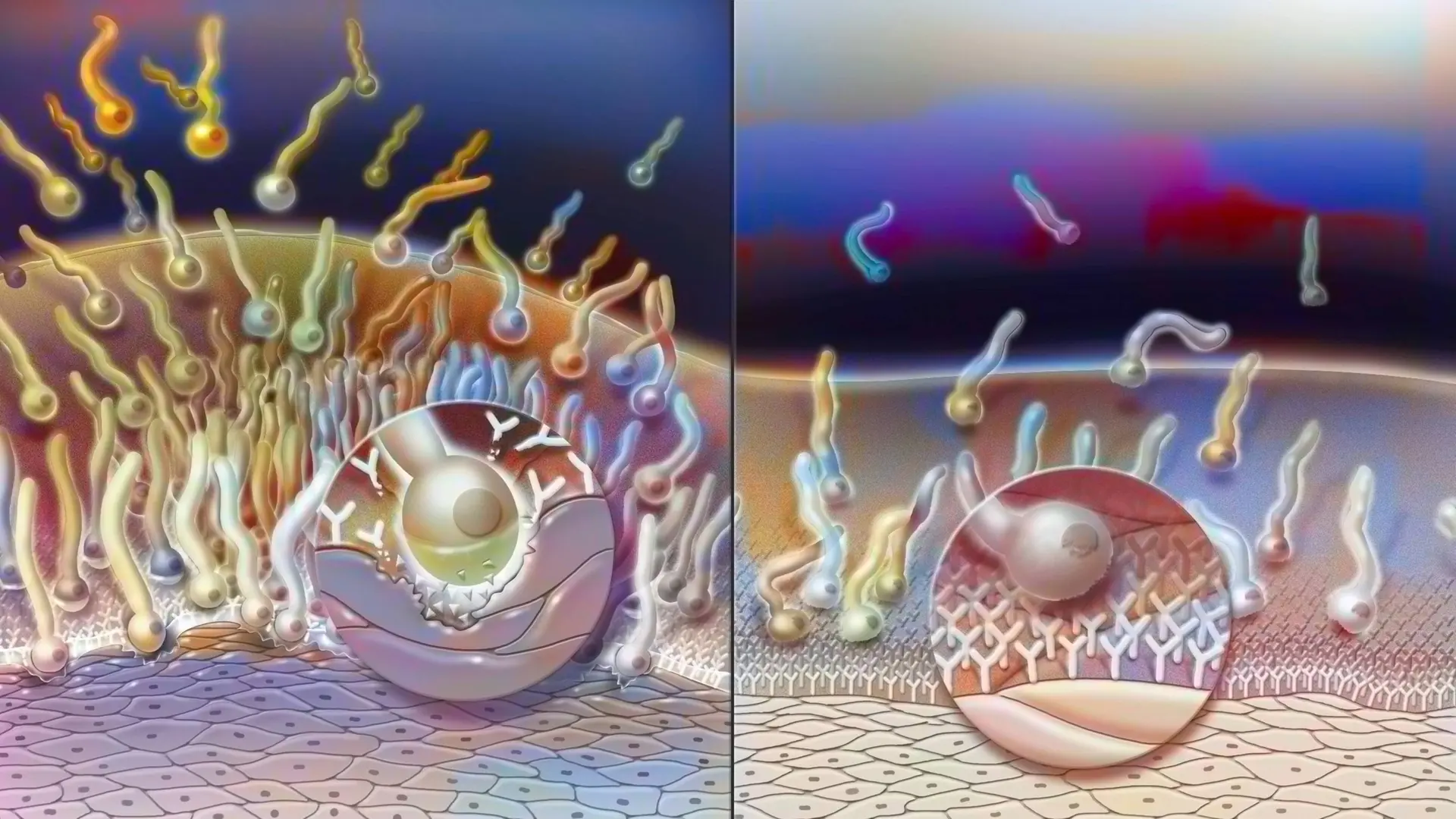
- Phase I: Identification of the Variable: The research team began by analyzing samples from patients suffering from recurrent vulvovaginal candidiasis. They consistently noted elevated levels of albumin in the vaginal secretions of women with the most severe, persistent symptoms compared to those with milder or no infections.
- Phase II: The Signaling Pathway: Through controlled laboratory experiments, researchers observed that Candida albicans reacts to the presence of albumin by upregulating the production of a specific protein called Sap1 (Secreted Aspartyl Protease 1).
- Phase III: Immune Overdrive: The study found that increased levels of Sap1 act as a red flag for the body’s innate immune system. This triggers an aggressive inflammatory response. While this is intended to kill the fungus, it instead creates a "cytokine storm" in the vaginal tissue, which is directly responsible for the intense pain, burning, and tissue swelling experienced by patients.
- Phase IV: The Defensive Shield: Perhaps most surprisingly, the team observed that albumin also acts as a physical or chemical buffer. It interferes with the immune system’s ability to utilize reactive oxygen species—the "chemical weapons" that white blood cells use to kill fungal pathogens. By dampening the effectiveness of these oxygen compounds, albumin essentially provides a sanctuary for the fungus to survive despite the heightened inflammation.
Supporting Data: Understanding the "Vicious Cycle"
The implications of this discovery are profound because they redefine the pathology of VVC. The research suggests that the severity of the infection is not merely a function of the fungal load, but rather the result of a pathological feedback loop.
- The Trigger: The initial fungal overgrowth causes local irritation and minor tissue damage.
- The Influx: The resulting inflammation causes a localized increase in vascular permeability, allowing serum albumin to leak from the blood into the vaginal mucosa.
- The Amplification: Albumin promotes the production of fungal Sap1, which calls in more inflammatory cells (neutrophils).
- The Stalemate: These neutrophils arrive and release reactive oxygen species to kill the Candida, but the albumin present in the environment blunts this attack. The neutrophils then release even more inflammatory signals, further damaging the tissue and perpetuating the cycle.
This data explains why traditional antifungal medications, which target the fungus directly, may fail in patients where this inflammatory loop is already established. The host’s own biology is essentially "trapping" the infection in a state of chronic inflammation.
Official Responses and Scientific Context
The findings have been met with significant interest from the gynecological and infectious disease communities. While the study is a breakthrough, researchers are cautious about immediate clinical applications.
"This is an essential piece of the puzzle, but it is just one piece," noted Sophie Austermeier. "The complexity of the vaginal microbiome and the hormonal fluctuations of the menstrual cycle mean that VVC is a multifactorial condition. However, identifying albumin as a central player provides us with a concrete target that we haven’t been able to see before."
The research highlights the importance of moving beyond simple "kill-the-pathogen" strategies. In many chronic inflammatory conditions, the damage is caused as much by the host’s immune system as it is by the pathogen itself. By focusing on the host-pathogen interface—specifically the role of serum proteins—scientists hope to develop "immunomodulatory" treatments that calm the overactive immune response while allowing the body to naturally clear the fungus.
Future Implications: Toward New Therapies
What does this mean for the millions of women currently suffering from recurrent yeast infections? The research from the Leibniz-HKI team opens several potential avenues for future medical innovation:
1. Diagnostic Biomarkers
Currently, diagnosing the severity of a yeast infection is largely based on clinical symptoms and standard microscopic or culture-based tests. If albumin levels in vaginal fluid can serve as a reliable biomarker for the risk of developing a chronic, hyper-inflammatory state, clinicians could move to more aggressive or specialized treatment protocols much earlier.

2. Targeted Therapeutic Blockers
The most exciting long-term prospect is the development of topical treatments that neutralize the interaction between albumin and Candida. If a medication could prevent the induction of the Sap1 protein or block the albumin-mediated suppression of reactive oxygen species, it could effectively "break" the cycle. By stopping the inflammatory feedback loop, the body’s own immune system would be much more efficient at clearing the fungus on its own, potentially reducing the need for long-term or repeated courses of harsh antifungals.
3. Personalized Medicine
The discovery also underscores the necessity of personalized medicine in gynecology. Since individual immune responses to albumin vary, patients with high-albumin reactivity may require a completely different clinical approach than those whose infections are purely fungal-driven.
Conclusion: A Shift in Perspective
The study from Jena represents a paradigm shift in how we understand mucosal immunity. For decades, the focus has been almost exclusively on the fungus. By looking at the blood-tissue barrier and the role of systemic proteins in localized infections, the research team has opened a new front in the battle against recurrent infections.
While a "magic bullet" cure is not yet on the shelves, the identification of the albumin-Sap1 axis provides a clear, actionable roadmap for pharmaceutical and clinical researchers. For patients, this discovery offers something arguably more important than a new pill: the validation that their persistent, painful symptoms are not "all in their head," but are the result of a specific, identifiable, and now—scientifically addressable—biological mechanism.
As the scientific community continues to explore the nuances of this interaction, the goal remains the same: to turn the tide against recurrent infections and provide long-term relief for those caught in the vicious cycle of chronic inflammation. The path forward will involve clinical trials and further investigation into how hormonal changes and other microbiome factors interact with this albumin-driven mechanism, but for the first time, the path is clearly illuminated.