By Florian Bayer
The political landscape of Europe’s far-right movement is undergoing a tectonic shift. In a development that has sent ripples of anxiety through the ranks of the Alternative for Germany (AfD), the electoral defeat of Serbian President Aleksandar Vučić has signaled the collapse of a second major "model" for European right-wing populism in less than six months. For the AfD, this is not merely a loss of an international ally; it is the erosion of a strategic prototype that served as a blueprint for their own aspirations.
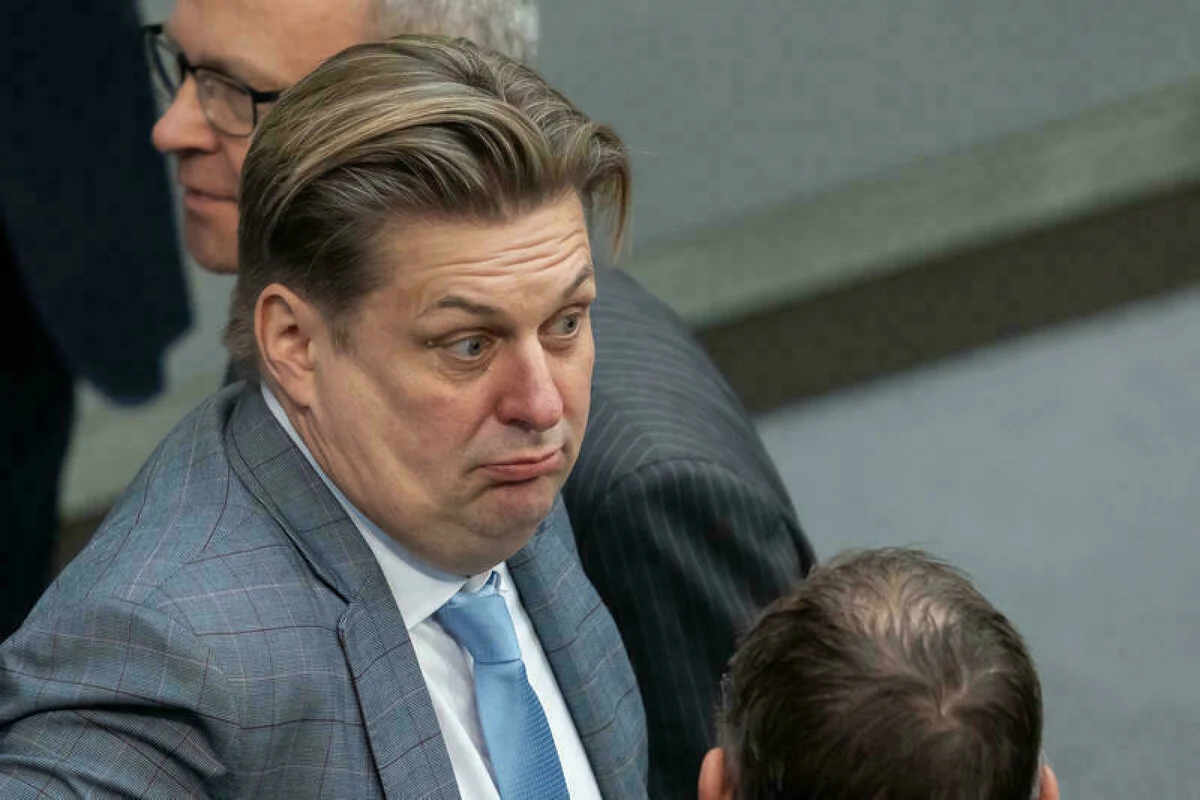
The palpable distress within the AfD was best summarized by a candid, if not desperate, post on X (formerly Twitter) by senior Bundestag member Maximilian Krah. "After Hungary, we have also lost Serbia," Krah lamented. While much of Europe celebrated the democratic transition in Belgrade, Krah viewed the result through a lens of existential dread: "This is not a good day. The Right must realign; our current concept is no longer convincing."
The Anatomy of a Lost Blueprint
To understand why the AfD is mourning the loss of a foreign head of state, one must look at what Aleksandar Vučić represented to the European far-right. Since 2012, Vučić has navigated Serbian politics through a series of roles—deputy prime minister, prime minister, and president—consistently steering the nation toward a hybrid regime.
Under his tenure, Serbia’s standing in international democratic indices cratered. According to the Freedom House Index, the country plummeted from 78 points in 2016 to 53 points by 2024. Since 2019, it has been officially classified as "partly free." The "Vučić years" were characterized by deep-seated systemic corruption, the systematic dismantling of judicial independence, and an increasingly overt geopolitical tilt toward Moscow.
For figures like Krah, Vučić was not a liability; he was a model of how to maintain a veneer of democratic legitimacy while consolidating authoritarian power. When Hungarian Prime Minister Viktor Orbán faced electoral challenges—and eventual defeat—earlier this year, Krah was equally vocal, appearing in a video from Budapest to warn his followers: "For us, it is bad; we must admit that." While the AfD leadership remained largely silent, the loss of these figures has stripped the party of its primary examples of successful "illiberal governance."

A Chronology of Strategic Alignment
The AfD’s relationship with Serbia was not always one of ideological harmony. Following the party’s inception in 2013, its interest in the Balkans was marginal, and when it did engage, it often supported those opposed to the status quo. As late as 2017, then-AfD leader Jörg Meuthen formally received Boško Obradović of the right-wing Dveri movement, who was challenging Vučić for the presidency at the time.
However, a strategic "pivot" occurred around 2019. The party began to view the Serbian regime as a reliable partner in its broader crusade against European integration and liberal values.
- 2019: Armin-Paul Hampel, the AfD’s then-foreign policy spokesperson, met with Vučić’s deputy, Marko Đurić, in a display of solidarity, explicitly declaring the independence of Kosovo to be illegitimate—a position that mirrored the Serbian government’s nationalist narrative.
- 2023: Following parliamentary elections in Serbia that were widely condemned by international observers for systemic manipulation, AfD MP Harald Weyel publicly defended the government, blaming the domestic opposition for civil unrest and violence.
- 2024: Co-party leader Tino Chrupalla praised Serbia’s "active border protection" policies, cementing ties by meeting with then-Family Minister Milica Đurđević Stamenkovski.
- 2025: The shift was complete when the Saxon branch of the AfD invited Đurđević Stamenkovski to serve as a keynote speaker at their election finale, signaling a total convergence of interests.
This alignment was further reinforced by the Austrian Freedom Party (FPÖ), the AfD’s closest ideological cousin. Under the leadership of figures like Heinz-Christian Strache and later through the work of MEP Harald Vilimsky, the FPÖ consistently championed Serbia’s entry into the EU as a lone exception to the rest of the Western Balkans. Vučić, in turn, rewarded this loyalty, even bestowing state orders upon his Austrian allies as recently as early 2025.

Supporting Data: The Illusion of "The Right"
The obsession with Vučić was never a quirk exclusive to the extreme right. For years, the European People’s Party (EPP)—the conservative bloc containing Germany’s CDU/CSU—maintained a remarkably "trusting" relationship with the Serbian president. Angela Merkel herself met with Vučić 16 times during her final nine years in office.
The data suggests a cynical trade-off: European leaders prioritized regional stability and the containment of migration flows over the health of Serbian democracy. By ignoring the erosion of the rule of law in Belgrade, mainstream European conservatives inadvertently provided a cover for the same authoritarian tactics that the AfD later sought to emulate. When the EU eventually turned a blind eye to corruption in favor of "calm on the Balkans," they validated the very methods of governance that Krah now laments the loss of.
Official Responses and Internal Fractures
The response from the AfD leadership to the Serbian election results has been telling. While Krah openly expressed his "honesty" and "wehmut" (melancholy), the party hierarchy has been notably tight-lipped. Alice Weidel, the party’s co-leader, has yet to issue a formal statement, having previously only permitted a spokesperson to express "regret" over the loss of a "significant partner" when Orbán fell.

This silence reflects a deeper fracture within the party. While the radical wing, represented by Krah, views the defeat of these "semi-autocrats" as a catastrophe for their ideological project, the more cautious elements of the party realize that clinging to failed, disgraced regimes is a political dead end. The contradiction is stark: the AfD portrays itself as a party of national sovereignty, yet it anchors its identity to the fortunes of foreign leaders who have lost the support of their own populations.
The Implications: A Crisis of Identity
The significance of the AfD’s panic cannot be overstated. Krah’s call for a "re-alignment" is, in effect, a confession of intellectual bankruptcy. By betting their future on the survival of leaders like Orbán and Vučić, the AfD effectively tied its own domestic platform to a specific form of governance: the ability to control media, dominate the judiciary, and manipulate electoral processes while maintaining a thin, cynical connection to the European Union.
These regimes were, for the AfD, a laboratory. They were the prototypes for a future where "sovereignty" and "hard borders" could be implemented without needing to engage in the messy, compromising work of democratic consensus-building.

Now, with both primary "models" having been rejected by voters within a single year, the AfD is forced to confront a reality they are ill-equipped to handle. If the "Hungarian model" and the "Serbian model" are no longer viable, what is left of the party’s vision for Germany?
As Krah himself inadvertently noted, the mourning of these leaders reveals the true face of the movement. It confirms that their political ideal is not one of robust national debate or parliamentary accountability, but of a top-down, authoritarian consolidation of power. In their rush to mourn their lost mentors, the AfD has inadvertently provided the public with a clearer picture of their own authoritarian desires than any investigative report could have managed.
The collapse of the Vučić government in Serbia is, therefore, more than just a setback for the Balkan state; it is a profound crisis for the European far-right, which now finds itself without a map, without a mentor, and increasingly, without a credible path forward. As the AfD scrambles to redefine its "concept," the evidence suggests that they are not just losing partners—they are losing the argument.