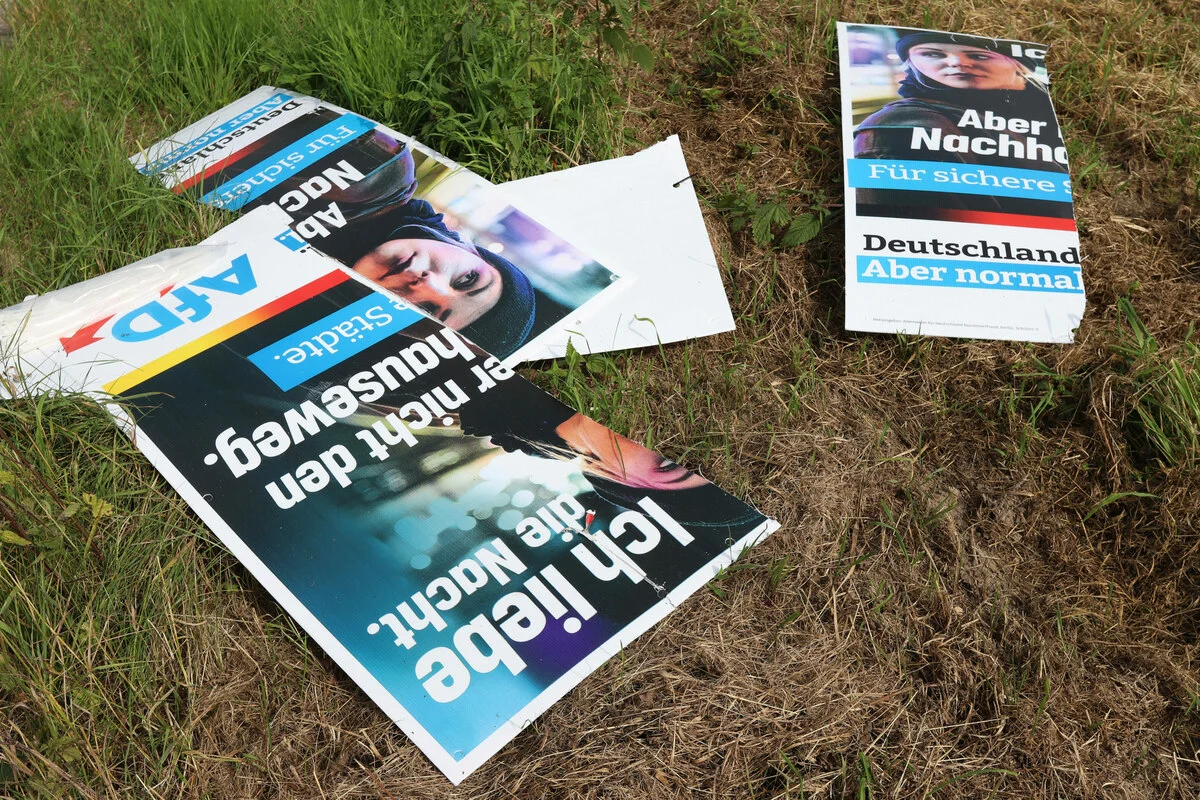
The release of over 400,000 internal emails from the Alternative for Germany (AfD)—a massive data dump totaling approximately 280 gigabytes—has sent shockwaves through the German political and media landscape. While the leak provides an unprecedented granular look into the party’s internal power struggles and organizational history, it has also begun to expose the hidden dual lives of individuals operating within the public sphere.
One of the most striking revelations concerns Thomas K. Gugler, a scholar of Islamic studies at the Goethe University Frankfurt. For years, Gugler has cultivated a dual persona: a respected academic and contributor to the progressive, leftist publication Jungle World, and, according to internal party communications, a card-carrying member of the far-right AfD.
The Discrepancy: An Academic with a Secret Agenda
Thomas K. Gugler has been a regular contributor to Jungle World since 2019. His pieces, often focusing on Pakistan and the nuances of Islamic religious practice, were perceived by readers and editors alike as informed contributions from a critical, academic perspective. As an expert in Islamic studies, Gugler was frequently cited by various media outlets, including the taz, to provide context on complex religious-political dynamics.
However, the "AfD Leaks"—a massive cache of data disseminated by an anonymous hacking group—tells a different story. The documents suggest that Gugler’s relationship with the far-right party dates back to 2017, the year he allegedly joined the organization. Furthermore, the records indicate that he attempted to formalize this affiliation professionally, applying for two different consulting positions within the AfD’s North Rhine-Westphalia regional office in 2018 and 2022.
The revelation that a consistent contributor to a publication defined by its anti-fascist and leftist stance was simultaneously attempting to secure employment within the apparatus of the party that Jungle World frequently critiques has sparked a crisis of credibility and professional ethics.
Chronology of the Exposure
The emergence of these facts follows the systematic analysis of the AfD leak by various data journalists and independent research collectives.
- 2017: According to the leaked data, Thomas K. Gugler is officially registered as an AfD member.
- 2018: Gugler allegedly applies for a position as a consultant at the AfD state headquarters in North Rhine-Westphalia, marking an attempt to transition from a private member to a professional political actor for the party.
- 2019: Gugler begins his tenure as a regular author for Jungle World, establishing himself as a voice on Islamic studies and international politics within the left-wing media sphere.
- 2022: A second application for an AfD consultant role is documented in the leaked emails. During this same year, Gugler continues to be quoted in mainstream media as an academic expert on Islam, seemingly maintaining his reputation as a neutral or left-leaning intellectual.
- 2024: The "AfD Leaks" are released, allowing researchers to connect the dots between the academic Gugler and the party-affiliated political actor. The research collective "Busters" suggests that his involvement likely extended well beyond simple membership.
Supporting Data: Digital Footprints and Social Media Activity
The evidence of Gugler’s political alignment is not confined to internal party emails. A review of his public-facing digital activity reveals a pattern of ideological affinity that sits in stark contrast to the editorial line of Jungle World.
On his personal Facebook account, Gugler has shared his own work—some of which appeared in academic journals like Anthropos—alongside content from figures widely regarded as central to the German "New Right." Specifically, he has shared contributions from Julian Reichelt, the former Bild editor who now leads the right-wing news outlet Nius. Furthermore, he has amplified content from Berlin AfD parliamentarian Julian Adrat.

More recently, Gugler engaged in the promotion of "Glut," a new, niche online publication founded by former Nius staff members. The Junge Freiheit, a cornerstone of the German conservative-to-far-right press, has described Glut as a "right-wing version of Correctiv," the well-known investigative journalism non-profit. By directing his audience toward these platforms, Gugler has left a trail of ideological endorsements that suggest his political commitments are far removed from the progressive ethos of the publications he contributed to under his own name.
The Reliability of the Leaks
A central question in this unfolding saga is the authenticity of the data. Given the volume of the leak, critics of the AfD and some party officials have scrutinized the contents for verification. However, the data’s credibility is supported by several independent findings.
Reputable media outlets, including the taz and Der Spiegel, have successfully verified portions of the dataset by matching internal records against known historical events, such as specific, previously private press inquiries that correlate perfectly with the leaked email timestamps. The existence of a searchable, public-facing database for these emails—goebbelsmail.com—has further democratized the verification process, allowing for widespread journalistic scrutiny of the party’s internal communications.
Official Responses and Editorial Fallout
When approached for comment by the taz, the editorial board of Jungle World expressed profound shock. "We had no knowledge of his membership until now," the publication stated.

The incident has triggered an immediate re-evaluation of the magazine’s vetting processes. Jungle World clarified its position regarding contributors who hold ties to the AfD: "In principle, if it emerges that an author is an AfD member or is closely affiliated with the party, we terminate the collaboration immediately." This policy underscores the fundamental incompatibility between the magazine’s anti-fascist mission and the ideological platform of the AfD, which has been under observation by Germany’s domestic intelligence agency (the BfV) for suspected right-wing extremism.
For an academic, the professional fallout is arguably more severe. By potentially misleading his editors and the public about his political affiliations, Gugler has placed his academic integrity in the spotlight. The trust required to provide expert commentary on sensitive topics like Islam and migration is contingent upon transparency; once that transparency is compromised by hidden political agendas, the value of the expert’s voice is inevitably diminished.
Broader Implications: The "Entryism" of the Right
The case of Thomas K. Gugler is not an isolated incident but rather a case study in the broader strategy of "entryism" practiced by the contemporary far-right. By embedding individuals within universities, media outlets, and cultural institutions, the movement seeks to normalize its discourse and gain legitimacy.
The AfD leaks have provided a rare glimpse into the machinery behind this strategy. The fact that the party was managing internal "blacklists" of political opponents, monitoring journalists, and dealing with internal ideological factions highlights a highly organized—if often dysfunctional—political apparatus.

As journalists continue to sift through the 280 gigabytes of data, more names, more professional conflicts, and more instances of dual-faced public engagement are likely to surface. The lesson for media organizations is clear: in an era of polarized politics and increased data transparency, the vetting of contributors must go beyond surface-level resumes.
The case of Thomas K. Gugler serves as a reminder that the "left" and "right" in Germany are not just battling over parliament seats; they are in a deep, structural conflict over the control of discourse. When an academic uses the credibility afforded by a leftist publication to further his own political agenda within a far-right party, he does more than just deceive his editors—he exploits the democratic norms of open debate to further an movement that is fundamentally opposed to them.
As the dust settles, the question remains: how many more "Guglers" are currently operating within the German media landscape, using the shield of professional neutrality to mask a far-right political commitment? The AfD leaks have opened the door; it is now up to the investigative community to ensure that these hidden alignments are fully brought to light.