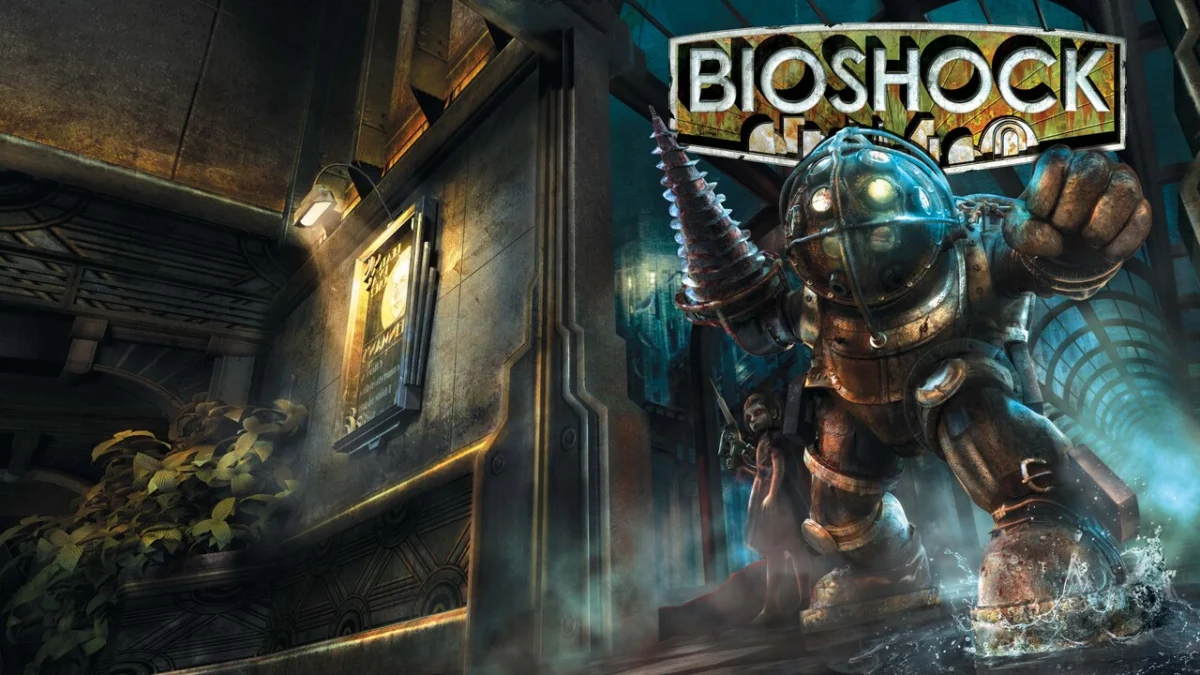
The underwater metropolis of Rapture, a city built on the crumbling ideals of objectivism and scientific hubris, has long been considered one of the most compelling settings in the history of interactive entertainment. For over a decade, Hollywood has flirted with the idea of bringing Ken Levine’s BioShock to the silver screen, yet the transition from controller to cinema seat remains fraught with creative and logistical hurdles. As of late 2024, director Francis Lawrence—best known for his work on The Hunger Games franchise—has confirmed that the project remains in active development at Netflix, though the path to production remains as treacherous as the city’s collapsing pressure hulls.
The Core Challenge: Translating Agency into Narrative
At the heart of the BioShock adaptation lies a fundamental structural problem: the nature of player agency. In the original 2007 title, the player is not merely observing the decay of Rapture; they are the active agent navigating its corridors, making choices that define the morality of the world.
Director Francis Lawrence, in a recent candid interview with The Direct, acknowledged that translating this experience is a "hard nut to crack." The primary obstacle is the creation of a standalone protagonist. In a film, the audience cannot "play" the character; they must witness a journey. This requires the screenwriting team to craft a lead character who feels authentic to the suffocating, morally bankrupt environment of the city—a world Lawrence colorfully, yet accurately, describes as "pretty f—ed up."
The creative team is currently navigating a delicate tightrope: should the film be a literal retelling of Jack’s arrival in the 1960s, or a prequel exploring the city’s descent into chaos before the bathysphere ever docked? While Lawrence remained tight-lipped regarding specific plot details, the industry consensus suggests that the film is seeking a balance between honoring the source material’s iconic imagery—the Big Daddies, the Little Sisters, and the haunting Art Deco architecture—and establishing a narrative arc that functions independently of a gaming console.
A Chronology of Stalled Ambitions
The current Netflix iteration is far from the first attempt to bring BioShock to life. The history of this project is a testament to the "video game movie curse" that haunted the industry for years, a stigma that has only recently begun to lift with successful adaptations like The Last of Us and Fallout.
The Verbinski Era (2008–2009)
The initial attempt began shortly after the game’s critical and commercial success. Universal Pictures secured the rights and tapped Gore Verbinski, the visionary behind Pirates of the Caribbean, to direct. Verbinski’s vision was reportedly grand, dark, and faithful to the game’s R-rated intensity. However, the project hit a terminal wall in 2009. While official reasons were kept under wraps, reports from the time pointed toward ballooning production costs and the studio’s hesitation to back a high-budget, R-rated film that did not fit the traditional "four-quadrant" blockbuster mold.
The Netflix Acquisition
After years of dormancy, the property found a new home at Netflix in partnership with Take-Two Interactive. This partnership was heralded as the perfect marriage: a platform willing to take risks on prestige television and film, and a game publisher with a massive, untapped intellectual property. Yet, despite the four-plus years of development, the film remains in a state of perpetual "pre-production," hindered by both the sheer scale of the world-building required and the shifting internal politics of the streaming giant.
Corporate Turbulence and Shifting Strategies
The development of the BioShock film has been mirrored by the volatile executive landscape at Netflix. Over the past several years, the streaming giant has undergone significant restructuring in its film division.
The project was originally conceived under the guidance of former film chief Dan Lin, who championed high-profile, big-budget genre projects. However, as Netflix shifted its strategy toward cost-efficiency and tighter control over production budgets, the scope of the BioShock adaptation was reportedly scaled back. The subsequent departure of both Lin and long-time Chief Content Officer Bela Bajaria—and the installation of former Disney and Fox executive Peter Rice—has introduced a new layer of uncertainty.
When a project sits in development for this long, it risks becoming a "legacy project"—one that is constantly reviewed, re-budgeted, and realigned with the current corporate mandate. For Lawrence, the challenge is not just the script; it is ensuring that the film’s vision survives the boardroom shuffle.
The "Horse Race" of Production
Francis Lawrence is a director in high demand, and his schedule is a significant factor in the BioShock timeline. He is currently deep into the production of The Hunger Games: Sunrise on the Reaping, slated for a late 2025 release.
When asked if BioShock would be his next immediate priority, Lawrence offered a pragmatic perspective, referring to his slate of projects as a "horse race." He explained that in the modern studio system, the greenlight process is rarely linear. A film’s production date is dictated by a convergence of variables: the finalization of a script that pleases both the studio and the creators, the availability of key talent, and the logistical realities of filming locations and seasonal windows.
"You never know," Lawrence remarked, acknowledging that while his passion for the project remains, he is at the mercy of the "horse race" of development. This ambiguity is frustrating for fans, but it reflects the reality of modern filmmaking, where projects are often developed in parallel until one gains enough momentum to clear the hurdles of budget and casting.
The Synergy with Gaming: A Simultaneous Release?
Adding another layer of complexity is the rumored synergy with the next entry in the BioShock gaming franchise. Producer Roy Lee has previously hinted that there is a desire to coordinate the release of the film with a new game.
Take-Two Interactive has confirmed that a new BioShock title (often referred to as BioShock 4) is in active development. While details remain scarce, reports suggest the game will be set in the 1960s in an entirely new, icy setting—the Antarctic. This potential for cross-media synergy creates a powerful incentive for both Netflix and Take-Two to get the film right. If they can synchronize the release of a high-end film with a major new game launch, they could create a cultural event that transcends both mediums. However, if the development cycles of either the game or the film continue to slip, this vision of a unified BioShock universe may remain a pipe dream.
Implications for the Future
The BioShock project serves as a perfect case study for the current state of video game adaptations. It highlights the tension between the artistic desire to preserve the "soul" of a game—the environmental storytelling, the philosophy, and the atmosphere—and the economic necessity of creating a film that appeals to a broader, non-gaming audience.
If Netflix and Francis Lawrence can successfully navigate the "f—ed up" world of Rapture, it would cement Netflix’s position as the premier destination for high-concept video game adaptations. However, if the project continues to linger in development hell, it may serve as a cautionary tale about the limits of intellectual property.
For now, the project persists. The script is being refined, the vision is being honed, and the studio is navigating its own corporate identity. Rapture has always been a city built on the belief that men and women could achieve anything if they were not constrained by the old rules. Perhaps it is fitting that the adaptation of such a city is taking a path that is equally defiant of traditional, predictable timelines. Whether this journey ends in a cinematic masterpiece or another chapter in the history of abandoned ambitions remains, for the time being, a question for the depths.