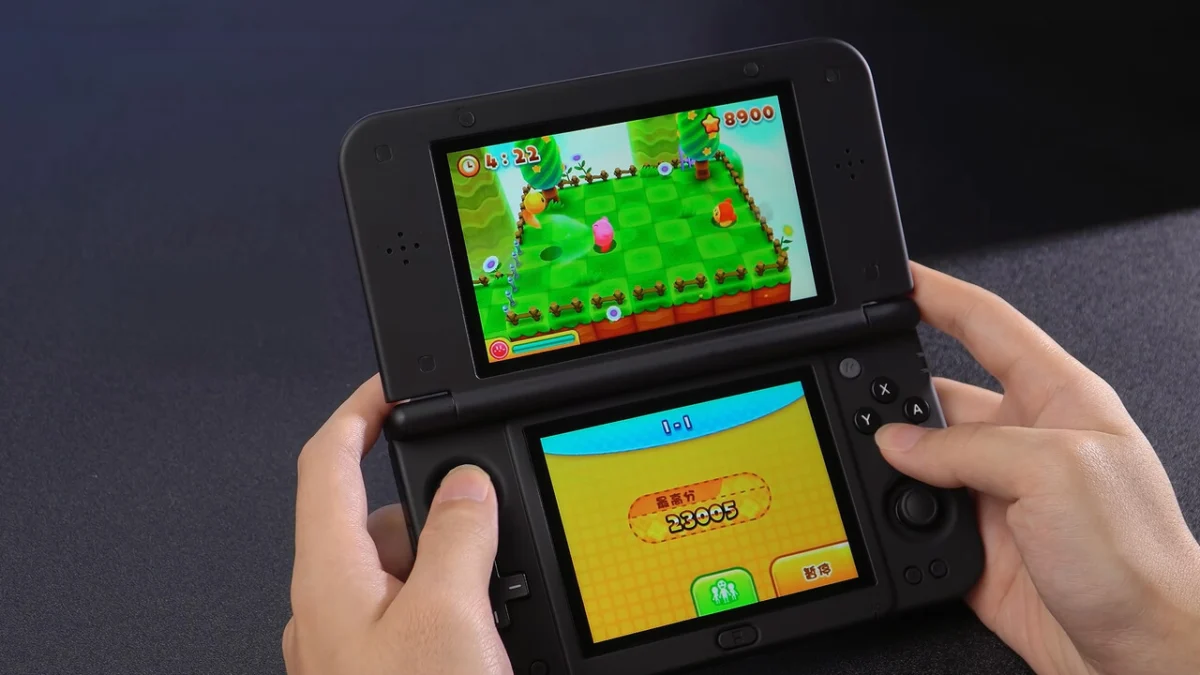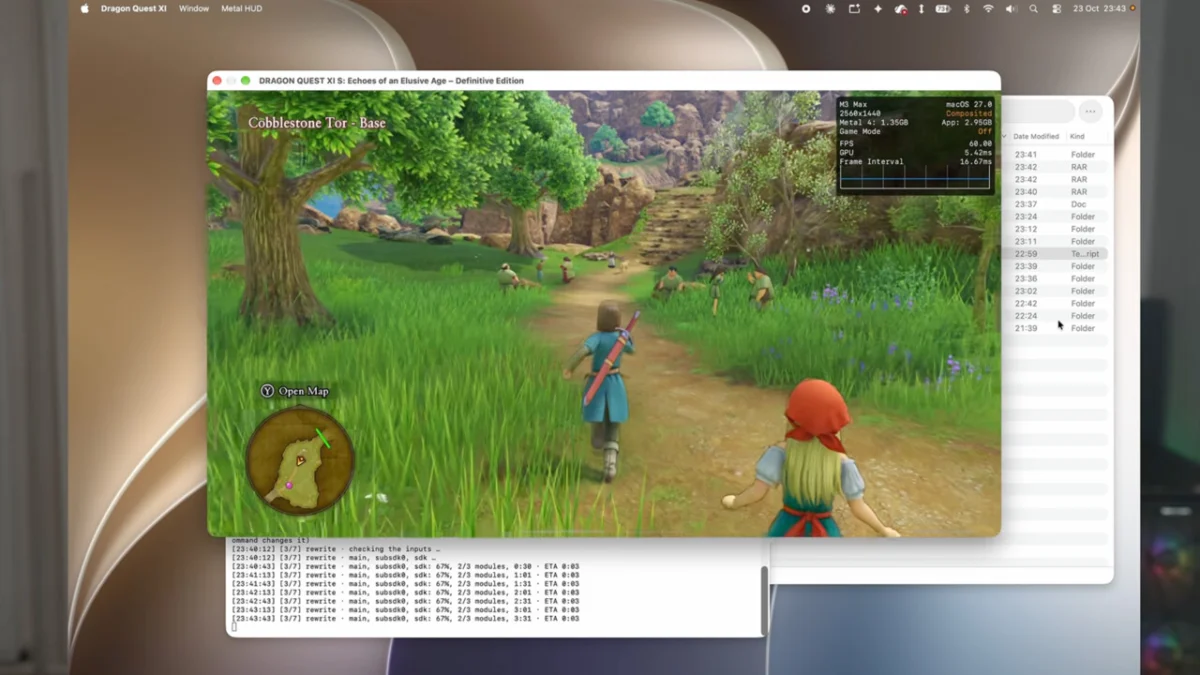
The gaming landscape is witnessing a fascinating technical evolution with the emergence of nxnative, an open-source project that is fundamentally changing how Nintendo Switch software interacts with non-Nintendo hardware. Unlike traditional emulation, which simulates a console’s hardware environment—often at a significant performance cost—nxnative allows Nintendo Switch games to run as native applications on iPhones, iPads, and Macs equipped with Apple Silicon. By bridging the gap between the Switch’s NVIDIA-based architecture and Apple’s ARM-based M-series chips, this project has effectively unlocked the ability to run high-fidelity titles on Apple’s ecosystem with unprecedented efficiency.
The Technical Foundation: Bridging ARM and Metal
At the heart of the nxnative project lies a simple but powerful realization: the Nintendo Switch and modern Apple devices share a common fundamental language. Both architectures are built upon the ARM64 instruction set.
Because the central processing units (CPUs) in both systems speak the same "native tongue," the software does not require the heavy overhead of an emulator to translate instructions in real-time. Instead, nxnative performs a sophisticated "re-platforming" process. It strips away the proprietary Switch-specific system calls and replaces them with Apple-native equivalents.
From NVN to Metal
The most significant hurdle in porting console games is the graphics pipeline. The Nintendo Switch utilizes a proprietary graphics API developed by NVIDIA, known as NVN. Apple’s hardware, conversely, relies exclusively on Metal, Apple’s proprietary low-level graphics framework.
Nxnative acts as a translator for these graphical commands. It intercepts the calls meant for the Switch’s NVN API and maps them to Apple’s Metal API. Because this process happens at the API level rather than through an entire emulated environment, the performance overhead is drastically reduced. This is why titles that are locked to 30 frames per second (FPS) on the original Switch hardware can, in some instances, hit a consistent 60 FPS on Apple Silicon, as the hardware is no longer bottlenecked by the emulation layer or the console’s thermal constraints.
Chronology of Development: From Proof of Concept to Functional Reality
The development of nxnative did not happen overnight; it is the culmination of years of community-driven reverse engineering.
- Early Research (2020–2022): Following the widespread adoption of the M1 chip in the MacBook Air and MacBook Pro, developers began testing the limits of Apple’s unified memory architecture. The realization that Nintendo’s reliance on ARM chips could be exploited grew as the community gained a deeper understanding of the Switch’s proprietary file systems.
- The Initialization Phase: Initial experiments focused on getting simple homebrew applications to run on macOS using the same ARM-based logic. The breakthrough occurred when developers began successfully redirecting file paths and memory addresses to match Apple’s strict macOS security standards.
- The GitHub Launch: With the public release of the nxnative repository, the project transitioned from a niche developer experiment to a community-supported tool. The repository quickly became a hub for "porting" games, with users contributing patches and configuration files to ensure specific titles would boot correctly.
- Scaling to Mobile: The most recent chapter in the project’s timeline involves the transition to iOS and iPadOS. By utilizing tools like Xcode, developers have managed to package these ports into standard
.ipafiles, allowing them to be sideloaded onto modern iPhones and iPads.
Supporting Data: Performance and Compatibility
The project’s GitHub page currently tracks over 60 verified titles, ranging from indie gems to massive AAA blockbusters.
Performance Metrics
The performance of these "ports" is startling. For example, testing Monster Hunter Rise on a base-model MacBook Air (M1, 8GB RAM) yielded a stable 60 FPS—a feat the original Switch hardware often struggles to maintain consistently during intense combat sequences. This confirms that the bottleneck in many Switch games has historically been the aging console hardware, not necessarily the game code itself.
Key Tested Titles Include:
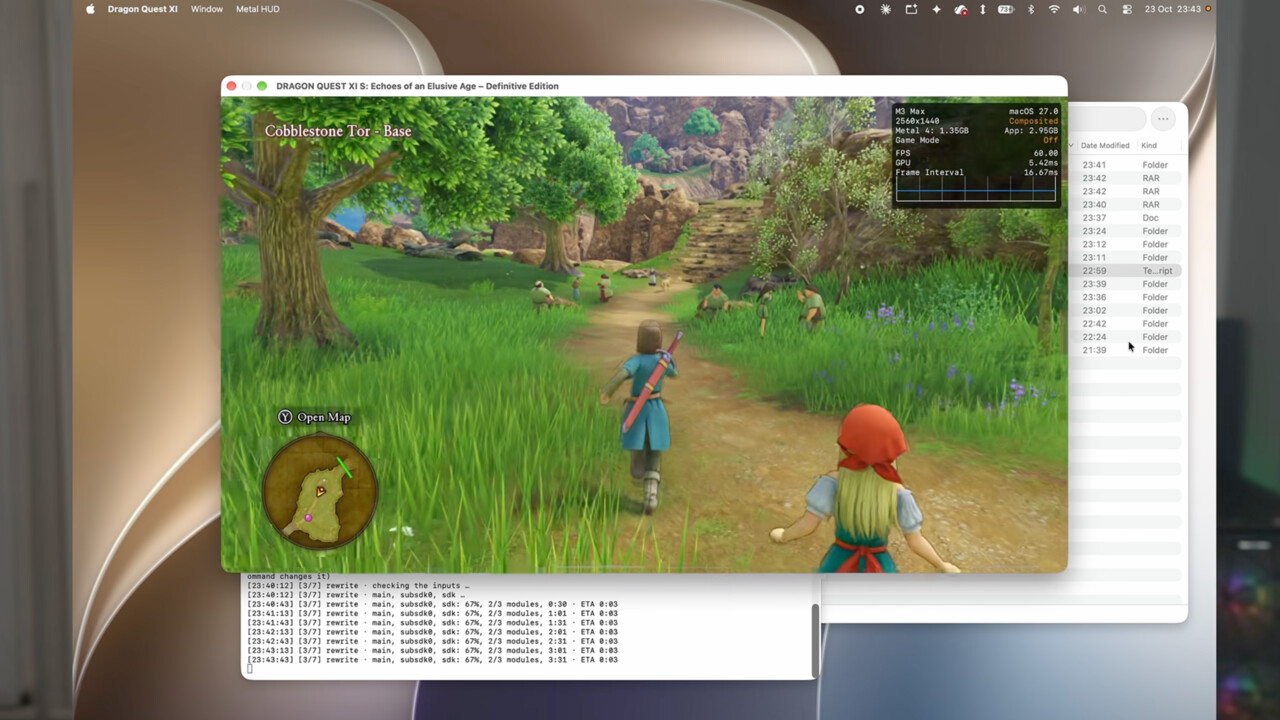
- Super Mario Odyssey: Demonstrates the efficiency of the translation layer in handling complex 3D rendering.
- Metroid Dread: Shows high compatibility with the platform’s specific controller input mapping.
- Monster Hunter Rise: Serves as the benchmark for sustained performance on entry-level Apple Silicon.
Hardware Requirements
The transition to mobile has been restricted by hardware architecture. The project currently mandates:
- For iOS/iPadOS: Devices must be running the latest firmware versions (iOS 17+ / iPadOS 17+).
- Processor Minimums: Due to specific requirements regarding texture compression formats (ASTC support), only devices with M1-series chips or the A17 Pro chip (found in the iPhone 15 Pro) and newer are currently capable of running these titles. Older iPhones lack the necessary hardware-level texture support, resulting in "black screen" errors or immediate crashes.
The Workflow: How the Porting Process Works
Creating a playable app is not a "one-click" experience. It requires the user to be a legal owner of the Switch hardware and the specific games they wish to play.
- Decryption: The user must dump their legally owned game files and the corresponding decryption keys from their own Nintendo Switch console. This is a critical step, as it ensures the project relies on the user’s own license rather than pirated software.
- Compilation: Using a Mac, the user runs a build script within Xcode. This script compiles the game assets and the nxnative translation layer into a standalone application.
- Deployment: Once the build is complete, the resulting file is installed via sideloading tools such as AltStore or Sideloadly.
This process can take up to an hour depending on the complexity of the game and the processing power of the Mac, highlighting that this is currently a "power user" tool rather than a consumer-ready product.
Implications: Legal, Ethical, and Industry Impact
The existence of nxnative presents a significant challenge to the traditional gaming industry model, raising several complex questions.
The "Sideloading" Dilemma
By enabling users to run console software on mobile devices, nxnative sits in a legal grey area. While the project itself is open-source and does not distribute copyrighted game files, the methodology relies on the extraction of encrypted keys from Nintendo hardware. Nintendo has historically maintained a zero-tolerance policy regarding the modification of their console’s firmware or the distribution of its proprietary software on non-Nintendo platforms.
The Future of Portability
From an industry perspective, nxnative proves that the "exclusivity" of console gaming is becoming increasingly tenuous. If a user can experience a Nintendo title at 60 FPS on their iPad with a controller attached, the incentive to purchase a dedicated console may diminish. However, the lack of support for Online Services and Amiibo functionality acts as a natural barrier that preserves the value proposition of the original Switch console.
Legal Risks and Official Responses
To date, Nintendo has not issued a public statement specifically targeting the nxnative project. However, the company has a long history of aggressive litigation against emulator developers and homebrew communities. Legal experts suggest that if nxnative were to gain mainstream popularity or if a third-party developer attempted to monetize a "one-click" version of this tool, Nintendo would likely initiate a Digital Millennium Copyright Act (DMCA) takedown request, citing the circumvention of technical protection measures.
Conclusion: A New Frontier in Gaming
Nxnative is more than just a clever hack; it is a testament to the power of the ARM architecture and the ingenuity of the open-source community. By bypassing the traditional route of emulation, developers have created a way to breathe new life into existing libraries, pushing the boundaries of what is possible on mobile devices.
While the current requirements—a Mac, technical proficiency, and a donor console—keep the project within the realm of hobbyists, the technological precedent is set. As Apple Silicon continues to evolve and the capabilities of iPads and iPhones approach those of desktop-class hardware, the line between "mobile gaming" and "console gaming" will continue to blur. Whether this leads to a new era of cross-platform portability or a legal crackdown from Nintendo remains to be seen. For now, nxnative remains a fascinating bridge between two of the most influential hardware ecosystems in the world.