
Introduction: The Impending Transformation
As artificial intelligence (AI) accelerates its integration into the global economy, a profound existential question has moved from the fringes of academia to the center of boardroom strategy: What remains for the human worker? Industry leaders, including Microsoft AI CEO Mustafa Suleyman, have boldly predicted that a vast majority of white-collar office roles could be automated within a few short years.
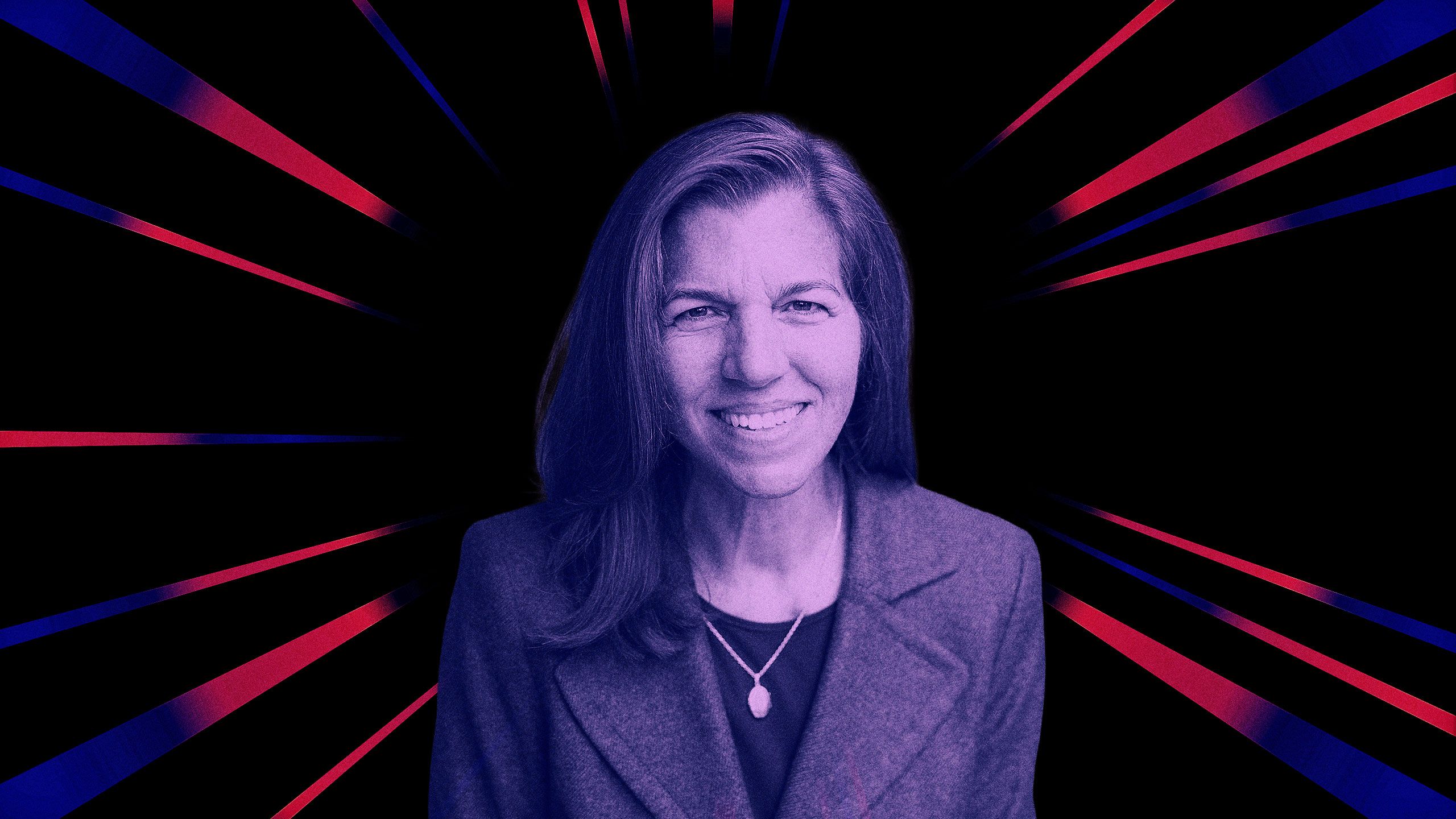
While the efficiency gains are undeniable, Allison Pugh—a preeminent sociologist at Johns Hopkins University—warns that we are overlooking a critical casualty of this transition: human dignity. In an era where algorithms can process data, draft contracts, and optimize supply chains, Pugh argues that the true "competitive advantage" of the future will not be technical proficiency, but rather the uniquely human capacity for social competence, empathy, and nuanced connection.
Main Facts: The "AI Tsunami" and the Crisis of Worth
The rapid deployment of generative AI has created what sociologists call an "AI Tsunami." Unlike previous industrial revolutions, which primarily displaced manual labor, this wave targets the cognitive tasks that have long defined the middle class.
The core concern, as articulated by Pugh, is not just economic displacement—it is the erosion of our sense of purpose. "We are failing to prioritize or protect the intrinsic value of what a human being contributes," she notes. When we allow machines to replace the human element in professions—such as caregiving, teaching, or management—we risk stripping away the dignity that comes from being seen, understood, and validated by another person.

The risk is a "hollowing out" of the workforce, where technical tasks are performed with machine-like speed, but the "glue" that holds organizational and societal structures together—trust, accountability, and emotional intelligence—dissolves.
Chronology: From Automation to Augmentation
To understand our current position, we must look at the evolution of labor:
- 1990s–2010s: The Digital Foundation. The rise of the internet and early enterprise software digitized workflows. Humans were still the primary decision-makers, but tools became faster.
- 2015–2022: The Data Era. Big data and machine learning began to influence decision-making, shifting the focus from manual output to data-driven strategy.
- 2023–Present: The Generative Shift. With the advent of Large Language Models (LLMs), AI has moved from a tool that calculates to a tool that creates. This marks the first time that creative and analytical jobs are under direct threat.
- The Future (2025 and beyond): The "Social Premium." As technical skills become commodified, the market value of "human-centric" skills is projected to skyrocket, creating a divide between those who can leverage AI and those who can provide the human connection that AI cannot replicate.
Supporting Data: The Productivity vs. Connection Paradox
Recent studies from the World Economic Forum and various labor research institutes highlight a paradoxical trend. While productivity indices are rising due to AI implementation, employee engagement scores in highly digitized sectors are hitting record lows.
- The Efficiency Trap: Companies utilizing AI for 70% of communication tasks report a 15% increase in operational speed, but a 22% decline in team cohesion.
- The Human Preference: In a recent survey, 68% of consumers stated that they still prefer human interaction for complex problem-solving or sensitive services (e.g., healthcare, legal advice, mental health support), citing a "lack of genuine understanding" in automated systems.
- Economic Value: Data suggests that roles requiring high emotional intelligence—leadership, conflict resolution, and complex negotiation—are seeing higher wage growth compared to roles focused solely on data processing, which are experiencing wage stagnation or decline.
Official Responses: Navigating the Ethical Frontier
The response from industry and policy circles has been bifurcated. Tech CEOs like Mustafa Suleyman argue that we are entering a "post-labor" era where the focus must shift to Universal Basic Income (UBI) and retraining. Their argument is rooted in the belief that productivity is the primary metric of a successful civilization.

Conversely, sociologists like Pugh and ethics-focused policymakers argue that we must regulate the application of AI to protect the "social sphere." They advocate for:
- Human-in-the-Loop Mandates: Ensuring that critical decisions affecting human lives (hiring, firing, medical diagnosis) always require a human auditor.
- Educational Reform: Shifting curricula away from rote memorization—which AI handles perfectly—toward philosophy, ethics, psychology, and collaborative arts.
- Corporate Stewardship: Encouraging companies to measure "social capital" as a KPI, ensuring that digital tools are used to enhance human connection rather than replace it.
The Future of Work: Why Social Competence Wins
The most compelling argument for the future of work lies in the limitations of machines. AI operates on patterns; it cannot "feel" the gravity of a situation or navigate the murky, non-linear terrain of human relationships.

As Pugh points out, there are moments of profound human interaction that transcend data. She describes a scenario where a daughter seeks advice from a parent rather than an AI: "I asked ChatGPT, but I am also asking you because I know you won’t just tell me what I want to hear."
This "non-transactional" interaction is the bedrock of future value. In a world of infinite AI-generated content, the "human stamp"—the proof of effort, care, and lived experience—becomes a luxury good.

H3: The Competitive Edge in the Marketplace
- Trust as Currency: In an age of deepfakes and algorithmic bias, trust is the scarcest resource. Professionals who can build and maintain high-trust relationships will command a premium.
- Synthesis and Judgment: AI provides the options, but humans must provide the judgment. The ability to synthesize AI-generated data through the lens of human values is the new "executive function."
- Conflict Resolution: Machines can optimize for efficiency, but they cannot mediate the messy, often illogical conflicts that occur in human teams. The ability to navigate these dynamics is what prevents organizational decay.
Implications: Preparing for the Shift
The transition to an AI-augmented economy requires a fundamental change in how we define "career." We are moving away from the industrial model of the "specialized expert" toward the model of the "integrator."
For the Individual:

- Double Down on Soft Skills: Communication, empathy, and social perceptiveness are no longer "extra" skills—they are the core business requirements.
- AI Literacy: You don’t need to be a coder, but you must be an effective orchestrator of AI tools.
- Cultivate "Human" Hobbies: The things we do for passion, community, and physical engagement are where we refine the skills that will keep us relevant.
For the Organization:
- Redefine Productivity: Stop measuring employees by their output alone. Start measuring the value they add to the collective environment.
- Preserve Human Touchpoints: Do not automate away the "water cooler" moments. Invest in physical spaces and rituals that foster spontaneous connection.
- Ethics-First Architecture: Before deploying an AI, ask not just "Can it do this?" but "Should it do this, and what is the human cost if it does?"
Conclusion: The Human Imperative
We are not heading toward a world where work disappears; we are heading toward a world where the nature of work is fundamentally redefined. If we allow ourselves to be seduced by the cold, algorithmic efficiency of machines, we will find ourselves in a sterile landscape where efficiency is maximized but meaning is lost.

However, if we recognize that social competence—the ability to relate, empathize, and lead—is our most powerful tool, we can build a future that is not only productive but profoundly human. As Allison Pugh rightly suggests, the future belongs to those who recognize that while AI can provide the answers, only humans can define the questions. The "competitive advantage" of the future is not a chip or a line of code; it is the person sitting across from you, looking you in the eye, and offering the one thing an algorithm never can: genuine, human concern.