SAN FRANCISCO – In a move that has sent shockwaves through Wall Street and underscored the sheer intensity of the global Artificial Intelligence arms race, Meta Platforms Inc. announced on Monday its intention to raise up to $95 billion in additional capital. The tech giant, led by Mark Zuckerberg, is positioning itself for a massive liquidity injection to fund the next generation of AI infrastructure, research, and product integration.
This capital raise, one of the largest in corporate history, highlights a critical turning point for the Silicon Valley behemoth. As the competition for generative AI dominance intensifies against rivals like Microsoft, Alphabet (Google), and OpenAI, Meta is betting that sheer scale—in terms of both hardware and financial firepower—will be the deciding factor.
Main Facts: The Structure of the Capital Raise
Meta’s plan to secure $95 billion is bifurcated into two primary financial instruments, designed to provide both immediate stability and long-term flexibility.
The Initial Offering
Meta has announced an immediate offering of common and preferred stock valued at approximately $35 billion. This move is designed to satisfy the immediate appetite of institutional investors who have been waiting for a clear signal from the company regarding its long-term AI funding strategy.
The ATM Program
The remaining $60 billion will be raised through an "At-the-Market" (ATM) program. This mechanism allows Meta to sell shares periodically over an extended timeline, rather than all at once. By selling shares directly into the secondary market, the company can manage the timing of issuance to mitigate dilution and capitalize on favorable market conditions. Notably, this program marks the first time Meta will issue its Class C shares—a stock class that carries no voting rights, allowing the company to raise capital without diluting the control held by Mark Zuckerberg and other existing primary stakeholders.
The Silicon Alliance: Strategic Anchor Investors
One of the most intriguing aspects of Meta’s announcement is the involvement of the "Big Three" in the semiconductor space. Nvidia, Advanced Micro Devices (AMD), and Broadcom have signaled their intent to act as anchor investors.
According to the regulatory filing, these chipmakers have expressed interest in purchasing up to $5 billion worth of Class A common stock. While the company was quick to clarify that these are non-binding expressions of interest, the optics are clear: the hardware providers that fuel the AI revolution are signaling deep alignment with Meta’s trajectory.
This strategic signaling suggests that the relationship between Meta and its chip suppliers is moving beyond simple vendor-client dynamics. By taking equity stakes, Nvidia, AMD, and Broadcom are essentially betting on the success of Meta’s AI ecosystem, ensuring their hardware remains the backbone of the company’s massive data centers.
Chronology: The Road to the $95 Billion Decision
To understand the magnitude of this decision, one must look at the rapid acceleration of Meta’s AI strategy over the past 24 months:
- Early 2023: Following the viral success of ChatGPT, Meta pivots heavily toward generative AI, integrating Large Language Models (LLMs) into its social media platforms and advertising tools.
- Late 2023: Meta launches Llama 2, its open-source foundational model, signaling a strategy to become the industry standard for AI developers.
- Mid-2024: Capital expenditure (CapEx) projections rise significantly as Meta announces plans to build massive GPU clusters using Nvidia’s H100 and Blackwell chips.
- Early 2026: Following a broad market correction in the tech sector, Meta faces pressure from shareholders to demonstrate fiscal discipline while simultaneously maintaining its lead in AI.
- Monday’s Announcement: Meta formalizes the $95 billion capital infusion, effectively clearing the path for the next phase of its "AI-first" evolution.
Supporting Data: Why $95 Billion?
The sheer scale of the investment is difficult to contextualize, but it becomes clear when analyzing the costs of modern AI infrastructure.
Infrastructure Costs
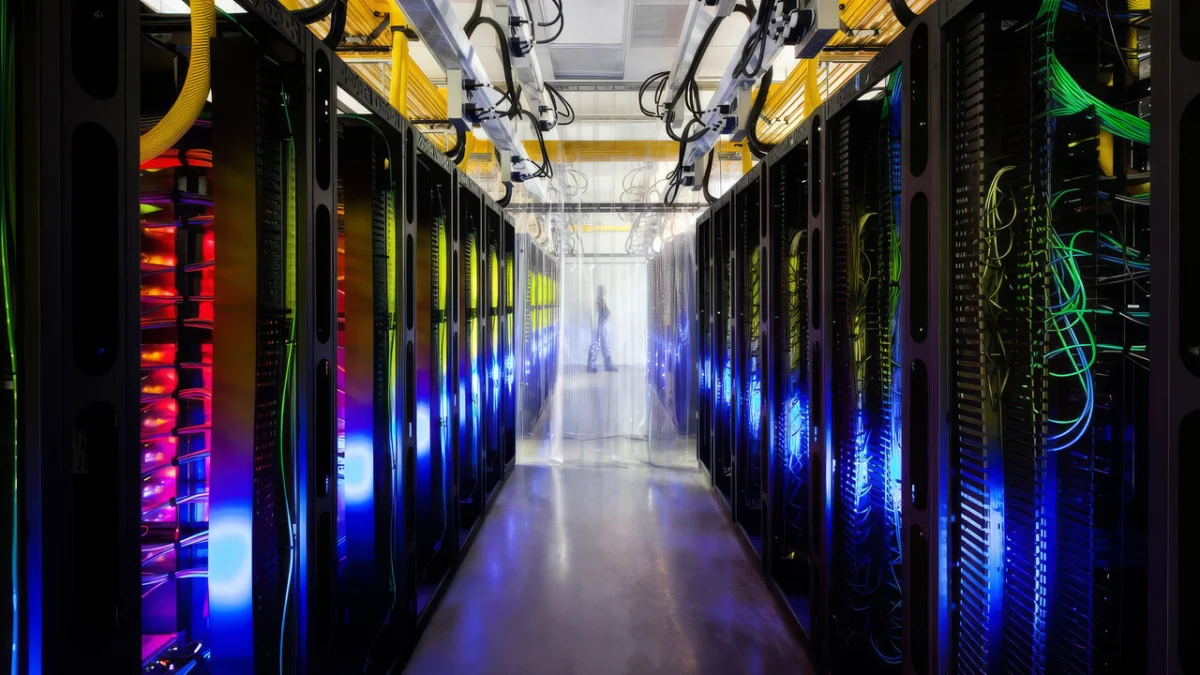
Training a frontier AI model now costs billions in compute time alone. With the industry moving toward training clusters involving hundreds of thousands of GPUs, the power consumption, real estate for data centers, and specialized networking hardware require unprecedented liquidity.
Market Performance
Despite the massive dilution implied by a $95 billion raise, the market response has been surprisingly resilient. Meta’s stock traded up roughly 1.6% in pre-market activity following the news. This suggests that investors view the move not as a sign of weakness, but as a "war chest" strategy. After a period of high volatility and a broad tech sell-off, shareholders appear willing to back Zuckerberg’s vision, provided the capital is used to secure a competitive moat against OpenAI and Google.
Expert Commentary: The "Digestion" Challenge
Financial commentators have been divided on the logistics of such a massive offering. As Markus Koch noted during coverage of the announcement, "The question will be how the capital market can even digest such a massive amount of new shares."
The "digestion" concern refers to the risk of supply-side pressure. When a company floods the market with billions of dollars of new equity, it creates downward pressure on the stock price. However, Meta is counting on the long-term growth potential of its AI initiatives—specifically in advertising efficiency and personalized user experience—to offset this temporary dilution.
Implications: The Future of Meta
The implications of this move extend far beyond the balance sheet.
For the AI Industry
Meta is essentially betting that open-source AI (via its Llama ecosystem) will win against the "walled garden" approach of companies like OpenAI. By raising $95 billion, Meta can sustain years of development without worrying about quarterly revenue fluctuations. This is a massive competitive threat to smaller AI startups that may struggle to compete with a company that has effectively infinite capital at its disposal.
For Shareholders
While Class C shares will prevent voting dilution, Class A shareholders are still facing a significant increase in the total share count. The company will need to prove that the return on invested capital (ROIC) for its AI projects is significantly higher than the cost of equity. If Meta fails to translate this investment into tangible revenue growth through its advertising products, the stock could face a long period of stagnation.
Regulatory Considerations
The deepening ties between Meta and the major chipmakers (Nvidia, AMD, Broadcom) are likely to draw the attention of antitrust regulators. The intersection of "Big Tech" and "Big Chip" creates a powerful nexus that could be viewed as an attempt to monopolize the supply chain of artificial intelligence.
Conclusion: A High-Stakes Gamble
Meta’s $95 billion capital raise is a bold, aggressive, and potentially defining moment for the company. By choosing to dilute its equity to fund its future, Meta is signaling that it believes the AI revolution is a winner-take-all game.
Mark Zuckerberg has effectively "doubled down" on the vision he set forth years ago. Whether this massive influx of cash results in a new era of dominance or a cautionary tale of over-investment will depend on the company’s ability to execute on its technical roadmap. For now, the markets are watching, the chipmakers are investing, and the stage is set for the most expensive race in the history of Silicon Valley.
As the company moves forward with its ATM program, the focus will shift from the amount of capital raised to the efficiency with which it is deployed. In the unforgiving world of artificial intelligence, where models become obsolete in months, $95 billion may be just the beginning of the cost of admission.