Berlin, Germany – The past week has been marked by a series of events highlighting the intricate interplay of global politics, corporate strategy, and domestic societal shifts. From a German automotive giant’s controversial investment in the United States, interpreted by many as a concession to political pressure, to a surprising democratic triumph in Serbia offering a beacon of hope for European democracy, and a heated debate in Germany over the gender of its next head of state – these developments underscore a turbulent yet transformative era.
Corporate Concession or Strategic Investment? Audi’s US Factory Plans Spark Controversy
The announcement by German luxury automaker Audi to invest a substantial sum of over $4 billion in a new manufacturing facility in the United States has ignited a fierce debate, casting a spotlight on the delicate balance between corporate interests and political appeasement. While framed as a strategic move to bolster its presence in a crucial market, the timing and manner of the announcement have drawn sharp criticism, particularly in Germany, for what many perceive as a "kneeling before Trump."
Main Facts: Audi’s Billion-Dollar Bet in the US
Audi’s planned multi-billion-dollar investment signifies a major commitment to the American market. The $4 billion allocation is earmarked for establishing a new production plant, primarily intended to ramp up the sales of its large, combustion-engine SUVs. These "thick" SUVs, as the original German article colloquially refers to them, represent a significant segment of the American automotive market, where consumer preference for larger vehicles remains strong despite global shifts towards electrification. For Audi, a subsidiary of the Volkswagen Group, increasing its local production capacity is a direct response to market demand and potentially a way to circumvent import tariffs.
However, the announcement arrives at a politically charged moment. Donald Trump, the former and potentially future US President, is currently campaigning for the upcoming US midterm elections, facing considerable pressure to demonstrate the tangible successes of his controversial "America First" economic policies, especially his aggressive stance on tariffs. Trump’s administration had previously imposed tariffs on imported goods, including automobiles, explicitly aiming to pressure foreign manufacturers to build factories on American soil. Audi’s investment, therefore, could be interpreted as a direct capitulation to these pressures, providing Trump with a much-needed talking point and a visible "win" for his protectionist agenda just as voters head to the polls.
Chronology: The Georgia Appearance
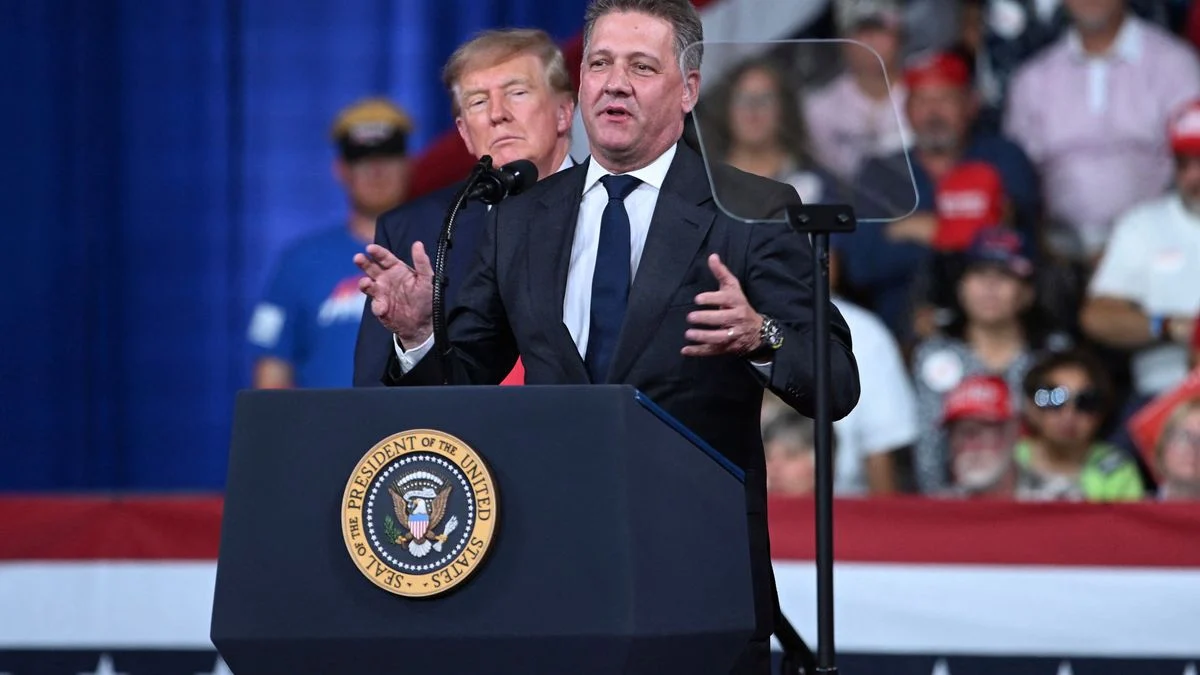
The controversy peaked with the public presentation of these factory plans. Audi CEO Gernot Döllner chose to make the announcement alongside Donald Trump himself, during a campaign event in the pivotal swing state of Georgia. This joint appearance, particularly at a political rally, was immediately seen by many observers as a deliberate political gesture, an "election gift" designed to curry favor with the powerful American politician. The image of a major German industrial leader standing shoulder-to-shoulder with a divisive figure like Trump, especially given the historical context of strained transatlantic trade relations under his previous presidency, sent ripples of discomfort and outrage across Germany and beyond.
The decision to align so publicly with a figure known for his "extortionist tariff policy," as characterized by the original German report, suggests a corporate strategy prioritizing immediate market access and tariff relief over perceived political neutrality or broader ethical considerations. This act of public endorsement, even if purely transactional for Audi, undeniably lends a degree of legitimacy and electoral momentum to Trump’s campaign.

Official Responses: Widespread Outrage in Germany
The reaction in Germany was swift and overwhelmingly negative, reflecting deep-seated concerns about corporate social responsibility and political entanglement.
Daniela Cavallo, the formidable Chairwoman of the Volkswagen Group Works Council, minced no words in her criticism. She sharply condemned Döllner’s participation in an event she unequivocally labeled as "racist, sexist, and anti-democratic." Cavallo’s statement highlights a fundamental tension within large corporations: while management focuses on market strategy, employee representatives often emphasize ethical conduct and alignment with democratic values. Her strong condemnation suggests a perceived betrayal of these values by Audi’s leadership, raising questions about the company’s commitment to social responsibility beyond its financial bottom line.
Adding to the chorus of disapproval was Christiane Benner, the powerful Chairwoman of IG Metall, Germany’s largest trade union. Benner described Döllner’s public appearance as "politically unacceptable" and "embarrassing." Her critique underscores the discomfort felt by many in Germany at seeing a prominent national brand seemingly bowing to political pressure from a figure whose policies and rhetoric are often viewed as antithetical to European democratic norms and international cooperation. The term "embarrassing" reflects a sense of national pride being compromised by what appears to be a politically motivated corporate maneuver.
The broader sentiment in Germany echoed these criticisms, with many commentators and citizens expressing dismay at Audi’s perceived "opportunism." The move reignited discussions about the role of multinational corporations in global politics, particularly when faced with protectionist threats from powerful nations.
Implications: Economic Risks and Ethical Dilemmas
Beyond the immediate political fallout, Audi’s "schleimspur-manöver" (slimy maneuver), as the original article provocatively calls it, carries significant economic and ethical implications.
Martin Hesse, from SPIEGEL’s business department, articulated the inherent economic risks. He argued that companies would be well-advised "not to opportunistically surrender to these uncertainties." Hesse’s point is critical: any tariff concessions or favorable trade conditions granted by a Trump administration, secured through such public appeasement, might be highly unreliable and transient. A potential change in government, whether in the upcoming midterms or a future presidential election, could easily nullify such promises, leaving Audi exposed to renewed trade tensions or a backlash from a different administration. This creates a volatile and unpredictable business environment, where long-term investment decisions are based on short-term political expediency rather than stable economic fundamentals.

The incident also raises profound questions about corporate responsibility in a politically charged global landscape. Is it acceptable for a company to align itself with a political leader whose values are widely contested, simply to gain market access or avoid tariffs? Critics argue that such actions normalize and embolden divisive political rhetoric and policies. While corporations are driven by profit motives, their immense economic power often places them in positions where their decisions have significant political and social ramifications. Audi’s move could be seen as setting a precedent, encouraging other companies to engage in similar forms of political appeasement, potentially undermining democratic principles and fostering an environment where economic leverage dictates political behavior.
Ultimately, Audi’s investment, while a substantial economic commitment, has become a symbol of the complex challenges facing global corporations navigating a fractured geopolitical environment, forcing a reckoning with the ethical boundaries of corporate pragmatism and the potential long-term damage to brand image and public trust.
A Glimmer of Hope for European Democracy: Serbia’s Student Uprising
Amidst the complexities of corporate politics, a different narrative unfolded in Serbia, offering a rare and powerful testament to the resilience of democratic ideals. The triumph of a student-led opposition movement against the entrenched, autocratic rule of Aleksandar Vučić has sent a wave of optimism across Europe, signaling that the tide of authoritarianism, particularly in the continent’s eastern reaches, might be turning.
Main Facts: Autocrat Defeated in Serbia
The news from Serbia was unequivocal: students had successfully defeated the autocratic ruler Aleksandar Vučić, 56, who had been accused of systematically undermining democratic institutions during his long tenure. Crucially, Vučić conceded his electoral defeat, a move that, while standard in mature democracies, is a significant and hopeful sign for a country that has struggled with democratic backsliding. His acknowledgment of the election results, even if reluctant, stands in stark contrast to many authoritarian leaders who cling to power through fraudulent means or refuse to accept legitimate outcomes.
This concession alone was hailed as a positive indicator for the health of democracy in Europe, particularly given the recent history of challenges to democratic norms in the region.
Chronology: The Rise of the Student Movement
The victory was spearheaded by an opposition student list, a movement that strategically leveraged the power of youth and anonymity. The movement consciously chose to feature many unknown and constantly changing young faces, thereby presenting a fresh, untainted alternative to the established political elite. This approach helped them avoid the pitfalls of personality cults and established political baggage, resonating deeply with a populace yearning for genuine change.

What makes this victory even more remarkable is the method employed: peaceful, democratic means. Unlike many youth movements globally, where frustration can sometimes boil over into violence, the Serbian students demonstrated that sustained, organized, and peaceful civic engagement can indeed lead to fundamental political transformation. Their success provides a powerful counter-narrative to the idea that democratic change is impossible in the face of entrenched authoritarianism.
Supporting Data: A Regional Trend?
The Serbian outcome gains even greater significance when viewed in a broader regional context. Serbia now stands as the second country on Europe’s eastern flank, following Hungary, where a long-reigning "democracy-despiser" has been voted out of office. This emerging pattern suggests a potential shift in the political landscape of Eastern Europe, challenging the narrative of an inexorable slide towards authoritarianism.
Jörg Schindler, a columnist for SPIEGEL, articulated the profound implications of these events. He argued that the Serbian election serves as a potent signal to Europe’s right-wing populists, demonstrating "that a landslide victory is not a law of nature." This suggests that even seemingly invincible populist regimes can be overthrown through democratic processes, offering encouragement to opposition movements across the continent.
Furthermore, Schindler highlighted the geopolitical significance of Serbia’s shift, interpreting it as a direct warning to Russia’s President Vladimir Putin. He contended that Putin has now "lost a second laboratory for anti-democratic destabilization in Europe." Russia has often been accused of supporting and fostering anti-democratic forces in Eastern Europe to destabilize the region and expand its influence. The democratic successes in Hungary and now Serbia, therefore, represent a setback for Moscow’s geopolitical ambitions and its model of authoritarian governance.
Implications: The Power of Youth and Democratic Renewal
The Serbian student movement’s triumph carries profound implications, particularly regarding the role of young people in political change and the future of democratic governance.
This success offers a compelling contrast to the experiences of youth movements elsewhere in Europe. In countries like France, Italy, or Belgium, young people often take to the streets to protest legitimate grievances such as teacher shortages, lack of future prospects, or housing crises. However, these demonstrations frequently escalate into violence, which, unfortunately, tends to delegitimize their core demands in the eyes of the public and the media. The Serbian experience demonstrates that it is possible for young generations to find their voice and achieve a majority for their concerns through peaceful, democratic channels, thereby retaining moral authority and broad public support.

Serbia’s peaceful transition provides a powerful model for democratic renewal, not just for the Balkans but for other regions grappling with authoritarian tendencies. It underscores the idea that citizens, particularly when organized and united, possess the power to effect change at the ballot box. This victory could inspire similar movements in countries where democratic institutions are under threat, showing that peaceful resistance and electoral participation can yield tangible results.
For Serbia itself, the implications are vast. The new government, born from a student movement, will face the immense challenge of rebuilding democratic institutions, addressing long-standing social and economic issues, and steering the country back towards a path of European integration. The path ahead will be fraught with difficulties, but the initial victory has instilled a renewed sense of hope and demonstrated the profound capacity for peaceful transformation.
Germany’s Presidential Quest: Gender, Representation, and Political Pragmatism
Meanwhile, within Germany’s own borders, a different kind of political debate is unfolding, centered on the identity of the nation’s next head of state. With the election for the Federal President just three months away, what began as a historic opportunity to elect the first female president has morphed into a complex discussion about gender, representation, and the very criteria for leadership in high office.
Main Facts: The Search for a New Head of State
The upcoming presidential election in Germany holds significant symbolic weight. Historically, the Union (CDU/CSU) and the Social Democratic Party (SPD) had reportedly reached an informal agreement: for the first time in the history of the Federal Republic, a woman should assume the prestigious, albeit largely ceremonial, role of Federal President. This consensus reflected a broader societal push for greater gender equality in leadership positions and a recognition of the symbolic power of having a female head of state.
However, this initial agreement and the expectation of a female president have recently been challenged, injecting a new dynamic into the debate. The question now being widely discussed is: "Can men not represent just as well as women?" This shift suggests a pushback against what some perceive as an overly prescriptive approach to gender in politics, advocating instead for a focus on individual qualifications regardless of sex.
Chronology: The Evolving Discussion
The initial consensus for a female president was a significant step, signaling a potential landmark moment for German politics and a powerful message about gender equality. For a nation that has seen a female Chancellor but never a female head of state, this would have been a historic achievement.

However, as the election draws nearer, the narrative has evolved. What was once an implicit understanding has now been explicitly questioned, leading to a public discussion about whether gender should be a primary criterion for such a high office. This evolution reflects ongoing societal debates about affirmative action, meritocracy, and the balance between symbolic representation and practical suitability. The emergence of counter-arguments suggests that while the desire for a female president is strong in some quarters, others believe the selection process should remain strictly merit-based, or that a focus on gender detracts from the true purpose of the office.
Official Responses: Voices for and Against a Gender Focus
The debate has attracted prominent voices from across the political and journalistic spectrum.
Nikolaus Blome, a columnist for SPIEGEL, directly challenged the prevailing sentiment, asking pointedly: "Why must it necessarily be a woman?" Blome argued that there is no inherent reason to treat the most important personnel decision of the coming months as a "woke societal ritual." His critique resonates with those who fear that an overemphasis on identity politics might overshadow the search for the most qualified candidate, regardless of gender. For Blome and others, the symbolic gesture of electing a woman should not supersede the primary objective of finding a leader with the most suitable profile and experience.
Echoing this sentiment, Wiebke Winter, a CDU politician from Bremen, stated in an interview with Deutschlandfunk that the profile of the person considered for the office of Federal President is more important than their gender. This perspective emphasizes a meritocratic approach, arguing that qualifications, experience, and leadership qualities should be paramount, rather than adhering to a predetermined gender criterion.
The author of the original article also weighed in, agreeing that there is "no reason why women should be better suited for the highest office in the state than men." However, the author acknowledges a crucial point: the underlying reason for the current debate might simply be the historical fact that Germany has "never had a woman Federal President." This highlights the symbolic importance of breaking that barrier, even if it leads to a potentially uncomfortable debate about criteria.
Implications: Symbolic Representation vs. Meritocracy
The German presidential debate encapsulates a broader societal tension between the desire for symbolic representation and the principle of meritocracy. The Federal President’s role in Germany is largely ceremonial, serving as a moral authority and representing the nation both domestically and internationally. While not wielding direct political power, the office holds immense symbolic significance, embodying national unity and democratic values.

Electing the first female Federal President would undoubtedly be a powerful statement about gender equality, reflecting progress in a nation that has historically grappled with underrepresentation of women in top political roles. It would serve as an inspiration and a signal that all positions of power are accessible to women.
However, the counter-arguments highlight valid concerns about setting gender as a primary criterion. Critics argue that such an approach risks prioritizing identity over competence, potentially leading to a less qualified candidate being chosen for the sake of symbolism. The debate thus becomes a microcosm of the larger discussion about quotas, affirmative action, and how societies balance historical injustices and the desire for diverse representation with the ideal of selecting individuals based solely on their merits.
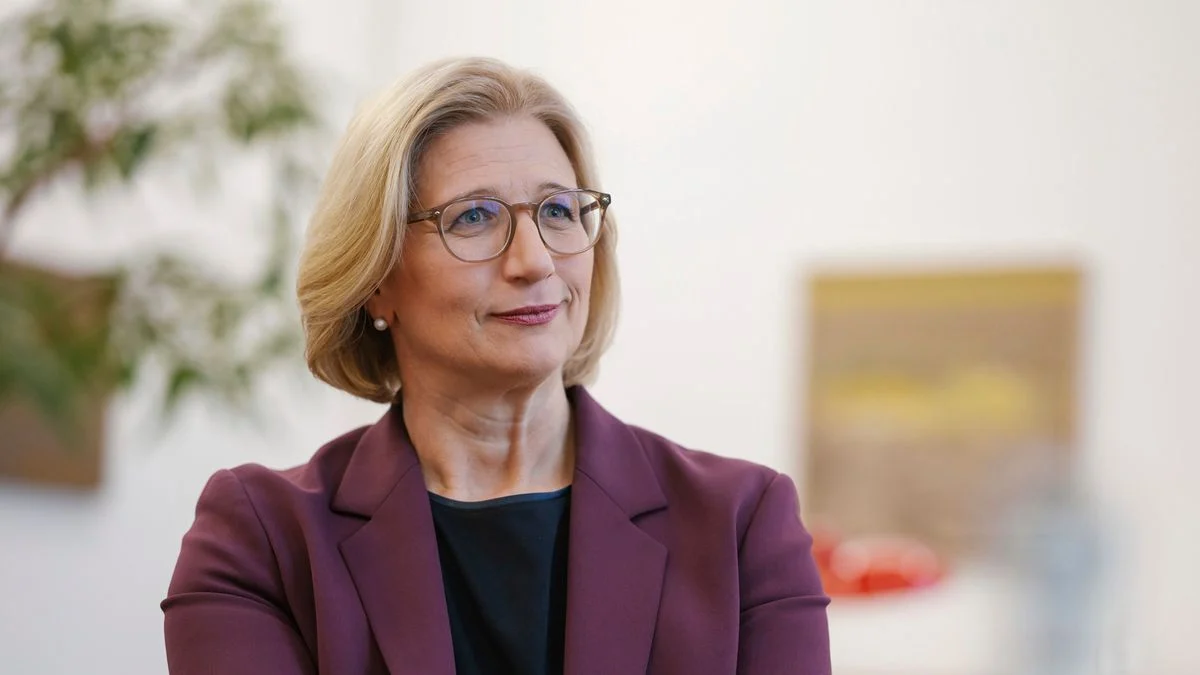
The political maneuvering surrounding the selection process further complicates matters. The CSU, for instance, reportedly has a convincing female candidate in its ranks, Ilse Aigner, a respected figure in Bavarian politics. The CDU also has potential female candidates. However, the article points out that CDU leader Friedrich Merz apparently "failed to look for one in time," remaining silent on the personnel discussion at the CSU party conference. This suggests internal party dynamics and potential strategic missteps are also at play, adding another layer to an already intricate debate about leadership, gender, and political succession. The outcome will not only determine Germany’s next head of state but also reflect the nation’s evolving understanding of leadership and representation.
Other Notable Mentions: Resilience and Rumors
Beyond the major headlines, the week also brought stories of human resilience and celebrity speculation. SPIEGEL+ highlighted the incredible survival story of Carolina Wilga, who endured twelve days alone in the Australian Outback in 2025. Her tale of survival, drinking from puddles and eating leaves, captivated Australia, yet she continues to grapple with memory gaps from the ordeal.
On a lighter note, Formula 1 driver Lewis Hamilton sparked celebrity rumors when he spoke about the joy his girlfriend’s four children bring him, revealing he bought them a dog named Halo. The identity of his girlfriend and the children remains unconfirmed, with speculation pointing to reality TV star Kim Kardashian, who indeed has four children.
Conclusion
From the ethical quandaries of corporate giants navigating geopolitical pressures to the inspiring resurgence of democratic hope in Eastern Europe, and the nuanced domestic debate over gender in high office, the past week has underscored the multifaceted challenges and opportunities defining our contemporary world. These stories, disparate yet interconnected, reflect a global landscape in constant flux, where economic interests clash with ethical responsibilities, where the fight for democracy continues to yield surprising victories, and where societies grapple with fundamental questions of representation and leadership in the pursuit of progress.