Washington D.C. – Less than two years into his second term, President Donald Trump faces a dramatic erosion of support among the very voter groups that propelled him to victory in the 2024 presidential election. Recent polling ahead of the crucial 2026 midterm elections reveals a significant downturn in approval ratings, with disaffected voters, particularly Latinos, young men, and some Black voters, retreating from the "Trump Coalition" that reshaped American politics. This unprecedented shift poses a severe challenge to Republican prospects in the upcoming congressional races and casts a long shadow over the future of the conservative movement.
Main Facts
President Donald Trump, who secured a historic victory in the 2024 presidential election by expanding the Republican base, is now grappling with a substantial decline in public approval. According to comprehensive data from the Pew Research Center, his approval rating has plummeted from 47 percent at the start of his second term in February 2025 to a mere 30 percent in October 2026. This 17-point drop signifies a loss of more than a third of his original support base.
The disillusionment is most pronounced among the demographics Trump successfully courted in 2024: Latino voters, young men, and a segment of Black voters. These groups, historically leaning Democratic, had shifted towards Trump due to concerns over inflation, economic hardship, and, in some cases, his hardline stance on immigration. However, current surveys indicate a dramatic reversal, with these key constituencies now expressing profound disappointment, largely attributed to persistent economic pressures and, notably, the administration’s initiation of an unpopular war against Iran. As the 2026 midterm elections approach, Republicans find themselves at a significant disadvantage, with polls showing Democrats leading in congressional preferences and a strong "anti-Trump" sentiment driving voter mobilization.
Chronology of a Shifting Political Landscape
The journey from a surprising 2024 victory to a precarious 2026 midterm outlook for Donald Trump is marked by several pivotal moments and evolving voter sentiment.
The Unprecedented 2024 Victory
The 2024 presidential election marked a significant turning point in American politics. Donald Trump, running for his second consecutive term, achieved a victory that defied conventional wisdom and surpassed his previous electoral performances. Unlike his 2016 win, where he secured the Electoral College but lost the national popular vote, in 2024, Trump managed to win both. He garnered 77.3 million votes (49.7 percent) against his Democratic opponent, Kamala Harris, who received 75 million votes (48.2 percent). This popular vote victory, a first for Trump, was a testament to his ability to broaden his appeal beyond his traditional Republican base.
The "Trump Coalition" of 2024 was a unique amalgamation. It comprised his fervent base of white working-class voters, particularly those in rural areas and outside major urban centers, as well as conservative and religiously-motivated individuals, especially evangelical Christians, who had consistently supported him. Crucially, however, Trump also made significant inroads into demographics that had historically been staunchly Democratic. He saw notable gains among ethnic minorities, specifically Latinos and, to a lesser extent, Black voters. While these groups remained predominantly Democratic, Trump’s ability to significantly narrow the margin, particularly among male voters within these communities, proved decisive. Furthermore, young men across all racial backgrounds showed an increased propensity to support Trump, drawn by promises of economic revitalization and a more isolationist foreign policy. This expansion into new voter segments, often referred to as "swing voters" or "crossover voters," was the cornerstone of his 2024 success.
The Second Term Begins: Initial Approval
Following his inauguration in January 2025, President Trump commenced his second term with a relatively stable approval rating. Data from the Pew Research Center in February 2025 showed his approval at 47 percent, closely mirroring his popular vote share from the November 2024 election. This initial period suggested that the coalition he had painstakingly built remained largely intact, indicating continued public confidence in his leadership and the policy agenda he had outlined during his campaign. The administration began with a mandate, seemingly reaffirmed by a broader electorate than ever before.
The Erosion of Support: October 2026
Fast forward almost two years, to October 2026, and the political landscape has dramatically shifted. The latest Pew Research Center polls reveal a stark decline in President Trump’s approval, which has now plummeted to just 30 percent. This substantial drop of 17 percentage points in less than two years indicates that over a third of the "Trump Coalition" has become disillusioned and withdrawn its support. The timing of this decline is particularly critical, as it occurs just weeks before the 2026 midterm elections, where control of both the House of Representatives and the Senate is at stake. The polls suggest that the very groups Trump successfully attracted in 2024 are now among the most disappointed, signaling a profound challenge to Republican hopes of maintaining or expanding their congressional majorities.
The War in Iran: A Catalyst for Discontent
A significant factor contributing to this widespread disillusionment, especially among younger voters, appears to be President Trump’s foreign policy decisions. During his 2024 campaign, a key appeal to young men, particularly in industrial states of the Midwest like Michigan, Wisconsin, and Pennsylvania, was his promise to end military interventions and avoid new wars. Many in this demographic, weary of prolonged conflicts, saw Trump as a leader who would prioritize domestic issues over foreign entanglements.
However, contrary to these promises, the Trump administration initiated a highly unpopular new war against Iran. This military action, perceived by many as an unnecessary and costly diversion, directly contradicted the anti-war sentiment that had drawn many younger voters to his banner. The decision to engage in this conflict has been a major point of contention and a primary driver for the sharp decline in support among the 18-29 age group, as well as other segments of his former coalition who valued his non-interventionist rhetoric. This policy reversal has been a significant catalyst in the unraveling of the broad appeal he cultivated in 2024.
Supporting Data: A Deep Dive into Discontent
The data from the Pew Research Center paints a comprehensive picture of the current political sentiment, highlighting the extent of the disaffection with President Trump and its potential ramifications for the 2026 midterm elections.
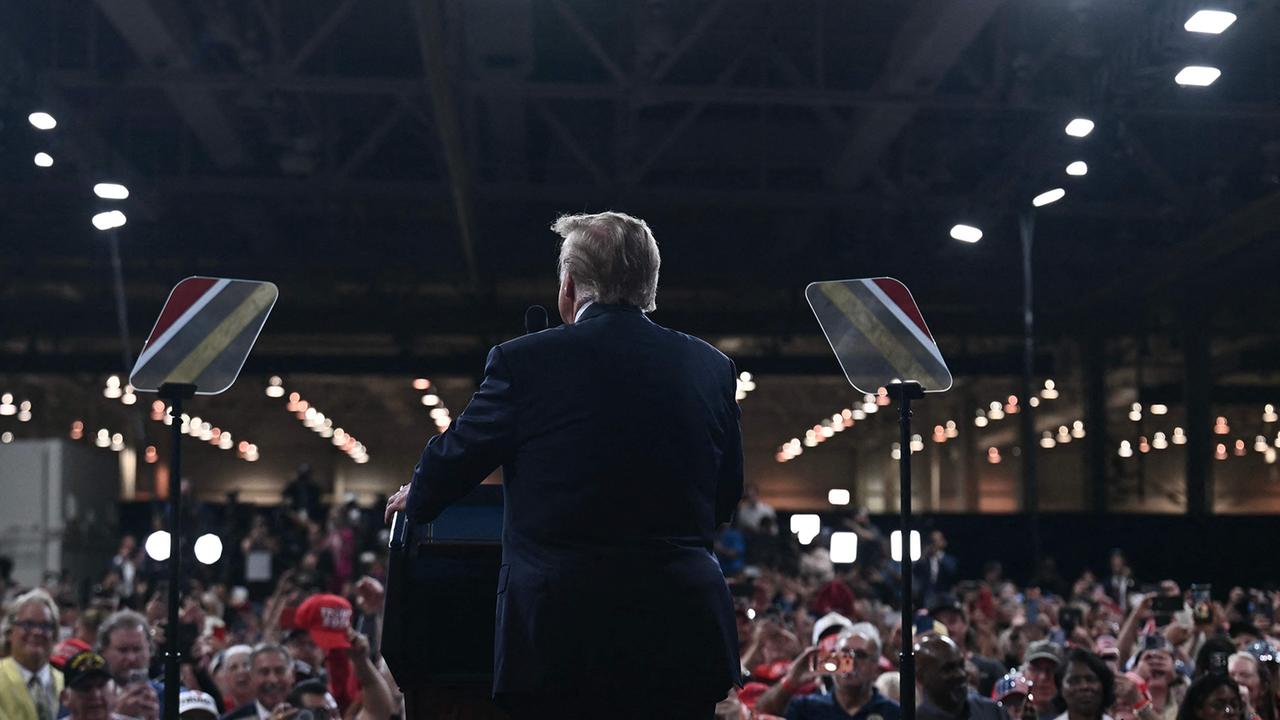
Overall Approval Ratings and Congressional Preference Shift
As noted, President Trump’s approval rating has fallen from 47 percent in February 2025 to 30 percent in October 2026. This sharp decline is directly impacting the Republican Party’s standing in the lead-up to the midterm elections. Current surveys indicate that the Republican Party is now trailing the Democrats significantly in congressional preferences. Only 36 percent of surveyed voters intend to cast their ballot for a Republican candidate in the House of Representatives, while 44 percent favor Democrats. A substantial 15 percent remain undecided, and five percent lean towards other, non-partisan candidates. This gap suggests that Republicans are not only at risk of losing their majority in the House but could also face challenges in retaining control of the Senate.
The "Trump Factor" in Midterms
The Pew survey specifically probed the influence of President Trump on voters’ decisions, revealing a stark polarization. Only 19 percent of respondents view their vote as a direct endorsement of Trump, while a significant 44 percent see it as a vote against him. This highlights how deeply the President remains a polarizing figure, even two years into his second term.
Even among those planning to vote Republican, less than half (48 percent) consider their ballot a vote for Trump. This suggests that a considerable portion of the Republican base is voting for the party or local candidates rather than as an explicit show of support for the President. Conversely, the anti-Trump sentiment is a powerful mobilizer for the opposition: a remarkable 84 percent of those intending to vote Democratic view their decision as a direct vote against President Trump. This level of counter-mobilization indicates that the midterms are, in many ways, shaping up to be a referendum on the President himself.
Disillusionment Across Demographics
The broad nature of the disappointment is evident across all segments of the former Trump Coalition, but its intensity varies significantly. The most pronounced shift away from Trump is observed in the very groups that were key to his 2024 victory – those who came from traditionally Democratic-leaning backgrounds and voted for him for the first time.
The Shifting Latino Vote
The Latino community represents one of the most significant reversals for President Trump. In the 2016 and 2020 elections, Trump faced considerable deficits among Latino voters, trailing Hillary Clinton by 38 percentage points in 2016 and Joe Biden by 25 points in 2020. However, in 2024, he dramatically narrowed this gap, reducing it to just three percentage points and securing nearly half of the Latino vote. This surge was attributed to a combination of factors, including concerns over inflation and economic problems, particularly among self-employed individuals, and a surprising resonance with Trump’s tough stance on migration. Many Latinos, being legal immigrants or descendants of immigrant families who built their lives through hard work, shared a strong aversion to illegal immigration.
This shift was instrumental in Trump’s 2024 victory, helping him flip six states from the Democrats, including Arizona and Nevada, where Latino populations played a decisive role. Yet, this hard-won support has evaporated. Currently, only 24 percent of Latino voters intend to support Republican candidates in the upcoming November elections. The initial hope placed in Trump has given way to profound disappointment, as rising prices persist and family budgets continue to shrink. The economic relief many hoped for has not materialized, leading to a widespread feeling of betrayal. This demographic, though constituting only 11 percent of the 2024 electorate, makes up about 20 percent of the total U.S. population, with a low average age, indicating their growing political influence in future elections.
Young Voters’ Retreat
Another critical demographic that has largely abandoned President Trump is the youth vote. Traditionally, voters aged 18-29 overwhelmingly support Democratic candidates. In 2016, Trump lagged this group by 30 points, but he managed to reduce this deficit to 19 points in 2024. This gain was particularly notable among young men, who, unlike young women who predominantly voted for Kamala Harris, showed increased support for Trump.
These young male voters were crucial to Trump’s success in the Midwest, specifically in states like Michigan, Wisconsin, and Pennsylvania, where significant portions of the white working class had previously turned away from Democrats. Their motivations included concerns about inflation and the broader economic climate, but also, significantly, Trump’s campaign promises to end military interventions and avoid new wars. However, the subsequent initiation of the highly unpopular war against Iran has deeply alienated this segment of the electorate. As a result, only 23 percent of 18-29 year olds now express an intention to support a Republican candidate in the upcoming House elections. The approval among young Trump voters from 2024 has effectively halved, underscoring the severe impact of his foreign policy choices on this key demographic.
Other Minority Groups
While the article focuses on Latinos and young voters, it also briefly mentions that Trump made gains among Black voters in 2024, albeit to a lesser extent than with Latinos. The overall trend of disillusionment suggests that even these smaller shifts away from the Democratic Party are likely reversing, further contributing to the Republican Party’s current electoral challenges.
Official Responses
While the original article does not provide direct quotes from political figures regarding these recent poll numbers, typical responses from the respective parties can be anticipated based on their established rhetoric and political strategies.
The Republican Party’s Stance
In response to such unfavorable polling, Republican strategists and party officials would likely attempt to downplay the significance of the numbers. They might argue that midterm elections are often challenging for the party in power and that these polls do not accurately reflect the enthusiasm of their base. A common approach would be to:
- Focus on the Economy (Selective Framing): Despite widespread economic dissatisfaction, Republicans might highlight specific positive economic indicators or blame persistent inflation on external factors or past Democratic policies. They would reiterate their commitment to fiscal conservatism and deregulation as long-term solutions.
- Emphasize Core Issues: Shift the narrative to issues that resonate strongly with their base, such as national security, border control (even amidst Latino discontent), or cultural debates.
- Question Poll Methodology: Accuse pollsters of bias or inaccurate sampling, a frequent tactic when facing negative results.
- Rally the Base: Call for increased voter turnout among their traditional supporters, emphasizing the importance of holding congressional majorities to support the President’s agenda, or conversely, to act as a check if the President’s popularity is indeed waning.
- Address Internal Divisions (Subtly): Some within the Republican Party might privately express concern but publicly maintain a united front, or subtly suggest that the party needs to broaden its appeal beyond a single personality.
Democratic Counter-Narrative
Democratic leaders would undoubtedly seize upon these poll numbers as definitive proof of President Trump’s failed policies and waning mandate. Their messaging would likely be characterized by:
- Validation of Concerns: Frame the declining support as a vindication of their warnings about Trump’s leadership and policies, particularly regarding the economy and foreign policy.
- Highlighting Policy Failures: Emphasize the persistent economic struggles (inflation, shrinking family budgets) and directly link them to Trump’s economic policies. The unpopular war in Iran would be a central point of attack, especially when targeting young voters and those who value peace.
- Call for Change: Position the midterm elections as an opportunity for voters to course-correct and elect a Democratic majority that will prioritize the needs of the American people over partisan agendas.
- Mobilization: Use the anti-Trump sentiment as a powerful tool to galvanize their own base and encourage undecided voters to support Democratic candidates.
- Optimism for Midterms: Express confidence in winning back control of the House and potentially the Senate, presenting it as a direct response to the public’s dissatisfaction with the current administration.
President Trump’s Own Reaction
President Trump himself would, based on historical patterns, almost certainly dismiss these polls as "fake news" or part of a biased media campaign against him. He would likely:
- Attack the Media and Pollsters: Discredit the sources of the data, portraying them as part of a larger conspiracy to undermine his presidency.
- Reaffirm His Popularity: Insist that his rallies and public appearances demonstrate overwhelming support, regardless of what polls suggest.
- Blame External Factors or Internal Sabotage: Attribute any perceived decline to political opponents, "Deep State" actors, or disloyal elements within his own party.
- Maintain Aggressive Campaigning: Double down on his populist rhetoric and continue to campaign vigorously for Republican candidates, urging voters to remember him even when his name isn’t on the ballot.
Implications
The significant unraveling of President Trump’s 2024 coalition has profound implications for the upcoming 2026 midterm elections, the future trajectory of the Republican Party, and the broader landscape of American politics.
Midterm Election Outlook
The most immediate consequence of these declining approval ratings and shifting voter preferences is the grim outlook for Republicans in the 2026 midterm elections. With Democrats leading by eight percentage points in the generic congressional ballot, the prospects of Republicans maintaining their majority in the House of Representatives appear increasingly dim. Furthermore, the Senate, often seen as more resilient to national waves, could also be vulnerable, especially if the anti-Trump sentiment translates into higher Democratic turnout in key swing states.
A Democratic takeover of one or both chambers of Congress would severely hamper President Trump’s ability to implement his agenda for the latter half of his second term. It would lead to legislative gridlock, increased oversight and investigations, and potentially a more aggressive opposition that could pave the way for a strong Democratic presidential challenge in 2028. The midterms, traditionally a referendum on the sitting president, are shaping up to be a powerful rebuke.
The Future of the Republican Party
The erosion of the "Trump Coalition" raises fundamental questions about the future of the Republican Party. Trump’s 2024 victory was built on his unique ability to mobilize non-traditional Republican voters. If these gains are indeed fleeting, it suggests that the "Trumpism" brand, while powerful, may not be sustainable in the long run without its namesake.
- Identity Crisis: The party faces an identity crisis: should it double down on the populist, nationalist agenda championed by Trump, or attempt to pivot back to a more traditional conservative platform to appeal to disaffected moderates and suburban voters?
- Rise of New Leaders: A poor midterm performance could empower alternative figures within the Republican Party, potentially leading to challenges to Trump’s continued dominance and opening the door for new presidential contenders in 2028 who might seek to unite different factions of the party.
- Long-term Demographic Challenges: The retreat of Latino and young voters highlights the Republican Party’s ongoing struggle to attract diverse and growing segments of the American electorate. Without a robust strategy to appeal to these demographics, the party risks becoming increasingly confined to an aging and predominantly white base.
Trump’s Political Legacy and Future Ambitions
For Donald Trump himself, the data presents a significant challenge to his political legacy and any potential future ambitions. While the article is set in 2026, the question of a possible 2028 presidential run, or his enduring influence as a kingmaker, would be paramount.
- Diminished Influence: A substantial loss of congressional support could diminish his authority and influence within the party, making it harder to dictate its direction or endorse successors effectively.
- Reconsideration of 2028: While Trump is known for his resilience, a catastrophic midterm showing, coupled with plummeting personal approval, might force a reconsideration of any plans for a third presidential campaign in 2028, or at least significantly complicate such a bid.
- Public Perception: The narrative of his "unprecedented" 2024 popular vote victory is being overshadowed by the rapid decline in his second term. This shift in public perception could redefine how his presidency is viewed in history.
The Nature of American Elections
Finally, the phenomenon observed in 2026 challenges long-held assumptions about American elections. For years, political scientists have argued that U.S. elections are primarily decided by voter mobilization rather than a significant number of "swing voters," with only 5-10 percent of the electorate truly open to switching parties. Trump’s 2024 coalition was remarkable precisely because he managed to activate and persuade substantial parts of the traditionally Democratic electorate to switch allegiances and, crucially, mobilized many young first-time voters.
The current data suggests that this "valuable capital" of crossover and newly engaged voters has largely been squandered. This indicates that while Trump possessed a unique ability to temporarily disrupt established voting patterns, the loyalty of these new converts was conditional. When their expectations regarding economic improvement or foreign policy were not met – particularly with the initiation of the war in Iran and persistent inflation – their support proved to be highly fluid. This underscores that even in a polarized environment, specific policy outcomes and perceived broken promises can profoundly impact voter behavior, especially among those who are not ideologically entrenched in either major party. The 2026 midterms are poised to be a powerful reminder that while personality can draw new voters, sustained policy delivery is often required to keep them.