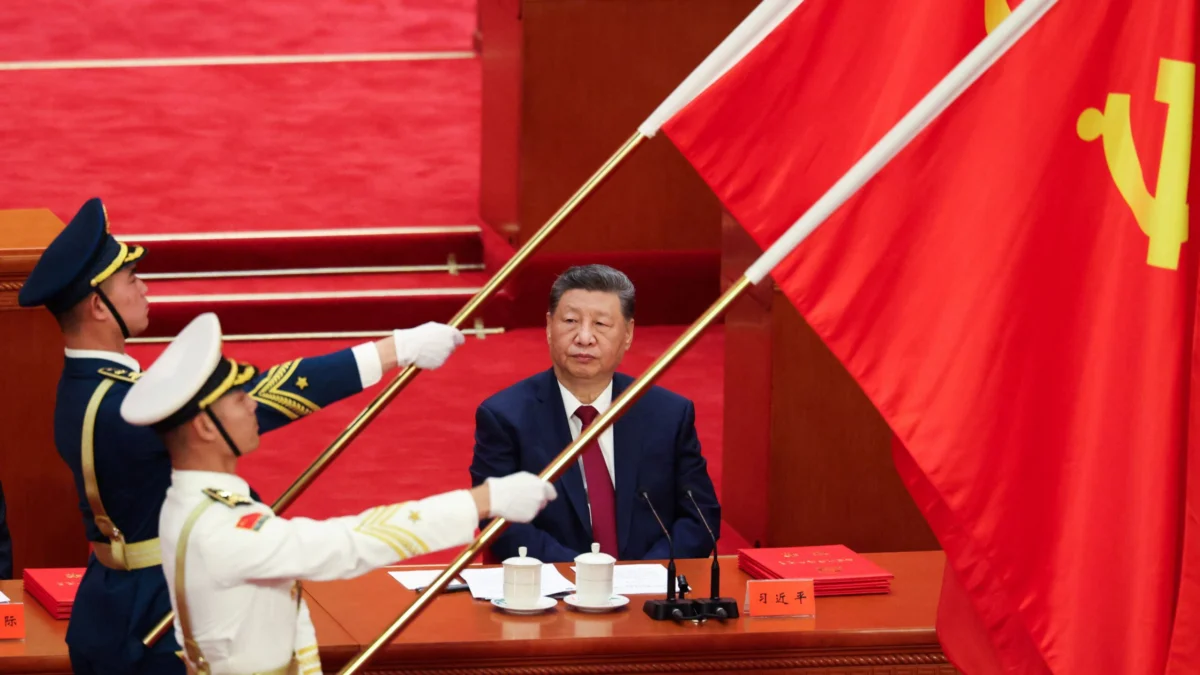
Shanghai. As the Communist Party of China (CPC) Central Committee convenes its closed-door plenum in Beijing this week, the world watches with bated breath. This pivotal gathering is set to lay the groundwork for next autumn’s Party Congress, an event that will determine China’s future political leadership and, most significantly, the trajectory of President Xi Jinping’s unprecedented tenure. The stakes are exceptionally high, with widespread speculation focusing on whether Xi, already considered the most powerful figure in the People’s Republic since its founder Mao Zedong, will seek an unprecedented fourth term. This central question looms large amidst a backdrop of extensive political purges, mounting economic challenges, and a noticeable shift in the Party’s preferred leadership cadre.
The Unfolding Power Dynamics in Beijing
The Central Committee Plenum is far more than a routine meeting; it is a critical juncture where the Party’s elite solidify strategic directions and personnel appointments. For observers of Chinese politics, it offers a rare glimpse into the opaque inner workings of the CPC, providing crucial signals about the country’s future course.
A Critical Plenum Ahead of the Party Congress
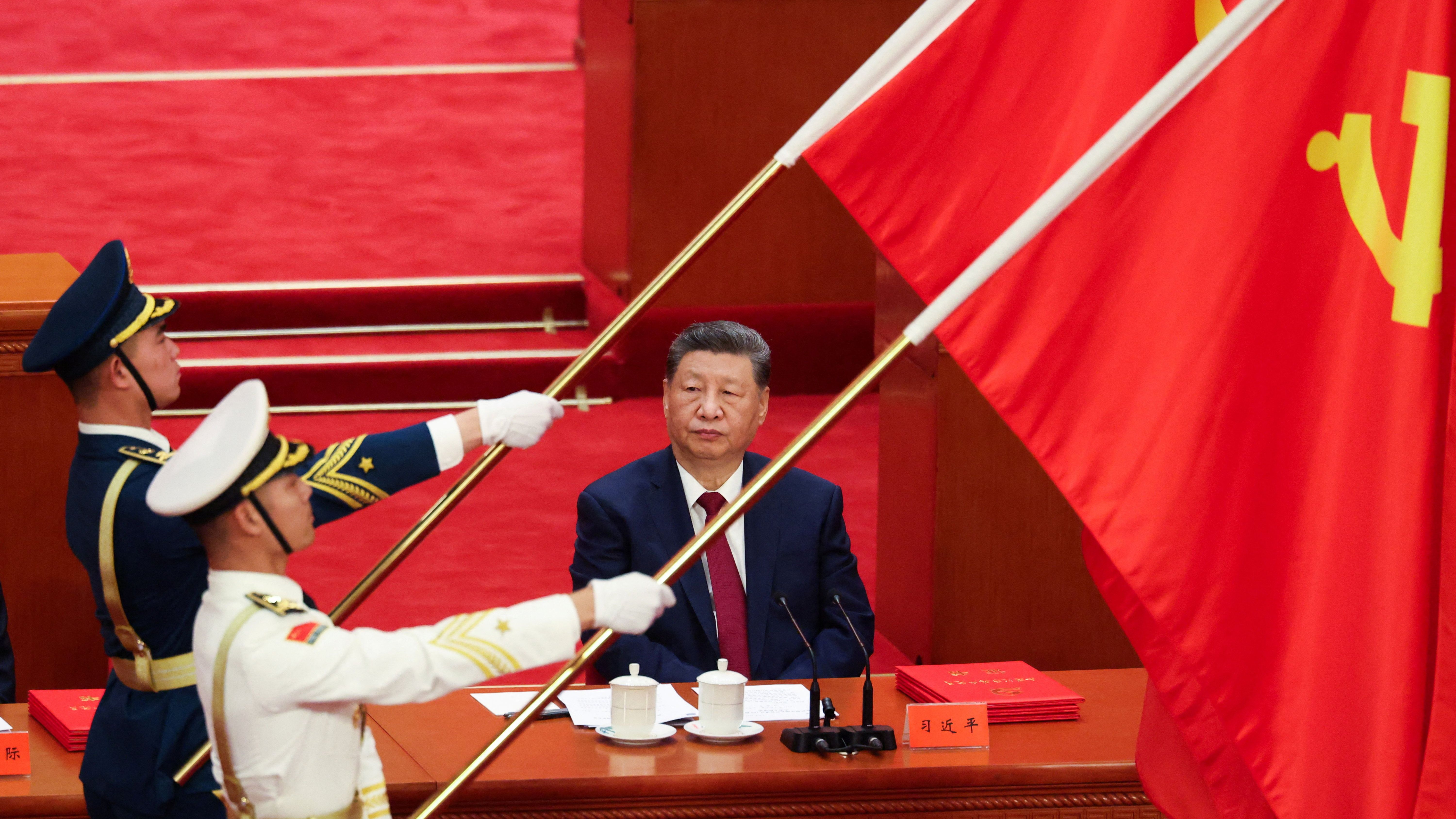
The current plenum serves as a vital preparatory session for the upcoming Party Congress in 2025. These congresses, held every five years, are constitutional necessities for the CPC, where major policy decisions are ratified, and new leadership teams are formally endorsed. However, under Xi Jinping, the traditional dynamics of collective leadership and predictable succession planning have been largely dismantled. Since ascending to power in 2012, Xi has systematically consolidated authority, establishing himself as the "core" leader and embedding his ideology – "Xi Jinping Thought on Socialism with Chinese Characteristics for a New Era" – into the Party and state constitutions. This week’s meeting is therefore less about open debate and more about rubber-stamping decisions already largely made by Xi and his inner circle, ensuring a smooth path to his continued dominance.
Xi Jinping’s Unprecedented Grip on Power
The most pressing question surrounding the plenum is the duration of Xi Jinping’s leadership. In 2018, a constitutional amendment abolished term limits for the presidency, a move widely interpreted as paving the way for Xi to rule indefinitely. This audacious step broke with a decades-long tradition of orderly leadership transitions, established after Mao’s era to prevent the resurgence of cults of personality and unchecked power. Many analysts now view Xi as having amassed power comparable only to Mao, wielding immense control over the Party, state, and military. His sustained "anti-corruption campaign," while officially aimed at rooting out graft, has also served as a potent instrument for eliminating political rivals and ensuring unwavering loyalty throughout the Party ranks. This dual function of the campaign underscores the personalized nature of power consolidation under Xi, where ideological purity and personal allegiance often supersede institutional norms.
Sweeping Personnel Changes and the Erosion of Collective Leadership
The meticulous preparation for the Party Congress extends deeply into personnel management, marked by what many observers describe as extensive "purges" within the Party’s highest echelons. These changes highlight a systematic effort to reshape the leadership landscape, ensuring that key positions are occupied by individuals loyal to Xi.
The Central Committee Purge
According to estimates from the Asia Society Policy Institute (ASPI), the current plenum is expected to see a significant reduction in the number of Central Committee members in attendance. Of the 376 full and alternate members elected in 2022, only an estimated 291 are expected to be present. This stark decline suggests a deliberate thinning of the ranks, with 28 members reportedly having been excluded outright. Dozens more are said to be under investigation or have simply disappeared from public view, a chilling testament to the reach of the Party’s disciplinary mechanisms. While officially framed as part of the ongoing anti-corruption drive, these widespread removals are widely interpreted as a strategic maneuver to eliminate potential dissent, sideline factional rivals, and install a leadership entirely subservient to Xi’s vision. The opacity surrounding these actions further reinforces the authoritarian nature of the regime, where accountability to the public is minimal, and internal power struggles are conducted behind a veil of secrecy.
Reshaping the Military and Key Institutions
The impact of these personnel changes has been particularly pronounced within the People’s Liberation Army (PLA), a critical pillar of the Party’s power. The Central Military Commission (CMC), China’s supreme military command, has seen its structure drastically streamlined. It now reportedly comprises only Xi Jinping himself and his trusted confidant, Zhang Shengmin, indicating an unprecedented level of direct control over the armed forces. Furthermore, prominent military figures such as Zhang Youxia, until recently the highest-ranking general, and Ma Xingrui, the former Party chief of the strategically important Xinjiang region, have been "dismantled" from their positions. These high-profile removals, often without public explanation, underscore Xi’s determination to purge any elements perceived as disloyal or insufficiently aligned with his command. The message is clear: personal connections and unwavering fealty to Xi are paramount for maintaining power, even at the highest levels of the military and regional governance. This consolidation ensures that Xi’s influence permeates every layer of the state apparatus, safeguarding his political legacy and long-term ambitions.
Economic Headwinds and a Strategic Shift in Leadership Cadres
Beyond the political reshuffle, China faces considerable economic challenges, particularly concerning local government finances and corporate debt. These pressures are prompting a significant, albeit subtle, adjustment in the Party’s preferred profile for its leading cadres.
The Looming Debt Crisis
One of the most significant challenges confronting Xi’s administration is the precarious financial state of local governments and the escalating corporate debt. The bursting of the real estate bubble, exemplified by the struggles of giants like Evergrande, has severely curtailed a crucial revenue stream for provinces: the sale of construction land. For years, local authorities relied heavily on these land sales to fund infrastructure projects and public services. With this income drying up, many regions are grappling with immense fiscal deficits and a growing pile of debt.

While official state debt figures for the end of 2025 are projected to be around 69 percent of GDP, the International Monetary Fund (IMF) presents a far more alarming picture. By adopting a broader calculation that includes off-balance-sheet liabilities and local government financing vehicles (LGFVs), the IMF estimates China’s public sector liabilities to be as high as 127 percent of its economic output, as reported by the Finnish think tank Bofit. This vast discrepancy highlights the hidden dangers within China’s financial system. Efforts to implement tax reforms that would provide more stable revenue sources for regions have been slow and fraught with political complexities. Meanwhile, some regions, particularly those outside the favored metropolitan clusters of Beijing, Tianjin, Shanghai, Chongqing, Chengdu, and Guangdong, feel increasingly marginalized and disadvantaged in terms of investment. They are often burdened with additional responsibilities, such as purchasing surplus housing units from the market to mitigate the fallout from the property crisis, further exacerbating their debt woes. This deepening debt problem has, according to observers, severely constrained the state’s capacity to act, impacting economic growth which slowed to 4.5 percent in the third quarter, down from 5 percent in the first quarter. While high-tech industries continue to boom, other sectors are struggling under intense price competition and fierce market saturation.
From Engineers to Financial Experts: A New Breed of Technocrats
In response to these complex economic realities, Beijing appears to be subtly adjusting its cadre selection strategy. Traditionally, China’s political elite has been heavily populated by "Technocrats 2.0" – officials with backgrounds in natural sciences or engineering. These individuals, often boasting long careers in large state-owned enterprises and local politics, were valued for their practical, application-oriented technical expertise, political reliability, and connections to the highest echelons of power. Chinese-born author Dan Wang, in his book "Breakneck: China’s Quest to Engineer the Future," even refers to China as an "engineer state," suggesting a fundamental difference in governance philosophy compared to, say, the lawyer-dominated United States. Past leaders like Jiang Zemin (electrical engineer) and Zhu Rongji (engineer) exemplify this trend, and even Xi Jinping himself studied chemical engineering before embarking on a political career.
However, a noticeable correction is underway, with a growing emphasis on financial experts. This shift is not a complete overhaul but rather an augmentation of the existing technocratic model. For several years, Beijing has actively deployed financial professionals from central banks and regulatory authorities to serve as deputy provincial governors. A 2024 study examining 31 such leaders revealed that 22 held doctorates, and approximately 80 percent were appointed without pre-existing personal or family connections, indicating a meritocratic push for specialized skills.

Zhu Zhongming, the newly appointed Mayor of Shanghai, embodies this emerging type of leader. At 54 years old, he belongs to the "post-1970s" generation now rising through the ranks. Crucially, his background is in finance, having previously served as Vice Finance Minister and gaining administrative experience in financial regulatory bodies and the provinces of Zhejiang and Hunan. Appointments to key positions in Shanghai are often precursors to national leadership roles, as demonstrated by current Premier Li Qiang (former Shanghai Party Secretary) and former Premier Zhu Rongji (former Shanghai Mayor). This strategic pivot towards financial expertise signals Beijing’s recognition of the urgent need for sophisticated economic management and risk mitigation to navigate China’s intricate financial landscape.
Social Dynamics and International Maneuvering
Beyond internal power struggles and economic shifts, China’s leadership faces scrutiny over its social policies and is actively engaged in complex international diplomacy to bolster its global standing.
The Persistent Gender Gap in Chinese Politics
Despite China’s economic advancements and increasing global influence, a glaring disparity persists in its political leadership: the near absence of women in top roles. Political scientist Li Cheng’s 2022 analysis, which examined 187 top officials, found only 20 women among them, with a mere two holding ministerial positions. This stark underrepresentation is not merely a statistical anomaly but reflects a systemic issue within the CPC. The study clearly indicates that the highest echelons of Chinese politics are almost exclusively male-dominated, and critically, President Xi Jinping has shown no inclination to promote women to senior positions, whether at the national or local administrative levels. This trend represents a significant setback for gender equality in Chinese public life and runs counter to global efforts to increase female participation in governance, reinforcing traditional patriarchal structures within the Party’s power framework.

Xi’s Diplomatic Offensive and Global Ambitions
In foreign policy, Xi Jinping appears keen to project an image of global leadership and diplomatic prowess. A recent proposal by Russian President Vladimir Putin for a tripartite summit involving himself, US President Donald Trump, and Xi Jinping on the sidelines of the Asia-Pacific Economic Cooperation (APEC) summit in Shenzhen on November 18-19 has garnered significant attention. The Kremlin has confirmed discussions regarding such a meeting, which would reportedly address the ongoing conflict in Ukraine, notably without direct Ukrainian involvement.
This potential summit, if it materializes, is widely seen in China and abroad as a significant image boost for Xi. Jörg Wuttke, the former long-standing president of the European Chamber of Commerce in China, describes it as an "upgrading of the president," validating Xi’s role as a crucial global player capable of influencing major international conflicts. Such an event would position China as a central mediator, enhancing its diplomatic leverage and potentially challenging the West’s unified stance against Russia. Simultaneously, ongoing trade talks between the European Union and China further underscore Beijing’s strategic efforts to manage its international relationships and economic interests amid increasing geopolitical tensions.
Germany’s Deliberate Engagement: President Steinmeier’s Visit
These complex international dynamics will undoubtedly feature prominently in the discussions during German President Frank-Walter Steinmeier’s state visit to China. Commencing his tour in Anhui province, Steinmeier is scheduled to meet with Premier Li Qiang and President Xi Jinping in Beijing. His visit is significant given Germany’s evolving "de-risking" strategy towards China, aiming to reduce economic dependencies without outright decoupling. As a former Chancellor’s Chief of Staff and Foreign Minister, Steinmeier brings decades of experience in the often-turbulent German-Chinese relationship. His last state visit to China was in 2018, and this trip marks the culmination of his official Asian travels before his presidential term concludes in 2027. His meetings will provide a crucial opportunity for high-level dialogue on pressing issues, including trade imbalances, human rights, regional stability, and the broader geopolitical landscape, reflecting Germany’s delicate balancing act between engagement and strategic caution with its largest trading partner.

Implications for China’s Future and Global Stability
The current developments in Beijing paint a clear picture of a nation at a critical juncture, shaped by the assertive leadership of Xi Jinping and confronted by multifaceted internal and external pressures.
Prolonged Xi Era: Stability vs. Stagnation?
The consensus among experts like Victor Shih of the University of California, San Diego, and Jörg Wuttke is that Xi Jinping is poised for at least another decade in power, possibly with a transitional period for a successor. Shih suggests a "five-year probation period for the successor" would be needed, ideally a functionary born in the late 1970s or early 1980s. However, he notes, "I don’t see such a functionary on the horizon at the moment." Xi, who will be 74 in 2027, shows no signs of relinquishing control. This extended tenure promises continuity in policy and leadership stability, which the Party often prioritizes. Yet, it also raises concerns about potential policy stagnation, reduced internal dynamism, and the stifling of diverse perspectives crucial for navigating increasingly complex challenges. The absence of a clear successor from a younger generation could also create future instability, as the mechanisms for orderly transition become increasingly opaque and personalized.
Navigating Economic and Geopolitical Complexities
China’s leadership under Xi Jinping faces the formidable task of balancing internal economic vulnerabilities, particularly the crushing burden of local government debt and the aftermath of the real estate crisis, with ambitious geopolitical goals. The strategic shift towards prioritizing financial experts in cadre selection underscores the Party’s recognition of the urgency of these economic issues. However, the interplay between political consolidation and effective economic management is fraught with tension. A highly centralized power structure, while efficient in implementing top-down directives, may lack the flexibility and responsiveness required to address grassroots economic problems or foster the kind of innovation that thrives in more open environments.

The global community, including Germany, must contend with a China that is both economically indispensable and increasingly assertive on the world stage. Xi’s diplomatic maneuvers, such as the potential tripartite summit, demonstrate a strategic effort to enhance China’s international standing and project influence. The trajectory of China’s domestic political and economic developments will have profound implications not only for its 1.4 billion citizens but also for the global economy, international relations, and the future of multilateralism.
Only Xi Jinping knows if he contemplates the end of his term. For now, the plenum in Beijing underscores that China remains firmly under his command, poised for an era of sustained, centralized leadership amidst a landscape of profound internal shifts and ambitious global aspirations.