KYIV, Ukraine – October 26, 2023 – In a groundbreaking feat of innovation and unwavering determination, Ukrainian forces have successfully executed a world-first: the drone evacuation of a severely wounded soldier from the perilous front lines. Konstantyn Vlasenko, whose survival story is a harrowing testament to human resilience, was airlifted to safety by a heavy-lift drone after enduring nearly 500 days in isolation following a devastating Russian attack. This unprecedented mission, meticulously planned and flawlessly executed, heralds a new chapter in battlefield medical evacuation and underscores the adaptive ingenuity defining the conflict in Ukraine.
The Unprecedented Rescue
The daring operation, which saw Vlasenko transported more than 16 kilometers at an altitude of 100 meters, represents a paradigm shift in how casualties might be retrieved from areas too dangerous or inaccessible for conventional ground or air vehicles. It offers a glimmer of hope for countless soldiers trapped or severely injured in the brutal realities of modern warfare, where every minute counts in the race against life-threatening wounds.
In an exclusive interview with ARD, Vlasenko recounted his extraordinary ordeal and the moment he realized rescue was finally at hand. His voice, though tinged with the trauma of his experiences, resonated with an undeniable spirit of survival. The images released by his unit, depicting him suspended beneath the drone as it traversed the war-torn landscape, have captivated global attention, illustrating both the horrific cost of conflict and the boundless human capacity for invention in the face of adversity.
Konstantyn Vlasenko’s Harrowing Ordeal
Trapped and Isolated
Konstantyn Vlasenko’s story is one that defies belief. For nearly 500 days, he was marooned in an advanced position on the front lines, a desolate and dangerous no-man’s-land. His nightmare began in February when a brutal Russian drone attack claimed the life of his sole comrade and left him critically wounded. The blast tore through his legs, leaving him incapacitated and utterly isolated amidst the rubble of what was once a fortified structure. The sounds of constant shelling and distant gunfire became the grim soundtrack to his daily existence, a constant reminder of his precarious situation.
His unit, aware of his predicament but unable to reach him through conventional means due to the intense enemy presence and artillery fire, resorted to innovative methods to sustain him. Drones became his lifeline, delivering vital supplies: water to quench his thirst, meager rations to stave off starvation, essential medications to combat infection and pain, and even a treasured book – a small comfort against the overwhelming despair. Each drone drop was a perilous undertaking, navigating contested airspace and risking detection, yet it was a testament to the unbreakable bond between soldiers and the lengths they would go to for a comrade.
The Agony of Self-Preservation
As weeks turned into months, Vlasenko’s injuries worsened. The shrapnel embedded in his left leg led to severe infection and gangrene, slowly but inexorably claiming the limb. In April, faced with the agonizing choice between certain death by sepsis or a desperate act of self-preservation, he made an unimaginable decision. With rudimentary tools and an incomprehensible fortitude, he amputated his own left leg. The pain must have been excruciating, a searing testament to his will to survive.
Just a month later, in May, the right leg, though not as severely damaged by shrapnel, became a hindrance to any potential movement or escape. It was dead weight, impeding his ability to shift positions, seek better shelter, or even reposition himself for comfort. In another act of profound desperation and self-surgery, he amputated his right leg as well. These horrific acts of self-mutilation, carried out alone in the ruins of a building, underscore the brutal choices imposed by the war and Vlasenko’s fierce, almost primal, instinct to cling to life against all odds. His body, though broken, was stubbornly refusing to yield to the inevitable.
A Test of Mental Fortitude
Beyond the physical torment, Vlasenko faced an equally formidable enemy: the psychological toll of extreme isolation and endless waiting. "The time stands still," he confided to ARD. "I think that an hour has passed while I was trying to engrave things into my mind – childhood memories, thoughts of my wife, of my child. While I think an hour has passed, I look at the clock and see that only a minute has gone by. That was the most difficult thing."
This distortion of time, a common symptom of severe trauma and isolation, speaks volumes about the mental battlefield he navigated daily. To fill the void, he clung to memories, to the faces of his loved ones, to the imagined future he desperately hoped to rejoin. He missed crucial life events, most notably the wedding of his only daughter, a regret that weighed heavily on his soul. "As a father, I – excuse the expression – messed everything up," he lamented. "The father went to war and missed his only daughter’s wedding. Nobody could have known I wouldn’t get out of there." His confession lays bare the profound personal sacrifices demanded by war, extending far beyond physical wounds.
The Birth of a Lifesaving Mission
Gurzuv Defence: Innovating Under Fire
As Vlasenko clung to life, his unit, unwilling to abandon him, began to brainstorm radical solutions. Traditional rescue methods were impossible. The front line in this sector was too heavily contested, too saturated with enemy fire and surveillance. It was clear that a conventional approach would only lead to more casualties. The answer lay in the very technology that had, in part, contributed to Vlasenko’s predicament: drones.
They turned to Gurzuv Defence, a Ukrainian defense enterprise that has rapidly emerged as a key innovator in drone technology. Gurzuv Defence is known for producing large, robust unmanned aerial vehicles (UAVs) primarily used for offensive strikes, reconnaissance, and logistical support. These drones, often capable of carrying substantial payloads, had become indispensable tools on the Ukrainian battlefield, delivering everything from ammunition to medical supplies to forward positions. The challenge now was to adapt one for a mission it had never before undertaken: human evacuation.
Orchestrating the Impossible
The planning for Vlasenko’s rescue was an arduous and painstaking process, stretching over two months. Every detail had to be meticulously considered and rehearsed. The weight of the human payload, the drone’s stability, its range, battery life, and most critically, its ability to evade detection and enemy anti-drone measures were all critical factors. Ivan, a spokesman for Gurzuv Defence, highlighted the extreme dangers involved. "We flew over an area where constant combat operations are taking place. Dozens of enemy drones patrol and fly in the air," he explained. The risk of the drone being shot down, or worse, jammed and sent plummeting, was ever-present.
The team had to identify the optimal flight path, minimizing exposure to enemy positions while maximizing speed and efficiency. They needed to coordinate with ground teams to prepare Vlasenko for the pickup, ensuring he could be securely fastened to the drone’s rigging. This wasn’t merely a technical exercise; it was a complex ballet of engineering, tactical planning, and unwavering courage from everyone involved. The lives of both Vlasenko and the drone operators hung in the balance.
The Perilous Flight to Freedom
A Drone’s Journey into Hostile Skies
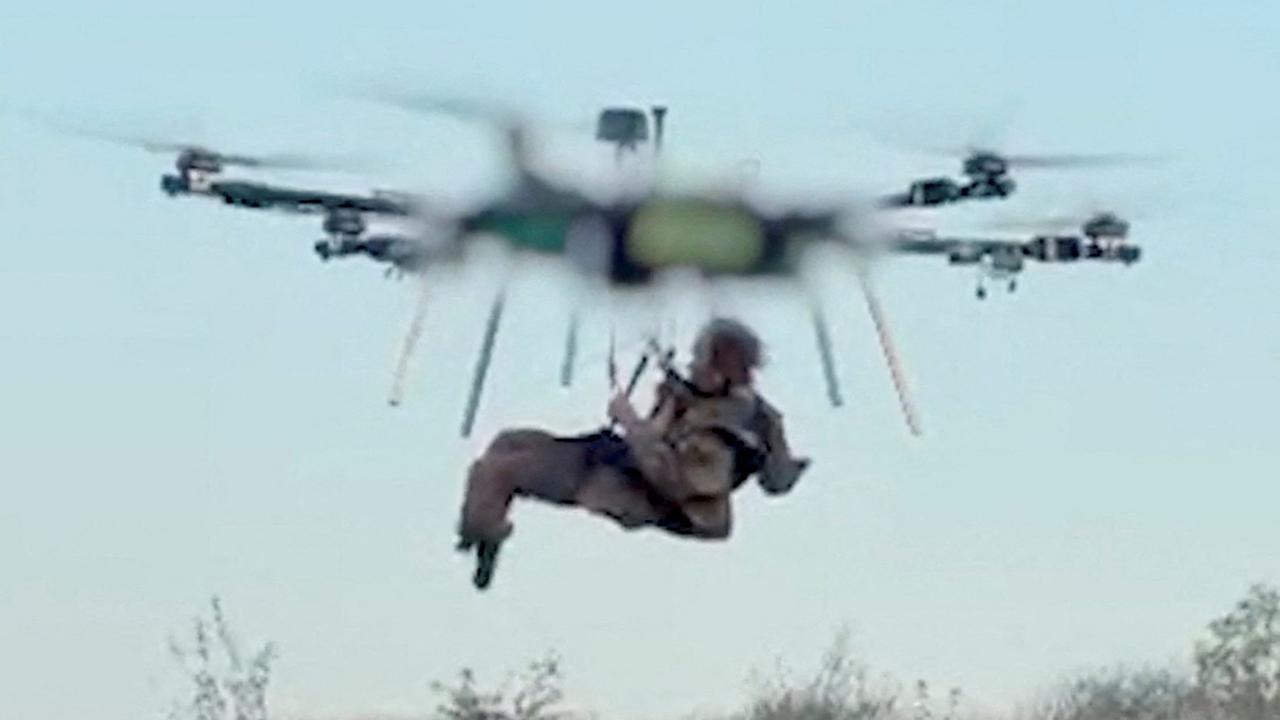
Finally, in October, after weeks of preparation and anticipation, the window for the mission opened. A large Gurzuv Defence drone, specially adapted with a harness system, was launched. Its rotors whirred to life, lifting it silently into the contested skies above the front. The drone operators, working from a secure location, guided the craft with laser-like focus, navigating through a gauntlet of potential threats. The 16-kilometer journey felt like an eternity for those watching, each minute ticking by with agonizing slowness.
The drone had to maintain an altitude of approximately 100 meters, high enough to avoid most small arms fire but low enough for precise control and to minimize exposure to more sophisticated anti-air defenses. The flight path likely involved intricate maneuvers to exploit terrain features and minimize radar signatures, all while dodging the constant threat of enemy surveillance drones and electronic warfare attempts to jam its signals.
Vlasenko’s Airborne Journey
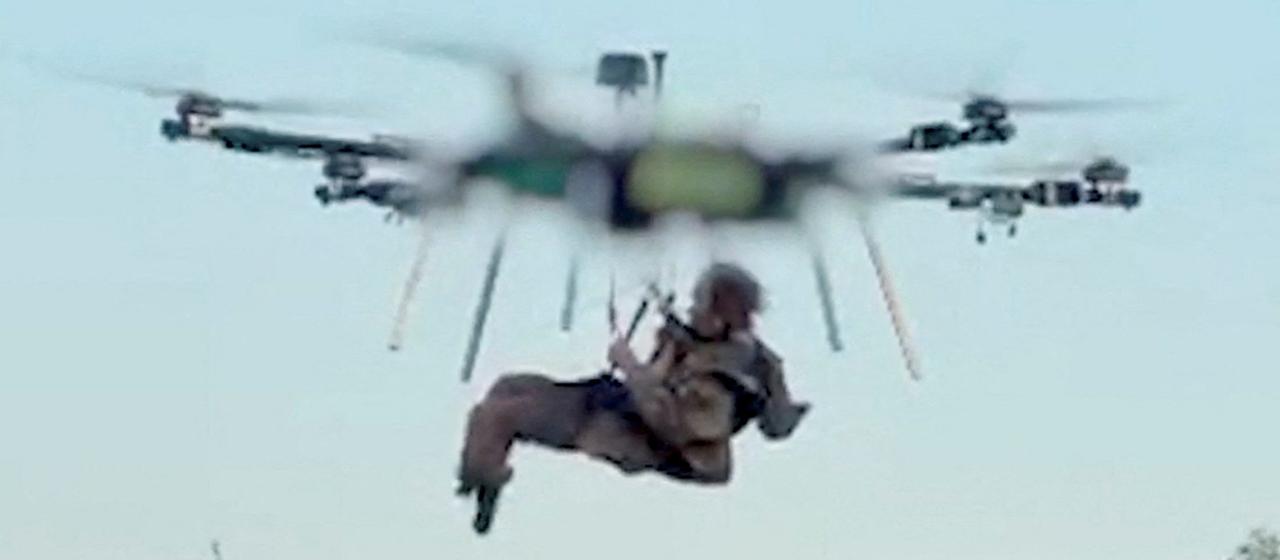
Camera footage from the unit, later released, offered a glimpse into the incredible moment of Vlasenko’s extraction. Attached to the drone by a system of sturdy straps, he hung suspended, a lone figure against the backdrop of a scarred landscape. The journey, though only 15 minutes long, was filled with a mix of terror and profound relief.
"It went well, I could hold on quite well," Vlasenko recounted, his characteristic dark humor shining through. "But when I eventually saw the Oskil River and realized I had to fly over it, I thought to myself: ‘What? I can’t swim. If the Russians shoot me down and I fall in, I won’t get out.’" He then added with a wry smile, "My guys joked: ‘And if you had fallen into the forest, would you have stood up and walked?’" His anecdote underscores the immense personal risk he faced and the gallows humor often found among soldiers. The Oskil River, a significant geographical feature in eastern Ukraine, particularly in the Kharkiv and Luhansk regions, often marks a line of intense combat, making the drone’s crossing even more perilous.
Drones: Reshaping Modern Warfare and Humanitarian Aid
The Evolving Role of UAVs in Ukraine
The war in Ukraine has dramatically accelerated the evolution of drone warfare. From commercial off-the-shelf quadcopters adapted for grenade drops to sophisticated reconnaissance and strike platforms, drones have become ubiquitous on the battlefield. They provide real-time intelligence, guide artillery fire, conduct targeted strikes, and deliver essential supplies. This rescue mission by Gurzuv Defence, however, adds an entirely new dimension to their capabilities. It demonstrates that UAVs are not merely tools of destruction or surveillance but can also serve as instruments of life-saving humanitarian aid in the most extreme circumstances.
The sheer volume of drone usage by both sides has created a complex and dynamic aerial environment, often described as a "drone soup." This makes any aerial operation, especially one involving a human payload, incredibly challenging. The success of Vlasenko’s evacuation speaks volumes about the advancements in Ukrainian drone technology and the skill of its operators, who must contend with constant electronic warfare, GPS jamming, and the threat of enemy interceptor drones.
Redefining Medical Evacuation in Conflict Zones
Traditionally, evacuating wounded soldiers from hot zones has been one of the most dangerous and logistically complex aspects of warfare. The "golden hour" – the critical period following traumatic injury during which prompt medical treatment can significantly improve survival rates – is often unattainable in contested areas. Ground ambulances face mines, artillery fire, and ambushes. Helicopters are vulnerable to anti-aircraft missiles and small arms fire.
The drone evacuation offers a potential solution to this intractable problem. It allows for rapid extraction from areas where human-crewed vehicles cannot safely operate, minimizing risk to rescue personnel while maximizing the chances of survival for the wounded. While not suitable for every scenario, particularly cases requiring immediate medical intervention during transport, it presents a vital new option for retrieving personnel trapped in isolated or heavily fortified enemy-controlled zones. This could fundamentally alter medical evacuation protocols in future conflicts, emphasizing speed, stealth, and reduced human exposure to danger.
Official Acclaim and Future Implications
A Beacon of Hope for Future Missions
The successful rescue of Konstantyn Vlasenko has been met with widespread acclaim, both within Ukraine and internationally. While no direct official statement from the Ministry of Defence was provided in the original text, such an unprecedented achievement would undoubtedly be hailed as a significant milestone. It symbolizes Ukraine’s tenacity and its commitment to leveraging technology to protect its soldiers. The Ukrainian military and defense establishment are likely to view this as a proof of concept, a model to be refined and potentially replicated.
Indeed, Gurzuv Defence has already confirmed that further drone evacuation missions are being planned. This indicates a strategic intent to integrate this capability more broadly into military operations, particularly in sectors of the front where traditional evacuation routes remain too perilous. This could lead to the development of specialized "medevac drones," designed specifically for human transport, with features such as enclosed capsules, enhanced medical support systems, and improved stability. Such advancements could save countless lives and represent a humanitarian breakthrough forged in the crucible of war.
The Long Road to Recovery and Reconciliation
For Konstantyn Vlasenko, the immediate future holds a long and arduous journey of rehabilitation. His extensive injuries, compounded by the psychological trauma of his nearly 500-day ordeal and self-amputations, will require comprehensive medical care, prosthetic fittings, and intensive therapy. Yet, his spirit remains unbroken. He speaks of a desire to make up for lost time with his family, to rediscover the "beautiful moments" he missed. His longing to reconcile with his daughter for missing her wedding speaks to the profound emotional scars that endure long after physical wounds begin to heal.
Vlasenko’s story is more than just a tale of survival; it is a powerful narrative of courage, adaptation, and the relentless pursuit of life. It serves as a stark reminder of the sacrifices made by soldiers on the front lines and the innovative spirit that emerges in times of extreme adversity.
Conclusion: A Testament to Human Ingenuity and Resilience
The drone rescue of Konstantyn Vlasenko stands as a monumental achievement in modern warfare. It is a testament to the boundless human spirit, both in Vlasenko’s incredible will to survive and in the innovative determination of his comrades and the engineers who refused to give up on him. This mission not only highlights the rapidly evolving landscape of military technology but also underscores the profound human element at the heart of conflict – the unwavering commitment to life, even in the darkest of times.
As the conflict in Ukraine continues to push the boundaries of military strategy and technological adaptation, Vlasenko’s flight to freedom will undoubtedly be remembered as a pivotal moment. It symbolizes a new frontier in battlefield logistics and medical evacuation, offering a beacon of hope that even from the deepest pits of despair, rescue can, and will, find a way.