In the fractured political landscape of Israel, where coalitions rise and fall on the razor-thin margins of parliamentary arithmetic, a small, pragmatically-oriented Arab party has emerged as a potential pivot point. Ra’am (the United Arab List), led by Mansour Abbas, finds itself in the improbable position of being a "kingmaker" in a nation deeply scarred by the trauma of October 7, 2023. As Israel approaches its next election, the party is not merely campaigning for seats; it is fighting for the existential integration of its constituents—a community that includes citizens living without electricity, victims of horrific violence, and individuals striving for a future within the state.
The Face of Marginalization: A Knesset Member Without Power
Waleed Al-Hawashleh, a member of the Knesset, personifies the duality of the Arab-Israeli experience. On the floor of the legislature in Jerusalem, he is indistinguishable from his peers: crisp blue shirt, polished demeanor, and the measured cadence of a seasoned politician. Yet, the 100-kilometer commute from his workplace to his home in the Bedouin village of Sa’wa serves as a stark reminder of the inequities he seeks to bridge.
Al-Hawashleh’s roof is a patchwork of solar panels, and his garden is fortified with vertical arrays. "I am a member of the Knesset, yet my home has no connection to the state electricity grid," he notes, gesturing toward the Negev desert. His village, like dozens of others in southern Israel, exists in a state of infrastructure purgatory—officially recognized by the state, yet systematically neglected. This physical reality is the bedrock of Ra’am’s political platform: if the state demands the taxes and civic participation of its 2.1 million Arab citizens, it must provide the basic services afforded to the Jewish majority.
Chronology of a Shifting Identity
The demographic history of Israel’s Arab minority is complex. Comprising approximately 20% of the 10.3 million population, they are largely the descendants of those who remained on their land during the 1948 war. For decades, their political representation was caught between the ideologies of secular nationalism and the rejection of the Israeli state.
The evolution of Ra’am is, in many ways, the history of the Islamic Movement in Israel. Founded in 1971 by Sheikh Abdullah Nimar Darwish, the movement once flirted with militant rhetoric, advocating for a pan-Islamic state across the entirety of the former British Mandate. However, the 1980s and 90s saw a profound shift toward pragmatism. Following a split between the movement’s northern and southern wings—the former choosing boycotts and radicalism, the latter opting for the "Oslo path" of legislative participation—Ra’am was born.
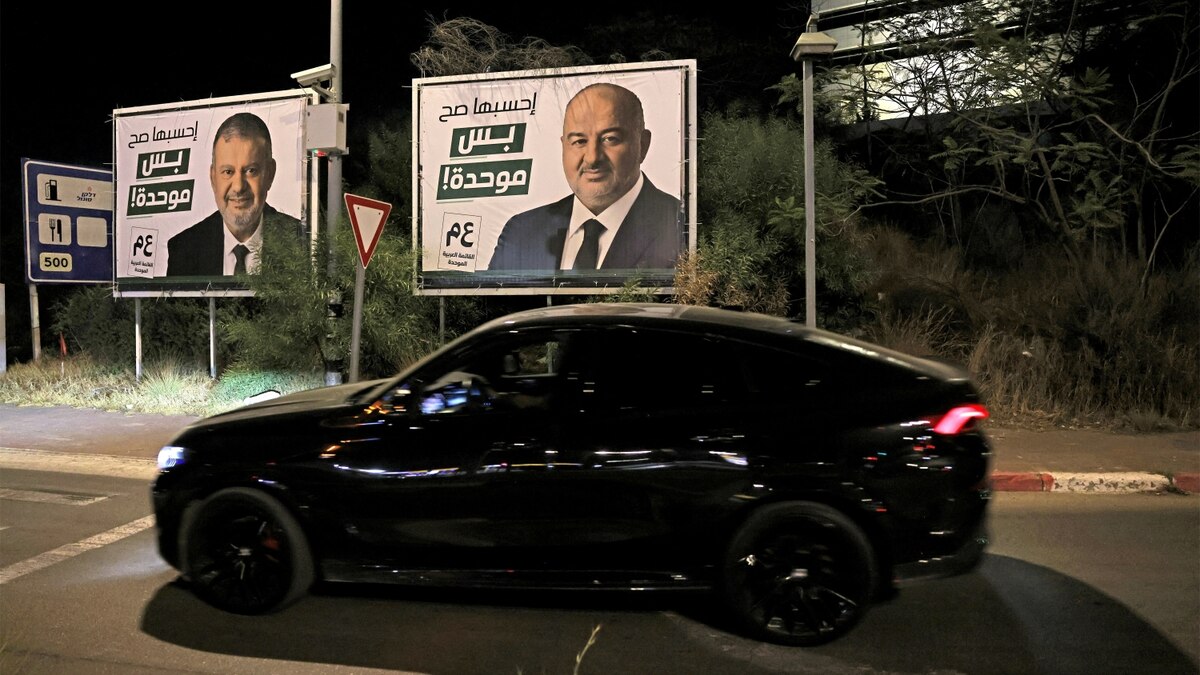
Under the current leadership of Mansour Abbas, the party has pursued a policy of "integrationist pragmatism." In 2021, Ra’am made history by joining the "Government of Change," becoming the first independent Arab party to sit in an Israeli coalition. Though that government eventually fell, the precedent was set: Ra’am had proved that Arab votes could directly influence the distribution of budgets and state policy.
The Trauma of October 7 and the Human Toll
Any discussion of current Israeli politics is now irrevocably defined by the events of October 7, 2023. The Hamas-led massacre, which claimed 1,200 lives and saw 251 hostages dragged into Gaza, left no segment of Israeli society untouched.
The Bedouin community, a key constituency for Ra’am, bore a disproportionate share of the suffering. Twenty-one Bedouin citizens were killed, seven by rocket fire and fourteen in close-quarters attacks. Seven were taken hostage. The tragedy of Hamed Abo Arrar serves as a harrowing microcosm of this trauma. On that morning, Abo Arrar was driving his pregnant wife, Fatma Alttalaqat, and their six-month-old son to his workplace near the Gaza border.
"They saw the headscarf, they saw the Quran in the car, and they opened fire anyway," he recounts. Fatma and their unborn child were killed instantly. Hamed survived by hiding in an electrical box with his son for hours, eventually guiding soldiers to safety to prevent a planned ambush. For his bravery, he was granted permanent residency, but the cost was an irreparable loss. His experience underscores the cruel irony of the conflict: the victims of extremist violence are often those who seek the most to live in peaceful coexistence.
Supporting Data: The Erosion of Trust
The post-October 7 landscape is defined by a collapse in social cohesion. A joint study by Tel Aviv University and the Palestinian Center for Policy and Survey Research (PCPSR) indicates that only one in ten Jewish Israelis currently expresses trust in their Palestinian counterparts. Fear and grief have hardened into a pervasive distrust that threatens to sideline moderate voices like those within Ra’am.

Despite this, Ra’am is doubling down on its strategy of inclusion. Mansour Abbas is actively courting a diverse coalition of voters: liberal Muslims, Christians, Druze, and even Jewish voters who are disillusioned with the right-wing establishment. "We are opening ourselves to everyone," Abbas says. He argues that the issues Ra’am prioritizes—most notably the unchecked epidemic of organized crime within the Arab community—are not merely "Arab issues," but national security imperatives. In 2025, 252 individuals were murdered in the Arab sector, a trend that continued with 144 deaths in the first half of 2026 alone.
Official Responses and Political Strategy
The current right-wing government, led by figures like Itamar Ben Gvir, has adopted a polarizing stance toward the Arab minority. Ben Gvir’s rhetoric, which frequently targets the legitimacy of Arab political participation and supports the demolition of "unauthorized" Bedouin homes, has exacerbated tensions.
Ra’am’s response is to argue that such policies are not just discriminatory, but destructive to Israel’s long-term viability. By fielding a diverse list—including, for the first time, a Jewish candidate, Yoav Segalovich—the party aims to demonstrate that Arab-Jewish cooperation is the only alternative to the cycle of violence. "Right-wing politicians express racist sentiments against the Arab part of society," Abbas asserts. "With Segalovich, we are sending a signal of cooperation."
Implications: The Path to the Knesset
As the election approaches, the math is unforgiving. Neither the opposition block nor the coalition of Benjamin Netanjahu is projected to reach the 61-seat threshold required for a majority. Both camps are short by six to ten seats. This leaves Ra’am in the position of kingmaker—a role that carries both immense potential and existential risk.
The implications of this election are twofold:

- Policy Shifts: Should Ra’am secure the eight seats it targets, it could force the next government to address the housing crisis in the Negev, improve public safety, and potentially launch an independent investigation into the failures of October 7.
- Social Cohesion: A successful, integrationist campaign by Ra’am could serve as a vital antidote to the deepening polarization. Conversely, if the party is ignored or delegitimized, it may signal a permanent fracture in Israeli civil society, potentially pushing the Arab population further toward political apathy or radicalism.
The decision for voters in the Bedouin villages is clear: stay home and face the risk of continued marginalization and home demolitions, or cast a vote that demands inclusion. As Hamed Abo Arrar puts it, "I support every Arab party that wants to participate in the politics of Israel, and I am against every party that threatens the Arab-Jewish partnership."
In the end, the next Israeli government may well be decided by those who, like Al-Hawashleh and Abo Arrar, live on the fringes of the state but are nonetheless determined to define its center. The choice is between a future of entrenched suspicion and one of fragile, but necessary, collaboration. The outcome of the election will not just determine the next Prime Minister; it will determine whether Israel remains a state for all its citizens or descends further into the silos of mutual fear.