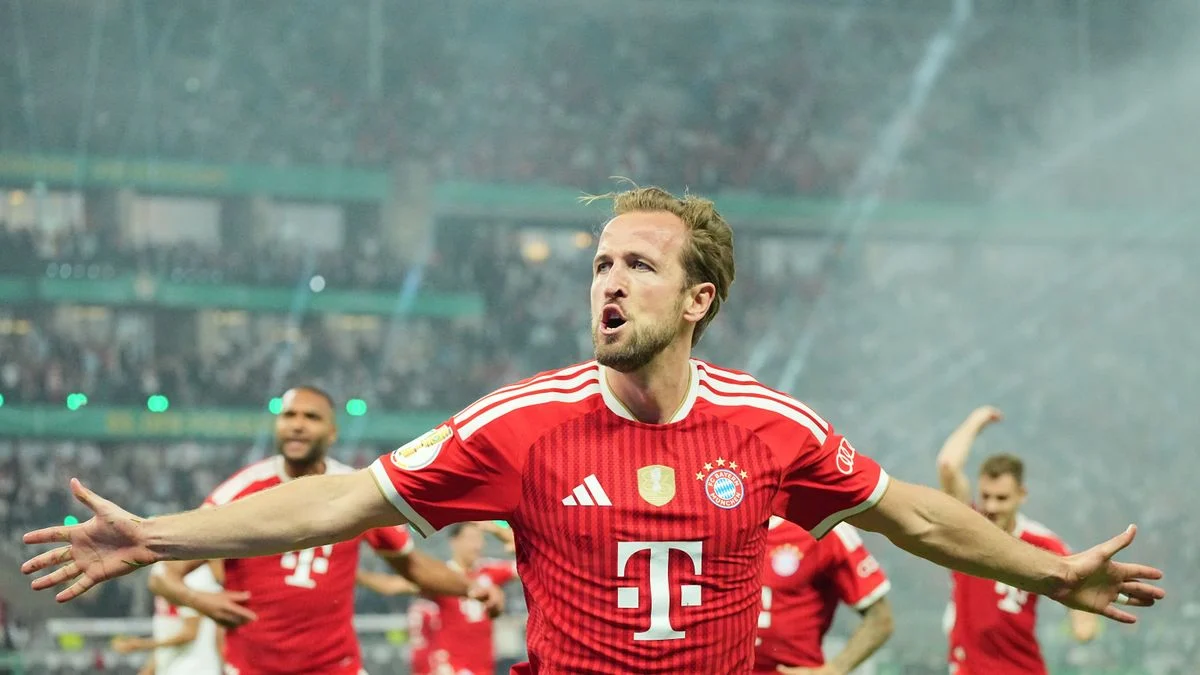
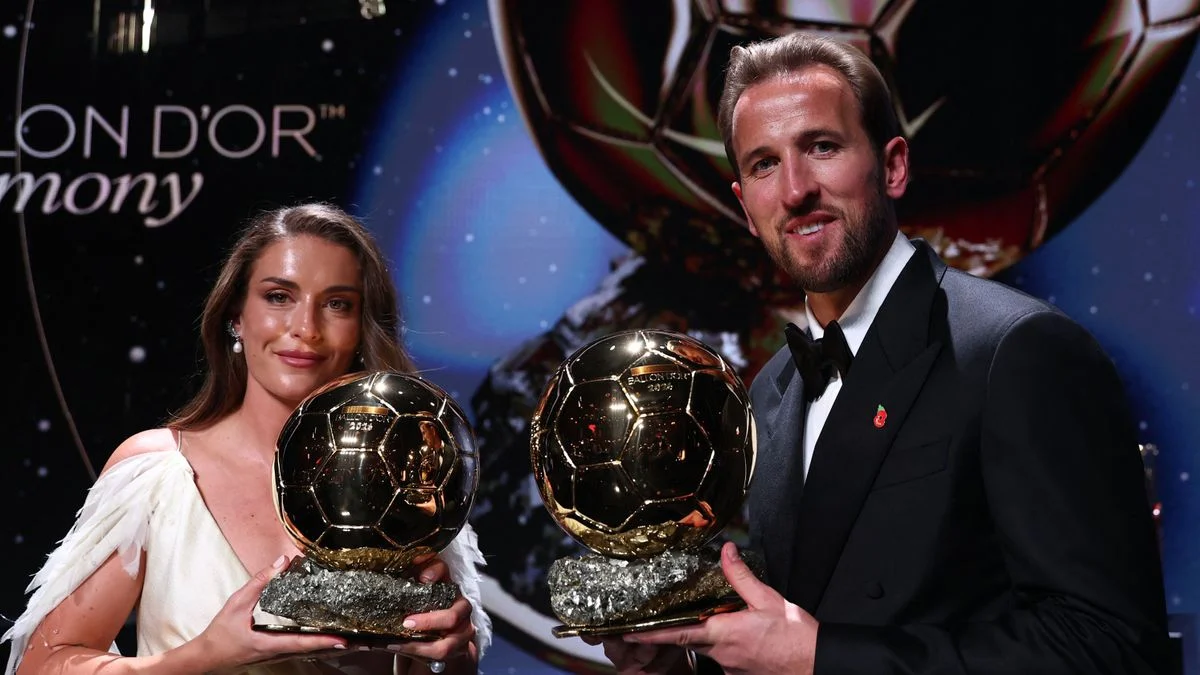
In a historic ceremony held in the heart of London, Harry Kane has been awarded the Ballon d’Or, cementing his status as the premier footballer on the planet. The Bayern Munich marksman’s crowning achievement—driven by a staggering 73-goal contribution across all competitions—marks a significant milestone for both the Bundesliga and English football.
The 70-year history of the Ballon d’Or has seen many legends ascend to the throne, but few have done so with the clinical, relentless efficiency displayed by Harry Kane over the past year. In a gala that for the first time in history moved from its traditional home in Paris to London, the 33-year-old striker stood at the center of the footballing universe, holding aloft the sport’s most coveted individual prize.
Kane’s victory sees him edge out a generation of fierce competition, including the mercurial young sensation Lamine Yamal of FC Barcelona and the explosive Kylian Mbappé of Real Madrid. It is the first time a Bayern Munich player has claimed the trophy since the legendary Karl-Heinz Rummenigge in 1981, and the first time an Englishman has held the title since Michael Owen in 2001.
The Path to the Summit: A Season of Unprecedented Output
While the Ballon d’Or has historically favored players who secure the Champions League or major international silverware, Kane’s triumph serves as a powerful testament to the value of pure, sustained individual brilliance. The 2025/2026 campaign was, by any statistical measure, a masterclass in center-forward play.
The Statistical Breakdown
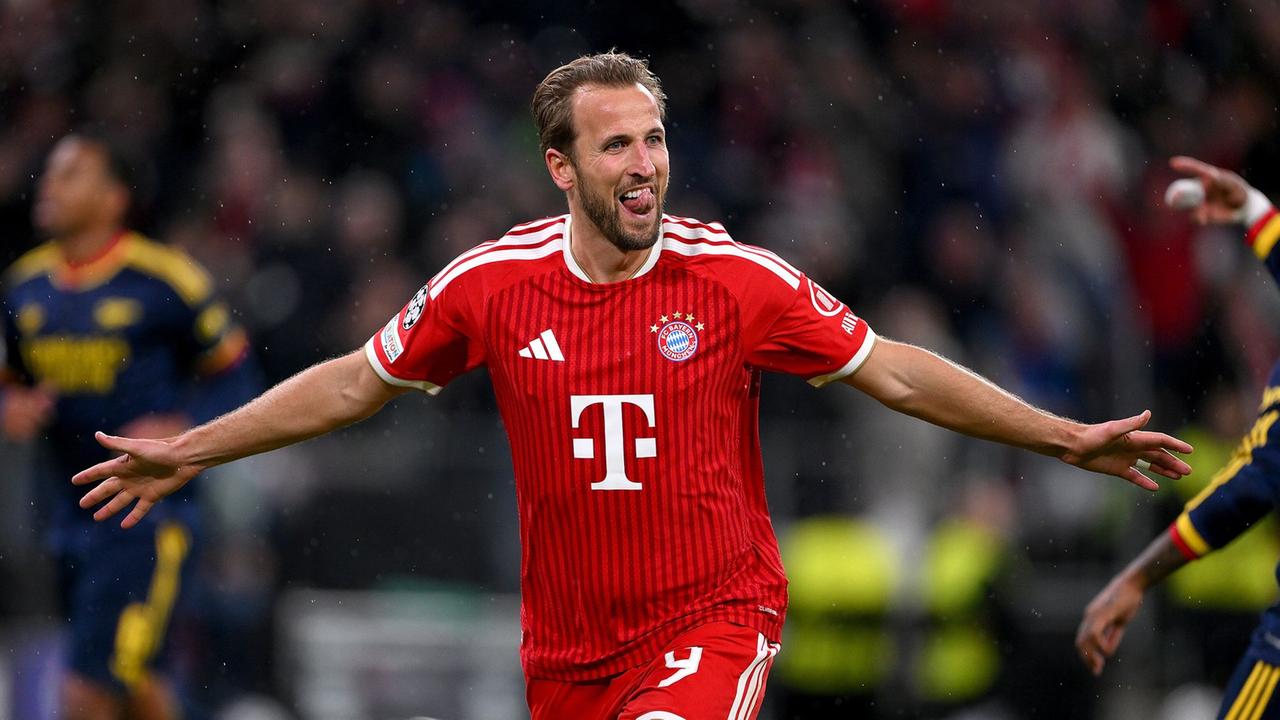
Kane’s numbers were nothing short of astronomical. Across 61 appearances for FC Bayern, he found the back of the net with a frequency that redefined the role of the modern target man. Adding his 12 goals for the England national team, his total tally of 73 goals served as the anchor for his candidacy.
Beyond the raw goal-scoring data, Kane’s influence on the pitch underwent a tactical evolution. Under the tactical framework at Bayern, he became more than just a finisher; he became the pivot around which the entire offensive machine revolved. His ability to drop deep, link play, and provide clinical deliveries made him an indispensable asset, effectively revolutionizing the "number nine" position in the Bundesliga.
The "Gerd Müller" Double
In addition to the primary Ballon d’Or, Kane was also honored with the Gerd Müller Trophy, acknowledging him as the world’s most prolific striker. This double-triumph highlights the consensus among the global footballing media: while team trophies are the product of collective effort, individual excellence of this magnitude demands its own recognition.
A Night of Emotion: "I am Almost Speechless"
The atmosphere at the London ceremony was electric, yet deeply personal for the England captain. As he took to the stage, the usually composed striker was visibly moved.
"Wow," Kane said, his voice trembling as he addressed the audience. "I am almost speechless. I can imagine how difficult it was for the jury this year, as there are so many outstanding players here. To be in London, my home, makes this evening feel like a special omen."
His humble admission reflected the nature of this year’s competition. The race for the Ballon d’Or was widely considered the most tightly contested in a decade. With Lamine Yamal representing the vibrant future of football and Kylian Mbappé continuing his dominance on the grandest stages, Kane’s win was not just a reward for his goal count, but an acknowledgment of his leadership, professionalism, and the sheer consistency he maintained throughout a grueling 60-plus match season.
The Barcelona Hegemony: A Wider Perspective
While the night belonged to Kane, the ceremony served as a powerful reminder of the current dominance of FC Barcelona, particularly in the women’s game and youth development. The Catalan club’s influence on the landscape of global football remains unparalleled.
A Clean Sweep for the Blaugrana
Barcelona’s success was near-total across the auxiliary categories. The club swept the U21 awards with Lamine Yamal and Vicky López, while their women’s team, fresh off a historic quadruple, were named the best team in the world.
The individual accolades for the women’s game were equally dominated by Barcelona connections. Alexia Putellas, now of the London City Lionesses, claimed her third World Player of the Year title, while Cata Coll was honored as the world’s best goalkeeper. This concentration of talent highlights the club’s successful structural investment in both their academy (La Masia) and their professional scouting network.
German Representation
For German football, the night provided a mixed bag. While the Bundesliga celebrated Kane’s win, there was significant recognition for the women’s game. Klara Bühl, the Bayern Munich forward, finished an impressive 12th in the overall ranking, confirming her status as one of the world’s most dangerous wingers. Furthermore, Ann-Katrin Berger’s second-place finish in the Goalkeeper of the Year category underlined the continued strength of German goalkeeping talent on the international stage.
Implications for the Future of the Ballon d’Or
The decision to host the event in London and the resulting winner suggest a shift in how the award is perceived and managed. By collaborating with UEFA, France Football has moved to standardize the voting process and broaden the reach of the ceremony.
The Voting Process
The jury, comprised of top-tier sports journalists from the top 100 footballing nations for the men’s category and the top 50 for the women’s, faces an increasingly difficult task. The modern game is more fragmented; the rise of emerging leagues and the tactical diversification of football mean that "best" is no longer defined solely by Champions League trophies.
The selection of Kane suggests that the voting body has moved toward a model that places higher value on year-long statistical dominance and professional longevity. This creates a fascinating precedent for future years, where players who do not necessarily lift the biggest trophies but perform at an otherworldly level every single week are given a fair chance at the ultimate prize.
The "Kane Era" at Bayern
For FC Bayern Munich, this award is a massive branding victory. In the post-Lewandowski era, many wondered if the club could retain its status as a destination for the world’s elite. Kane’s success proves that the Bavarian giants remain at the pinnacle of the sport. His presence has not only elevated the level of the Bundesliga but has provided the club with a global figurehead whose professional standards have rubbed off on the entire squad.
Conclusion: A Legacy Secured
As the lights dimmed in London, the footballing world turned its attention back to the pitch. The 2026 Ballon d’Or will be remembered as the year of the "Goal King." Harry Kane’s journey—from the youth ranks in England to the pinnacle of German football—has been one of quiet, persistent greatness.
In a sport that often demands spectacle and flash, Kane has thrived through substance. His 73 goals were not just statistics; they were the heartbeat of his teams. By winning the Ballon d’Or, he has silenced the final critics who argued that he could not reach the absolute summit of the individual game without a major international trophy in his cabinet.
Harry Kane is not just the best player in the world by the count of his goals; he is the best because, in a year of transition for global football, he remained the only constant, the only guaranteed excellence, and the only player who could legitimately claim to have carried the weight of a team on his shoulders, week in and week out. The gold is in the right hands.