By Sports Desk | October 27, 2026
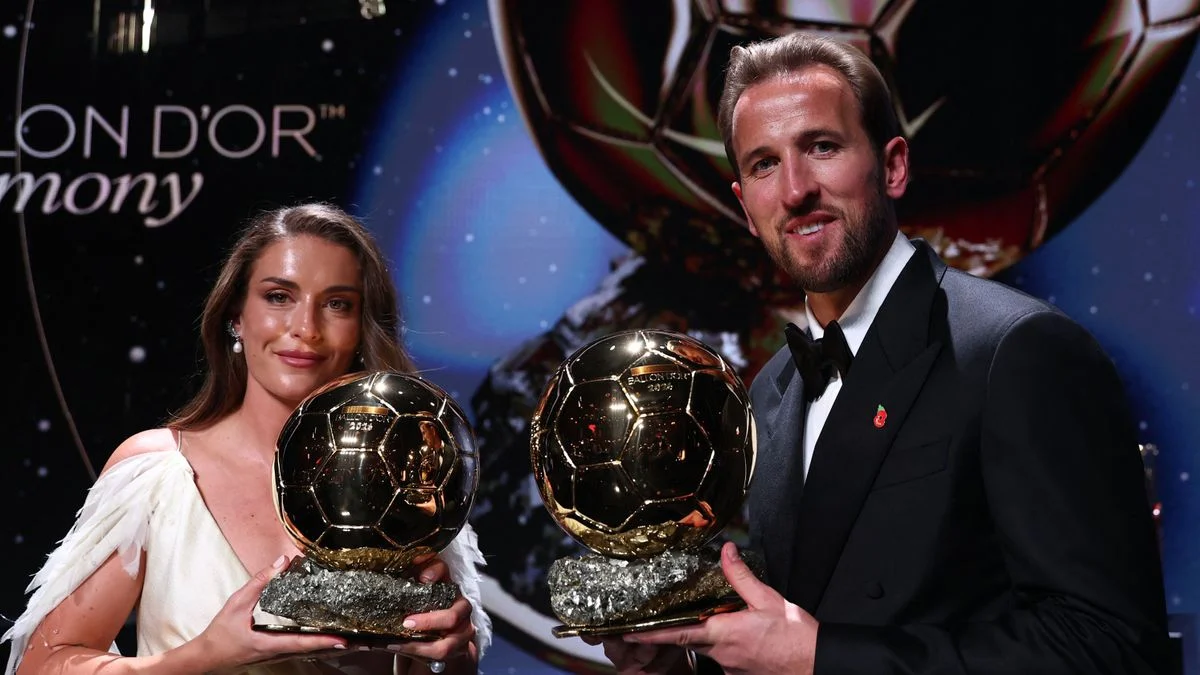
In a glittering ceremony held in the heart of London, Harry Kane, the talismanic captain of the England national team and the spearhead of Bayern Munich, has been crowned the recipient of the 2026 Ballon d’Or. The award, widely considered the most prestigious individual honor in world football, marks a historic milestone for the German Bundesliga, as Kane becomes the first player plying his trade in Germany to lift the trophy since Matthias Sammer in 1996.
This recognition is not merely a testament to goal-scoring prowess; it is a formal acknowledgment of a tactical evolution that has fundamentally altered the role of the modern center-forward. At 33 years old, Kane has silenced critics who once questioned whether his game would age gracefully, proving instead that footballing intelligence is the ultimate equalizer.
The Statistical Masterclass: A Season for the Ages
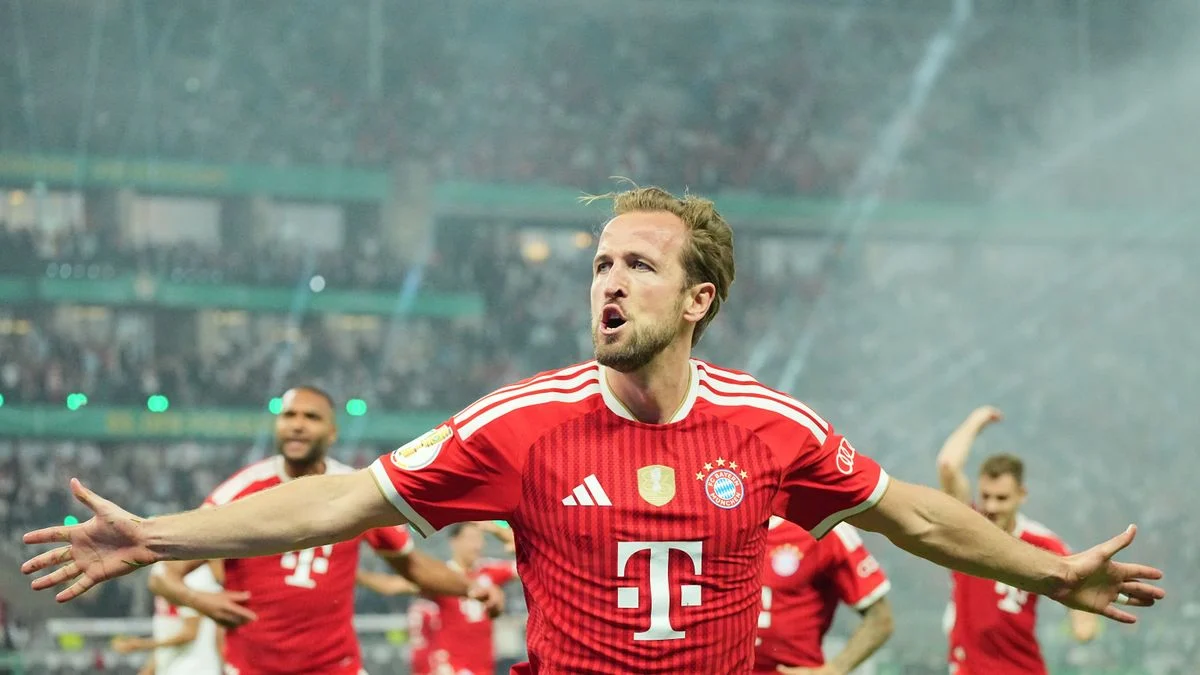
To understand why Kane secured the award, one need only look at the sheer weight of his output. During the 2025/2026 campaign, Kane operated on a level of efficiency that defied conventional metrics. He concluded the season with an staggering 61 goals for Bayern Munich across all competitions, paired with an additional 12 strikes for the Three Lions.
Perhaps most impressively, six of those international goals arrived during the 2026 FIFA World Cup held in North and Central America. While the ultimate trophy eluded him, his presence on the pitch remained a constant, suffocating force for opposing defenses.
The "Deep-Lying Playmaker" Paradigm
The jury for the Ballon d’Or—comprised of football journalists and international coaches—placed significant weight on the manner in which Kane achieved his statistics. Under the tactical guidance of his club coaching staff, Kane transitioned from a traditional "number nine" into a hybrid "number ten."
By dropping deep into the midfield, Kane effectively acted as a playmaker, pulling center-backs out of position and creating space for his teammates to exploit. This "False Nine" evolution, which he pioneered with unparalleled success this season, has been described by tactical analysts as revolutionary. He didn’t just score goals; he orchestrated the entire attacking phase of the game, providing a record-breaking number of assists while simultaneously leading the Bundesliga golden boot race.
A Chronology of the 2026 Campaign
The road to the Ballon d’Or is never linear, and for Kane, the 2026 season was a tapestry of historic highs and agonizing near-misses.
- August–December 2025: Kane begins the domestic season in blistering form, shattering mid-season scoring records in the Bundesliga. His integration into a high-pressing, fluid attacking system under the Bayern manager earns him widespread praise.
- January–March 2026: Kane maintains his fitness despite a grueling schedule. His leadership in the Champions League group stages and early knockout rounds cements Bayern as a tournament favorite.
- April 2026: The Champions League semi-final against Paris Saint-Germain. Despite a heroic effort, Bayern Munich is eliminated in a high-stakes, two-legged thriller. The defeat is a massive blow to the club, but individual observers note that Kane was the standout performer on the pitch, even in a losing effort.
- June–July 2026: The World Cup in North America. England, under the weight of immense expectation, navigates a difficult bracket. Kane scores in crucial moments, including a brace in the quarter-finals.
- July 2026: The semi-final heartbreak against Argentina. A late, tactical gamble by the opposition leads to an Argentine victory. Kane leads England to a third-place finish, securing the Bronze Boot in the process.
- October 2026: The coronation. Following a stellar start to the 2026/27 campaign, the voting committee confirms that Kane’s body of work over the previous twelve months was unparalleled in world football.
Supporting Data: Why Kane Won
The voting criteria for the Ballon d’Or focuses on individual performance, team success, and class/fair play. Critics might point to the lack of a Champions League or World Cup trophy as a deterrent, but the voting panel emphasized the "Total Football" aspect of Kane’s game.
| Metric | Output |
|---|---|
| Total Competitive Goals (25/26) | 73 |
| Assists (Club & Country) | 22 |
| Minutes Played | 4,120 |
| Conversion Rate | 28% |
| Big Chances Created | 34 |
Beyond the raw numbers, the "Eye Test" was definitive. Kane’s ability to transition from a target man to a creative hub meant that even when he wasn’t scoring, he was the most influential player on the pitch. His leadership as the England captain, steering a young squad through the pressures of a World Cup, was also cited as a key factor in his maturity and global standing.
Official Responses and Industry Reaction
The announcement sent shockwaves through the footballing world, sparking debates on the nature of the award.
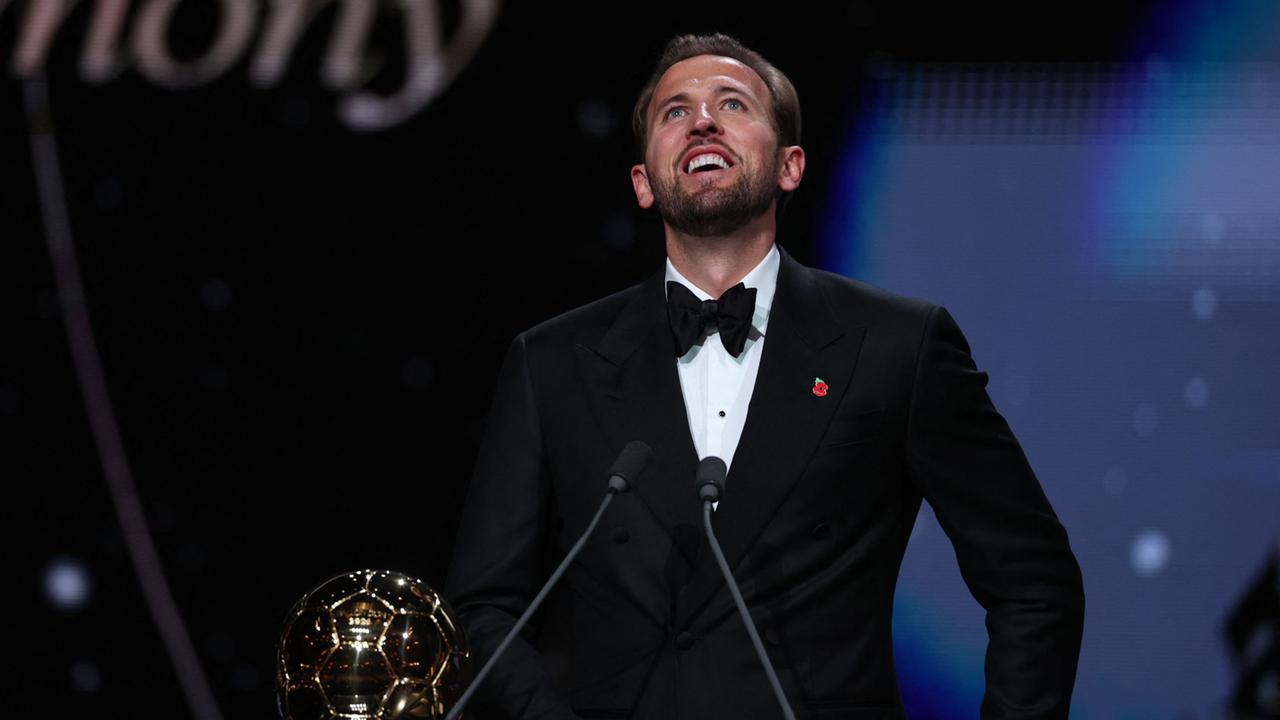
Harry Kane’s Acceptance Speech:
"To be recognized in this way is a dream I’ve held since I was a child. Football is a team game, and this trophy belongs to every teammate, coach, and staff member at Bayern and with the England setup. We fell short of our ultimate team goals this year, but this gives me the fire to go again. I’ve always tried to evolve, to find new ways to help my team, and I’m honored that the experts believe we’ve found something special."
Thomas Tuchel/Managerial Perspective:
"Harry is the rarest of breeds. He has the killer instinct of a striker and the vision of a midfielder. In 2026, we saw a player who solved problems on the pitch before they even materialized. This award is long overdue for a professional of his caliber."
The Critics’ Counterpoint:
While the majority of the footballing world celebrated the decision, some pundits argued that a player without a major continental trophy should not take the top spot. However, the precedent set by past winners like Lionel Messi and Luka Modrić suggests that individual brilliance, when it reaches a level of total dominance, can outweigh team hardware.
Implications: The Legacy of a Modern Icon
The 2026 Ballon d’Or victory for Harry Kane has several significant implications for the future of the sport:
- Validation of the Bundesliga: After years of the Premier League and La Liga dominating the individual award conversation, Kane’s win puts the German top flight back on the map as a destination for the world’s elite talent.
- The Evolution of the Center-Forward: Kane has provided a blueprint for the next generation. Young strikers will no longer be judged solely on their goal tallies; they will be expected to participate in the build-up play, hold the ball under pressure, and act as tactical pivots.
- The Longevity Factor: By winning at 33, Kane proves that the modern athlete’s longevity—aided by advanced sports science, nutrition, and recovery—is changing the traditional "prime" age of a footballer. He has effectively extended the window of "world-class" performance by several years.
- The England Captaincy: Having achieved the highest individual honor, the pressure on Kane to lead England to a major international trophy in the 2028 European Championships will be at an all-time high.
Final Thoughts
Harry Kane’s 2026 Ballon d’Or is not just a trophy; it is a monument to a career defined by perseverance and tactical reinvention. From a young prospect at Tottenham to a global icon in Munich, Kane has navigated the highs and lows of the beautiful game with unwavering consistency. As he stood on that stage in London, holding the golden orb, he wasn’t just holding a personal accolade; he was holding the proof that, in a sport defined by chaos, the most intelligent and versatile minds will always rise to the top.
The football world now looks to the remainder of the season to see if the Ballon d’Or winner can carry this momentum into even greater heights. One thing is certain: the "Kane Era" is far from over.