LONDON — In a ceremony that felt like a bridge between a storied past and a bold, uncertain future, Alexia Putellas stood center stage at the London gala on Monday, October 27, 2026, holding the Ballon d’Or Feminin aloft. It was the third time the Spanish maestro had claimed football’s most prestigious individual honor, a feat that cements her legacy not merely as a player, but as an icon of resilience. After three years of dominance by her compatriot and former Barcelona teammate, Aitana Bonmati, the throne has been reclaimed by the woman who once defined an era.
The Coronation: A Night of Emotional Reflection
The atmosphere at the London event was electric, yet deeply personal for the 32-year-old midfielder. As she took the microphone, the composure that typically defines her playmaking vanished, replaced by visible emotion.
"I don’t know what to say," she whispered, her voice cracking before she turned her focus to the collective. Her speech was less about individual accolades and more an open love letter to the FC Barcelona squad she departed just months prior. "It was an honor to play by your side," she remarked, acknowledging the teammates who facilitated her meteoric return to the top of the sport.
For the football world, this award is not just a recognition of her 2026 statistics; it is a validation of a grueling, multi-year recovery process that saw her go from the pinnacle of the sport to the depths of injury and back again.
A Career Defined by Resilience: The Chronology of a Comeback
The Golden Years (2021–2022)
Before the injury, Putellas was untouchable. Her back-to-back Ballon d’Or wins in 2021 and 2022 were the result of an unprecedented level of control in the center of the pitch. During these years, she was the heartbeat of a Barcelona side that dismantled European opposition with surgical precision. She was the captain, the playmaker, and the primary goal-scoring threat, leading the club to domestic dominance and Champions League glory.
The Injury That Shook the World (2022)
The trajectory of her career was violently interrupted in July 2022. On the eve of the European Championships in England, a catastrophic ACL tear in her left knee sent shockwaves through the sport. For a player whose game relies on explosive turns and precise movement, the diagnosis was potentially career-ending. As she watched from the sidelines, her absence forced a tactical evolution at Barcelona. Enter Aitana Bonmati, who seized the mantle, winning the Ballon d’Or for three consecutive years (2023, 2024, 2025) while Putellas labored through the long, lonely road of rehabilitation.
The Grinding Return (2023–2025)
Returning to the pitch in April 2023 was only the first step. Putellas spent the following two seasons navigating the transition from being the undisputed focal point to a vital, yet evolving, cog in a machine led by Bonmati. There were flashes of her former self, most notably her clinching goal in the 2024 Champions League final against Olympique Lyon. However, the effortless dominance of her early career remained elusive—until the 2025/26 campaign.
The Renaissance (2026)
The 2025/26 season proved to be the greatest of her life. In a final act of service for Barcelona, Putellas was untouchable. In 11 Champions League appearances, she tallied seven goals and seven assists, leading the team to a 4-0 demolition of Lyon in the Oslo final. UEFA’s recognition of her as the Player of the Season was the prelude to this week’s Ballon d’Or victory.
Supporting Data: Why the Jury Favored Putellas
The voting panel, composed of international journalists, favored Putellas for her dual ability to dictate play and deliver in high-stakes environments. While many top-tier midfielders focus on defensive structure or final-third penetration, Putellas remains a rare hybrid.
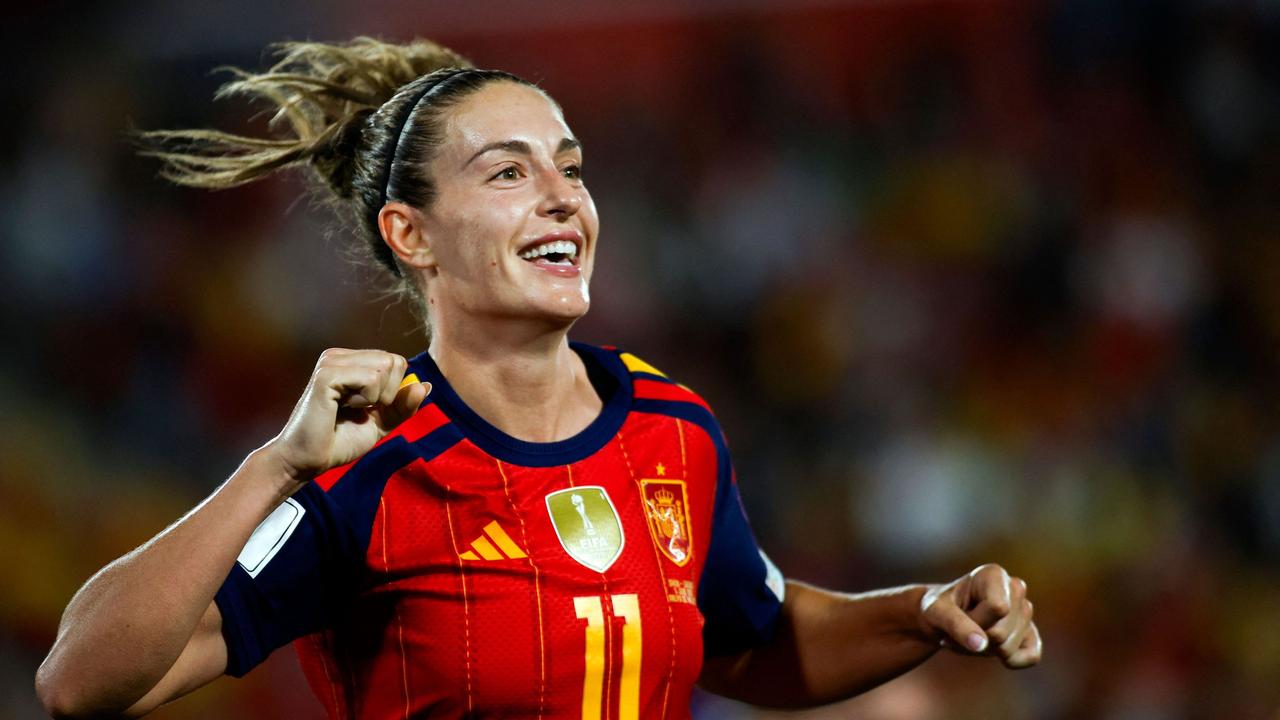
Statistical Breakdown (2025/26 Season):
- Champions League: 7 goals, 7 assists (leading all players).
- Club Honors: Spanish League title, Copa de la Reina, Supercopa, and UEFA Women’s Champions League.
- Total Career Goals for Barcelona: 232, a figure that stands as a testament to her longevity and consistency.
The dominance of FC Barcelona was further highlighted by the evening’s other awards. From Vicky Lopez winning the U21 award to Cata Coll being named Goalkeeper of the Year and Pere Romeu taking Coach of the Year, the club’s institutional excellence provided the perfect backdrop for Putellas to end her 14-year tenure in Catalonia on the highest possible note.
The London Transition: A New Chapter
Perhaps the most intriguing subplot of this award is that Putellas received it while representing a new crest. Following the 2026 season, she made the shocking decision to leave the comfort of Barcelona for the London City Lionesses in the English Women’s Super League (WSL).
Analysts were initially skeptical of the move, questioning whether a player of her pedigree would find the same tactical alignment in England. However, her early form suggests she is treating the move not as a retirement tour, but as a challenge to conquer a new league. By winning the Ballon d’Or while transitioning to a new environment, she has effectively silenced any critics who argued that her success was solely a product of the Barcelona system.
Implications for the Future of Women’s Football
The rivalry between Putellas and Bonmati has been the defining narrative of the last six years. With Bonmati having enjoyed three years of absolute supremacy, this win for Putellas restores balance to the hierarchy of world football.
What This Means for the Sport:
- The Standard of Excellence: The fact that both women hail from the same nation and have shared the same club locker room underscores the absolute dominance of the Spanish pipeline in developing technical, intelligent midfielders.
- The "Post-Injury" Era: Putellas has become the blueprint for elite recovery. Her success will undoubtedly change the way clubs manage ACL injuries, moving away from "rushing back" and toward a more holistic, performance-oriented recovery that allows for the adaptation of a player’s game as they age.
- Shifting Power Dynamics: With Putellas in London and the Barcelona squad undergoing a period of transition, the landscape of European club football is set to become more competitive. The WSL will likely see a surge in global interest as a direct result of her presence, potentially shifting the epicenter of women’s club football away from the Iberian Peninsula.
Official Reactions
The footballing community was quick to praise the winner. Barcelona issued a heartfelt statement via social media, declaring, "Alexia is the heartbeat of our history. Her third Ballon d’Or is a celebration of her spirit."
Aitana Bonmati, who was present at the ceremony to hand over the trophy, showed immense grace in defeat. "Alexia paved the way for all of us," she said during a press conference. "Seeing her back at this level is not a surprise to those of us who know how she works. She is the reference point."
Conclusion: A Legacy Secured
As the lights dimmed in the London venue, the conversation was already shifting toward the 2027 season. Can Putellas replicate this form in the physical, high-intensity environment of the English league? Can she lead the Lionesses to European contention?
Regardless of what happens next, the 2026 Ballon d’Or serves as a definitive punctuation mark on a historic career. Alexia Putellas has proven that while talent may get a player to the top, it is the refusal to accept the finality of a decline that makes a legend. She returns to the throne not as the same player she was in 2021, but as a more hardened, tactical, and experienced version of herself—a queen who knows that every crown is earned, and even after being lost, can be won again.