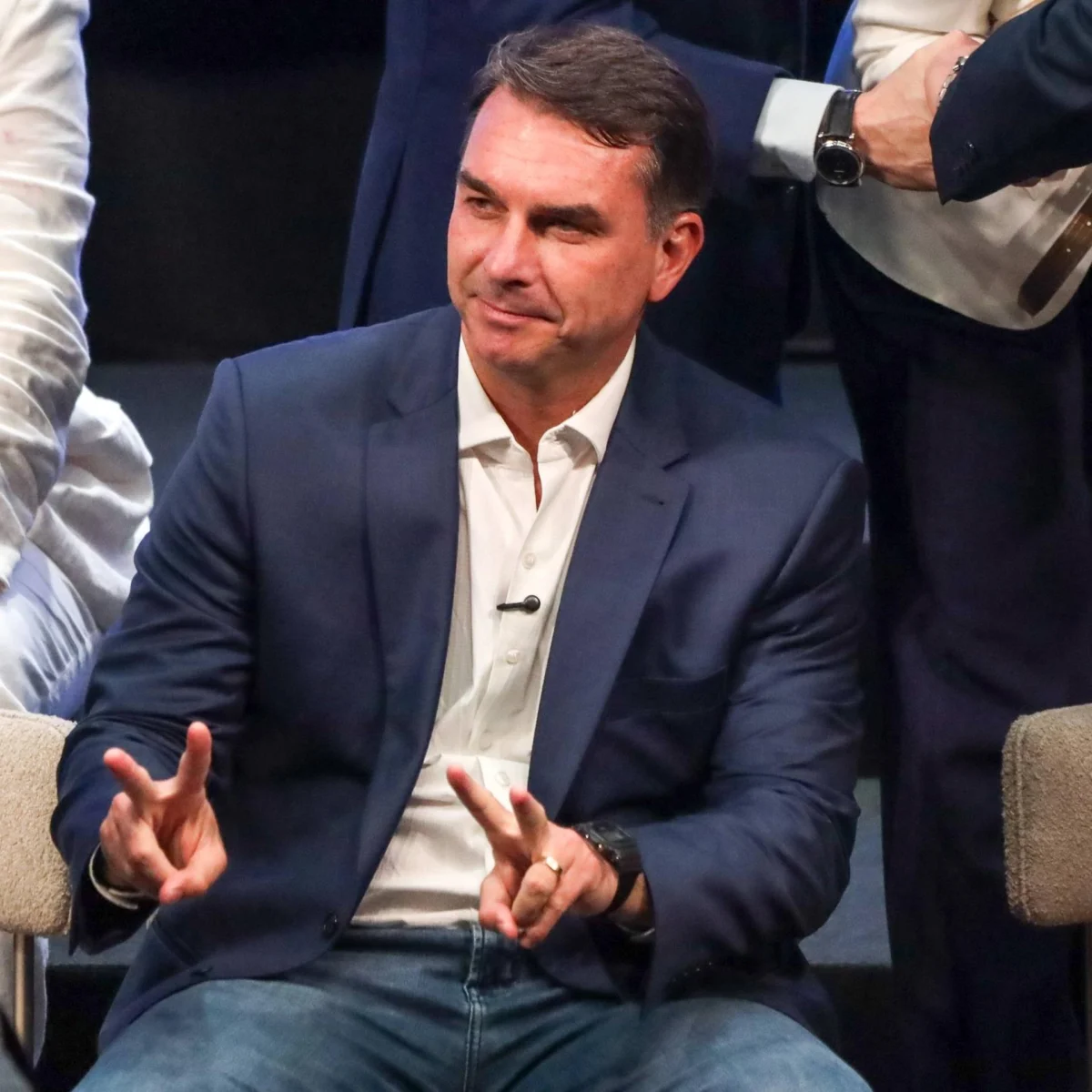
Brasília, Brazil – October 27, 2026 – In a dramatic turn of events following Brazil’s contentious presidential runoff election, defeated candidate Flávio Bolsonaro has been prohibited from leaving the country. The order, issued by the nation’s Supreme Court, mandates the surrender of his passports as authorities pursue an investigation into alleged money laundering activities, reportedly linked to sports betting schemes. The 45-year-old right-wing politician, who narrowly lost Sunday’s election to incumbent left-wing President Luiz Inácio Lula da Silva, has vehemently dismissed the travel ban as a politically motivated act of intimidation, asserting he had no intention of departing Brazilian soil.
The judicial injunction against Bolsonaro adds a layer of unprecedented complexity to an already fraught post-election landscape. Bolsonaro has, thus far, refused to concede the election results and has signaled his intent to challenge the outcome, claiming irregularities. These claims have found an unlikely echo in former U.S. President Donald Trump, who publicly branded the Brazilian election as "manipulated" without providing any verifiable evidence to support his assertions. The unfolding legal drama and the lingering specter of election denial threaten to plunge Brazil into a period of heightened political instability, challenging the resilience of its democratic institutions and the rule of law.
Main Facts
The core of the unfolding crisis centers on a judicial order that effectively grounds Flávio Bolsonaro, a prominent figure in Brazil’s conservative political movement and son of former President Jair Bolsonaro. The Brazilian Supreme Court, acting on a request from federal prosecutors, issued a travel ban against him, citing an ongoing investigation into alleged financial improprieties.
The allegations against Bolsonaro primarily revolve around suspicions of money laundering. While specific details remain under wraps, initial reports indicate a connection to operations involving sports betting. This particular sector in Brazil has recently undergone significant regulatory scrutiny, making it a fertile ground for investigations into illicit financial flows. The Supreme Court’s decision to confiscate Bolsonaro’s passports underscores the seriousness with which judicial authorities are treating these allegations, suggesting a perceived flight risk or concern about potential obstruction of justice.
Bolsonaro, a senator representing the state of Rio de Janeiro and a key architect of his family’s political machine, swiftly condemned the travel ban. In a public statement, he characterized the measure as an "attempt to intimidate" and a "political persecution," aimed at silencing opposition voices and undermining the democratic process. He maintained that he had no plans to leave Brazil, implying the court order was an unnecessary and punitive action.
This legal entanglement comes at a critical juncture for Brazil. Just days prior, Bolsonaro faced a crushing defeat in the presidential runoff election, where he sought to unseat President Lula da Silva. The electoral court officially declared Lula the winner with a decisive margin. However, Flávio Bolsonaro, echoing sentiments often expressed by his father, has refused to acknowledge the results, alleging widespread manipulation without presenting concrete evidence. His stance has been bolstered by former U.S. President Donald Trump, whose vocal support for Bolsonaro’s claims of a rigged election draws parallels to his own post-2020 election conduct, further fueling global concerns about the integrity of democratic processes.
The dual challenges—a serious criminal investigation and a contentious refusal to concede an election—place immense pressure on Brazil’s judiciary, electoral authorities, and the incoming administration, setting the stage for a period of profound uncertainty.
Chronology of Events
The events leading to Flávio Bolsonaro’s travel ban and his refusal to concede are deeply rooted in Brazil’s recent political history and a highly polarized electoral cycle.
The Run-up to the Election: A Nation Divided
The 2026 presidential election campaign was characterized by intense ideological clashes and deep societal divisions. Flávio Bolsonaro, running on a platform of conservative values, economic liberalization, and law and order, sought to capitalize on the legacy of his father, Jair Bolsonaro, who had previously held the presidency. His campaign frequently targeted perceived corruption within the Workers’ Party (PT) and criticized the policies of the previous Lula administration. The political climate was already charged with accusations and counter-accusations, particularly concerning the integrity of Brazil’s electronic voting system, which Flávio and his allies had often questioned without providing substantive proof.
Election Day and Initial Results: Lula’s Victory and Bolsonaro’s Defeat
On Sunday, October 25, 2026, millions of Brazilians headed to the polls for the runoff election. The contest was fiercely fought, reflecting the stark choice between Flávio Bolsonaro’s right-wing populism and Lula da Silva’s left-wing social democracy. As the votes were tallied, it quickly became clear that Lula da Silva had secured a victory, with the Superior Electoral Court (TSE) officially announcing him as the duly elected President of Brazil. The margin, while not a landslide, was sufficiently clear to avoid any immediate disputes over vote counts. Flávio Bolsonaro’s defeat marked a significant setback for the Bolsonaro political dynasty, ending their immediate hopes of reclaiming the presidential palace.
The Refusal to Concede: Seeds of Doubt
In the immediate aftermath of the election, contrary to established democratic norms, Flávio Bolsonaro did not issue a concession speech. Instead, he and his campaign began to echo familiar refrains of electoral fraud and manipulation. While not providing specific evidence, his team hinted at systemic issues with the voting machines and the counting process, suggesting that the results did not accurately reflect the will of the people. This refusal to concede immediately raised concerns among political observers both domestically and internationally, recalling similar events in other democracies where defeated candidates have challenged legitimate election outcomes.
Trump’s Intervention: An International Echo
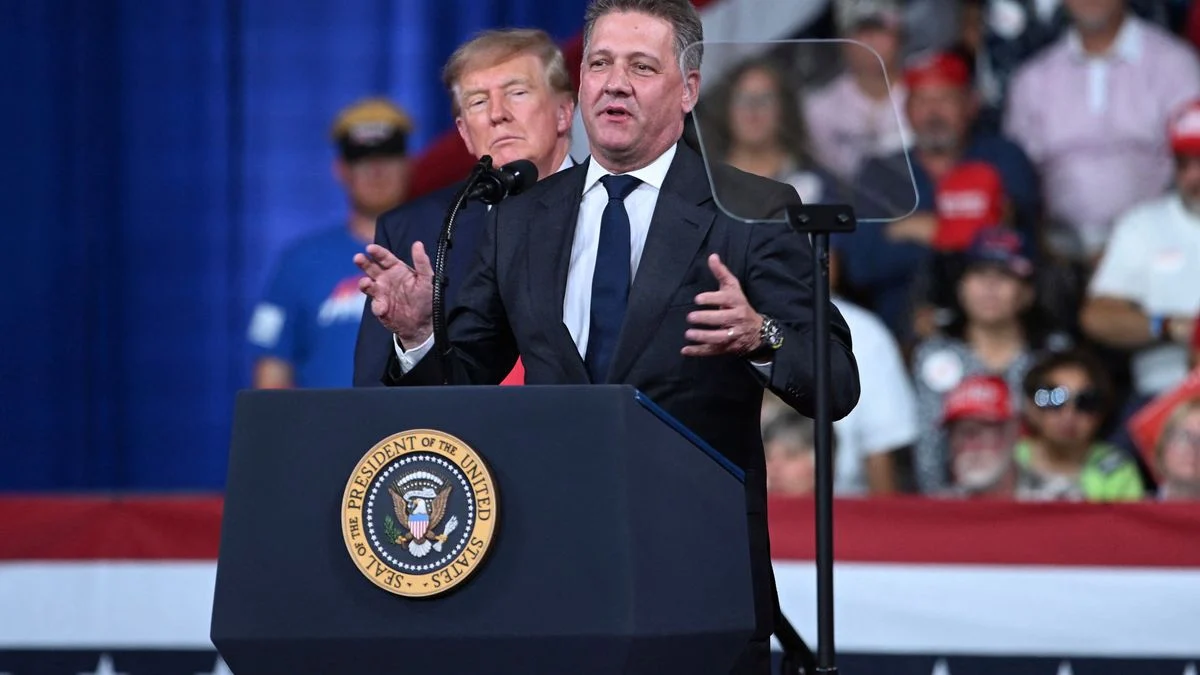
Adding an international dimension to the domestic turmoil, former U.S. President Donald Trump weighed in on the Brazilian election results. In a series of social media posts and public statements, Trump asserted that the election had been "stolen" from Flávio Bolsonaro and was "rigged." These claims, entirely devoid of evidence and widely debunked by electoral experts, were seen by many as an attempt to undermine democratic processes in a sovereign nation and provided a significant, albeit controversial, boost to Bolsonaro’s narrative of an illegitimate outcome. Trump’s intervention further amplified the global scrutiny on Brazil’s post-election stability.
October 27, 2026: The Supreme Court’s Travel Ban
The culmination of these tensions arrived on October 27, 2026. The Brazilian Supreme Court, acting on a request from federal prosecutors, issued a binding order prohibiting Flávio Bolsonaro from leaving the country. The order explicitly required him to surrender all his passports to the authorities. The basis for this drastic measure was revealed to be an ongoing investigation into alleged money laundering, specifically mentioning links to illicit activities within the sports betting sector. This judicial action, coming just two days after his electoral defeat and amidst his refusal to concede, cast a long shadow over Bolsonaro’s political future and intensified the legal pressures on him.
Bolsonaro’s Reaction: Defiance and Accusations
Upon learning of the Supreme Court’s order, Flávio Bolsonaro publicly condemned it as an act of political persecution. He reiterated his claim that he had no intention of fleeing Brazil, implying that the travel ban was a punitive measure designed to intimidate him and his political base. He vowed to fight the allegations and challenge what he termed an "unjust" and "undemocratic" judicial overreach. His defiant stance suggested a prolonged legal and political battle ahead.
Supporting Data and Context
The travel ban and the election dispute are not isolated incidents but are deeply intertwined with Brazil’s complex political landscape, its legal system, and a broader global trend of democratic backsliding and election denial.
The Money Laundering Allegations: A Deeper Look
The investigation into Flávio Bolsonaro’s alleged money laundering activities is not new. While the specific link to sports betting is a more recent development, the Bolsonaro family, including Flávio and his father Jair, has faced various legal inquiries related to financial improprieties and alleged illicit enrichment for years. These often involve accusations of "rachadinha" (a scheme where public employees are pressured to return part of their salaries to the politician who hired them) and suspicious real estate transactions.
The connection to sports betting adds a new dimension. Brazil’s sports betting market has recently exploded, attracting both legitimate investors and, inevitably, illicit actors seeking to launder money through the burgeoning sector. Authorities are likely scrutinizing large, unexplained financial movements or unusual patterns of investment linked to Bolsonaro or his associates within this industry. The potential penalties for money laundering in Brazil are severe, including lengthy prison sentences and substantial fines, and can lead to political disqualification. The Supreme Court’s intervention suggests that prosecutors believe they have compelling evidence, warranting preventative measures to ensure the integrity of the investigation.
Brazil’s Electoral System and Election Integrity
Flávio Bolsonaro’s and Donald Trump’s claims of a "manipulated" election stand in stark contrast to the widespread international consensus on the robustness of Brazil’s electronic voting system. Brazil adopted electronic voting machines decades ago, and the system has been praised by international observers for its efficiency and transparency. While no system is entirely immune to scrutiny, independent audits and extensive security checks have consistently affirmed the integrity of the electoral process.
The specific allegations often center on the unverifiable nature of electronic votes, a concern that electoral authorities have repeatedly addressed through public audits, source code reviews, and parallel manual counts in selected precincts. The refusal by Bolsonaro to provide concrete evidence for his claims, instead relying on generalized accusations, mirrors tactics employed in other nations where political actors have sought to delegitimize election results to rally their base and undermine public trust in democratic institutions. This pattern of election denial poses a significant threat to the peaceful transfer of power, a cornerstone of any functioning democracy.
The Role of the Brazilian Supreme Court
The Brazilian Supreme Court (Supremo Tribunal Federal – STF) plays a uniquely powerful role in the country’s political system. It acts not only as the highest judicial body but also as a constitutional court, often intervening in political disputes and acting as a check on executive and legislative power. In recent years, the STF has been increasingly assertive in upholding democratic norms, combating corruption, and safeguarding the electoral process, often drawing the ire of right-wing politicians, including the Bolsonaro family, who accuse it of judicial activism and overreach.
The decision to impose a travel ban on a prominent political figure, especially one who just ran for president, is a testament to the court’s perceived independence and its willingness to enforce the rule of law, even against powerful individuals. This stance, while crucial for democratic accountability, also exacerbates the political polarization, as supporters of Bolsonaro view the court’s actions as part of a broader "persecution" rather than a legitimate legal process.
Polarization and Disinformation in Brazil
Brazil is a deeply polarized nation, a divide that was significantly exacerbated during the years of Jair Bolsonaro’s presidency and continues to define its political landscape. Social media platforms are battlegrounds where disinformation and conspiracy theories thrive, often used to undermine opponents, sow distrust in institutions, and mobilize political bases. The claims of election fraud and the narrative of political persecution surrounding Flávio Bolsonaro are amplified through these channels, making it challenging for factual information to penetrate the echo chambers of partisan support. This environment makes resolving political and legal disputes particularly arduous and increases the risk of social unrest.
Official Responses
The travel ban and the ongoing election dispute have elicited a range of responses from various stakeholders, both domestically and internationally, each reflecting their respective interests and positions.
Flávio Bolsonaro’s Defense
Flávio Bolsonaro has adopted a defiant stance. His immediate response to the travel ban was to label it an "unjustifiable act of intimidation" and a "clear attempt to silence dissent." He and his legal team have indicated they will appeal the Supreme Court’s decision, arguing that it violates his fundamental rights and is based on flimsy evidence. They plan to challenge the veracity of the money laundering allegations, possibly by providing alternative explanations for his financial transactions and discrediting the link to sports betting. Bolsonaro has also used this opportunity to reinforce his narrative of political martyrdom, portraying himself as a victim of a biased judicial system and a vindictive political establishment. His lawyers are expected to argue that a travel ban is an excessive measure, especially given his public declaration of no intent to leave the country.
The Brazilian Supreme Court and Judiciary
The Supreme Court, through its spokespersons and official statements, has maintained that its actions are strictly within the bounds of the law and are based on substantial evidence presented by federal prosecutors. The court’s primary objective is to ensure the integrity of ongoing investigations, prevent potential flight risk, and uphold the principle of equality before the law. The judiciary, as a whole, is likely to emphasize its independence from political influence and its commitment to defending the constitution and democratic norms, especially in a period of heightened political tension. They are expected to stress that no individual, regardless of their political standing, is above the law.
The Lula da Silva Administration and Allied Parties
President-elect Lula da Silva and his incoming administration have largely adopted a cautious but firm approach. While refraining from direct commentary on the specifics of the criminal investigation against Flávio Bolsonaro, they have consistently called for respect for the electoral results and the democratic process. Lula’s allies have denounced Bolsonaro’s refusal to concede as an attack on democracy and have urged a swift and peaceful transition of power. They are likely to support the Supreme Court’s actions as a necessary measure to maintain the rule of law and prevent impunity, framing it as part of a broader effort to combat corruption and strengthen democratic institutions in Brazil.
International Community and Observers
Reactions from the international community have been mixed, though generally leaning towards upholding Brazil’s democratic processes. Most international bodies and democratic nations have either congratulated President-elect Lula da Silva or called for respect for the official election results. The travel ban on Flávio Bolsonaro, while a domestic legal matter, has been noted with concern, particularly regarding its potential to further destabilize Brazil’s political climate.
The intervention of former U.S. President Donald Trump, however, stands out as a significant exception. His unsubstantiated claims of election manipulation have been widely criticized by diplomatic circles and democracy advocates as an inappropriate interference in another country’s internal affairs. Many view his statements as irresponsible and potentially inciting, given the global fragility of democratic norms. International organizations observing the Brazilian elections, such as the Organization of American States (OAS) and the European Union, have generally affirmed the fairness and transparency of the electoral process, thereby implicitly rejecting Bolsonaro’s and Trump’s claims.
Implications
The legal entanglement of Flávio Bolsonaro and his refusal to concede the presidential election carry profound implications for Brazil’s political future, its legal system, and its standing on the global stage.
For Flávio Bolsonaro and the Bolsonaro Dynasty
For Flávio Bolsonaro, the travel ban and the ongoing money laundering investigation represent a severe blow to his political career and personal freedom. If convicted, he could face significant prison time, heavy fines, and a ban from holding public office, effectively ending his political ambitions. The legal battle will drain resources, attention, and credibility from him and his political allies. Furthermore, this situation casts a long shadow over the entire Bolsonaro family, potentially implicating other members in financial irregularities and further eroding their political capital. It risks transforming their political movement from one of national influence to one battling continuous legal challenges.
For Brazilian Politics and Democratic Institutions
The immediate implication for Brazilian politics is a period of heightened instability and uncertainty. Bolsonaro’s refusal to concede, combined with the legal pressures, could deepen the already profound political polarization, potentially leading to social unrest or protests. The incoming Lula administration will face the challenge of governing a deeply divided nation while navigating an ongoing political and legal battle with the defeated opposition.
Crucially, the situation tests the resilience of Brazil’s democratic institutions. The Supreme Court’s assertive stance, while affirming the rule of law, also fuels accusations of judicial overreach, which could further erode public trust in institutions among Bolsonaro’s supporters. The peaceful transfer of power, a cornerstone of democracy, is under threat, forcing a robust defense by electoral and judicial authorities. The way this crisis is managed will set precedents for how future political disputes and allegations of electoral fraud are handled in Brazil.
For Brazil’s International Standing
Globally, Brazil’s image as a stable democracy could be tarnished. The combination of a defeated presidential candidate refusing to accept election results and facing serious criminal charges creates a narrative of political turmoil. This could deter foreign investment, impact diplomatic relations, and diminish Brazil’s influence in international forums. The backing of former President Trump for Bolsonaro’s unsubstantiated claims also places Brazil in a broader global context of democratic fragility, drawing comparisons to other nations struggling with election denialism and the rise of illiberal forces. The international community will be closely watching how Brazil navigates these challenges, particularly how its democratic institutions uphold constitutional principles and ensure accountability.
The Future of Disinformation
The episode also highlights the pervasive threat of disinformation in modern politics. The ease with which unsubstantiated claims of election fraud can be propagated and gain traction, amplified by figures like Donald Trump, poses a severe challenge to informed public discourse and democratic decision-making. Future administrations and civil society will need to develop more robust strategies to counter such narratives and protect the integrity of information in the public sphere.
In conclusion, the travel ban on Flávio Bolsonaro and his ongoing challenge to the election results represent a critical juncture for Brazil. The coming weeks and months will determine not only the fate of a prominent political figure but also the strength and durability of Brazil’s democratic institutions in the face of unprecedented legal and political pressures.