Berlin/Singapore/Beijing – Germany’s political landscape is currently dominated by a flurry of high-stakes international diplomacy and fervent domestic policy debates. While CDU leader Friedrich Merz champions closer trade ties between the European Union and Southeast Asian nations, President Frank-Walter Steinmeier embarks on a critical state visit to China, aiming to balance economic interests with calls for greater geopolitical responsibility. Simultaneously, a domestic firestorm rages over Audi CEO Gernot Döllner’s appearance at a Donald Trump campaign event, drawing sharp criticism from across the political spectrum. These developments underscore Germany’s intricate balancing act between global economic imperatives and its foundational democratic values, all while facing significant internal political challenges, including contentious coalition talks in Berlin and ongoing discussions about a potential AfD ban.
Germany’s Global Economic Outreach: Merz in Singapore and Steinmeier in China
Germany is actively pursuing a strategy of economic diversification and strengthening alliances beyond its traditional partners, particularly in the dynamic Asia-Pacific region. This week, two prominent German leaders are undertaking distinct, yet strategically linked, diplomatic missions that highlight the country’s multifaceted approach to international relations and trade.
Deepening Ties with ASEAN: Merz’s Vision for Free Trade
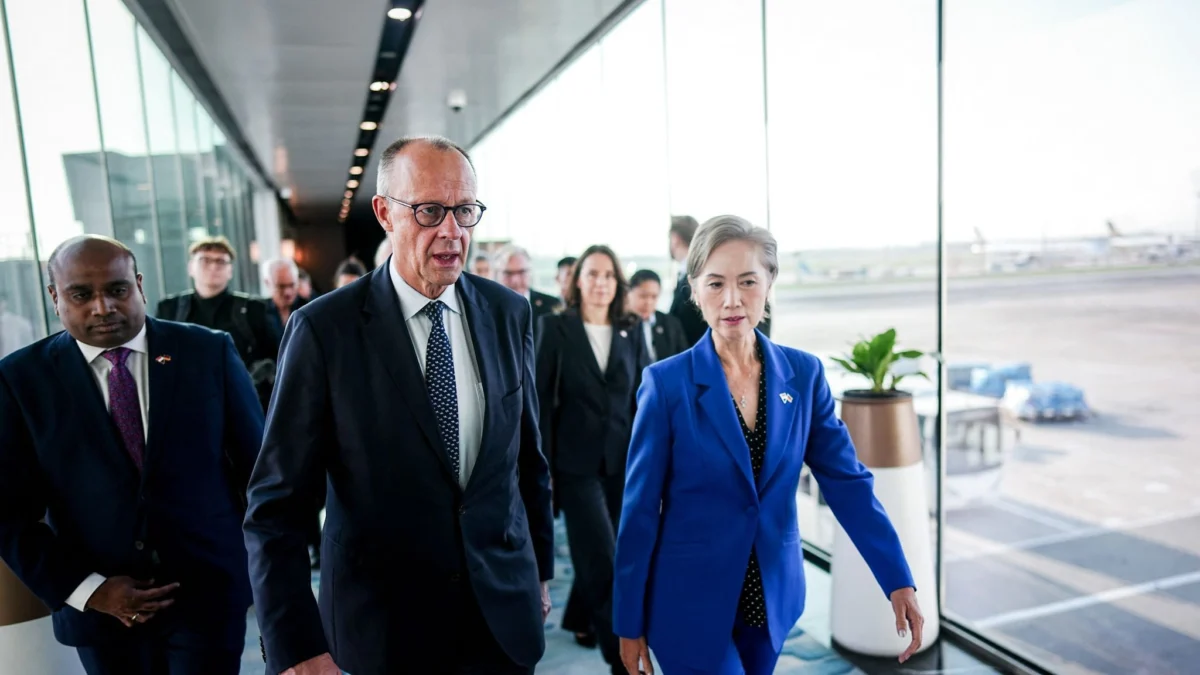
CDU leader Friedrich Merz, a prominent figure in German opposition politics and a potential future chancellor candidate, is advocating for a robust economic alignment between the European Union and the Association of Southeast Asian Nations (ASEAN). During his recent visit to Singapore, Merz met with Prime Minister Lawrence Wong, where both leaders expressed strong support for enhancing trade relations.
"We fully support Germany’s participation in the CPTPP," stated Prime Minister Wong, referring to the Comprehensive and Progressive Agreement for Trans-Pacific Partnership. This significant free trade agreement encompasses a diverse group of nations, including Singapore, Australia, New Zealand, Peru, Vietnam, Mexico, Japan, Chile, Canada, the United Kingdom, Brunei, and Malaysia. The CPTPP’s core objectives are ambitious: a substantial reduction of tariffs, the establishment of common standards for digital trade, robust protection of intellectual property, and the promotion of essential labor and environmental standards.

Merz, emphasizing Germany’s proactive role, declared his intention to push the EU towards further free trade agreements. His vision is clear: "We seek partnerships that aim to expand trade, especially with regard to free world trade, open competition, a rules-based order, and reliability within the WTO." He noted that such like-minded partners could be found not only in Singapore but also in other Asian countries sharing similar economic philosophies. This stance reflects a broader German and European interest in diversifying supply chains and reducing economic dependencies, particularly in light of geopolitical shifts and past disruptions. The CPTPP, with its extensive membership and commitment to high standards, represents an attractive framework for fostering these deeper economic integrations, offering a counterbalance to over-reliance on single markets.
Navigating Complex Relations: Steinmeier’s Diplomatic Mission to China
Concurrently, Federal President Frank-Walter Steinmeier has embarked on a four-day state visit to China, a critical diplomatic endeavor aimed at addressing the intricate and often contentious relationship between Europe’s largest economy and the world’s second-largest. His visit commenced with a tour of the Volkswagen plant in Hefei, a significant symbol of German industrial investment in China.
Volkswagen, grappling with substantial sales challenges in the highly competitive Chinese automotive market, has established a research and development center in Hefei. The goal is ambitious: to slash development times for new models by approximately 30 percent and significantly reduce costs. This strategic move is vital for VW’s aspirations to regain competitiveness and market share in what remains the world’s largest automotive market, particularly as local manufacturers increasingly dominate the electric vehicle segment. Steinmeier’s visit to such a facility underscores the deep economic ties that bind Germany and China, even amidst growing political tensions.
A central theme of Steinmeier’s visit is his advocacy for fair economic and trade relations that benefit both nations. The Federal President’s Office indicated that a key objective is to address and dismantle existing imbalances in the bilateral trade relationship. This message is expected to be delivered forcefully in a keynote address at Peking University on Thursday, followed by direct discussions with Chinese President Xi Jinping and Premier Li Qiang.

Beyond trade, Steinmeier intends to address China’s evolving role in international relations. From Germany’s perspective, China’s ascent as a global power must be accompanied by a commensurate assumption of greater international responsibility. This includes urging Beijing to leverage its significant connections with Russia to advocate for an end to the ongoing war in Ukraine. This diplomatic tightrope walk reflects Germany’s commitment to multilateralism and its concern over global stability, while acknowledging China’s pivotal role in addressing major international crises. The success of Steinmeier’s mission will be measured not just by economic agreements, but by any signs of a shift in China’s geopolitical engagement and its willingness to uphold shared international norms.
Domestic Political Turmoil and Corporate Scrutiny
While German leaders engage in international diplomacy, the domestic political arena is fraught with intense debates and controversies, reflecting deep divisions on economic policy, corporate responsibility, and the future of democratic governance.
Audi’s Controversial Appearance with Trump Ignites Political Firestorm
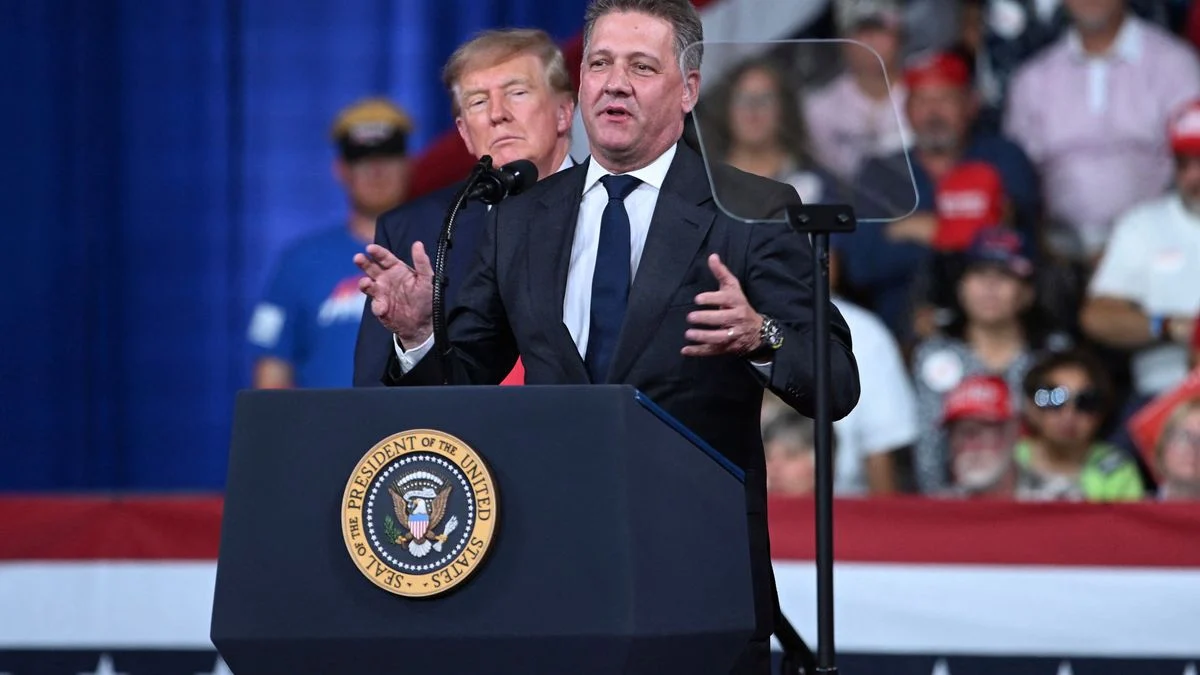
A recent appearance by Audi CEO Gernot Döllner at a campaign rally for former US President Donald Trump in Georgia has triggered a fierce backlash across the German political spectrum. The event, where Trump announced a multi-billion dollar investment by Audi in a new US plant, was widely condemned as a "political genuflection" and "election campaign aid for an autocrat."
Dennis Radtke, head of the CDU’s employee wing, sharply criticized Döllner’s decision, telling Handelsblatt: "That German companies invest abroad is initially a completely normal and understandable process. To turn it into an election campaign staging for Donald Trump, however, is disturbing and pathetic." Radtke underscored the detrimental impact of Trump’s policies on German industry, including the automotive sector, and called on the Volkswagen Group (Audi’s parent company) to take consequences. "If the ethics and compliance rules for the Board of Management and Supervisory Board of Volkswagen are to represent more than a mixture of management platitudes and wall tattoos, then they must now clearly position themselves," he asserted. He also questioned the silence of Olaf Lies (SPD), the Minister-President of Lower Saxony, who sits on the VW Supervisory Board.
Fabian Mehring, Bavaria’s State Minister for Digital Affairs (Freie Wähler), echoed the strong criticism on LinkedIn, lamenting that "one of the proudest flagships of our industry is being harnessed to the cart of an American election show" while jobs in Germany are being contested. He called the appearance "a shocking symbol of the decline in self-confidence of our German industry." Mehring challenged the notion that a "political genuflection" should be part of the business model for German premium manufacturers, emphasizing that economic strength should not come at the expense of political independence.
Isabel Cademartori, an SPD traffic expert and Bundestag member, condemned the incident as "shameful, especially given the history of the VW Group." She argued that Audi’s announcement of billions in investments in a politically contested state like Georgia directly supports Trump’s strategy of using trade wars to attract jobs to the US at Europe’s expense. Cademartori warned that such actions facilitate "the dismantling of democracy, violence against minorities, and corruption under this president." The consensus among critics is that actively campaigning for an autocrat who wages trade wars against Germany represents a new low for the VW Group and raises serious questions about corporate social responsibility and political alignment.
The Battle for Berlin: SPD’s Coalition Ambitions and Fierce Opposition
The political landscape in Berlin is currently embroiled in contentious debates surrounding the formation of a new state government. The Berlin SPD has formally decided to enter into coalition negotiations with the Left Party and the Greens, following initial exploratory talks. However, this potential red-green-red alliance has ignited widespread opposition and generated significant national discussion.
Franziska Giffey, Berlin’s outgoing Economic Senator and a prominent SPD figure, has publicly rejected the proposed plans by the prospective coalition to nationalize 160,000 apartments from large housing corporations. Giffey stated on Instagram: "I do not believe that nationalizations are the right way to advance our city, achieve continued above-average economic growth, and create sufficient affordable housing." She deemed the proposed compensation sum of 16 billion euros (approximately 100,000 euros per apartment) unrealistic, warning of protracted legal battles. Furthermore, Giffey predicted that affected housing companies, and many others, would halt or postpone planned construction projects in Berlin, exacerbating the already acute housing shortage in a rapidly growing city. She stressed that nationalization would not create a single new apartment and would have severe repercussions for Berlin’s economy and state budget.

Economist Marcel Fratzscher, head of the German Institute for Economic Research (DIW), criticized what he called "panic-mongering" surrounding the potential red-green-red government. He specifically targeted statements from figures like CDU Economics Minister Katherina Reiche, who had warned of a "danger to the location" of Berlin, with implications extending beyond the capital. Fratzscher deemed such blanket judgments "very problematic" and "not sustainable," arguing that such rhetoric ultimately harms Germany’s image and calls for a more measured tone.
However, criticism of the Left Party in particular remains strong. Culture Minister Wolfram Weimer (non-partisan) issued a stark warning against a red-green-red coalition, asserting that "a government in the capital led by the direct successors of the SED would betray the consensus of democrats regarding remembrance policy in two respects." Weimer accused the Left Party of "opening the door and gate" to antisemitism, a particularly sensitive issue in Berlin given its historical context. He also argued that the party undermines efforts to come to terms with the injustices of the SED regime in East Germany.
These concerns are not confined to external critics. Reports from "Spiegel," "Bild," and "Table.Briefings" indicate that 20 SPD Bundestag members have signed a joint declaration opposing a coalition with the Left Party in Berlin. Their statement, titled "Our compass of values is never negotiable," reportedly cited "recurrent antisemitism conflicts within the Berlin state association of the Left Party, contacts with the Remmo environment (a criminal clan), as well as with actors from extremist milieus, and the handling of these incidents" as reasons for "considerable doubt" regarding the political reliability of the state party. SPD parliamentary group leader Matthias Miersch confirmed these critical voices within his party.
The Young Union, the independent youth organization of the CDU and CSU, has taken an even more extreme stance. At their "Deutschlandtag" in Bonn, they unanimously passed a motion demanding the exclusion of a potential red-green-red Berlin state government from information shared by the intelligence services (Verfassungsschutz) and the Federal Criminal Police Office (Bundeskriminalamt). They also called for a federal-level body to "document legal breaches and perversion of justice" by the Berlin government and urged the immediate implementation of a federal law prohibiting nationalizations. The Young Union branded such a coalition as a "cultural breach" that would necessitate "societal ostracization" of the government. This intense opposition highlights the deep ideological chasm that persists in German politics regarding the Left Party’s role in governance.

Internal Party Dynamics and Leadership Debates
Beyond coalition talks, German political parties are also grappling with internal leadership questions and policy direction.
Following the resignation of former Federal Labor Minister and SPD leader Bärbel Bas, the question of SPD leadership is open. Hubertus Heil, another former Federal Labor Minister, has indicated his openness to a candidacy for the SPD chairmanship, but under specific conditions. "That is possible," Heil told "Spiegel," adding, "But I will carefully decide based on two questions. First: What should be the direction of the SPD? Second: What is the team?" He emphasized the need for a clear course towards a "solidary performance society," respect for "commitment and achievement," clarity in foreign and security policy, and a "strong team." This conditional interest signals the internal soul-searching within the SPD as it seeks to redefine its future trajectory.
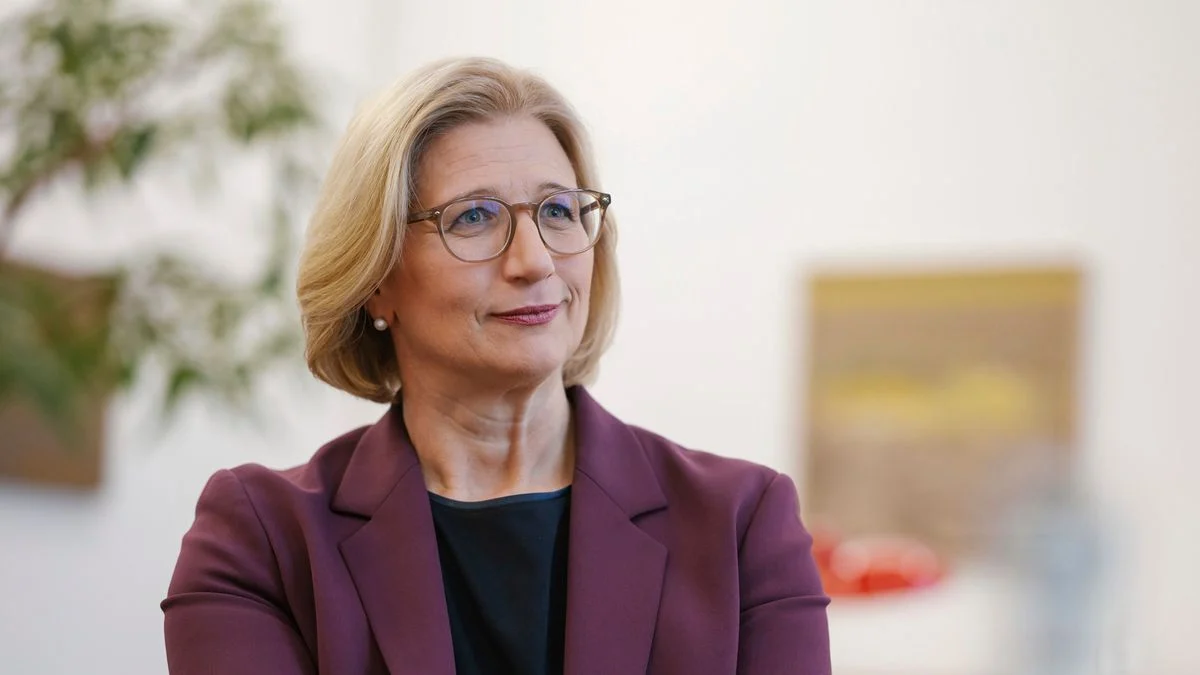
Meanwhile, the debate over the next Federal President is gaining traction. SPD parliamentary group leader Matthias Miersch has publicly endorsed Ilse Aigner (CSU), the Bavarian State Parliament President, for the largely ceremonial but symbolically important role. Miersch urged a swift decision, stating: "What are we waiting for? Has Ilse Aigner not long since gained a majority across party lines? I would be on board!" He praised Aigner as a "convicted democrat who shows a clear edge against right-wing extremism and strongly advocates for our democratic values." Miersch also highlighted her reputation as a reliable, constructive, and fair negotiating partner in past coalition talks. Crucially, he added, "After twelve men at the head of our state, it is high time for a woman," concluding that Aigner would be a President capable of uniting the country without compromising democratic principles. The CDU, Aigner’s sister party, has so far remained reserved on the matter.
Another sensitive domestic issue is the ongoing debate about a potential ban on the far-right Alternative for Germany (AfD) party. Manuela Schwesig, Minister-President of Mecklenburg-Vorpommern (SPD), has advocated for a federal-state working group to rigorously examine the possibility of an AfD ban. In an interview with RTL and ntv’s "Frühstart," Schwesig stated: "The AfD stands for policies that would harm our country." She proposed that such a working group, comprising federal and state representatives, should collect all incidents and findings related to the AfD and then commission an expert opinion. Schwesig stressed that "we as politicians cannot ban the AfD. Only the Federal Constitutional Court can decide on that." The expert would then evaluate the evidence and propose whether and how such a submission should be made.

The complex nature of dealing with the AfD is further highlighted by a local issue in Saxony-Anhalt. CDU state parliament member Guido Heuer has declared he will not leave the plenary chamber when AfD politician Ulrich Siegmund runs for Minister-President in December. While refusing to disclose his voting intentions in the secret ballot, Heuer’s decision stands in contrast to potential symbolic protests by other parties, underscoring the differing approaches to confronting the AfD within the established political parties.
Finally, within the Berlin Left Party itself, the leadership of its parliamentary group has yet to find a resolution regarding the controversial MP Vanessa Emde. Emde, who entered the House of Representatives after the September 20 election, has sparked multiple debates due to her Israel-critical positions, including the assertion that "there is no right of existence for states, only for people." The faction board, which Emde did not attend due to illness, has reinvited her for next week’s meeting, indicating ongoing internal deliberations on how to address her contentious statements.
Broader Policy Debates and Regional Politics
Beyond these immediate headlines, Germany’s political agenda is also shaped by broader policy discussions impacting the economy, social welfare, and regional governance.
Economic Policy Clashes: Söder vs. Federal Government
Economic policy remains a key battleground, with CSU leader and Bavarian Minister-President Markus Söder vocalizing strong opposition to certain federal government plans. Söder has vehemently rejected the SPD-led Federal Environment Ministry’s proposed plastic tax in its current form, as well as demanding an offset for "cold progression."

At the Young Union’s Deutschlandtag, Söder criticized the federal government: "Instead of cutting taxes, we have decided to increase taxes on everything that is fun." Regarding the plastic tax, he declared, "You have to say no to such nonsense plans." He highlighted that the Federal Ministry of Finance anticipates needing 800 additional positions just to administer this tax. The proposed levy, set to begin in mid-2027 at 550 euros per tonne of plastic, is expected to generate 670 million euros in 2027 and around 1.5 billion euros annually from 2028. Söder deemed the tax "really exaggerated" and warned of a competitive disadvantage for German companies against Chinese rivals, who would not face similar charges.
Söder also criticized the tax and budget plans of Finance Minister Lars Klingbeil (SPD), insisting that "cold progression is a duty." He argued that without compensation for cold progression (where inflation pushes taxpayers into higher tax brackets without a real increase in purchasing power), politicians cannot credibly claim that "performance must pay off in our country." The federal government, citing a strained budget, currently has no plans for such an offset. Söder also called on the federal states to drop their resistance and co-finance the costs. He further demanded the implementation of the pension reform commission’s proposals, noting that the CSU-driven increase in "Mütterrente" (mothers’ pension) alone burdens the federal budget with approximately five billion euros annually. The Finance Ministry estimates the cost of offsetting cold progression at around 2.6 to 3.4 billion euros per year per percentage point.
Healthcare and Labor Reform on the Agenda
Discussions also extend to critical social and labor policies. Unionsfraktionschef Thorsten Frei (CDU) is pushing for greater equity in access to specialist doctor appointments, arguing that "all insured persons must receive a specialist appointment within a reasonable period." He stated that Federal Health Minister Carsten Linnemann (CDU) would put forward proposals on this issue. While acknowledging the benefits of Germany’s dual private and statutory health insurance system, Frei conceded that some aspects are "perceived as unfair or are actually unfair," citing long waiting times for specialist appointments as a prime example.
On labor reform, Frei reiterated the commitments made in the black-red coalition agreement regarding working hours. "In the coalition agreement, we clearly agreed to create the possibility of a weekly instead of a daily maximum working time, in accordance with the European Working Time Directive – also and especially in the interest of a better work-life balance," he said. This statement comes amidst repeated warnings from trade unions against ending the traditional eight-hour workday, indicating potential for further debate on labor flexibility.

Regional Political Landscape
Regional politics also saw significant developments. The planned "Free States Meeting" between the Minister-Presidents of Saxony (Michael Kretschmer, CDU), Thuringia (Mario Voigt, CDU), and Bavaria (Markus Söder, CSU) was canceled. The Thuringian State Chancellery announced that Saxon Premier Kretschmer had to attend urgent budget consultations in Dresden. The meeting, intended to foster closer cooperation on political and societal issues and culminate in the signing of a new cooperation agreement, will be rescheduled.
In Schleswig-Holstein, SPD’s top candidate Ulf Kämpfer has unequivocally ruled out a coalition with the Left Party in the northern state. Kämpfer told the German Press Agency: "I currently see no perspective whatsoever for a coalition," citing profound political differences, particularly in areas of internal security, budget policy, and economic strategy. He described the Left Party as "a politically very isolated group without the willingness and ability to assume real responsibility." Kämpfer also expressed a lack of imagination for a four-party coalition involving the Left, which is currently not represented in the state parliament but shows potential for re-entry in the April 2027 state election. This clear rejection underscores the challenges the Left Party faces in establishing itself as a viable coalition partner in many federal states.
Cyber Security and Energy Reserves
On the operational front, the Federal Ministry of the Interior reported positive news regarding cyber security: no damage to federal authorities has been reported due to vulnerabilities in the widely used PHP programming language. A spokesperson stated that "at this point in time, there are no reports of compromised IT systems either at the federal level, in the administration, or in the regulated economy." This suggests that many operators proactively installed software updates, as recommended, and identified the problem. The vulnerabilities had prompted organizations worldwide to temporarily take their websites offline, with cybersecurity firm Cloudflare reporting a surge in hacker attacks. Palo Alto Networks estimated that over 22 million servers and applications globally were potentially at risk, given that an estimated two-thirds to three-quarters of all websites are based on PHP.
Finally, Germany is releasing further oil reserves as part of its international commitments, including a decision by the G7 nations. The Economy Ministry confirmed that a corresponding regulation came into force on Thursday. Germany is obligated by the International Energy Agency (IEA) to contribute 19.5 million barrels out of a total of 100 million. Six million barrels had already been released by October, with the remaining 13.5 million barrels to focus on diesel and heating oil. The strategic oil reserve of Germany is temporarily being reduced from 90 to 82 days, a measure reflecting ongoing global energy market dynamics and collective