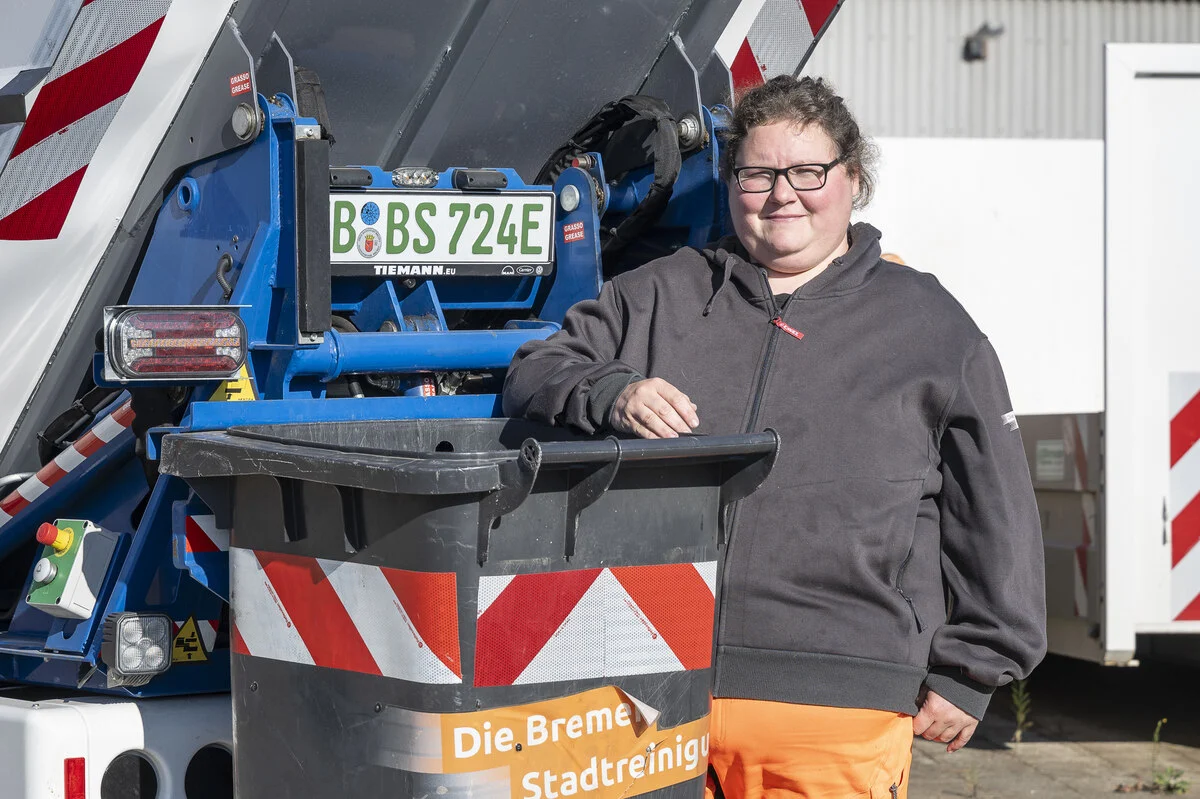
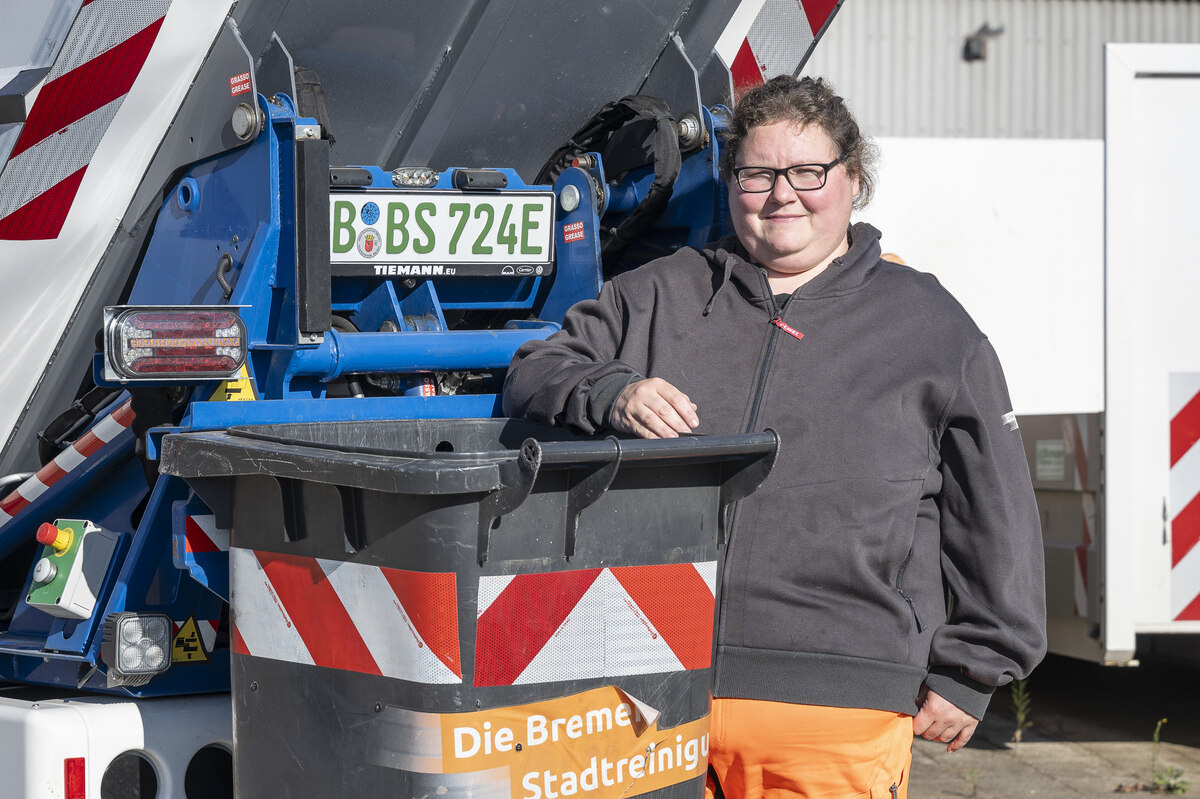
BREMEN-NORD, Germany – In a profession traditionally dominated by men, Ann-Kathrin Grüttner stands out. At 31, she is the sole woman among roughly 25 colleagues at Bremen-Nord’s street cleaning service, diligently ensuring the city’s thoroughfares remain spotless. Yet, her daily grind of emptying public bins, cleaning gullies, and operating heavy machinery is starkly contrasted by her private life: a tranquil existence on a small, self-sufficient farm in rural Lower Saxony, where she cares for a menagerie of animals, including seven horses. Grüttner’s journey is a compelling narrative of finding professional fulfillment in an unexpected place, embracing a challenging lifestyle, and demonstrating remarkable resilience in the face of personal tragedy.
Her story challenges conventional perceptions of both public service work and gender roles, painting a vivid picture of dedication, pragmatism, and a deep connection to the land that provides her sanctuary from the urban hustle.
Main Facts: A Life of Contrasts and Commitment
Ann-Kathrin Grüttner embodies a unique blend of urban necessity and rural tranquility. As a street cleaner for Bremen-Nord, she is on the front lines of urban sanitation, her days marked by early starts, physical labor, and the constant hum of city life. She is responsible for a wide array of tasks, from the routine emptying of public waste bins to the more specialized work within "hand columns," which involves meticulously cleaning storm drains and other urban infrastructure. Her passion, however, lies in operating the powerful machinery of winter service, particularly driving a tractor to clear snow, a task she describes as her favorite.
Despite her integral role in maintaining Bremen’s cleanliness, Grüttner has chosen to distance herself geographically from her workplace. She resides on a small "Resthof," a former farm, nestled in the quiet expanse of Lower Saxony. This rural retreat is not merely a home but a vibrant ecosystem she shares with her mother and a growing family of animals: seven horses, several dogs, cats, chickens, quails, and even turtles. This dual existence highlights a woman who is both grounded in the practicalities of public service and deeply rooted in the rhythms of nature and self-sufficiency. Her journey into street cleaning was driven by a pragmatic desire for job security, transitioning from a series of temporary contracts as a gardener to a permanent position in a critical urban service. As the only woman in her department, Grüttner not only performs her duties with unwavering commitment but also serves as a quiet pioneer, subtly reshaping the landscape of a traditionally male-dominated profession.
Chronology: From Creative Aspirations to Public Service Dedication
Ann-Kathrin Grüttner’s career path has been anything but conventional, charting a course from artistic inclinations to hands-on public service, punctuated by significant personal milestones.
Early Aspirations and a Pivotal Shift
Born and raised in Bremen, Grüttner initially envisioned a career far removed from the physical demands of outdoor labor. Her first vocational training was as a graphic design assistant, a role that promised creative expression through digital mediums. However, it quickly became apparent that the sedentary nature of office work and screen time was not compatible with her inherent need for activity and tangible output. "I quickly realized that sitting at a PC all day was not for me," she recalls, reflecting on her early twenties. This pivotal realization prompted a complete re-evaluation of her professional trajectory.
Driven by a desire for practical, hands-on work, Grüttner cast a wide net, applying for various manual trades, including painter and varnisher. Her persistence paid off when she secured her first opportunity as a gardener, a profession that offered the physical engagement and outdoor environment she craved. This marked her initial foray into working with her hands and connecting with the natural world, albeit within an urban context.
The Call for Stability: Joining Street Cleaning
After several years as a gardener with the city’s environmental operations, Grüttner faced a common challenge for many in contract-based roles: a lack of long-term security. "I only ever had annual contracts," she explains. By her mid-twenties, the yearning for stability and a permanent position became paramount. "Eventually, in your mid-twenties, you want a permanent contract."
It was this pursuit of job security that led her to the Straßenreinigung Bremen-Nord. An open advertisement for a position within the street cleaning department caught her eye. The transition was not entirely unfamiliar, as she had already gained experience in winter service operations, often collaborating with the street cleaning team. Moreover, her future supervisor, Dieter Bauch, was someone she already knew from her winter service engagements, creating a sense of familiarity that eased the change. "There was an advertisement here at the street cleaning department, and then I simply switched doors," Grüttner recounts. The prospect of a stable, indefinite contract proved to be the decisive factor, offering the foundation she needed to plan for her future.
Four Years on the Front Lines: Daily Duties and Winter Thrills
For the past four years, Grüttner has been an indispensable part of Bremen-Nord’s street cleaning force. Her responsibilities are diverse and demanding. Primarily, she is tasked with emptying the numerous public waste bins that line the city’s streets, a crucial role in maintaining urban hygiene. Beyond this, she frequently works in the "hand columns," teams dedicated to more intricate cleaning tasks, such as clearing debris from gullies and storm drains, which often require manual effort in confined spaces.
Despite the varied nature of her duties, Grüttner has a clear favorite: the winter service. When snow blankets the city, she is among the first to be called, often roused from sleep at 4 AM. "Many people say it’s no fun," she observes, "but there’s nothing better than throwing snow around with the tractor in the morning when no one else has walked through it yet." This task, involving the powerful snowplows and tractors, allows her to operate heavy machinery and experience a unique sense of solitude and purpose in the quiet, pre-dawn hours. It’s a stark contrast to the often-messy and public nature of her other duties, offering a meditative, almost artistic, engagement with the elements.
Building a Rural Dream and Enduring Personal Loss
The stability provided by her permanent position enabled Grüttner to pursue a long-held personal dream: owning a home in the countryside. Driven by the prohibitive cost of boarding her seven horses in an urban environment, she, along with her parents, purchased a small "Resthof" in Lower Saxony. This move transformed her daily life, establishing a profound connection to rural living. Her home became a sanctuary not just for her horses, but also for dogs, cats, chickens, quails, and turtles, creating a bustling, animal-filled household.
Tragically, shortly after the family acquired the farm, Grüttner experienced a profound personal loss. Her father was killed in an accident, struck by a drunk and drugged driver. This devastating event not only brought immense grief but also placed an unexpected burden on the nascent rural project. The loss of her father, a key partner in the farm’s establishment, was a severe blow. However, the support she received from her workplace during this period was exceptional. Her supervisors and colleagues stood by her, offering practical and emotional assistance, including sick leave and accompanying her to police briefings regarding the investigation. This unwavering support underscored the deep sense of community and care within the street cleaning department, demonstrating a compassionate approach to employee welfare during times of crisis. Grüttner has since learned to cope with her grief by speaking openly about her father’s death, understanding that suppression would only lead to further pain. Her mother now helps her manage the demands of the farm, ensuring the dream they built together continues to thrive.
Supporting Data: Challenging Norms and Defining Public Service
Ann-Kathrin Grüttner’s story is not just a personal anecdote but also a rich source of data illuminating broader trends and challenges within public service, particularly regarding gender roles, operational scope, and employee well-being.
The Gender Imbalance in Street Cleaning
Grüttner’s status as the sole woman among approximately 25 colleagues at Bremen-Nord’s street cleaning department highlights a significant gender imbalance within the profession. This is a common pattern in many physically demanding trades, where traditional stereotypes persist. When questioned about the scarcity of women, Grüttner muses, "Maybe they are afraid? I don’t know." Her supervisor, Dieter Bauch, offers a comparative perspective, drawing on his experience from the Berlin city cleaning service: "In Berlin, women are potential; many more apply than here. Here, women are still shy about going out on the street."
This suggests that while the perception of the job might deter some, there might also be regional differences in recruitment efforts or societal acceptance. The interviewers’ hint at "image campaigns" becoming "flottier" (more dynamic) in city cleaning services overall points to a recognition within the industry that the public perception of these jobs needs modernization to attract a more diverse workforce. Grüttner acknowledges the physical demands, noting that colleagues have weighed the sacks they lift, finding them to be "10 to 15 kilos." However, Bauch firmly dismisses the notion that physical strength is a barrier for women, stating, "It’s a prejudice that women have less strength. Ann-Kathrin is equal to any man." This direct challenge to a common stereotype from a male supervisor underscores the evolving understanding of capability within the sector.
The Extensive Scope of Bremen-Nord’s Street Cleaning
The operational remit of the Straßenreinigung Bremen-Nord is substantial, providing a glimpse into the scale of urban sanitation. The department is responsible for a staggering 300 kilometers of streets and 94 kilometers of bicycle paths. Beyond these main arteries, their duties extend to maintaining the "public accompanying green" – the landscaped areas alongside roads – and managing 400 public waste bins.
A particularly labor-intensive aspect of their work involves the city’s drainage system. Bremen-Nord is home to 10,000 gullies (storm drains), of which 1,250 require regular manual cleaning due to blockages from leaves, debris, and litter. This detail highlights that street cleaning is far more than just sweeping; it involves meticulous, often unpleasant, manual labor crucial for preventing urban flooding and maintaining infrastructure. The fleet of vehicles includes specialized sweepers and collection vehicles, which are described as "somewhat smaller than the refuse trucks for household waste," indicating tailored equipment for various tasks. This intricate network of responsibilities underscores the critical, yet often unseen, work that keeps a city functioning cleanly and efficiently.
The Value of Public Service Stability
Grüttner’s move to street cleaning was primarily motivated by the promise of a permanent contract, a stark contrast to the precarious annual contracts she endured as a gardener. This highlights a key advantage of public service employment: stability and security. Her supervisor, Dieter Bauch, explicitly states, "The street cleaning service values making indefinite contracts immediately; it’s a different company policy not to start with these annual contracts at all." This policy reflects a strategic approach to recruitment and retention, offering employees a sense of security that is increasingly rare in many sectors.
For Grüttner, this stability was not just about peace of mind; it was the foundation upon which she could build her future, enabling her to fulfill her dream of buying a farm. "I always get my money on time, I can start on time and finish on time," she affirms, emphasizing the predictability and reliability that allow her to manage her demanding personal life. This aspect of public service offers a compelling argument for its appeal, especially in an era where temporary work and gig economies are prevalent, demonstrating that a secure job can be a powerful enabler of personal aspirations.
The Commute and Lifestyle Integration
Grüttner’s daily routine vividly illustrates the challenges and choices involved in bridging urban employment with rural living. To be at the Bremen-Nord depot by 6 AM, she must wake up at 3:30 AM in Lower Saxony, enduring a significant commute. This early start, even earlier during winter service call-outs at 4 AM, underscores her dedication and the physical discipline required for her lifestyle. "Jein. Ja," she responds when asked if she’s an early riser, a candid admission of the constant push and pull between necessity and preference.
Her ability to integrate her demanding work schedule with the extensive responsibilities of her farm – caring for horses, dogs, cats, chickens, quails, and turtles – speaks volumes about her organizational skills and energy levels. "Eventually, sometimes in between," she muses about resting, "but rarely." This constant activity, fueled by her passion for animals and the land, demonstrates a remarkable capacity for work-life integration, where "leisure" often means switching from one form of labor to another. Her move to the countryside was a calculated financial decision, driven by the cost of boarding seven horses, illustrating how practical considerations can shape profound lifestyle choices.
Official Responses: Leadership, Support, and Image
The management’s perspective within the Bremen-Nord street cleaning service offers valuable insights into their operational philosophy, approach to employee welfare, and the broader challenges facing public service.
A Proactive Hiring Philosophy
Dieter Bauch, Ann-Kathrin Grüttner’s Einsatzleiter (operations manager), emphasizes a key difference in their organizational policy compared to Grüttner’s previous employer. "She had always stood out positively to us, and when we were looking for staff, we asked if she wouldn’t like to switch," Bauch recounts. This proactive recruitment approach, identifying talent and offering opportunities, speaks to a management style focused on recognizing potential. Crucially, Bauch highlights the service’s commitment to job security: "The street cleaning service values making indefinite contracts immediately; it’s a different company policy not to start with these annual contracts at all." This commitment not only attracts skilled workers but also fosters loyalty and long-term engagement, demonstrating a forward-thinking approach to human resources in public administration.

Addressing Diversity and Challenging Stereotypes
The scarcity of women in the street cleaning profession is a recognized issue, and Bauch’s comments shed light on the departmental and industry perspective. While Grüttner is the sole woman in her team, Bauch’s comparison to the Berlin city cleaning service suggests an awareness of differing regional dynamics and recruitment potential. His statement that "Here, women are still shy about going out on the street" points to a cultural or perception barrier that the sector needs to overcome.
However, Bauch also directly challenges prevailing stereotypes about women’s physical capabilities. When Grüttner mentions the physical demands, he interjects, "It is a prejudice that women have less strength. Ann-Kathrin is equal to a man." This unequivocal statement from a senior manager is crucial. It signifies a workplace culture that values competence over gendered assumptions about physical prowess, laying the groundwork for greater inclusivity. The implicit acknowledgement by the taz interviewer about "image campaigns" becoming "flottier" (more dynamic) in city cleaning services hints at a broader industry-wide effort to modernize the profession’s image and attract a more diverse workforce, including women.
Exemplary Employee Support in Crisis
Perhaps the most poignant aspect of the management’s response is the unwavering support provided to Ann-Kathrin Grüttner following the tragic death of her father. Grüttner openly shares how the department rallied around her: "After that, everyone at work stood behind me, that was great support." This support was not merely verbal but practical and deeply compassionate. "I was on sick leave for a while first. But even after that, if I said I couldn’t do it right now, it was no problem," she explains.
The personal involvement of her supervisors further underscores this commitment. "On the day I went to the police to be informed about the status of the investigation into my father’s fatal accident, I was picked up by my two superiors," Grüttner reveals. This level of personal care, extending beyond professional obligations, demonstrates an exceptional standard of employee welfare and a strong sense of community within the team. Such responses from leadership are vital in fostering a supportive work environment where employees feel valued and cared for, especially during their most vulnerable moments. It sets an important precedent for how public institutions can and should support their staff through personal tragedies.
Implications: Resilience, Role Models, and the Future of Public Service
Ann-Kathrin Grüttner’s multifaceted life carries significant implications, not only for her immediate community but also for broader discussions on gender roles, public service, and personal resilience.
Breaking Barriers and Serving as a Role Model
Grüttner’s presence as the sole woman in a male-dominated street cleaning team in Bremen-Nord inherently makes her a quiet trailblazer. Her ability to perform physically demanding tasks, operate heavy machinery, and navigate the challenges of urban sanitation effectively dismantles traditional gender stereotypes. While she doesn’t actively seek to be a "feminist icon," her very existence in this role sends a powerful message: competence and dedication transcend gender. She demonstrates that women are fully capable of excelling in professions historically deemed "unsuitable" for them. This has implications for younger generations, who might see her and reconsider their own career choices, potentially leading to a more diverse workforce in public service and other trades. Her story contributes to a subtle but important shift in societal perceptions, normalizing women’s participation in all sectors.
The Evolving Image and Challenges of Public Service
The conversation between Grüttner and the taz interviewer about "image campaigns" highlights an ongoing effort by public sanitation services to modernize their appeal. For decades, jobs like street cleaning have been underappreciated, often associated with low status and difficult conditions. Grüttner’s candidness about public reactions – some express gratitude, others complain about noise – reflects the mixed public sentiment. Her pragmatic response to impatient drivers ("If people feel they need to make a fuss, I’ll just go even slower") also points to a resilience developed from years of public interaction and a firm understanding of her job’s necessity.
Her work underscores the critical, yet often unseen, value of public service. She and her colleagues are the unsung heroes who ensure urban environments remain habitable and healthy. The challenges of littering, public indifference, and occasional hostility reveal the need for greater public awareness and appreciation for these essential workers. The discussion about attracting more women, as mentioned by her supervisor, suggests a recognition that a diverse workforce is not just equitable but also beneficial for the vitality and future of these services.
Resilience in the Face of Adversity
Grüttner’s journey is profoundly marked by personal resilience. Her ability to navigate the demanding physical and emotional aspects of her job while simultaneously managing a busy farm, all in the wake of her father’s tragic death, speaks volumes about her inner strength. Her decision to speak openly about her loss – "If you keep suppressing it, it will destroy you" – offers a powerful lesson in coping with grief and trauma. This openness, combined with the extraordinary support from her workplace, illustrates how strong community bonds and empathetic leadership can significantly aid in personal recovery and enable individuals to continue contributing meaningfully. Her experience highlights the importance of mental fortitude and the human capacity to adapt and thrive even after profound setbacks.
The Pursuit of Personal Fulfillment and Work-Life Integration
Ultimately, Ann-Kathrin Grüttner’s story is one of finding deep personal fulfillment in a life she has meticulously crafted. Despite the grueling schedule of a 3:30 AM wake-up, a physically demanding job, and constant farm responsibilities, she expresses happiness in her work and her life choices. "I hope to stay until retirement," she states, emphasizing the job security and predictable hours that allow her to manage her extensive animal care. The "freedom" she finds in planning her routes and the "good team" environment are key factors contributing to her job satisfaction.
Her choice to move to the countryside was a practical one, driven by the needs of her horses, but it has evolved into a deeply rewarding lifestyle that connects her to nature and provides a tangible sense of purpose beyond her professional duties. Her ability to integrate these seemingly disparate worlds – the urban grime and the rural sanctuary – demonstrates a successful model of work-life integration. She exemplifies how one can forge a meaningful existence by aligning professional stability with personal passions, even if it means embracing a path less traveled. Grüttner’s narrative is a testament to the idea that true happiness often lies in the balance of hard work, personal passion, and the quiet satisfaction of a life well-lived, on one’s own terms.