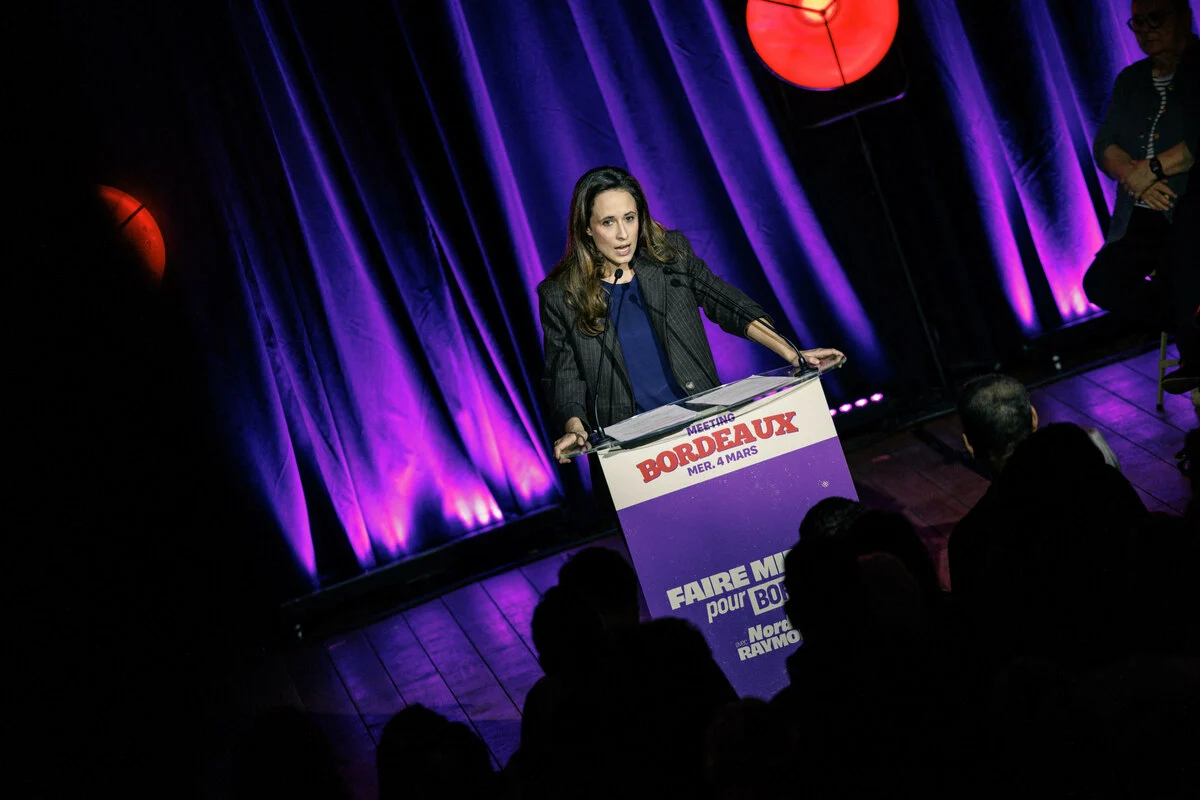
As France approaches a nationwide general strike on November 5, the political landscape is fracturing. Clémence Guetté, a leading voice of the "La France Insoumise" (LFI) movement, warns that the government’s reliance on police repression to silence social unrest is pushing the country toward a democratic breaking point.
The Current State of Affairs: A Nation in Turmoil
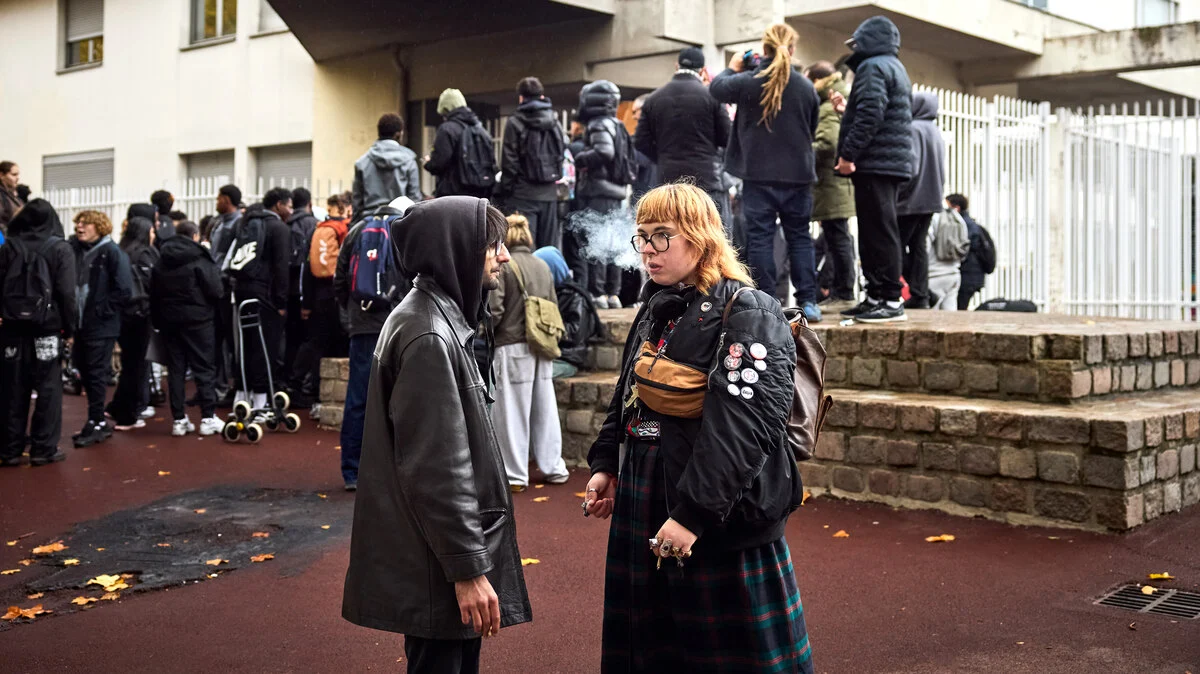
France stands at a critical juncture. The simmering discontent that began with localized school blockades in late September 2026 has transformed into a broad-based movement of national proportions. The central issue is no longer just the deteriorating state of public education; it is a profound rejection of the socio-economic status quo under the administration of President Emmanuel Macron.
With a general strike scheduled for November 5, labor unions, student organizations, and political opposition groups are coalescing around a common narrative: the French state has abandoned its social contract. Clémence Guetté, Vice-President of the National Assembly and a pivotal figure within La France Insoumise, argues that the government has opted for a strategy of "systemic violence" to manage a population that is increasingly unable to cover basic living expenses.
"This generation has endured the trauma of the pandemic lockdowns, the exclusionary digital selection processes of the university system, and the mounting anxiety of the climate crisis," Guetté stated in a recent interview. "Now, they have stood up, and they have brought the entire country—and indeed, a global audience—behind them. Bravo, Gen Z."
A Chronology of the Escalation
The current unrest did not emerge in a vacuum. Its roots can be traced back to the systematic neglect of public infrastructure in suburban and rural districts.
- Late September 2026: Protests erupt in Créteil and surrounding areas. Students, backed by parents and school staff, begin blocking schools to demand basic necessities: teachers, school nurses, and functional administrative support.
- October 17, 2026: The demonstrations take a violent turn. Police intervention leads to severe injuries, including reports of teenagers losing eyes and suffering hand mutilations from crowd-control munitions.
- Late October 2026: Investigatory reporting by Médiapart reveals that security services were allegedly under internal orders to frame the LFI party as the instigators of the chaos, a revelation that has sent shockwaves through the French political establishment.
- November 5, 2026: A scheduled date for a national general strike, marking the formal union of student grievances with broader labor demands for wage increases and price controls.
The Politics of Repression and Alleged Manipulation
One of the most explosive elements of the current crisis is the allegation that the state attempted to manufacture a scapegoat. The Médiapart exposé, which suggested that top-level security officials ordered the blame for student-led unrest to be placed on LFI, has turned a domestic dispute into a potential state scandal.
"In a functioning democracy, this would be an absolute scandal," Guetté argued. "The government is in extreme distress and is entirely incapable of responding to the youth. Their only recourse is to manufacture culprits."
Guetté remains adamant that LFI’s role is not to lead or "instrumentalize" the youth, but to support them. She rejects the narrative—frequently pushed by government mouthpieces—that the students are mere pawns of radical leftist agitators. "What contempt it shows to believe that students need someone else to tell them that a classroom without a teacher is not a normal state of affairs," she said.

Data and Economic Context
The economic arguments underpinning the protests are rooted in the widening chasm between the cost of living and stagnant wages. Guetté presents an LFI economic platform that seeks to overhaul the current budgetary trajectory.
According to Guetté, the government’s fiscal policy has been a failure, marked by over 1,000 billion euros in additional national debt and significant tax concessions to the wealthiest citizens. In response, LFI proposes a budget aimed at systemic redistribution:
- Revenue Generation: 106 billion euros through the reintroduction of a wealth tax, higher taxation on "super-profits," and the closing of corporate tax loopholes.
- Strategic Investment: 82 billion euros allocated toward public services, education, and the ecological transition.
- Deficit Management: The plan theoretically closes the gap with a surplus of 25 billion euros, intended to reduce the national deficit.
Guetté contends that austerity measures favored by the current administration are self-defeating, "strangling" economic growth and deepening the very poverty that fuels social instability.
Official Responses and the "Police Violence" Debate
The government’s response to the mounting protests has been defined by a heavy-handed security approach. For the opposition, the use of flashballs and tear gas against minors is not merely a tactic of "order," but a moral failure.

Guetté outlines a radical vision for police reform should her party come to power:
- Abolition of Brutality: An immediate ban on flashballs and lethal immobilization techniques.
- Structural Reform: Extending basic police training to two years, with a heavy emphasis on de-escalation strategies rather than confrontation.
- Accountability: Creating a truly independent oversight body to investigate cases of police misconduct, ending the culture of impunity.
"The state’s monopoly on violence carries a heavy responsibility," Guetté asserted. "With the current level of brutality and the subsequent lack of accountability, that monopoly has lost its legitimacy."
The Threat of the Far-Right
A central concern among political observers is whether this vacuum of governance will be filled by the Rassemblement National (RN). Guetté is quick to differentiate LFI’s strategy from that of the far-right. She argues that while the RN attempts to "paint itself" as a voice for the working class, its voting record tells a different story—most recently evidenced by RN deputies blocking a proposal to raise the minimum wage to 1,700 euros.
"The extreme right profits from the chaos that Macron has created, pouring oil on the fire with racism and division," Guetté noted, highlighting the recent murder of 26-year-old Pengo Bossio Wangi in Trappes by a self-described extremist. "Racism kills. We must be the voice of progress, or we risk losing the Republic to those who would see it destroyed."

Implications for 2027 and Beyond
As the nation looks toward the 2027 presidential elections, the strategy of La France Insoumise is clear: they intend to win by mobilizing the millions of disillusioned voters who have retreated from the ballot box.
"We will win by giving people hope," Guetté concluded. "We want to rebuild public services, lower the retirement age, and transition to a Sixth Republic. Lula’s victory in Brazil proved that a shift toward the left is possible when you offer a concrete alternative to the status quo."
The events of November 5 will likely serve as a barometer for the nation’s political temperature. If the turnout is as high as organizers expect, the government will find itself in a position where the traditional methods of governance—relying on technocratic policy and police force—will no longer suffice. France is not just asking for better schools or higher wages; it is asking for a fundamental shift in how the state perceives its own citizens. Whether the administration will listen or continue its current path remains the most pressing question in European politics today.