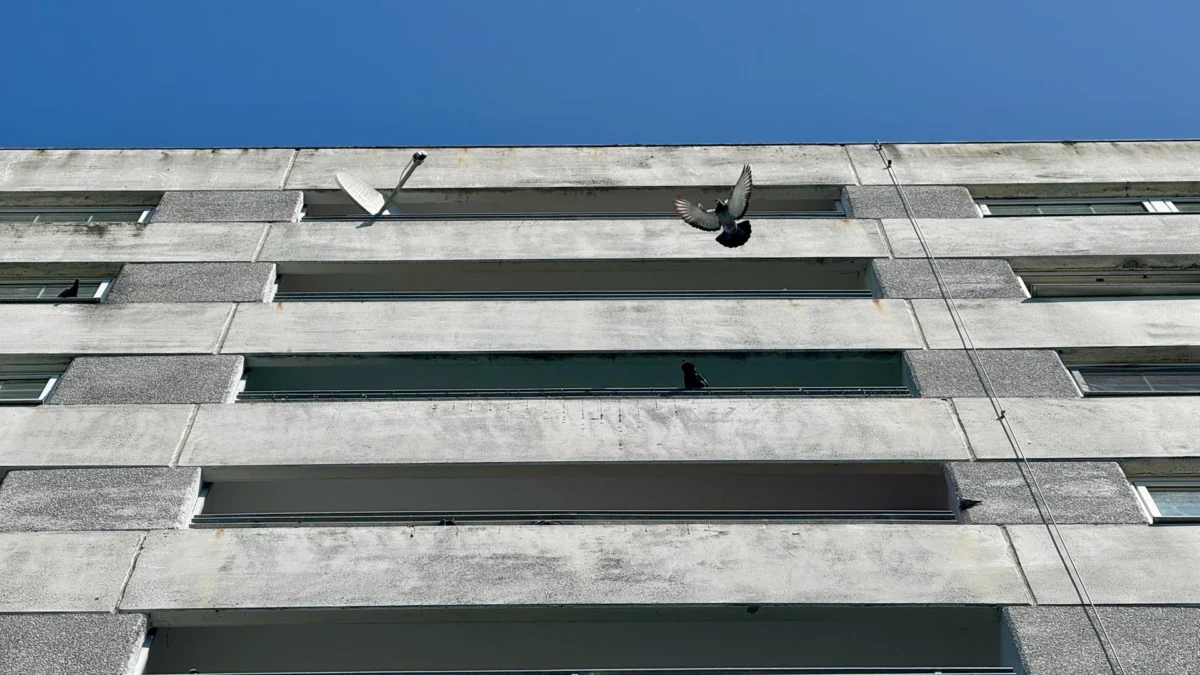
For nearly 17 months, the eleven-story residential high-rise in Babenhausen, located in the Darmstadt-Dieburg district, has stood as a hollowed-out monument to neglect and bureaucratic failure. Once home to 190 residents, the building “Im Erloch” was expected to welcome its inhabitants back by the end of October. However, that hope has been shattered by the local building authority, which has once again refused to grant occupancy clearance.
The situation has devolved into a cycle of frustration, financial strain, and dashed expectations for the condominium owners’ association (WEG). With the winter season approaching and critical safety systems still missing, the dream of returning home remains indefinitely postponed.
The Core Issues: Why the Doors Remain Locked
The building authority’s refusal to permit a return is not merely a bureaucratic formality; it is rooted in profound safety concerns. Martina Löffler, the head of the local building inspection department, has remained steadfast in her position: she cannot authorize the return of residents to a building that fails to meet basic modern safety standards.
The Missing "Flush Ventilation" System
The most significant hurdle is the absence of a required “flush ventilation” (Spüllüftung) system. Under the 2020 fire safety concept, this high-rise is required to feature two independent structural escape routes. Because the building was constructed with only one, the flush ventilation system was designed as a compensatory measure. In the event of a fire, this system must be capable of pumping at least 10,000 cubic meters of fresh air per hour into the stairwell, diluting smoke and forcing it out through specific openings. Without this, residents would be at risk of smoke inhalation during an evacuation. As of the most recent inspection, the authority has not even received proof that this system has been commissioned.
Secondary Safety Deficiencies
Beyond the ventilation issue, a litany of smaller but vital tasks remains incomplete:

- Documentation: There is a lack of certified proof regarding the commissioning of fire-resistant doors.
- Structural Hazards: Protective tarps are missing from scaffolding to prevent falling debris—specifically window components—from endangering pedestrians.
- Infrastructure: Deficiencies exist in the lightning protection system, the elevators, and the building’s electrical safety certification.
- Accessibility: The emergency escape route over the roof has not yet been modified to be barrier-free.
- Safety Features: Critical "panic locks" are missing from stairwell doors, and a handrail is absent from a basement access point.
A Chronology of Failure: From Routine Maintenance to Crisis
The current ordeal is the culmination of years of alleged mismanagement. The timeline of the "Im Erloch" crisis serves as a sobering case study in real estate negligence.
May 2025: The First Signs of Decay
The crisis began when residents and observers noticed parts of the building’s facade visibly bulging outward. What initially appeared to be a localized issue quickly escalated into a full-scale structural emergency.
June 2025: The Evacuation
On June 1, a 25-square-meter section of the facade collapsed into the entrance area. The situation reached a breaking point on the night of June 4, when approximately 190 residents were ordered to vacate their 70 apartments. Initially, it was hoped that the evacuation would last only a few weeks.
August 2025: Total Lockdown
The situation worsened when a window fell from the eighth floor, prompting the authorities to order a total, building-wide lockdown. During this time, investigations revealed severe, systemic fire safety violations that had been ignored for years.
Late 2025 – 2026: The Shift in Management
Following public outcry and legal scrutiny regarding the previous property management’s conduct—including allegations of financial irregularities and years of deferred maintenance—a new management company, WohnWert, took over. In February 2026, residents were briefly allowed back into their apartments for the first time to collect belongings, but the building remained officially uninhabitable.

Financial and Personal Implications for Owners
The human cost of this high-rise saga is profound. For many owners, the property has transformed from a retirement asset or a source of rental income into a "financial black hole."
The Burden of Maintenance
Despite not being able to live in or rent out their units, owners are still legally obligated to pay "Hausgeld" (maintenance fees) and cover the mounting costs of the necessary renovations. One owner noted that they had expected to have new tenants by November. Instead, they are dealing with further damage caused by a leaking roof—damage they cannot repair because access to the building is restricted.
The "Ghost Town" Effect
The psychological toll is equally heavy. Anonymously, some owners have expressed utter disbelief at the slow pace of progress. "It is a joke," one owner remarked, noting that even where work has begun—such as in the stairwells—it remains unfinished. "There is no plaster, no paint, no doors. Nothing."
This sentiment is compounded by a perceived lack of transparency. Owners report that information regarding the status of the construction often fails to reach them, leading to a breakdown in trust between the management board and the individual owners. The desperation has reached such a level that some owners are now openly discussing selling their properties as soon as possible, simply to escape the financial and emotional bleeding.
The Winter Challenge: The Roof Problem
Adding to the immediate technical challenges is the approaching winter. The building’s roof is in such a dilapidated state that the building authority has mandated it be kept free of snow. Because of the building’s 37-meter height, standard maintenance staff cannot perform this task safely. The requirement to hire specialized, certified industrial climbers for snow removal adds yet another layer of cost and logistical complexity—a service for which, once again, no proof of commissioning has been presented to the authorities.

Official Responses and Future Outlook
The local government, represented by the building inspection department under Martina Löffler, maintains that they are already operating with a degree of leniency.
"It is a major concession on our part that we are not requiring the complete implementation of every single measure from the 2020 building permit before allowing a return," Löffler explained. The authority has repeatedly stated that the criteria for reopening were communicated early and clearly. The ball is firmly in the court of the owners’ association and the property management.
Legal Complications
While the building authority focuses on safety, the legal system is scrutinizing the past. The public prosecutor’s office in Darmstadt is currently investigating former members of the previous management team on suspicion of fraud and embezzlement. While a separate investigation into "endangering construction" was eventually closed, the civil and financial damages continue to ripple through the community.
Conclusion: A Long Road Ahead
As of late 2024, there is no fixed date for the return of the residents. While the new management and the administrative board have taken steps to collect outstanding fees and initiate necessary repairs, the scale of the remaining work—and the looming million-euro costs for the full facade and roof renovation—cast a long shadow over the future of the high-rise.
The story of the Babenhausen high-rise is not just one of crumbling concrete and failed safety systems. It is a cautionary tale of what happens when oversight fails and the burden of professional negligence falls onto the shoulders of private individuals. For now, the "sleeping giant" on the outskirts of Babenhausen remains silent, leaving its owners to wonder if their investment will ever truly be a home again.