By Editorial Staff
In a fusion of historical reverence and contemporary pop culture, the iconic German comic institution Mosaik has taken flight with its latest release, "Minnas Luftreise" (Minna’s Air Journey). The new edition shifts the spotlight from the long-standing Abrafaxe trio to the female protagonists—Anna, Bella, and Caramella—as they traverse 19th-century Saxony to cross paths with one of Germany’s most daring pioneers: Wilhelmine "Minna" Reichard.
The comic, which hit shelves this week, serves as both an entertaining adventure for young readers and a poignant tribute to the life of the first German woman to ascend in a hot air balloon. By weaving local history with the whimsical, high-stakes storytelling characteristic of the Mosaik brand, the publishers are once again proving that the medium can serve as a potent vessel for educational storytelling.
The Historical Context: The Life of Wilhelmine Reichard
To understand the weight of the new Mosaik release, one must look at the remarkable life of its subject, Wilhelmine Reichard (1788–1848). Long before aviation became a standardized science, Reichard was a woman of extraordinary courage. Born in Braunschweig, she moved to Saxony, where she eventually settled in the Dölschen district of Freital.
Reichard was not merely an aeronaut; she was a spectacle-maker and a master of engineering in an era when women were largely restricted from public life. Alongside her husband, a balloonist, she performed numerous public ascents, captivating crowds throughout the German states. However, it was her historic solo flight in 1811 that secured her legacy.
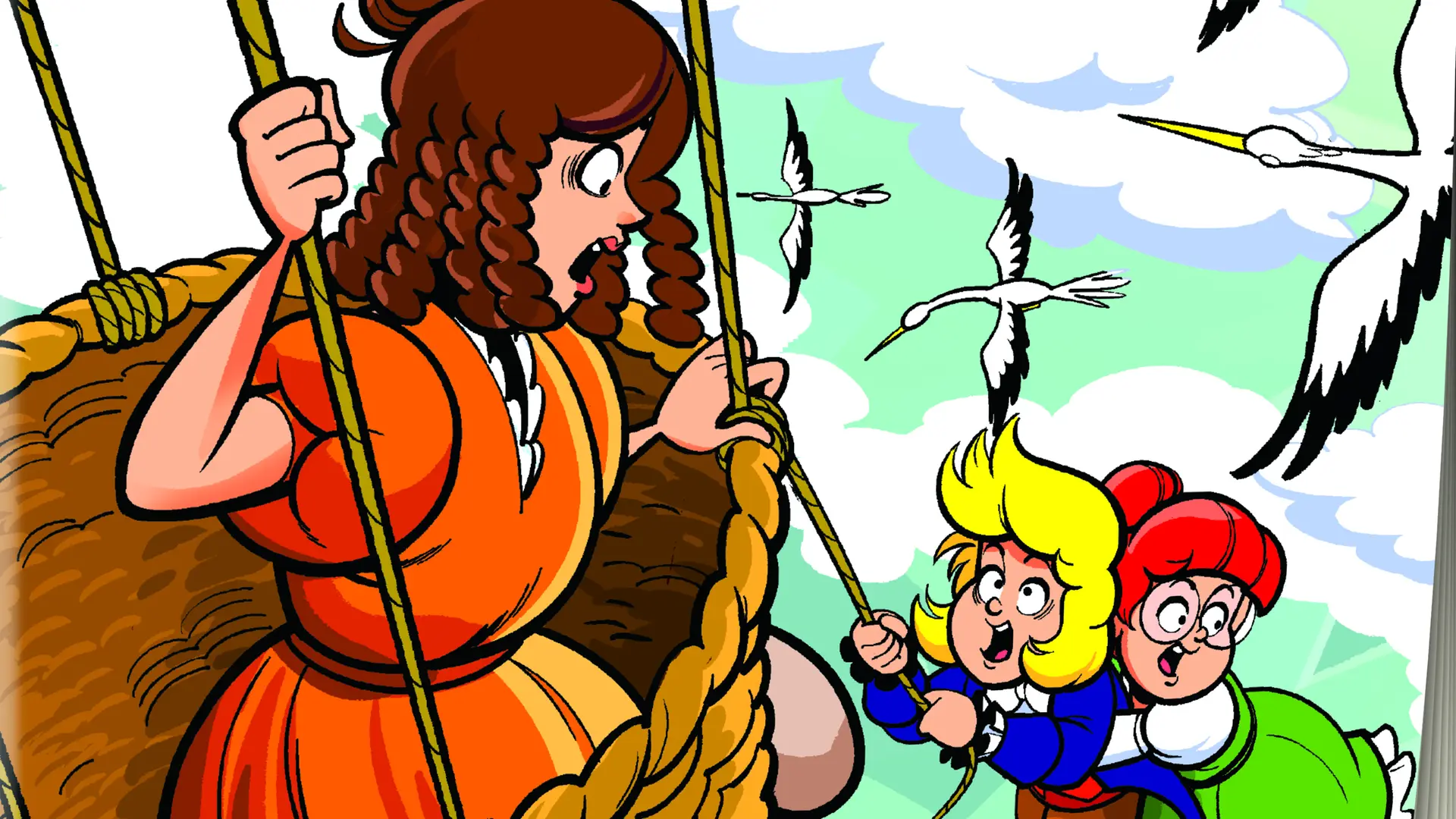
The feat was monumental: at a time when ballooning was in its infancy and remarkably dangerous, Reichard took to the skies alone, reaching altitudes that were as terrifying as they were exhilarating. Her life remains a cornerstone of Freital’s local identity, preserved through landmarks like the Reichardstraße and a commemorative stone on the Döhlen cemetery.
Chronology of a High-Altitude Adventure
The narrative of "Minnas Luftreise" is structured around the climatic events of 1811. As explained by Robert Löffler, spokesperson for the Mosaik publishing house, the plot centers on the dramatic events surrounding Reichard’s historic flight.
- The Launch: The story opens in the heart of Dresden, where the air is thick with the anticipation of a public demonstration. Minna prepares her balloon, a contraption of silk and fire, while Anna, Bella, and Caramella arrive on the scene, eager to witness the marvel of flight.
- The Ascent: The narrative captures the awe of early 19th-century spectators as the balloon rises above the spires of the city. For readers, the comic provides a bird’s-eye view of a Saxony that has long since vanished, rendered in the meticulous detail for which Mosaik artists are famous.
- The Crisis: History dictates the tension of the story. Due to worsening weather conditions, the flight takes a harrowing turn. As the balloon loses buoyancy and stability, Reichard faces the ultimate test of her aeronautical skill.
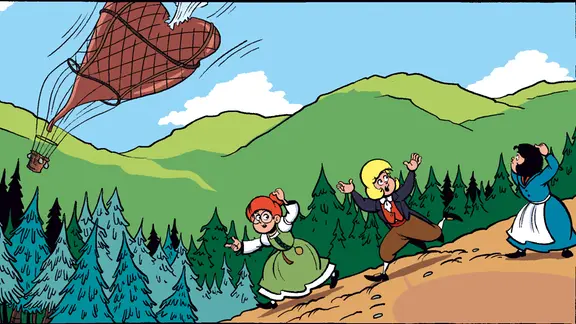
- The Rescue: In a creative license that integrates the comic’s protagonists into the fabric of history, the three sisters—Anna, Bella, and Caramella—find themselves in the Saxon Switzerland region. It is here that they play a pivotal role in the aftermath of the crash, assisting the wounded pioneer after her descent from an altitude of 7,000 meters.
Supporting Data: The Evolution of "Mosaik"
The release of "Minnas Luftreise" marks the 70th volume featuring the sisters, a sub-series that has seen a dramatic surge in popularity. While the Abrafaxe—the main characters of the Mosaik universe—have reached a staggering 611 issues, the shift toward the female-led narrative has tapped into a growing appetite for stories that highlight women who broke societal glass ceilings.
- Total Issues (Main Series): 611
- Total Issues (Sisters Series): 70
- Key Historical Figures Featured: Empress Sisi, Marie Curie, Frida Kahlo, and now, Wilhelmine Reichard.
The decision to feature these specific women is a calculated move by the editorial team. By placing these real-world icons alongside fictional comic heroines, the publishers are building a bridge between historical education and fantasy, ensuring that the legacy of figures like Reichard is introduced to a new generation of children who might otherwise never encounter her story.
Official Responses and Editorial Vision
Robert Löffler, representing the Steinchen für Steinchen Verlag, emphasized the importance of this specific project during his interview with MDR Kultur.

"After our adventures involving iconic figures like Marie Curie and Frida Kahlo, we wanted to return to a narrative that was closer to our own roots in Saxony," Löffler noted. "Wilhelmine Reichard is a perfect fit. She represents not just the history of aviation, but the spirit of innovation and resilience that defines our region."
Löffler further explained the technical challenges of depicting the crash in the comic: "We had to be historically sensitive. The fact that she survived a fall from 7,000 meters is nothing short of miraculous. By incorporating our three heroines into that moment of survival—specifically landing in the trees of the Saxon Switzerland—we allow our readers to feel the intensity of that moment while keeping the tone appropriate for our audience."
The collaboration with the city of Freital has been instrumental in the production. The city provided extensive archival information regarding the restoration of Reichard’s former home in Döhlen, ensuring that the background visuals of the comic are as accurate as possible.
Implications: A New Era for German Comics
The success and continued expansion of the Mosaik brand carry significant implications for the European comic market. In an age where digital media dominates the attention of youth, the enduring appeal of the Mosaik print format suggests that there is still a powerful demand for tangible, historical storytelling.
Promoting Regional Heritage
By focusing on local legends like Reichard, Mosaik is effectively acting as a cultural curator. This helps to reinforce regional identity, particularly in Saxony, where the legacy of the DDR-born comic remains a point of intense pride. When a child reads about the streets of their own town being the site of a 19th-century miracle, the local history becomes "alive."
Empowering Young Readers
The shift to the sisters—Anna, Bella, and Caramella—reflects broader societal changes in the representation of gender. By portraying women as capable, brave, and intellectually curious figures who interact with scientists, artists, and pioneers, the comic provides positive, multi-faceted role models. The inclusion of Reichard is not an outlier; it is part of a deliberate editorial strategy to highlight the "hidden" women of history.
The Sustainability of Print
With the main series approaching 620 issues and the sister-series consistently performing well, the Steinchen für Steinchen Verlag is bucking global trends regarding the decline of print media. Their ability to adapt the Mosaik format—blending historical accuracy with consistent, high-quality illustration—has created a sustainable model that relies on collector loyalty and academic interest.
Conclusion
"Minnas Luftreise" is more than just a comic book; it is a testament to the enduring power of local history when filtered through the lens of imagination. As Wilhelmine Reichard’s balloon ascends once more, this time in the colorful panels of Mosaik, she is granted a new kind of immortality.
For the residents of Freital, the scholars of aviation history, and the thousands of children who await each new Mosaik installment, this issue serves as a reminder that the sky is not a limit, but a starting point. Whether she is performing a daring stunt in 1811 or being rescued by a trio of sisters in 2026, the spirit of "Minna" continues to soar, proving that the most compelling stories are often those that take flight from our own backyards.
As the Mosaik series looks toward the future, one can only wonder which historical figure will be next to join the ranks of its heroes. But for now, the spotlight remains firmly on the woman who dared to go where no one else would—into the thin, cold air of the Saxon sky.