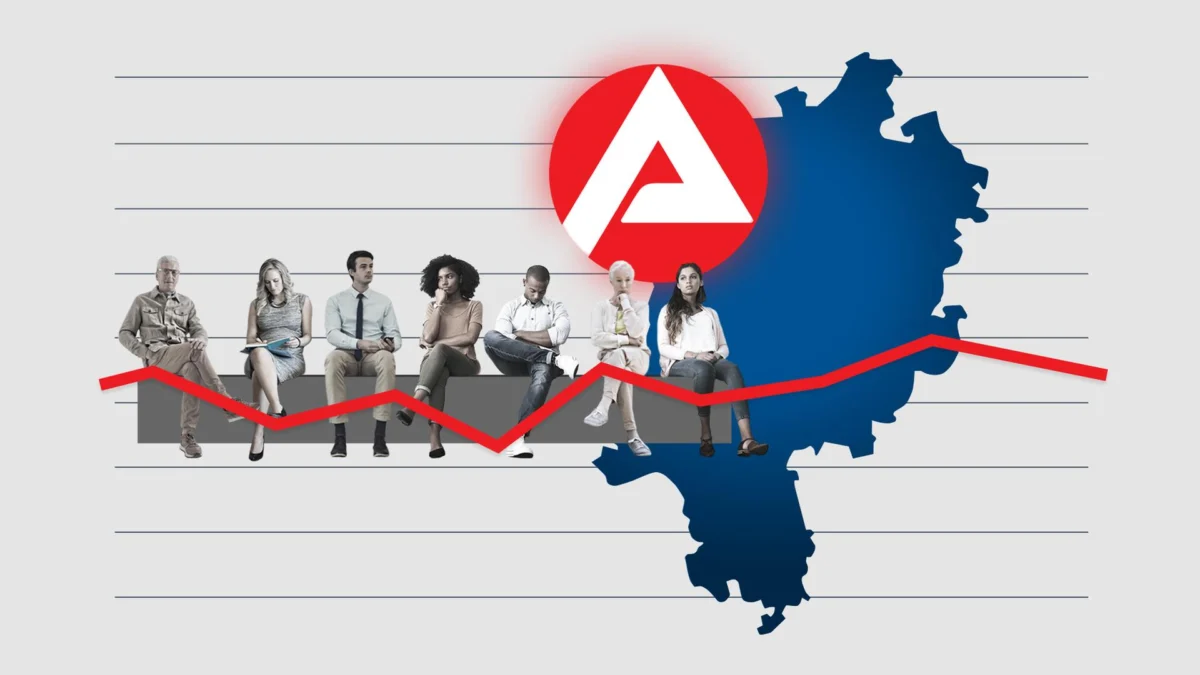
The latest labor market data for the German state of Hessen paints a sobering picture of an economy in transition. While the raw number of unemployed individuals saw a marginal, almost nominal decline in October, the underlying metrics reveal a structural malaise that has analysts and policymakers deeply concerned. With 209,611 people currently without work and a persistent, widening gap in the apprenticeship market, the "slight improvement" often cited in monthly reports masks a deepening crisis for the next generation of the workforce.
Main Facts: A Stagnant Landscape
According to the latest report from the Regional Directorate of the Federal Employment Agency (Bundesagentur für Arbeit), the number of unemployed individuals in Hessen fell by roughly 800 in October compared to the previous month. While this downward tick might appear positive at first glance, it keeps the unemployment rate stuck at 5.9 percent—a plateau that reflects a broader lack of momentum in the German economy.
The year-over-year comparison provides a more accurate, and arguably more pessimistic, reality: there are currently 4,000 more people unemployed in Hessen than there were at this time last year. Furthermore, the number of employees subject to social security contributions has remained stagnant, indicating that businesses are largely unwilling or unable to expand their payrolls.
Frank Martin, the head of the Regional Directorate for Hessen, did not mince words when discussing the state of the market. "We are witnessing a significant reluctance on the part of companies to make new hires," Martin noted. The consensus among economic observers is that the current framework conditions—characterized by high energy costs, bureaucratic hurdles, and global geopolitical instability—have deterred firms from investing in human capital, both within the industrial sector and the service industry.
Chronology of a Slowdown
The current economic stagnation did not appear overnight. It is the culmination of a period of sustained uncertainty that began in the post-pandemic era and was exacerbated by the energy crisis in late 2022.
- 2021–2022 (The Post-COVID Recovery): Following the lockdowns, the labor market initially saw a robust rebound. During these years, apprenticeship positions were relatively plentiful, with supply roughly tracking demand.
- Late 2023: As inflationary pressures hit German manufacturing, the "wait-and-see" approach became the dominant corporate strategy. Hiring freezes were implemented across medium-sized enterprises (Mittelstand), the backbone of the Hessian economy.
- September 2024: The cutoff date for the annual vocational training statistics revealed a alarming trend. As of September 30, the gap between available apprenticeship spots and eager applicants became statistically undeniable.
- October 2024: The latest monthly data confirms that while the absolute unemployment number has dipped slightly due to seasonal fluctuations, the structural lack of new, high-quality jobs persists.
Supporting Data: The Apprenticeship Crisis
Perhaps the most troubling aspect of the recent report is the collapse of the apprenticeship market. In a country that prides itself on the "Dual Education System," which has historically served as a bridge between school and a successful career, the current figures represent a systemic failure.
Companies reported only 29,500 available apprenticeship positions this year—a sharp 10 percent decline compared to the previous year. Conversely, the number of applicants rose by four percent, reaching approximately 37,700.
"29,500 training positions for 37,700 applicants—that simply cannot work," Frank Martin emphasized. The delta between these two figures is not merely a statistical anomaly; it is a human crisis. Even during the height of the COVID-19 pandemic, there were 6,000 more positions available than there are today.

As of the end of September, nearly 4,200 young people remained completely unserved, despite their active efforts to secure a vocational path. This lack of access to training is not just a short-term issue; it creates a long-term economic drag. The employment agency reports that more than 75 percent of currently unemployed youths do not possess a vocational qualification, effectively trapping them in a cycle of low-skilled, precarious employment.
Official Responses and Economic Analysis
The Regional Directorate of the Federal Employment Agency has signaled that the current state of the labor market is "critical." The agency’s leadership highlights that businesses are not seeing the necessary incentives to grow. From the perspective of the private sector, the cost of labor—coupled with sluggish domestic demand—means that hiring is viewed as a financial risk rather than an opportunity for growth.
Economic analysts suggest that the "Hessen effect" is a microcosm of the national German challenge. Hessen, as a hub for finance, logistics, and manufacturing, is particularly sensitive to global trade fluctuations. When the industrial output of the Federal Republic slows, the administrative and logistical hubs in Frankfurt and the surrounding areas feel the impact immediately.
Government representatives are currently under pressure to address the structural mismatch. There are calls for improved incentives for small and medium-sized enterprises to keep their apprenticeship quotas high, even during downturns. Without intervention, the state risks losing a generation of talent to long-term unemployment or reliance on social welfare systems.
Implications: A Looming Skills Gap
The long-term implications of this labor market trajectory are profound. If thousands of young people are unable to enter the workforce through vocational training, the "skills gap" that has long plagued German industry will likely widen into a chasm.
- Demographic Decline: Germany’s aging population means that the labor force is shrinking. Every young person who remains un-trained represents a loss of potential tax revenue and productivity that the state cannot afford to lose.
- Social Stability: A high rate of youth unemployment is a known indicator of future social instability. When young people feel that the path to a professional career is blocked, it leads to disengagement from the democratic process and increased reliance on social security, placing a further burden on the state budget.
- Industrial Competitiveness: The "Made in Germany" label relies heavily on the technical proficiency provided by the dual education system. If apprenticeships continue to vanish, the quality of the domestic workforce will decline, further eroding the competitive advantage of Hessian and German manufacturers on the global stage.
Conclusion: A Need for Structural Reform
The October labor market figures serve as a wake-up call. While a dip of 800 people in the unemployment registry might provide a temporary headline, it is insufficient to mask the deeper, more structural problems facing Hessen.
To reverse this trend, the state must look beyond simple hiring incentives. It requires a concerted effort to simplify business regulations, lower the barriers for small firms to offer apprenticeships, and ensure that the educational curriculum remains aligned with the needs of a modern, digitalized economy.
As the winter months approach—a time when seasonal unemployment typically rises—the outlook remains guarded. The resilience of the Hessian labor market will be tested in the coming months, and for the 4,200 young people currently without a placement, the urgency for a solution has never been higher. The stability of the next decade depends on how policymakers and business leaders respond to these warning signs today.