In a world where global health challenges range from endemic viruses to the silent spread of antimicrobial resistance, our most sophisticated defense mechanism—the immune system—remains our greatest asset. But how did this complex, 24/7 protection network come to be? In a recent episode of the MDR podcast "The Big Questions in 10 Minutes," host Karsten Möbius explores the profound evolutionary journey of our immune defenses, joined by leading immunobiologist Prof. Dr. Thomas Boehm.
1. The Main Facts: A Personal Quest for Biological Understanding
For Karsten Möbius, the investigation into the immune system is more than just academic; it is deeply personal. Having survived life-threatening battles with Dengue fever and sepsis, and remaining, as he puts it, "spared from cancer—toi, toi, toi," Möbius views his health as a hard-won victory. Standing in line at his workplace for a seasonal flu shot, he experienced a moment of profound gratitude toward the biological machinery that keeps him alive.
"I owe this to myself," Möbius reflects. "The fact that my immune system works 24/7, patrolling my body, identifying threats, and executing precise responses, is nothing short of miraculous."
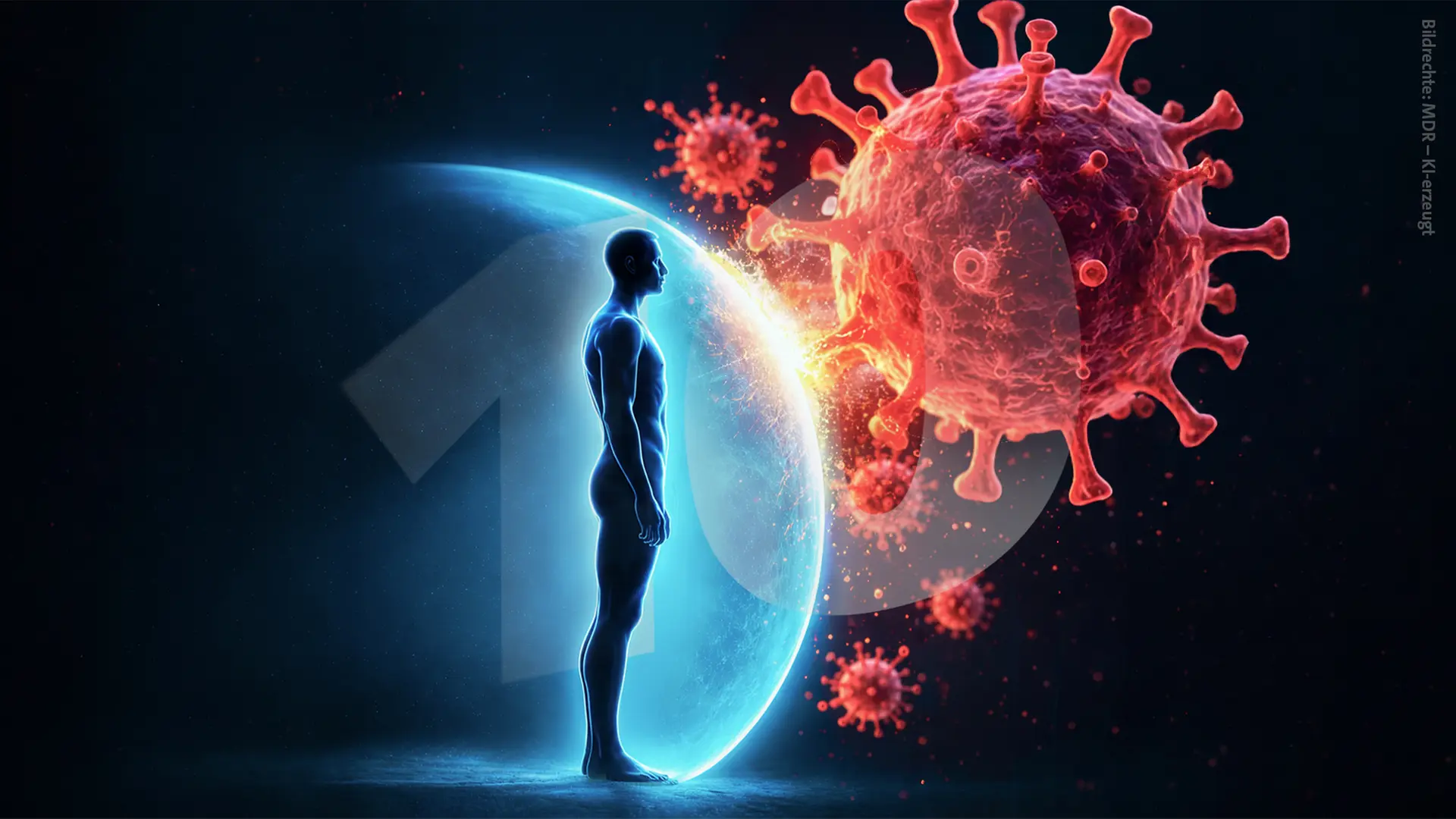
This realization sparked a journey into the origins of immunity. Together with Prof. Dr. Thomas Boehm, director at the Max Planck Institute of Immunobiology and Epigenetics in Freiburg, the program strips away the complexity of modern medicine to examine the fundamental "building blocks" of defense. The core takeaway? Our immune system is not a static invention but a cumulative, adaptive masterpiece that has been refined over hundreds of millions of years of evolutionary pressure.
2. Chronology: From Primordial Cells to Adaptive Sophistication
To understand the complexity of the human immune system, one must travel back to the dawn of multi-cellular life. Prof. Boehm outlines a timeline that shifts our perspective from "sudden design" to "gradual adaptation."
The Era of Innate Immunity
In the earliest stages of life, organisms relied exclusively on the innate immune system. This is the "first responder" layer—a non-specific, rapid-action force. Ancient cells developed receptors capable of recognizing broad, recurring patterns found on pathogens (such as bacterial cell walls). It was a "shoot first, ask questions later" approach, effective for basic survival but lacking the precision required for modern, complex life.

The Great Evolutionary Leap: The Adaptive System
The most significant shift occurred with the emergence of vertebrates. Prof. Boehm notes that the transition to the adaptive immune system—the branch capable of "learning" and "remembering" specific pathogens—was a game-changer. This allowed organisms to develop immunological memory. Once the body successfully fights a specific virus or bacteria, it keeps a "blueprint" on file. If the same threat returns, the response is near-instantaneous.
Genetic Innovation and Transposons
How did this complexity arise? Research cited by Prof. Boehm suggests that the evolution of adaptive immunity was not merely a matter of trial and error but involved "genetic hijacking." Specifically, evidence points to the role of transposable elements—so-called "jumping genes"—that integrated into the genome of early vertebrates. These genetic elements were repurposed by evolution to create the highly variable receptors that allow our T-cells and B-cells to recognize an almost infinite array of foreign invaders.
3. Supporting Data: The Science of Survival
The dialogue between Möbius and Boehm is underpinned by rigorous scientific literature. To understand why our immune system is so adept at identifying threats, one must look at the genetic pressure applied by pathogens.

- Comparative Immunology: Recent studies, such as those published in Nature Reviews Immunology, emphasize that vertebrate immunity is a study in comparison. By looking at how different species—from jawless fish to mammals—defend themselves, we can identify the conserved core mechanisms that have persisted for half a billion years.
- The Power of Memory: The adaptive immune system is essentially a high-fidelity data storage system. Research from Nature Reviews Genetics on the origin of adaptive immunity highlights how specific genetic events and constant selection pressure forced the body to create a system that doesn’t just react, but anticipates.
- Biological Efficiency: The "cost" of the immune system is high. Maintaining the cells, the energy required for inflammation, and the risk of autoimmune overreaction are massive trade-offs. Yet, as the data shows, the evolutionary benefits of surviving a plague outweigh the metabolic costs of maintaining this internal army.
4. Official Perspectives: Insights from the Max Planck Institute
Prof. Dr. Thomas Boehm’s work at the Max Planck Institute for Immunobiology and Epigenetics serves as the anchor for this exploration. His research into the development of the immune system reveals that our current biological configuration is the result of a "biological arms race."
"We are essentially living in the future of our ancestors," Boehm suggests. "Every component of the immune system we possess today was stress-tested by extinct pathogens."
Boehm emphasizes that the immune system is not just a shield; it is an intelligent, reactive environment. It relies on the environment to "train" itself. In early life, exposure to benign microorganisms is essential for "programming" the immune system, ensuring it can distinguish between self and non-self. When this programming goes wrong, we see the rise of allergies and autoimmune diseases, which remain some of the greatest challenges in modern medicine.
5. Implications: Why This Matters for the Future
The study of the immune system’s evolution is not just an exercise in historical curiosity; it has profound implications for modern medicine.
The Threat of Antimicrobial Resistance (AMR)
As discussed in the broader series of The Big Questions in 10 Minutes, we are reaching a turning point where traditional antibiotics are losing their efficacy. As bacteria evolve to "crack" our chemical defenses, our only remaining, truly sustainable weapon is the human immune system itself. Understanding its evolution gives researchers clues on how to "boost" or "re-educate" our natural defenses to handle these "superbugs."
Longevity and "Super-Immunities"
The research also touches upon the mystery of "super-centenarians"—individuals who live well beyond 100 years. Studies suggest that these individuals possess specialized immune cells—hybrids of helper and killer cells—that remain highly efficient at clearing out cancer cells and persistent pathogens even at an advanced age. By studying these individuals, scientists hope to develop therapies that could help the rest of the population maintain a more youthful, effective immune response into old age.
The Future of Medical Intervention
The era of personalized medicine is dawning. If we can understand the genetic triggers that allowed for the evolution of our adaptive immunity, we may eventually be able to use gene-editing technologies (like CRISPR) to treat immune-deficient patients or retrain an overactive immune system in patients with chronic inflammatory diseases.
Conclusion: A Legacy of Resilience
The 11-minute journey provided by Karsten Möbius and Prof. Thomas Boehm serves as a poignant reminder that we are the beneficiaries of an ancient, ongoing biological success story. Our immune system is a testament to the fact that, against all odds, life finds a way to survive, adapt, and prevail.
As we look toward the future—facing new viral threats, the challenge of climate-driven disease shifts, and the crisis of antibiotic resistance—the "big question" remains: Can we use the lessons of our own evolutionary history to protect the future of our species? The answer likely lies within the very cells we carry inside us every day.
For those interested in delving deeper into the mechanics of the immune system, the research papers cited by Prof. Boehm are available via Nature Reviews, offering a comprehensive look at the genetic and molecular architecture of our primary defense system.
Podcast Recommendation: For listeners seeking more, check out "Frag dich fit – mit Doc Esser und Johanna" in the ARD Sounds app for practical tips on maintaining your health and fitness.
Feedback: The team at "The Big Questions in 10 Minutes" invites listeners to reach out with questions, feedback, or suggestions for future topics at [email protected].