By Editorial Staff | August 18, 2026
Sixty-five years have passed since the concrete barriers of the Berlin Wall began to slice through the heart of a nation, turning streets into battlefields of ideology and families into strangers overnight. For the digital-native generation of 2026, the Cold War is a chapter in a textbook—a distant, abstract period of history. However, a groundbreaking new initiative from Germany’s public broadcasters, WDR and MDR, is transforming how that history is taught, felt, and understood.
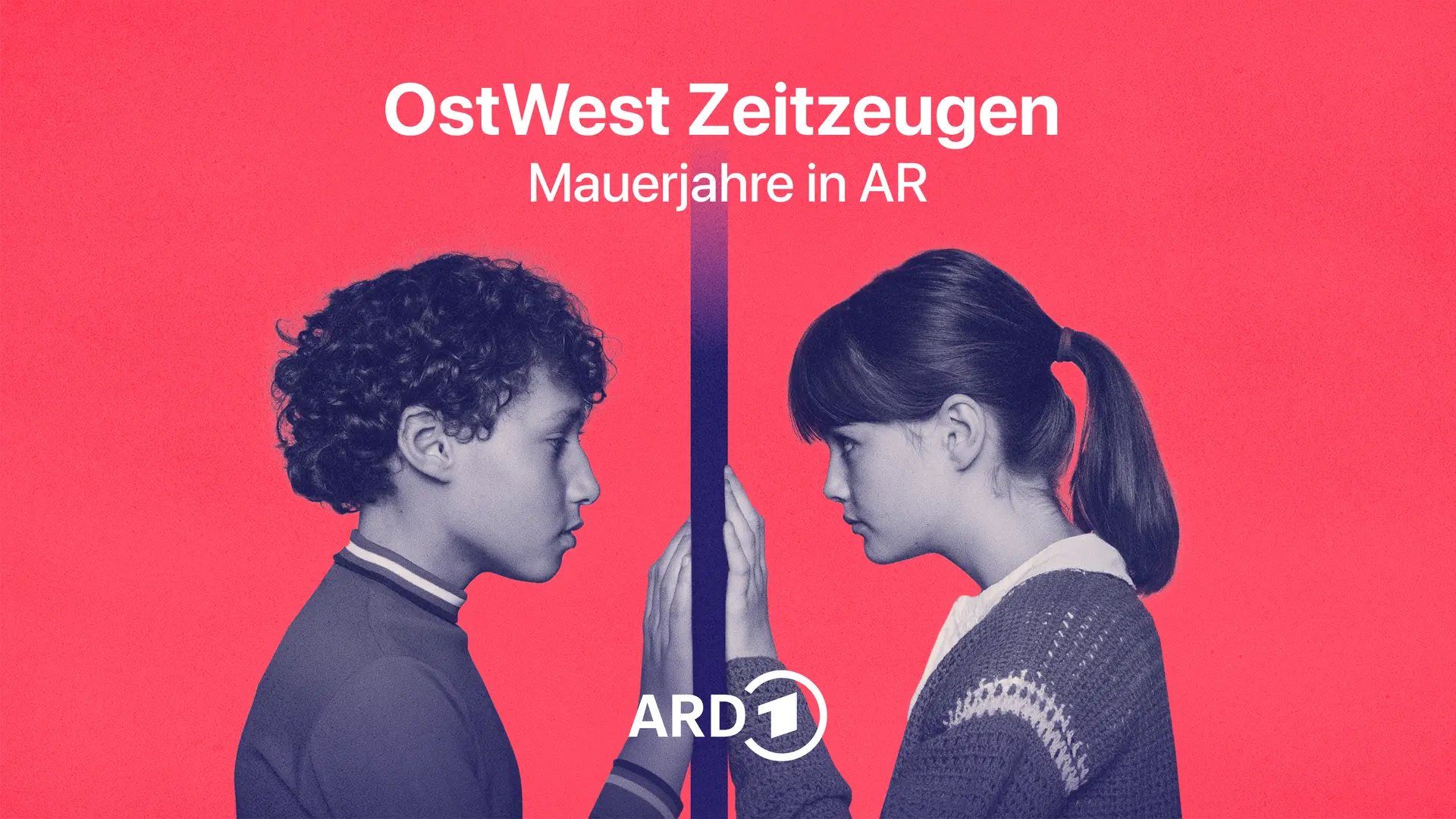
The launch of the Augmented Reality (AR) app, "OstWest Zeitzeugen – Mauerjahre in AR" (East-West Witnesses – Wall Years in AR), marks a significant shift in historical pedagogy. By bringing history directly into the living rooms and classrooms of students, the project seeks to bridge the generational divide and provide an intimate, visceral connection to one of the 20th century’s most defining tragedies.
The Core Narrative: Personalizing the Abstract
The strength of the app lies in its rejection of "top-down" history. Instead of reciting dry statistics about the number of guard towers or the length of the "Death Strip," the application focuses on the human element. It centers on three distinct, lived experiences that illustrate the complex, often agonizing decisions forced upon citizens in 1961:
- Elke Rosin: A woman whose life was upended by the sudden border closure, forcing a desperate, immediate decision to flee to the West.
- Jörg Hildebrand: An individual who, despite holding profound ideological opposition to the socialist system, chose to remain in the German Democratic Republic (GDR).
- Uwe Rutkowski: A former "Volkspolizist" (People’s Police officer) who found himself tasked with guarding the very wall he harbored growing doubts about.
These narratives are not merely recorded clips; through AR technology, these figures appear as life-sized, three-dimensional avatars within the user’s own environment. This "eye-level" engagement transforms the experience from passive consumption to active interaction, allowing students to confront the contradictions of the era directly.
Chronology of a Division: A Multi-Sensory Journey
To understand the impact of the app, one must view it within the timeline of the division. The app functions as a portal, moving through the following thematic milestones:
1. The Shock of August 1961
The app’s primary module focuses on the night of August 12–13, 1961. Through primary sources, photographs, and the oral testimony of Elke Rosin, students witness the moment the illusion of a unified city shattered. As Rosin recalls, "When the border was closed, we realized it would stay closed forever. My parents told us to gather what was important. We were leaving for the West." This module forces the user to confront the suddenness of displacement.
2. The Years of Consolidation
The secondary phase covers the solidification of the border. Here, the app provides historical context through digitized archives, maps, and audio recordings, showing how the "Anti-Fascist Protection Rampart" (the official GDR term) transformed from barbed wire into a lethal, fortified complex.
3. The Dilemma of Conscience
Perhaps the most crucial stage of the AR experience is the interaction with Jörg Hildebrand and Uwe Rutkowski. By focusing on those who stayed or those who policed, the app dismantles the binary narrative of "victims" and "perpetrators." It invites students to ask: Why stay? Why obey? This nuanced exploration of human agency under authoritarianism is the project’s primary pedagogical objective.
Supporting Data: A Collaborative Production
The development of "OstWest Zeitzeugen" was not a purely academic exercise; it was a co-creation. Recognizing that historical empathy requires peer-to-peer engagement, the producers involved students from schools across Germany, including the Lyonel-Feininger-Gymnasium and the Elisabeth-Gymnasium in Halle, as well as the Geschwister-Scholl-Schule in Liebertwolkwitz.
These students were not just test audiences; they were active contributors. They conducted the interviews, helped select the visual archives, and debated the project’s branding. This collaborative approach, combined with the technical expertise provided by the Hochschule Düsseldorf, ensured that the app speaks the language of its users.
The project is supported by a robust digital ecosystem. Beyond the AR visuals, the app integrates:
- Multimodal Archives: Thousands of high-resolution photos and declassified documents.
- Interactive Dialogue: A dedicated web portal where students can submit questions. The most poignant queries are recorded and integrated into the app via updates, creating an evolving, "living" historical record.
- Gamified Learning: Optional modules that test the user’s ability to navigate historical scenarios, reinforcing the gravity of the decisions made by the witnesses.
Official Responses: A Commitment to Public Education
The launch of the app has been met with significant praise from the highest levels of German public media, who view it as a vital defense against the erosion of historical literacy.
WDR Director-General Dr. Katrin Vernau emphasized the project’s role in the digital age: "The division of Germany continues to cast a long shadow. This project proves that the ARD’s mandate for education can be fulfilled in a way that is innovative, participatory, and deeply rooted in the lives of young people. It provides teachers with an essential, modern tool for the history classroom."
Echoing this sentiment, MDR Director-General Ralf Ludwig highlighted the necessity of protecting history from misinformation: "We have a collective, national responsibility to preserve the truth of this era. By making these stories emotionally accessible, we build a firewall against false narratives and historical revisionism. We want to ensure that as the generation of the Wall passes away, their experiences do not vanish with them."
Implications: The Future of Historical Memory
The implications of "OstWest Zeitzeugen" extend far beyond the classroom. We are currently witnessing a global decline in historical knowledge among youth, exacerbated by the rise of social media algorithms that prioritize bite-sized, often inaccurate content.
Countering Revisionism
By providing a platform for direct engagement with witnesses, the app creates a barrier against the "memory holes" often exploited by political extremists. When a student can "stand" in a room with a person who actually lived through the terror of the border guards, the potential for historical denialism significantly decreases.
The Power of Empathy
The most profound implication is the shift from "history as a subject" to "history as a dialogue." By allowing users to submit their own questions—and potentially meeting the witnesses in person—the project humanizes the political divide. It challenges the "East vs. West" stereotypes that still linger in German society, fostering a more nuanced, empathetic understanding of the past.
A New Standard for Public Media
As public broadcasters worldwide struggle to remain relevant to younger demographics, the success of this collaboration provides a blueprint. It demonstrates that the future of public service journalism lies in the intersection of high-fidelity technology and deep-rooted investigative reporting. By leveraging AR, the German public broadcasters have turned the mobile phone—often a source of distraction—into a window into the soul of the 20th century.
Conclusion: An Invitation to Participate
The project is far from static. Until early October 2026, the editorial team is actively soliciting questions from classrooms across the nation. This is not just an archive; it is an ongoing conversation.
For educators, the app is now available for download on both Android and iOS platforms. It represents a bold, necessary step toward ensuring that the lessons of 1961 remain etched not just in stone and wire, but in the collective consciousness of the next generation. As the 65th anniversary of the wall’s construction brings the past back into focus, "OstWest Zeitzeugen" reminds us that while walls can be built, the truth—when supported by technology and human courage—is impossible to contain.