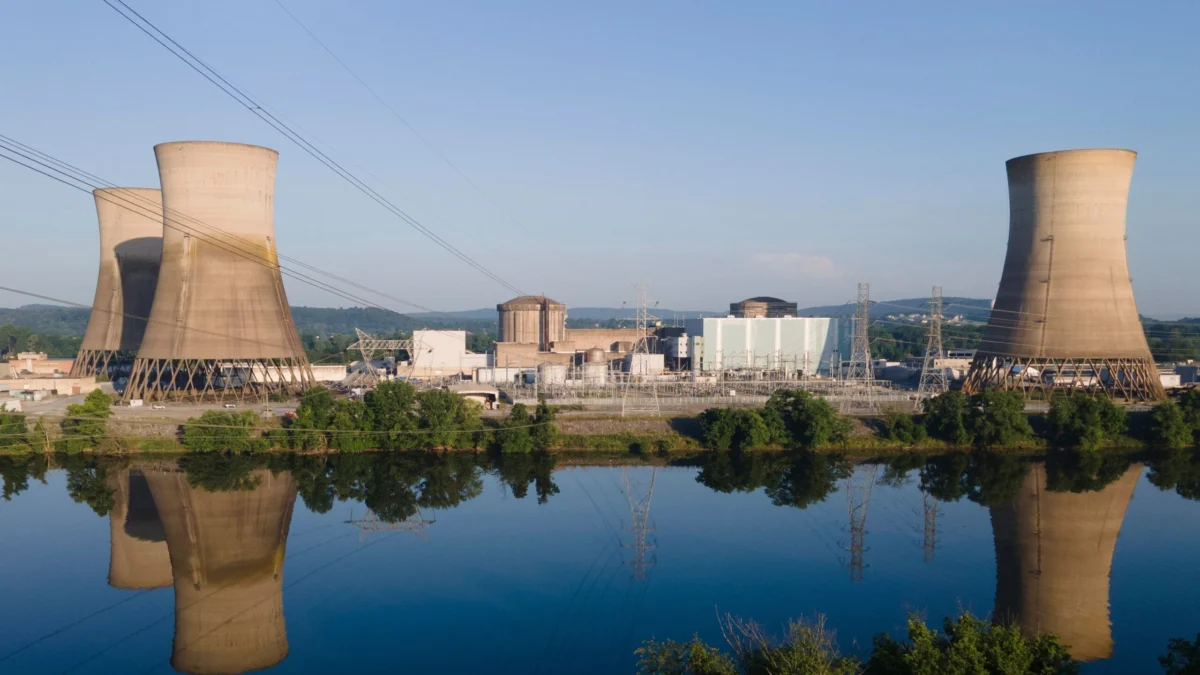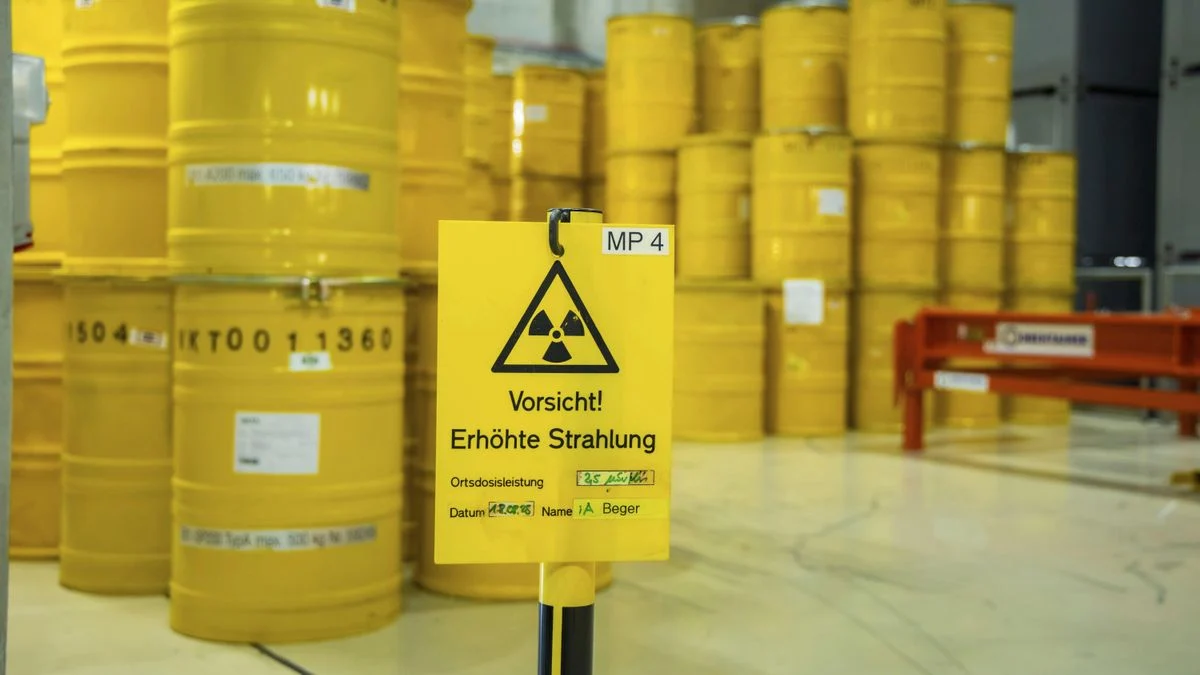
The search for a final resting place for Germany’s high-level nuclear waste has entered a critical new phase. As the nation grapples with the legacy of six decades of nuclear power generation, the Federal Company for Radioactive Waste Disposal (BGE) has unveiled a new, highly refined analysis that drastically narrows the scope of the hunt. With 27,000 cubic meters of high-level radioactive waste currently housed in temporary surface facilities, the clock is ticking toward a 2050 deadline for a permanent solution that must remain secure for the next million years.
The Shrinking Map: A Dramatic Reduction in Potential Sites
The latest data from the BGE marks a significant milestone in what is arguably the most complex engineering and geological undertaking in German history. According to the company’s recent report, the potential area under consideration for a deep geological repository has been reduced to less than five percent of the German federal territory.
To put this in perspective, the process has undergone a rapid evolution. As recently as 2025, approximately 25 percent of the country was still under consideration. Going back further to 2020, the initial report identified 90 potential areas—comprising nearly 54 percent of the nation—where a closer geological examination was deemed worthwhile.
This latest refinement excludes several federal states from the running entirely. While the BGE continues to evaluate regions in Southern, Eastern, Northern, and Northwestern Germany, the states of Rhineland-Palatinate, Hesse, Berlin, Saxony, and the Saarland have been removed from the list of candidates. The Saarland was effectively ruled out as early as 2020, while Rhineland-Palatinate was eliminated in 2025. The most recent additions to the list of excluded regions include Berlin, Hesse, and Saxony.

The Methodology: Scientific Rigor Over Political Expediency
The narrowing of the search area is not a political decision, but rather the result of a rigorous, science-based selection process. The BGE employs "representative preliminary safety investigations" to assess the suitability of the subsurface. By leveraging existing geological and geodetic data, the agency evaluates whether the surrounding rock formations can guarantee the safe containment of radioactive waste over geological timescales.
Geological Prerequisites
For a site to be considered viable, it must meet stringent criteria regarding stability and heat conductivity. Generally, three types of rock are considered potentially suitable for an underground repository:
- Salt formations: Known for their ability to heal fractures and isolate waste.
- Clay deposits: Highly impermeable to water, offering excellent containment properties.
- Crystalline rock (Granite): Provides significant structural stability.
Conversely, the Federal Office for the Safety of Nuclear Waste Management (BASE) has established strict exclusionary criteria. Any region with a compromised subsurface is immediately disqualified. This includes areas with a history of active mining, regions prone to volcanic activity, and zones susceptible to earthquakes.
Furthermore, water management is a paramount concern. The repository must be shielded from "water pathways" that could potentially transport radioactive particles to the surface. The waste itself generates significant heat even after disposal, necessitating rock formations capable of effectively dissipating this thermal energy. Ultimately, the repository must be located beneath at least 300 meters of impermeable rock to ensure total isolation from the biosphere.

A Chronology of the Search
The path to a final repository is a multi-generational project. The timeline is defined by the following key developments:
- 2013: The Site Selection Act is passed, establishing the framework for a transparent, science-based search process.
- 2020: The BGE publishes its first interim report, identifying 90 sub-areas covering 54 percent of Germany’s landmass.
- 2023: Germany officially shuts down its final operational nuclear power plants, marking the end of the atomic era but the beginning of the long-term waste management challenge.
- 2025: A major reduction in the search area occurs, with only 25 percent of the country remaining under evaluation.
- 2026 (Current Status): The search area is reduced to less than 5 percent. The entire national territory has now been subject to an initial geological assessment.
- 2027: The end of the first phase. The BGE is expected to present concrete regions for surface exploration.
- 2050: The target deadline for the identification and final selection of the site.
The Role of the Bundestag and Future Governance
While the BGE conducts the scientific heavy lifting, it is crucial to note that the agency does not have the final say. The search process is designed to be inclusive and democratically accountable. Following the BGE’s recommendations, the proposed sites undergo intensive scrutiny by independent scientists and the BASE.
Ultimately, the power to decide the final location lies with the German Bundestag and the Bundesrat. The legislative body will authorize the next, more invasive phases of exploration. As the process moves forward, considerations such as proximity to densely populated urban centers will be integrated into the evaluation—factors that were intentionally excluded from the initial purely geological screening.
Implications: The Burden of Future Generations
The challenge of nuclear waste is a stark reminder of the long-term consequences of energy policy. Currently, the 27,000 cubic meters of high-level waste are stored in 16 surface-level interim storage facilities scattered across the country. These facilities were never intended for permanent storage; they are merely a temporary bridge.

Experts, including Julia Neles of the Öko-Institut in Darmstadt, have cautioned that the path to a permanent solution is fraught with technical and social complexity. Neles has suggested that it may be 2046 at the earliest before a site is fully confirmed. Moreover, there is a growing consensus among some experts that a single repository might not be sufficient to handle the total volume and diversity of waste, implying that the "task of generations" may require more than one facility.
The Social and Economic Dimension
The transition from broad, nation-wide screening to specific regional focus brings with it significant social implications. As regions are identified, local populations will inevitably express concerns regarding property values, regional stigma, and long-term environmental safety. The transparency of the BGE’s process is therefore not just a scientific requirement but a social necessity to maintain public trust.
Conclusion
The latest report from the BGE serves as a sobering reminder of the scale of the task ahead. While the reduction of the search area to under five percent of Germany is a significant technical achievement, the most difficult work remains. The requirement for a site to remain secure for one million years is an unprecedented engineering demand.
As Germany moves toward the end of the first phase of this search in 2027, the focus will shift from theoretical modeling to empirical, on-the-ground exploration. The success of this endeavor will depend on the continued adherence to a science-based process, the transparency of the decision-making in the Bundestag, and the patience of a public that has seen the promise of nuclear power turn into the reality of a million-year responsibility. For now, the maps continue to change, and the search for a permanent home for the legacy of the atomic age continues, one geological layer at a time.