The world is currently witnessing a critical intersection between planetary health and human survival. According to the tenth annual Lancet Countdown on Health and Climate Change report, the accelerating pace of the climate crisis has officially surpassed the world’s current efforts to mitigate its impact. A coalition of 146 leading experts from over 30 academic institutions and UN agencies has now issued a stark, unified call: the climate crisis must be formally recognized as a global health emergency.
The report, which synthesizes years of environmental and medical data, underscores that the decade following the landmark Paris Agreement has seen a more rapid and severe degradation of health outcomes than the preceding ten years. As global temperatures hit record highs, the symptoms of a warming planet are increasingly manifesting in hospital wards, emergency rooms, and mortality statistics worldwide.

Main Facts: A Decade of Escalating Risk
The core argument presented by the Lancet researchers is that climate change is no longer a distant threat or an abstract environmental problem; it is a current, acute health crisis. The data indicates that the environmental markers—rising greenhouse gas emissions, extreme temperature fluctuations, and volatile hydrological cycles—are creating a hostile environment for human physiology.
The research highlights a disturbing correlation: as energy sectors continue to rely on fossil fuels for over 80% of global power needs, the resulting atmospheric instability directly feeds into heat-related illnesses, the spread of infectious diseases, and the collapse of nutritional security. The researchers argue that without a radical shift in global health policy, which currently treats climate impacts as peripheral, the world risks losing decades of public health progress.

Chronology of a Worsening Climate
To understand the severity of the situation, one must look at the progression of the last decade.
- 2016–2020: The Warning Signs: The early years following the Paris Agreement showed that while global awareness was rising, structural changes in energy consumption remained stagnant. Heatwaves began to increase in duration and intensity, with early signals of rising mortality rates in vulnerable populations.
- 2021–2023: The Accelerating Crisis: This period marked a distinct shift. Extreme weather events, ranging from unprecedented flooding in South Asia to historic droughts in Europe and North America, began to disrupt healthcare infrastructure. The COVID-19 pandemic further exposed the fragility of global health systems when faced with compounding stressors.
- 2024: The Peak of Emissions: Despite global commitments, greenhouse gas emissions reached an all-time high in 2024. The reliance on fossil fuels continued to dominate the global energy mix, effectively canceling out localized gains in renewable energy adoption.
- 2025–2026: The Economic and Human Toll: The most recent data paints a grim picture. In 2025 alone, the global economy suffered an estimated $1.07 trillion loss due to heat-related labor productivity declines. By 2026, the cumulative toll of heat-related deaths reached record-shattering levels, with regions like Central Europe seeing hundreds of fatalities in single summer events.
Supporting Data: The Anatomy of the Crisis
The Lancet Countdown provides an exhaustive look at the metrics that define this crisis.
The Mortality of Heat
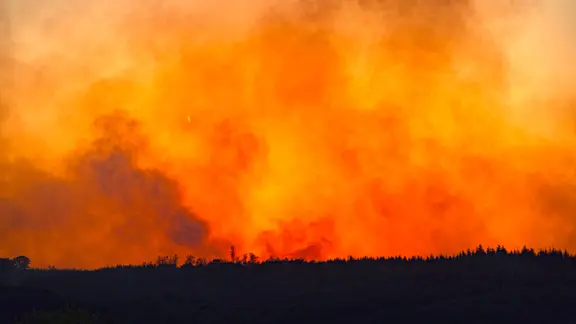
Between 2016 and 2023, an estimated 540,800 people died annually due to extreme heat. The study attributes approximately 68% of these deaths directly to human-induced climate change. The year 2023 stands out as the deadliest, with a record 710,000 heat-attributed deaths. These figures represent more than just statistics; they represent a fundamental failure to adapt urban environments, housing, and social safety nets to a warmer world.
Water Security and Nutrition
The hydrological cycle is becoming increasingly erratic. In 2025, more than 50% of the Earth’s land surface experienced at least one month of extreme drought. Satellite data confirms that soil moisture has been permanently altered across 80% of global land mass. This creates a dual threat: agricultural failure leading to food insecurity, and the increased risk of water-borne diseases in areas where heavy, extreme rainfall leads to sewage contamination and flooding.

Economic Consequences
Beyond the human cost, the economic toll is unsustainable. The loss of labor hours due to heat stress is a silent tax on the global economy. As workers in agriculture, construction, and manufacturing become unable to perform in extreme temperatures, the ripple effects are felt in global supply chains, driving inflation and deepening the divide between wealthy and developing nations.
The Counter-Narrative: Where Progress Exists
Despite the dire warnings, the report offers a glimmer of hope, proving that climate action is synonymous with health action.

Investments in clean energy hit a record $2.1 trillion in 2025. This transition is already saving lives. In at least 77 countries, the reduction in air pollution—a byproduct of moving away from fossil fuels—has prevented an estimated 323,000 premature deaths annually since 2016. This underscores a crucial point: policies aimed at decarbonization are, in effect, massive public health initiatives.
Furthermore, early warning systems for extreme weather and climate-responsive health plans have proven effective. However, the report notes that only about 25% of the World Health Organization’s (WHO) member states have fully integrated health into their climate adaptation plans.
Official Responses and Expert Perspectives
Professor Marina Romanello, lead author of the Lancet Countdown at University College London, summarized the urgency of the situation: "The progress we are seeing is too slow, too shallow, and is not reaching those who need it most. We are seeing a widening gap between the rhetoric of climate action and the reality of health impacts. We are calling for an immediate, formal recognition of the climate crisis as a global health emergency to mobilize resources at the scale required."
Medical organizations worldwide have begun to echo these sentiments, arguing that climate change is the single biggest health threat facing humanity. They emphasize that the "health sector" can no longer be a passive observer; it must lead the charge in advocating for policy shifts that prioritize public health over short-term economic growth.

The Path Forward: Policy and Global Cooperation
The authors of the report outline several key pillars for a coordinated response:
- Mandatory Health Integration: Every climate policy—whether related to transport, agriculture, or energy—must undergo a health impact assessment.
- Equitable Climate Finance: Wealthy nations, which have historically contributed the most to carbon emissions, must provide significantly more funding to the Global South for adaptation. The current levels of support are insufficient to address the disproportionate impact being felt in developing regions.
- Phase-Out of Fossil Fuels: The reliance on fossil fuels must be treated as a public health hazard. An aggressive, transparent, and fair transition to renewable energy is the only way to stabilize the climate and, by extension, protect human health.
- Strengthening Infrastructure: Healthcare systems must be "climate-proofed." This includes investing in sustainable hospitals, cold-chain storage for vaccines that can withstand power outages, and training healthcare workers to manage climate-sensitive diseases.
Implications: A Call to Action
The message from the international research community is clear: we are running out of time. The Lancet report serves as a diagnostic tool for the planet. It identifies the symptoms, tracks the progression, and suggests a treatment plan. The diagnosis is "critical," but the prognosis is not yet fatal, provided the global community acts with the urgency of an emergency.

The declaration of a "global health emergency" is not merely symbolic. It is a procedural necessity that would unlock international funding, prioritize climate-health research, and force governments to reconcile their economic policies with the biological limits of the human population.
As we look toward the future, the choice is between two paths. The first is a continuation of current trends, leading to a world where extreme weather, food scarcity, and heat-related mortality become the defining features of the human experience. The second is a transition to a sustainable, low-carbon society that views health as the fundamental metric of success.

The Lancet Countdown report confirms that the medical and scientific community is ready to face this challenge. Whether the political and economic systems of the world are capable of matching this resolve remains the defining question of our time. The evidence is on the table; the consequences of inaction are already being felt in every corner of the globe. The transition to a healthier, more sustainable future is not only possible—it is the only path that ensures the continued health and stability of human civilization.