As repair bills continue to climb across Germany and beyond, both vehicle owners and insurance giants find themselves in a precarious position. What was once a manageable annual expense has transformed into a major financial burden, raising questions about the future affordability of private transport.
In the modern automotive landscape, the simple act of taking a car to the workshop has become an exercise in sticker shock. According to recent reports from the German Insurance Association (GDV), the cost of an average car repair in Germany has surged by approximately 70 percent over the last decade, reaching an average of 4,600 euros. This dramatic escalation is not merely a reflection of inflation; it is the result of a complex convergence of technological advancement, supply chain pressures, and soaring labor costs. As insurers struggle to keep pace with these expenditures, the ripple effects are being felt by millions of drivers who, despite years of accident-free driving, are seeing their premiums rise at unprecedented rates.
The Anatomy of Rising Repair Costs
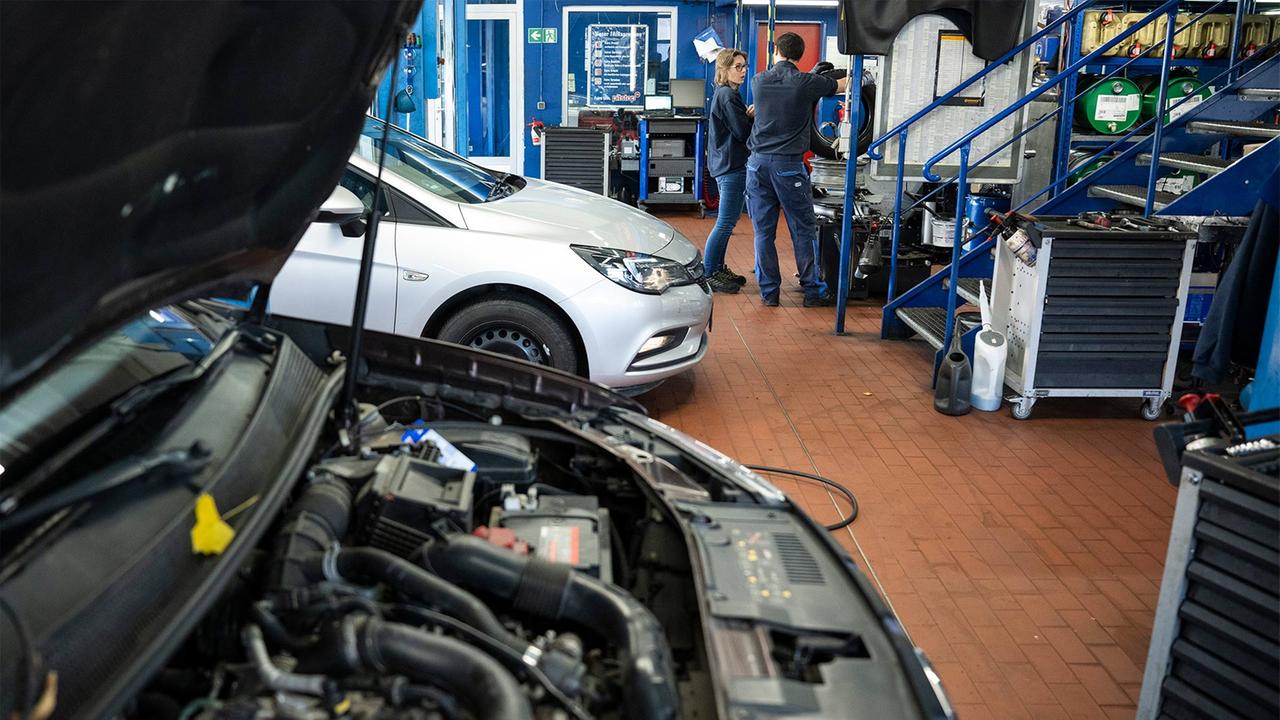
The primary driver behind these staggering figures is a dual-pronged increase: the soaring price of high-tech spare parts and the rising cost of skilled labor. Modern vehicles are no longer purely mechanical machines; they are sophisticated, software-driven platforms equipped with advanced sensors, complex onboard computers, and intricate driver-assistance systems.
When a vehicle is involved in a collision, replacing a simple bumper often requires the recalibration of radar sensors and cameras—a process that demands specialized equipment and highly trained technicians. These components have seen price hikes far exceeding standard consumer inflation. For instance, common structural components such as front doors, hoods, and LED headlamp assemblies have seen double-digit percentage increases in costs over the past two years.
Furthermore, the automotive repair industry is grappling with a significant labor shortage. As the complexity of vehicle systems grows, the requirement for highly skilled, certified technicians increases. This demand, coupled with rising wages meant to attract and retain talent, has pushed the hourly rates at independent and authorized workshops to record highs. When these labor costs are compounded by the expensive materials required for modern vehicle bodies—such as high-strength aluminum and carbon fiber—the total cost of repair frequently pushes vehicles toward "total loss" status much faster than in previous years.
Chronology of a Financial Squeeze
To understand the current crisis, one must look at the trajectory of the last decade:
- 2014–2018: The industry experienced steady, predictable increases in repair costs, largely tracking with moderate inflation and the gradual introduction of safety electronics.
- 2019–2021: The COVID-19 pandemic caused massive disruptions to global supply chains. The shortage of microchips and basic raw materials forced spare parts prices to decouple from traditional inflationary trends.
- 2022–2023: Energy costs spiked across Europe, significantly impacting the overheads of workshops and the manufacturing processes of component suppliers. Insurers began to report their first major losses in the motor segment.
- 2024–2026: The current period is defined by a "perfect storm." While supply chains have stabilized, the structural shift toward electric vehicles (EVs) and high-density electronics has solidified a new, higher baseline for repair costs. Insurers are now in a defensive position, struggling to balance premiums with the reality of 35 billion euros in annual claim payouts.
Supporting Data: The Insurer’s Dilemma
The economic reality for insurance companies is stark. The GDV has reported that for 2026, the motor insurance sector is operating on razor-thin margins, hovering precariously close to the red. The "Combined Ratio"—a metric used in the insurance industry to measure the profitability of a business by comparing claims and expenses to premiums—is currently projected at 99 percent.
This means that for every 100 euros of premium collected, 99 euros are spent on claims, administrative costs, and overheads. With only one euro of profit remaining, the industry has almost no cushion to absorb further economic volatility. Jörg Asmussen, Chief Executive Officer of the GDV, noted that claim expenditures are rising significantly faster than premium income. The 35 billion euros being paid out to customers represents a ten percent increase over previous periods, creating a situation that is fundamentally unsustainable for the current business model.
Official Responses and Strategic Shifts
The industry giants, including market leaders like Allianz and the HUK-Coburg Group, have had to adopt a more rigorous approach to risk assessment. For the consumer, this means that insurance premiums are no longer calculated based solely on a "No Claims Bonus" (Schadensfreiheitsklasse).
While the individual’s driving history remains a factor, insurers are increasingly utilizing "Big Data" to assess risk on a macro level. This includes the "Regional Class" (Regionalklasse) system, which categorizes the risk profile of specific geographic areas based on accident frequency, weather-related risks, and vehicle theft rates. Consequently, a driver who has never had an accident might still face a premium increase simply because the local area has seen an uptick in claims.
Moreover, insurers are increasingly prioritizing "repair over replace" strategies. Many companies are now incentivizing the use of refurbished parts or "green" parts (reclaimed from totaled vehicles) to keep repair costs below the threshold that triggers a total write-off.
Implications for the Modern Driver
For the average motorist, the message is clear: the era of "cheap" car insurance is likely over, at least in the traditional sense. However, the market remains highly competitive. The insurance industry views the car contract as a "gateway product." Because many customers bundle their auto insurance with home, life, or liability policies, insurers are often willing to take a loss on the car policy to maintain the broader client relationship.
Tips for Navigating the Market:
- Re-evaluate the "Bundle": While combining policies often offers a "combo-bonus," it is vital to periodically check if the savings on the home policy are being negated by an overpriced car premium.
- The November Deadline: In Germany, the standard cancellation deadline for most auto policies is November 30th. This period marks the height of the "price war," as insurers aggressively target new customers with competitive rates to capture market share.
- Review Coverage: Many older vehicles are over-insured. If a car is nearing the end of its useful life, switching from comprehensive (Vollkasko) to partial coverage (Teilkasko) or liability-only can result in significant immediate savings.
- Use Comparison Portals: While digital brokers and comparison portals are not always comprehensive, they are excellent for benchmarking the current price of "entry-level" policies.
The Macro-Economic Outlook: Beyond the Garage
The instability in the insurance market is happening against a backdrop of broader economic uncertainty. As the DAX fluctuates around the 26,000-point mark, investors are looking to the European Central Bank (ECB) for signs of future monetary policy. Analysts like Thomas Altmann of QC Partners suggest that the ECB is likely to hold interest rates steady, but the market remains hyper-sensitive to any hints of future rate hikes from ECB leadership.
For the automotive sector, this macro-environment is critical. Higher interest rates increase the cost of financing for new car buyers, potentially slowing the transition to newer, safer, but more expensive vehicles. This, in turn, keeps older, more accident-prone, and more expensive-to-repair cars on the road for longer, perpetuating the cycle of high repair costs.
Conclusion: A New Era of Mobility
The rising cost of vehicle repairs is a multi-dimensional challenge that touches technology, economics, and social solidarity. As cars become more sophisticated, the "hidden" cost of their maintenance becomes a permanent fixture of household budgets. While the insurance industry seeks to stabilize its margins through more granular risk assessment and competitive pricing, consumers must become more proactive managers of their own financial risks.
The path forward requires a balance between the necessity of modern safety features and the economic reality of maintaining them. Until the cost of parts and labor finds a new equilibrium, the smart driver will be the one who treats their insurance policy not as a set-and-forget expense, but as a dynamic financial product that requires annual scrutiny. In a world where the price of a simple fender-bender can rival the cost of a luxury vacation, the true value of being an informed consumer has never been higher.