Introduction: A Festive Symbol in Distress
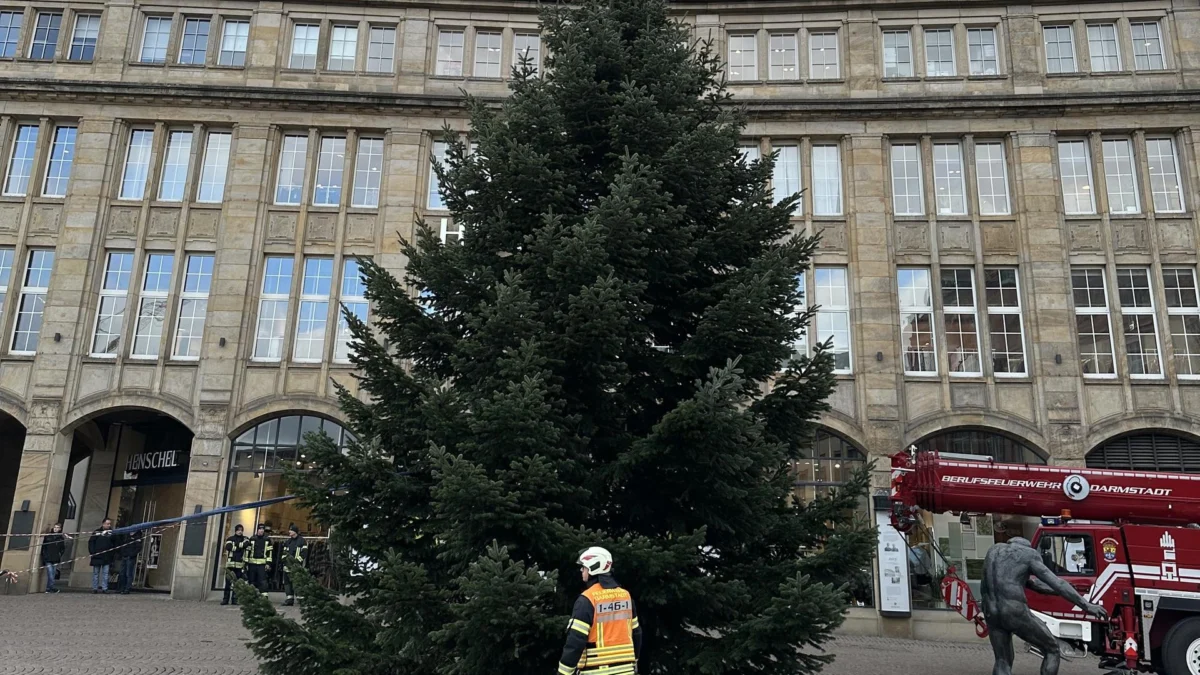
In the early hours of Thursday morning, the city of Darmstadt experienced a vivid reminder of nature’s unpredictable power as high winds compromised the structural integrity of its centerpiece Christmas tree. The towering conifer, intended to serve as the visual anchor for the city’s upcoming holiday celebrations, was pushed into a dangerous list, necessitating a swift and highly visible intervention by local emergency services.
The incident, which occurred amidst a broader weather system affecting the Hessian region, has sparked local concern and underscored the logistical complexities of urban festive preparations. As the city prepares for the influx of holiday shoppers and tourists, the image of a tilted tree flanked by firefighting equipment has become the unexpected emblem of the season’s kickoff.

The Incident: Chronology of a Midnight Crisis
The trouble began late Wednesday night as wind gusts intensified across southern Hesse. While municipal staff had ensured the tree was secured according to standard protocols, the sheer force of the wind—coupled with the expansive surface area of the tree’s boughs—created a "sail effect" that overwhelmed the initial anchoring systems.
Wednesday Night: The Onset of Instability
By midnight, reports began circulating among local residents of unusual swaying and audible creaking coming from the town square. Municipal monitoring systems, combined with calls to the emergency services, confirmed that the tree had shifted significantly from its vertical axis.

Thursday Early Morning: The Emergency Response
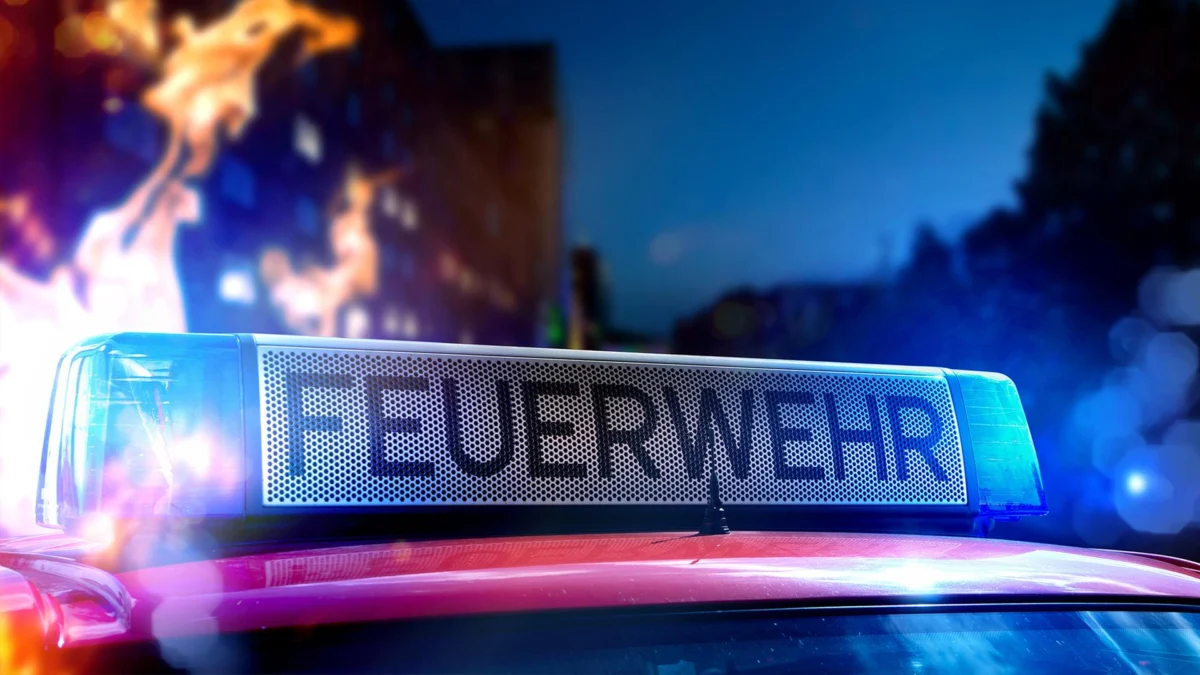
At approximately 3:00 AM, the Darmstadt Fire Department (Feuerwehr Darmstadt) arrived on the scene. The site was cordoned off to ensure public safety, as the tree’s proximity to a prominent commercial building posed a risk of structural damage should the specimen collapse entirely.
The intervention was delicate; fire crews utilized heavy-duty rigging and support vehicles to stabilize the trunk before attempting to realign the base. By dawn, the tree remained in a semi-stabilized position, with experts from the city’s Parks and Green Spaces Department assessing whether the root system or the mounting hardware had sustained irreparable damage.

Supporting Data: Meteorological Context
The incident was not an isolated case of bad luck but rather a direct result of localized meteorological phenomena. Weather stations in the Darmstadt area recorded gusts reaching speeds that, while not reaching "storm" status by national definitions, were sufficient to destabilize tall, unsecured vertical objects.
The Physics of the "Sail Effect"
Arborists note that a fully decorated or even partially foliage-dense Christmas tree acts as a significant obstacle to wind. When winds strike the dense canopy, the force is transferred to the base and the anchoring bolts. If the soil surrounding the mounting point has been softened by previous rainfall—a common occurrence in the Hessian autumn—the leverage exerted by the tree’s height can easily compromise its footing.

Regional Weather Patterns
Hesse has seen an unusually active autumn in terms of wind patterns. Meteorological data for the week leading up to the incident indicates a series of pressure troughs moving across the state, bringing intermittent high-speed gusts. This specific weather system resulted in multiple minor incidents across the region, including downed tree limbs and disrupted power lines in surrounding districts, of which the Darmstadt Christmas tree was merely the most high-profile casualty.
Official Responses and Municipal Strategy
The City of Darmstadt has been quick to manage the narrative, emphasizing that safety remains the primary priority. In a press briefing held early Thursday morning, a spokesperson for the city administration stated, "Our priority is to ensure that the Christmas tree serves as a symbol of joy and safety. We are working closely with the fire department and private contractors to rectify the situation."

The Engineering Challenge
The mounting of a public Christmas tree is an engineering feat that often goes unnoticed until something goes wrong. Typically, these trees are housed in deep, reinforced steel casings embedded in concrete. The failure in this instance is being investigated as a potential combination of extreme localized gusts and a possible loosening of the stabilization wedges used to keep the trunk vertical within the mounting sleeve.
Future Protocols
The city has announced that it will conduct a comprehensive audit of all festive installations across the municipality. This includes not just the main tree, but also the lighting structures and secondary decorations that are currently being erected for the Advent season. The goal is to implement a "wind-load safety certificate" for all future large-scale seasonal installations.

Implications: The Intersection of Tradition and Safety
The incident in Darmstadt raises broader questions about the sustainability and safety of hosting massive natural trees in urban squares during an era of increasingly unpredictable weather patterns.
The Cost of Tradition
Large public Christmas trees are not only symbolic but also costly. From the logistics of harvesting and transporting a massive specimen to the rental of heavy cranes and the labor costs of the fire department’s emergency response, the economic footprint is significant. Critics in local government have begun to question whether the city should transition toward more resilient, synthetic, or modular alternatives that can withstand higher wind loads without risking public safety.

Impact on Local Commerce
The tree sits at the heart of the commercial district. The cordoning off of the area during the busiest early-morning hours caused minor disruptions for delivery services and local businesses preparing for the day. However, local shop owners remain optimistic. "It’s a talking point," said one local merchant. "People are coming to see the ‘leaning tree of Darmstadt.’ As long as they fix it safely, it adds a bit of human drama to the holiday preparations."
Public Sentiment and Community Resilience
Social media in the region has been flooded with images of the tree. While some express concern, the prevailing sentiment is one of humor and community solidarity. The image of the fire department working under the floodlights has been framed by many residents as a testament to the city’s quick response and ability to handle the "unexpected."

Conclusion: Lessons for the Festive Season
The events of this Thursday morning serve as a microcosm of the challenges faced by modern European cities. As urban environments become more dense and the climate continues to fluctuate, the traditions we hold dear—such as the communal Christmas tree—must be adapted to meet contemporary safety standards.
Darmstadt’s experience is a reminder that even the most cherished traditions are subject to the laws of physics. The rapid response of the fire department successfully prevented a potential disaster, and the ongoing efforts to secure the tree demonstrate a commitment to both public safety and the preservation of the holiday spirit.

As the city moves forward with its holiday programming, the "leaning tree" will likely be remembered as a unique chapter in Darmstadt’s history—a moment where the community paused, assessed the risk, and worked together to ensure that, despite the winds, the lights would eventually shine bright across the square. For the residents of Darmstadt, the Christmas season has officially begun—not with a quiet installation, but with a resilient display of civic duty and the promise that, come what may, the spirit of the season will remain upright.