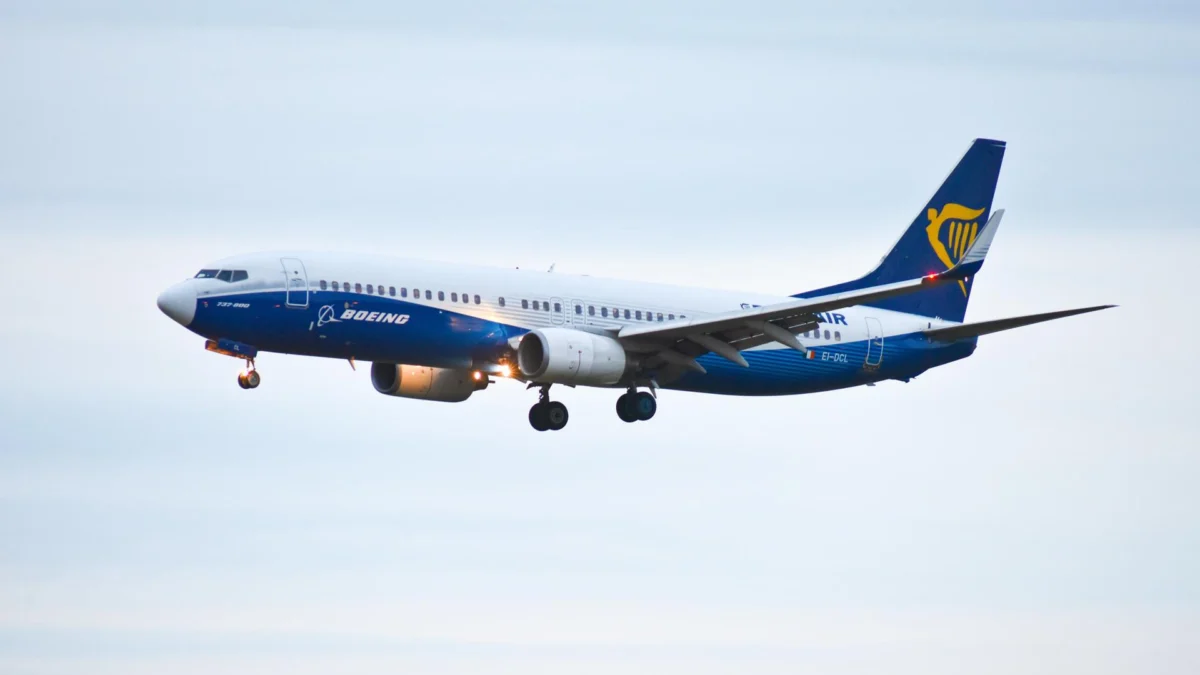
Kassel, Germany – In a move that has sent ripples through both the regional aviation sector and the halls of the Hessian state parliament, the Irish low-cost carrier Ryanair has announced a return to the Kassel Airport (KSF) in Calden. Starting in March 2027, the airline will initiate four weekly flights connecting Northern Hesse to the sun-drenched destinations of Palma de Mallorca, Spain, and Lamezia Terme, Italy.
This development marks a significant shift for a regional airport that has spent the better part of the last decade grappling with structural deficits and a struggle to maintain consistent commercial traffic.
The Flight Plan: Reconnecting the Region
According to a joint statement released by the airport and the airline, the new schedule is set to launch on March 29, 2027. For travelers in the Kassel region, this offers a long-awaited expansion of the airport’s currently sparse flight schedule.
The schedule is structured as follows:
- Palma de Mallorca: Flights will operate twice weekly from March 31 to October 30, 2027. Departures from Kassel are slated for Wednesdays at 9:15 AM and Saturdays at 7:30 PM. Return flights from Mallorca are scheduled to land in Kassel at 8:50 AM on Wednesdays and 7:05 PM on Saturdays.
- Lamezia Terme (Calabria): Service will run from March 29 to October 29, 2027, with departures on Mondays at 1:15 PM and Fridays at 5:10 PM. Return flights from Italy are expected to arrive in Kassel at 12:50 PM on Mondays and 4:45 PM on Fridays.
Lars Ernst, Managing Director of Kassel Airport, hailed the agreement as a milestone. "We are extraordinarily pleased to have gained one of Europe’s leading airlines for Kassel Airport," Ernst said in a statement. "This is not only a commercial success for our airport but also a powerful signal for the entire North Hesse region, demonstrating our potential to serve as a vital travel hub."
Chronology: A History of High Hopes and Economic Realities
The story of Kassel Airport is one of ambition tempered by fiscal reality. Since its opening in 2013, the facility has consistently struggled to reach the passenger volumes necessary for self-sufficiency.
- 2013: The airport opens with great fanfare, intended to serve as an economic engine for the region.
- 2014–2023: A decade defined by annual multi-million euro deficits. Despite various attempts to attract carriers, passenger numbers remained sluggish.
- 2024: The airport suffers a major setback as its last remaining resident airline, Sundair, ceases operations at the site. The financial burden deepens, with the annual deficit hovering around five million euros.
- 2025: The state of Hesse, as the primary stakeholder (holding 68% of shares), continues to subsidize the airport’s operations, with the municipal government of Kassel and the surrounding district holding smaller stakes.
- 2026 (November): The official announcement of the Ryanair partnership is made, setting the stage for the 2027 revival.
The Ryanair Stance: A Critique of German Aviation Policy
While the airline expressed enthusiasm for the new route, its communication was underscored by a pointed critique of the German aviation landscape. Ryanair explicitly used the announcement as a platform to lobby against current government policies.
In its statement, the airline described Germany as "one of the least competitive aviation markets in Europe." Ryanair cited what it termed "harmful" aviation taxes and "exorbitant" security, air traffic control, and airport fees as the primary deterrents to growth. The carrier issued a challenge to the German federal government: abolish the aviation tax and halve security fees, or risk further stagnation. Ryanair argued that such reforms would unlock immediate investment, including the stationing of 30 additional aircraft and the creation of 1,000 new jobs nationwide.
This rhetoric follows a recent, albeit modest, decision by the German government to lower aviation taxes—a move that has drawn fire from environmental groups. Climate advocates argue that any tax reduction incentivizes environmentally damaging flight habits and undermines efforts to curb greenhouse gas emissions and noise pollution.
Political Friction: The Debate Over Labor and Legitimacy
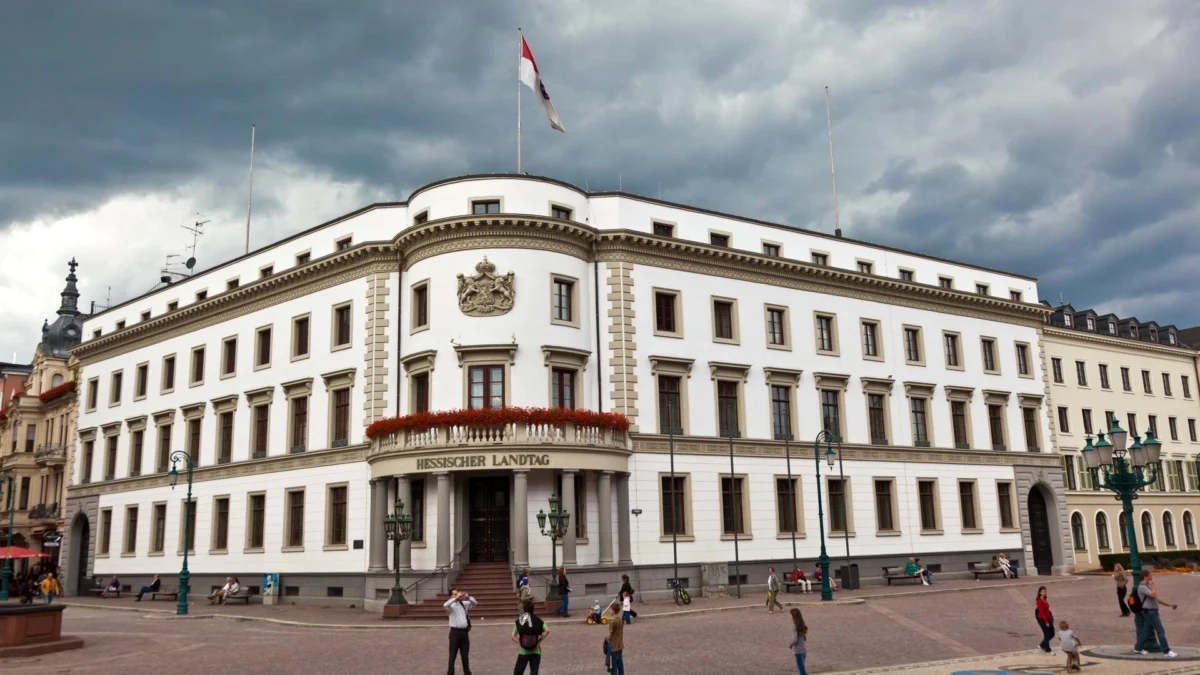
The news has triggered a polarized response within the Hessian state parliament, reflecting long-standing concerns regarding Ryanair’s business model and the state’s continued investment in the airport.

The SPD’s Cautious Welcome
Maximilian Ziegler, the transport policy spokesperson for the SPD, offered a tepid welcome. While acknowledging the importance of the flights for the airport’s workforce, he expressed deep reservations about the airline’s history.
"Ryanair has a problematic record regarding its treatment of employees," Ziegler noted. He referenced the airline’s past tenure at Frankfurt Airport, which ended abruptly in 2022. During that period, the Pilot Association (Cockpit) and the cabin crew union (Ufo) leveled serious allegations against the carrier, including "social dumping" and the use of questionable self-employment contracts for pilots. Ziegler pledged that the SPD would monitor the situation closely to ensure that the "conditions seen during the short Ryanair guest appearance in Frankfurt" are not replicated in Kassel.
The Green Party’s Skepticism
The parliamentary faction of the Alliance 90/The Greens raised fundamental questions regarding the economic logic of the deal. Given the near-zero passenger traffic previously recorded at the airport, the Greens expressed suspicion that the state government might have provided secret incentives or discounts to lure the low-cost carrier to Calden. Transport spokesperson Katy Walther announced that the party would be launching a formal parliamentary inquiry to ascertain the terms of the deal and whether public funds are being used to "artificially sweeten" the offer for the airline.
A Pivot Toward Diversification: Logistics and Drones
Recognizing that commercial passenger traffic alone may never bridge the multi-million euro deficit, the Kassel Airport supervisory board has initiated a "strategic realignment." The goal is to transform the site from a pure passenger airport into a multifunctional hub.
Central to this new strategy is the integration of the defense and technology sectors. The airport is becoming home to a "Logistics and Training Hub" for the German defense contractor Rheinmetall. This project, involving an investment of approximately 45 million euros and the creation of 100 jobs, is intended to turn the airport into a cornerstone of industrial activity in the region.
Furthermore, the site is positioning itself as a leader in unmanned aerial vehicles (UAVs). The "Drone Competence Center," supported by an eight-million-euro grant from the state and managed by the Technical University of Darmstadt, is already underway. Alongside this, a specific drone test center is being developed at the airport with an investment of five million euros.
Implications: The Road Ahead
The return of Ryanair to Kassel is a high-stakes gamble. For the airport management, it is a necessary lifeline—a way to prove that the facility has a future beyond being a state-subsidized drain on the budget. For the region, it provides connectivity that many citizens have demanded for years.
However, the implications are complex:
- Economic Sustainability: Can two weekly flights to Mallorca and Italy, even with high load factors, actually turn the tide on a five-million-euro annual deficit? Or is this merely a temporary palliative?
- Political Scrutiny: The pressure on the Hessian government to justify its continued financial support of the airport will only intensify. If the Ryanair partnership becomes a source of labor disputes or if the economic return remains elusive, the political fallout could threaten the airport’s long-term existence.
- Industrial Integration: The shift toward drones and logistics suggests that the airport’s future may lie more in the sky above it—for testing and training—than in the terminal building itself.
As the industry looks toward the March 2027 start date, all eyes will be on Calden. For a project that has often been described as the "most expensive field in Hesse," the upcoming years represent a critical window to prove whether a regional airport can successfully pivot in an era of climate consciousness, labor activism, and shifting aviation economics. Whether Ryanair will act as the savior of the Kassel Airport or simply a temporary, controversial guest remains to be seen.