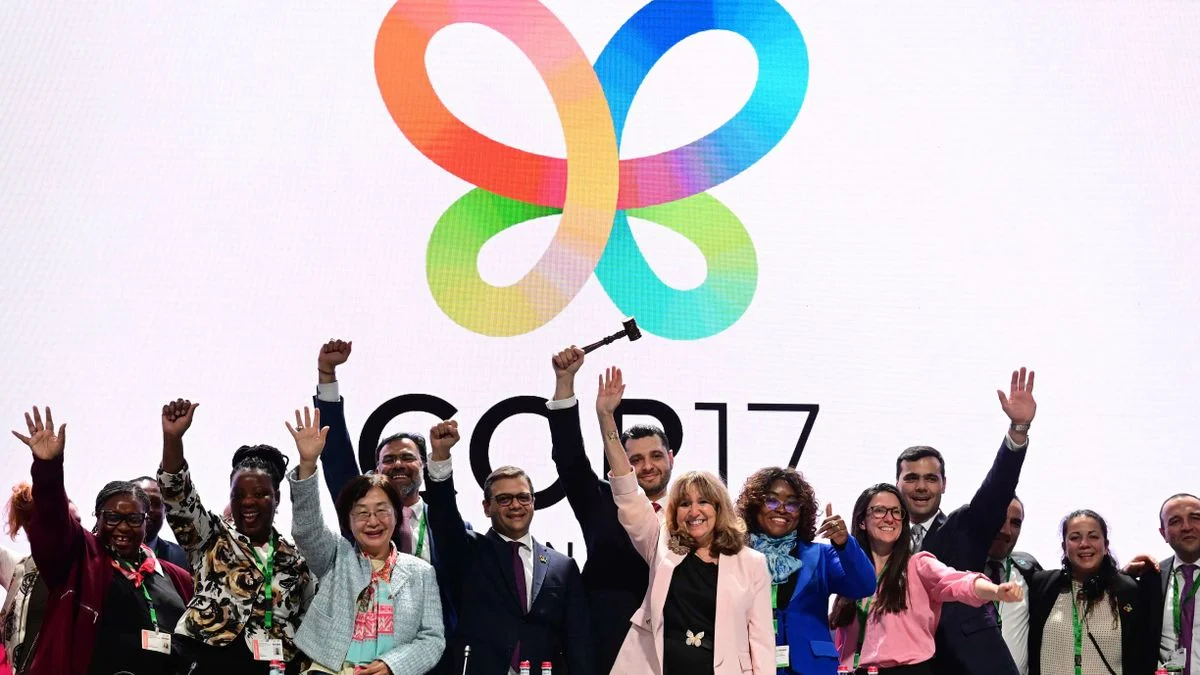
After nearly two weeks of grueling, round-the-clock negotiations in the Armenian capital of Yerevan, the 17th UN Biodiversity Conference (COP17) has concluded. The summit, which brought together representatives from nearly 200 nations, faced a daunting mandate: to salvage the credibility of the global "World Nature Treaty" and find a pathway to meeting ambitious biodiversity targets that are currently slipping out of reach.
While the conference ended with applause in the plenary hall, the mood among delegates and environmental observers was a complex mix of relief and profound sobriety. The resulting agreement provides a roadmap for implementation, yet it leaves many experts questioning whether the pace of change is sufficient to avert an ecological collapse.
The Core Mandate: Reviving the 2030 Targets
Four years ago, the global community reached a landmark agreement—the Kunming-Montreal Global Biodiversity Framework—establishing 23 ambitious targets to be met by 2030. These targets were designed to halt and reverse the catastrophic decline of the world’s ecosystems. Key pillars of this framework included the "30×30" goal, which mandates the protection of at least 30 percent of the world’s land and sea areas, and a massive commitment to redirect or eliminate at least $500 billion annually in environmentally harmful subsidies, such as those supporting fossil fuel extraction and industrial agriculture.
As nations gathered in Yerevan, a grim reality hung over the discussions: a pre-conference progress report confirmed that, at current rates of implementation, these 2030 goals are mathematically and ecologically out of reach. The primary objective of COP17 was therefore not to set new goals, but to establish a concrete, enforceable action plan to accelerate the implementation of existing ones.
A Chronology of Zestful Diplomacy
The negotiations in Yerevan were marked by their "zestful" and often obstructive nature. The sheer breadth of the agenda—ranging from financial mechanisms to the integration of climate and biodiversity policy—meant that progress was incremental and laborious.
Phase 1: The Reality Check
The opening days were dominated by the sobering reality of the progress report. Delegates were confronted with data showing that the fragmentation of habitats and the rate of species extinction have continued to accelerate. This served as a catalyst for a tense atmosphere, where the divide between developed nations, who are expected to provide the bulk of the funding, and developing nations, who host the majority of the world’s biodiversity, became starkly apparent.
Phase 2: The Mid-Summit Stalemate
Midway through the conference, talks stalled over the "resource mobilization" issue. Several delegations argued that without a dedicated, transparent fund, the targets would remain aspirational. The stalemate necessitated late-night "informal" sessions—a hallmark of high-stakes international diplomacy—where small groups of ministers attempted to bridge the gap on subsidy reform and finance.
Phase 3: The Final Marathon
By Friday evening, the pressure reached a fever pitch. A tentative agreement was reached, triggering applause, but the technical finalization of the texts dragged on into the early hours of Saturday morning. The exhaustion in the hall was palpable, reflecting the difficulty of reconciling nearly 200 disparate national interests into a single, cohesive document.
Supporting Data and the Urgency of Action
The scientific consensus underpinning the conference was clear: biodiversity loss is no longer a localized issue but a systemic risk to the global economy and human security.

- Subsidies: The commitment to reform the $500 billion in harmful subsidies remains the most contentious yet essential element of the 2030 framework. Proponents argue that shifting these funds toward nature-positive practices is the single most effective way to address the drivers of extinction.
- Integrated Policy: A key outcome of the Yerevan summit was the stronger emphasis on the nexus between climate change and biodiversity. The delegates recognized that natural carbon sinks—such as peatlands, mangroves, and old-growth forests—are the most cost-effective technologies for climate mitigation.
- Indigenous Leadership: Data presented at the summit highlighted that indigenous-managed lands retain significantly higher levels of biodiversity. There was a strong, albeit contested, push to ensure that future financing flows directly to these communities, bypassing bureaucratic national channels.
Official Responses: A Divided Outlook
The aftermath of the conference produced a chorus of varying perspectives, ranging from cautious optimism to sharp critique.
The UN Perspective:
UN Biodiversity Chief Astrid Schomaker struck a diplomatic yet realistic tone. Addressing the press after the closing plenary, she remarked that the summit achieved "some quite remarkable things" during a period when multilateralism is under fire. "We did not expect to reach full agreement on every single point," she noted, acknowledging that the process is designed to be iterative. For Schomaker, the fact that nearly 200 nations remained at the table and reached a consensus on an action plan is a success in itself.
The NGO Perspective:
Environmental organizations offered a more critical assessment. Catherine Weller, representing Fauna & Flora, described the agreement as "not particularly exciting or detailed," though she conceded that the mere act of reaching a consensus was a "good message to the world."
Greenpeace adopted a sharper tone, suggesting that while the summit established a course, it lacked the necessary urgency to match the crisis described in the pre-conference report. Jannes Stoppel, a representative for Greenpeace Germany, argued that the results—while providing a "tailwind" for upcoming climate negotiations in Antalya—fell short of the radical transformation required. He specifically called for a more direct and substantial increase in funding for indigenous communities in critical regions like the Amazon.
The Political Perspective:
German Environment Minister Carsten Schneider expressed a sense of frustration with the negotiating dynamics. "We Europeans negotiated strongly and collectively for nature, but there were ‘brakes’—countries that wanted to take less responsibility, particularly on financial issues," he stated. Schneider reaffirmed Germany’s commitment to restoring ecosystems and expanding protected areas, emphasizing that the domestic implementation of these international agreements would be a priority.
Implications for the Future: Looking Toward 2028
The conclusion of COP17 also set the stage for the next phase of the global nature strategy. In a closely contested secret ballot, Ecuador was selected as the host for the COP18 summit, narrowly defeating Panama by 55 votes to 53. The choice of Quito for the 2028 meeting underscores the growing importance of Latin American nations, which contain some of the world’s most critical biodiversity hotspots, in the global conversation.
The Road Ahead
The implications of the Yerevan summit are threefold:
- The Financing Gap: The "compromise" reached on biodiversity finance is widely viewed as a temporary patch rather than a long-term solution. The international community will face immense pressure to create more robust, transparent funding mechanisms before the 2026 and 2028 meetings.
- National Accountability: The focus now shifts from international plenary halls to national legislatures. The "action plan" agreed upon in Yerevan puts the burden of proof on individual nations to translate global goals into local, actionable legislation.
- Climate-Biodiversity Synergy: The "tailwind" mentioned by observers suggests that future climate summits (such as those in the UNFCCC process) will be required to integrate biodiversity more deeply. The realization that there is no "net-zero" future without "nature-positive" outcomes has finally taken center stage.
Conclusion: A Foundation, Not a Finish Line
Ultimately, the 17th UN Biodiversity Conference in Yerevan served as a crucial, if imperfect, recalibration. It did not provide the silver bullet that many activists demanded, nor did it collapse under the weight of national self-interest, as many skeptics feared.
The summit proved that in an era of geopolitical fragmentation, the global community is still capable of maintaining a shared vision for the planet’s survival. However, the data remains uncompromising: nature is in a state of rapid decline, and the policy instruments developed in Yerevan are merely the starting blocks for the work that must be done. Whether these commitments represent a genuine turning point or merely a bureaucratic delay will be determined by the actions taken on the ground in the next four years. As the world turns its gaze toward Quito in 2028, the central question remains: will the policy rhetoric finally match the speed of the ecological reality?