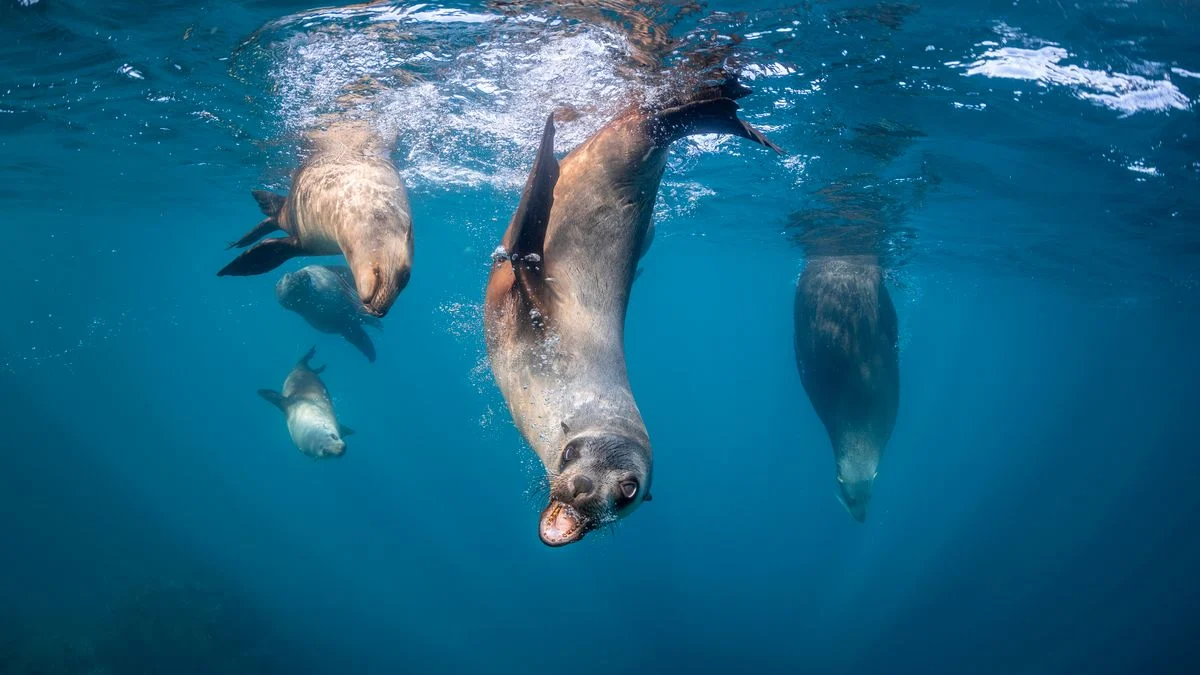
In the vast, azure expanses surrounding the Australian continent, a quiet crisis is unfolding beneath the waves. As maritime traffic, coastal industrialization, and offshore construction projects reach unprecedented levels, the acoustic environment of the ocean has been radically transformed. For marine mammals, whose survival depends on the precision of their auditory senses, this cacophony represents more than just a nuisance; it is a fundamental threat to their existence. Now, a pioneering research team led by the German acoustician Professor Christine Erbe is utilizing an unlikely cohort of experts—trained sea lions and fur seals at Sydney’s Taronga Zoo—to decipher exactly how these animals perceive a world increasingly filled with human-made noise.
The Foundation of Auditory Research: Establishing the Baseline
The primary challenge in assessing the impact of anthropogenic noise on marine life is a lack of fundamental data. "To determine whether a specific sound affects an animal’s behavior or physiology, we must first establish whether they can hear that sound at all," explains Professor Erbe, who leads the ambitious project at Curtin University.
For years, marine biologists have operated under assumptions based on limited field observations. However, understanding the biological "hearing threshold" requires controlled, repeatable scientific testing. By partnering with the Taronga Zoo in Sydney, researchers have gained access to a controlled environment where they can systematically map the auditory capabilities of two distinct species: the Australian sea lion and the fur seal. Both species belong to the family Otariidae, or eared seals, yet their specific hearing ranges remained largely a mystery until this study.
Chronology of a Scientific Breakthrough
The project, which has been unfolding over the last several years, represents a marriage between behavioral psychology and acoustic engineering. The methodology is as elegant as it is rigorous.
Phase I: Conditioning and Training. The process began with intensive behavioral conditioning. Animal keepers at the Taronga Zoo worked daily with two sea lions and two fur seals. The goal was to train the animals to participate in a "hearing test" through positive reinforcement. The creatures were taught that the appearance of a specific acoustic signal required an immediate physical response: pressing a lever with their snout.
Phase II: The Testing Protocol. Once the animals were proficient, the controlled trials commenced. Researchers played a series of tones at varying frequencies and intensities. If an animal detected the sound, it pressed the lever. If the animal correctly identified the signal, it was rewarded with fish. This "go/no-go" task allowed the team to pinpoint the exact moment an animal perceived a sound, mapping out their sensitivity thresholds across the frequency spectrum.
Phase III: Data Synthesis. Following the successful completion of these trials, the team at Curtin University analyzed the results. The data revealed that both species exhibit peak sensitivity at approximately 3.2 kilohertz. To the human ear, this is considered a high-frequency, sharp tone, situated well above the average range of common conversational speech but within the range of many mechanical ship noises and sonar pulses.
Supporting Data: The Anatomy of Sound
The implications of the 3.2 kHz sensitivity threshold are significant. In the marine environment, sound travels nearly five times faster and much further than it does in air. Consequently, the low-to-mid-frequency range occupied by shipping propellers, seismic airguns, and coastal drilling creates a pervasive "background hum" that can mask the biological sounds essential for seal survival.
The study indicates that while seals are remarkably sensitive within this range, they are also potentially vulnerable to the masking effects of human activity. Masking occurs when the background noise is so loud that it prevents the animal from hearing critical acoustic cues, such as the call of a pup, the vocalization of a predator, or the subtle rustling of prey moving through the water column.
Furthermore, the research highlights that these animals do not perceive their environment through sight alone. Unlike terrestrial mammals, which rely heavily on visual cues, the Australian sea lion and the fur seal are acoustic-centric predators. Their reliance on sound for navigation—a form of biological sonar—means that even slight disruptions in their acoustic environment can lead to decreased hunting efficiency, disorientation, and increased energy expenditure as they struggle to find food in a noisy ocean.
Official Responses and Expert Perspective
The scientific community has lauded the project for its ingenuity and its potential to influence future maritime policy. Dr. Marcus Thorne, an independent marine ecologist not affiliated with the study, noted that the use of captive animals for this type of research is essential for establishing a baseline that can then be extrapolated to wild populations.
"Professor Erbe’s team has effectively bridged the gap between theoretical acoustic modeling and real-world biological capacity," Dr. Thorne stated. "By confirming the 3.2 kHz threshold, we now have a benchmark. We can take recordings of ship traffic in the Great Australian Bight, filter them through this data, and predict with high accuracy how much of that noise is actually audible to these seals. It shifts the conversation from speculation to evidence-based management."
The Taronga Zoo administration has also emphasized the welfare-first approach of the project. The trainers involved report that the seals appear to enjoy the mental stimulation provided by the auditory tasks. This voluntary participation is a hallmark of modern animal research, ensuring that the data gathered is not the result of stress-induced behavior but rather the natural, cognitive output of the animals.
Implications for Conservation and Maritime Industry
The most pressing concern arising from this research is the conservation status of the Australian sea lion. Currently, the species is considered endangered, with the total population estimated at roughly 12,000 individuals. Their restricted range and low reproductive rate make them particularly susceptible to environmental changes.
1. The Masking Effect
The study’s findings suggest that if shipping lanes overlap with primary foraging grounds, the "masking" effect could effectively render large swaths of the ocean silent to these predators. If a mother cannot hear her pup’s distress call, or if a bull cannot locate a mate, the reproductive success of the colony could plummet.
2. Regulatory Policy
Professor Erbe’s findings provide a scientific framework that could eventually influence maritime regulations. Just as noise ordinances are established in cities to protect human sleep and well-being, the data could support the creation of "acoustic protected zones" in the ocean. This might include speed restrictions for vessels in sensitive areas—since ship noise is directly correlated to engine speed—or the rerouting of industrial maritime traffic away from critical seal breeding grounds.
3. Future Directions
The research does not end with frequency identification. The next phase of the project aims to simulate complex, multi-source environments. Researchers plan to introduce "white noise" and intermittent industrial sounds into the testing environment to observe how the seals’ detection thresholds change when they are forced to "listen through" the clutter of modern human activity.
Conclusion: A Call for Acoustic Stewardship
The work being conducted in Sydney serves as a vital reminder that our impact on the planet extends far beyond the visible horizon. While plastic pollution and climate change are frequently discussed, the invisible pollutant of noise remains one of the most under-regulated threats to biodiversity.
By listening to the seals, scientists are learning how to better listen to the ocean. The data provided by Professor Erbe and her team offers a path forward—a roadmap for a future where economic activity and marine conservation can coexist. Protecting these animals requires more than just preserving their physical habitat; it requires the protection of their acoustic habitat. As the maritime industry continues to grow, the question remains whether we can harmonize our technological advancement with the biological needs of the species that share our blue planet. For the Australian sea lion, the answer to that question may determine their future survival.