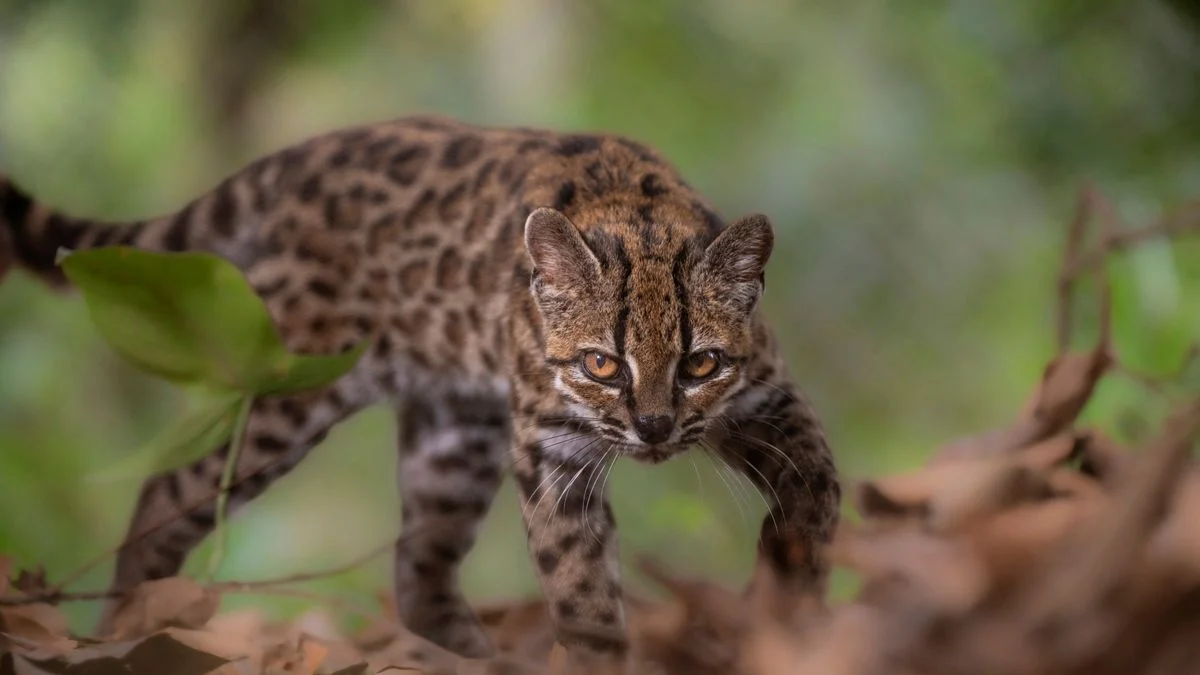
In the high-altitude, mist-shrouded corridors of the Bolivian Andes, a biological mystery has finally been unraveled. For decades, the dense, verdant cloud forests of South America have guarded their secrets well, but none more elusive than a small, rosette-spotted feline that has been hiding in plain sight. Scientists have officially confirmed the discovery of a new species of wild cat, Leopardus tilcayo, marking the first time in over a hundred years that a new, living cat species has been formally identified by the scientific community.
The discovery, published in the peer-reviewed journal Current Biology, represents a watershed moment for zoology. It challenges our fundamental understanding of feline evolution and biodiversity in the neotropics, suggesting that the "cat family tree" is significantly more complex than previously documented.
The Main Facts: A Feline Reimagined
Leopardus tilcayo is a petite, enigmatic predator. Physically, it is a striking creature, measuring approximately 46 centimeters in length and weighing a modest 1.4 kilograms. Its coat is a warm, hell-brown hue, adorned with distinctive, irregular rosettes that serve as perfect camouflage against the dappled light of the forest floor.
Genetic analysis served as the final arbiter in identifying the cat as a distinct species. Researchers compared the genomes of 38 wild cats belonging to the Leopardus genus, revealing that L. tilcayo branched off from its closest genetic relatives approximately 1.4 million years ago. This long period of evolutionary isolation explains why, despite its superficial resemblance to other small wild cats, its internal biological makeup is unique.
A Chronology of Discovery: From "Stray" to Scientific Breakthrough
The story of Leopardus tilcayo is as much about serendipity as it is about rigorous science. The journey began roughly a decade ago, not in a remote field station, but in a local community setting.

A resident in a rural region of Bolivia encountered a small kitten and, assuming it to be a common domestic stray, brought it into their home. However, as the animal matured, its behavior grew increasingly erratic and predatory, failing to exhibit the domestic traits typical of a household pet. Recognizing that they were caring for a wild animal, the family eventually surrendered the cat to a local wildlife sanctuary.
It was there that biologist Paola Nogales-Ascarrunz first encountered the animal. Initially, she suspected it was a Tiger cat (Leopardus tigrinus), a small wild feline widespread across parts of Central and South America. However, the cat’s morphology—the shape of its ears, the texture of its fur, and the unique patterns of its rosettes—did not quite align with the established characteristics of the L. tigrinus population.
For years, the individual cat remained an anomaly, a singular puzzle in a sanctuary. It was only through the recent, comprehensive genetic study that the scientific community could definitively reclassify the specimen as a distinct species, finally giving it the name Leopardus tilcayo.
Supporting Data: What We Know of its Biology
While the formal recognition of Leopardus tilcayo is a major milestone, the biological profile of the species remains largely a blank canvas. Because the species has effectively been "hidden" within the shadow of its cousins for so long, there is an urgent need for longitudinal field studies.
Current evidence, gathered from limited observations and initial forensic data, provides a few glimpses into its lifestyle:

- Dietary Habits: Analysis of scat samples collected from the sanctuary specimen revealed the presence of remains belonging to small rodents. This suggests that L. tilcayo occupies a niche as an opportunistic predator, keeping small mammal populations in check within its ecosystem.
- Circadian Rhythm: Preliminary data from camera traps set up in suspected habitats indicate that the cat is likely nocturnal. Its increased activity during the night suggests an evolutionary adaptation to avoid larger predators and to capitalize on the peak activity periods of its prey.
- Population Density: The most pressing question remains: how many are there? To date, only two individuals have been definitively identified. Whether L. tilcayo is a critically endangered species on the brink of extinction or a rare but stable resident of the inaccessible cloud forests is currently unknown.
Official Perspectives and Scientific Implications
The implications of this discovery extend far beyond the identification of a single animal. The study authors argue that Leopardus tilcayo is likely not the only "hidden" species within the Leopardus genus. There is a strong consensus among the researchers involved that several other small wild cat populations, currently lumped into broader categories, may actually be distinct, misidentified species.
"The discovery of Leopardus tilcayo acts as a wake-up call for conservation biology," noted a researcher involved in the Current Biology study. "We have been looking at the biodiversity of South America through a narrow lens. If we can miss a cat for a century, what else are we missing?"
The last comparable discovery of a new living cat species occurred in 1923. Since then, the focus of felid research has largely been on cataloging subspecies or analyzing extinct lineages. This finding forces a re-evaluation of conservation priorities in Bolivia and beyond. If L. tilcayo is as rare as the current data suggests, it likely requires immediate protection and habitat preservation efforts to prevent its loss before it can be fully understood.
The Challenge of Conservation
The discovery highlights the vital importance of local wildlife sanctuaries and the role of indigenous knowledge in modern conservation. Without the intervention of the local family and the subsequent professional care provided by experts like Nogales-Ascarrunz, the genetic material necessary to identify this species might have been lost to history.
However, the path forward is fraught with challenges. The cloud forests of Bolivia are increasingly threatened by deforestation, climate change, and agricultural expansion. These ecosystems are fragile, and the encroachment of human activity into these high-altitude regions could destroy the habitat of L. tilcayo before scientists have even mapped its range.

The scientific community is now calling for a concerted effort to use environmental DNA (eDNA) and expanded camera trap arrays to identify further populations. By analyzing water and soil samples in the suspected habitat of the cat, researchers hope to detect the presence of the species without needing to capture individuals, thereby minimizing human interference in the creature’s natural environment.
Conclusion: A Reminder of the Uncharted
In an era where satellite imagery, GPS tracking, and global connectivity make the world feel entirely mapped, the story of Leopardus tilcayo serves as a humbling reminder of how much remains unknown. Nature still holds secrets, and the silent, nocturnal wanderings of this small, rosette-spotted cat are a testament to the resilience and complexity of life in the Andes.
As researchers move forward, the focus will shift from identification to protection. The goal is to ensure that Leopardus tilcayo does not remain a footnote in a journal, but becomes a flagship species for the conservation of the Andean cloud forests. The discovery is not just the end of a long search; it is the beginning of a new chapter in the study of feline evolution—one that promises to reveal more of the hidden wonders waiting in the world’s most secluded corners.