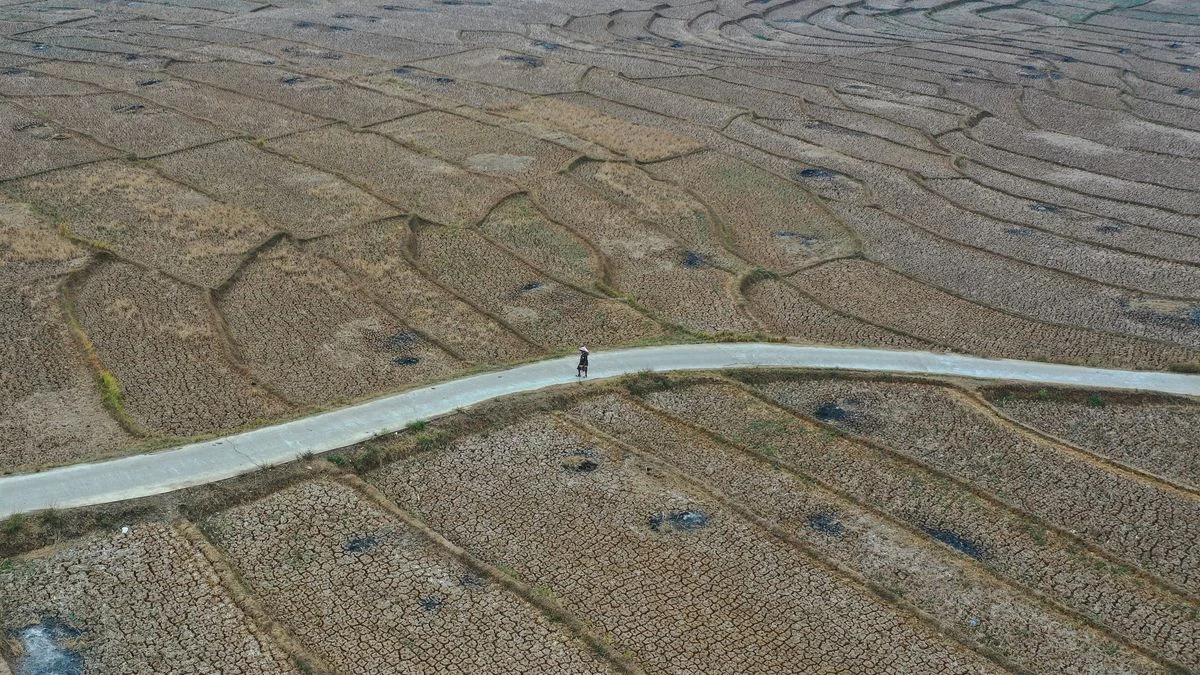
The global climate system is currently facing a meteorological upheaval of historic proportions. According to a grim forecast released by the Climate Impact Lab—a prestigious research consortium involving experts from the University of Chicago and the University of California, Berkeley—the current El Niño phenomenon is projected to claim approximately 450,000 additional lives by the end of February 2027. This staggering figure represents mortality directly linked to extreme heat, excluding the further, often higher, death tolls associated with the secondary effects of El Niño, such as catastrophic flooding, extreme precipitation events, and rampant wildfires.
As the planet braces for what scientists describe as a "Super El Niño"—potentially the most powerful event since modern meteorological record-keeping began—the humanitarian implications are becoming alarmingly clear. This is not merely a statistical anomaly; it is a profound public health crisis unfolding on a global scale.
The Mechanics of a Global Climate Disruptor
El Niño is a periodic climate pattern that typically occurs every four years, characterized by the warming of ocean surface temperatures in the central and eastern Pacific. This shift in sea-surface temperatures triggers a cascade of atmospheric changes that reverberate across the globe. By altering massive ocean currents and shifting jet streams, El Niño disrupts established weather patterns, leading to a "seesaw" effect: while some regions suffer from severe, prolonged droughts, others are battered by extreme rainfall and devastating floods.
The current cycle began earlier and with greater intensity than historically expected. Meteorologists have been tracking the rapid development of this event throughout 2026, noting that the thermal energy being released into the atmosphere is unprecedented. As the phenomenon moves toward its expected peak in the autumn and winter months, the cumulative stress on global ecosystems and human infrastructure is reaching a breaking point.
A Chronology of the Crisis
To understand the trajectory of this catastrophe, one must look at the timeline of the current cycle. The early warning signs appeared in the spring of 2026, when sea-surface temperature anomalies in the Pacific surged beyond the threshold typically associated with a "strong" El Niño.
- June 2026: The official start of the study period for the Climate Impact Lab. By this point, the global climate was already exhibiting signs of significant instability.
- Late 2026: The onset of the "Super El Niño" characteristics became undeniable, as temperature records began to tumble in both the Northern and Southern Hemispheres.
- Autumn/Winter 2026-2027 (The Peak): Current models indicate that the impact of the phenomenon will reach its zenith during these months. It is during this window that the risk of heat-related mortality is expected to spike, as the cumulative effects of the heat are compounded by the exhaustion of local resources and public health systems.
- February 2027: The conclusion of the forecast period. By this date, the researchers estimate that 450,000 people will have succumbed to heat-related illnesses that would not have occurred under standard, non-El Niño temperature conditions.
The Methodology: Calculating the Human Cost
The projections presented by the Climate Impact Lab are not based on speculation, but on a rigorous comparative analysis. The researchers mapped mortality rates in regions known to be sensitive to El Niño’s influence and compared these figures against a baseline of expected deaths, assuming temperatures remained within the average range observed over the previous three decades.
By isolating the "El Niño factor," the team was able to distinguish between baseline mortality and the "excess" deaths directly attributable to the anomalous heat. The study emphasizes that this data is not a prediction of inevitable fate, but a diagnostic tool meant to highlight the regions where the heat burden will be most lethal.
Regional Disparities: The Burden on the Global South
The findings reveal a deeply unequal distribution of risk. While the entire planet is affected by climate instability, the researchers note that the countries of the Global South are bearing the heaviest toll.

The Sahel region of Africa stands out as a primary area of concern. The report predicts that this region alone will see approximately 67,000 additional heat-related deaths, with Nigeria accounting for half of that figure. The combination of high population density, existing infrastructure challenges, and extreme temperature spikes creates a "perfect storm" for public health.
Similarly, nations in Southeast Asia—specifically the Philippines, Thailand, Indonesia, and Vietnam—are identified as high-risk zones. In South America, Brazil is projected to face the highest number of additional heat-related fatalities. The geographical concentration of these deaths highlights the intersection of climate vulnerability and socioeconomic status. Countries with fewer resources to implement cooling infrastructure, advanced medical warning systems, and robust water management are the most exposed to the lethal consequences of this climate event.
Mitigation and Policy Responses
In response to these findings, the authors of the report have outlined a series of urgent interventions. According to Michael Greenstone of the University of Chicago, the report serves as a roadmap for immediate, life-saving action. The proposed measures include:
- Hitzewarnsysteme (Heat Warning Systems): Implementing real-time communication networks to alert vulnerable populations before extreme heatwaves hit.
- Cooling Centers: Establishing accessible, climate-controlled public spaces to provide refuge for those without air conditioning.
- Water Security: Deploying mobile or stationary drinking water stations to prevent heat-related dehydration, a primary driver of mortality during these events.
- Workplace Safety: Enforcing protective regulations for individuals working in agriculture, construction, and other outdoor industries.
- Targeted Aid: Creating support programs specifically for the elderly and those with pre-existing medical conditions, who are statistically the most susceptible to heat stress.
The goal, Greenstone explains, is to translate data into action. "This report helps us identify exactly where immediate, localized measures must be taken to save tens of thousands of lives in the coming months," he stated.
Implications: A Climate Reality Check
The potential for this El Niño to cause damage reaching into the trillions of dollars is a sobering reality. Beyond the loss of human life, the economic destruction—ranging from crop failures and agricultural collapse to the strain on energy grids and the degradation of critical infrastructure—threatens to set back development in many of the affected nations by years, if not decades.
For a long time, the scientific community treated the connection between El Niño and the broader, long-term trend of human-induced climate change as an area of ongoing debate. However, a growing body of evidence, including the most recent studies, suggests that the intensity and frequency of these "Super" events may be increasingly tied to a warming world. The climate is not just changing; it is becoming more volatile, and the systems we rely on to manage risk are being pushed to their absolute limits.
As we look toward 2027, the data serves as a stark reminder: the climate crisis is not a future problem. It is a present-day reality that is already claiming lives. The ability of the international community to respond to this specific, predictable, and measurable threat will serve as a test case for our collective capacity to adapt to an increasingly hot and unpredictable world. The question remains whether the global response will be swift enough to prevent the grim projections of the Climate Impact Lab from becoming the historical record.