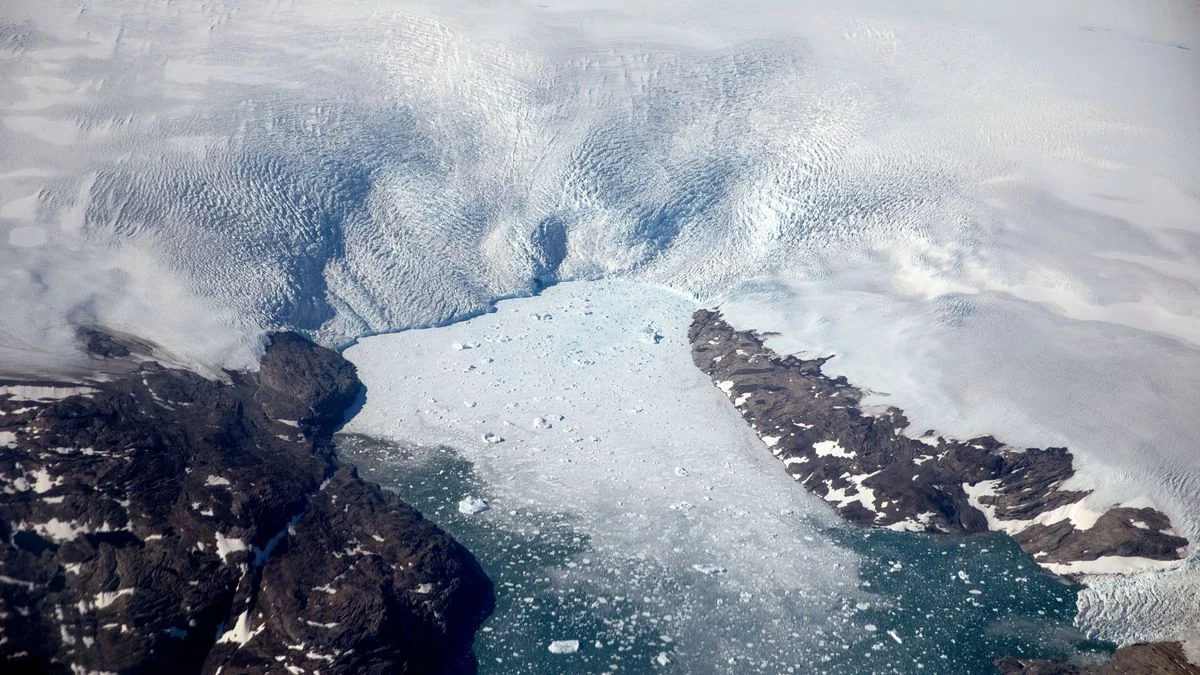
The stability of the Earth’s climate is fundamentally tied to the "eternal ice" of our polar regions. However, new research published in the journal Scientific Data provides a sobering confirmation of a long-feared reality: the planet’s two massive ice sheets in Greenland and Antarctica are disappearing at an alarming and accelerating rate. According to the Ice Sheet Mass Balance Intercomparison Exercise (IMBIE), these regions have shed more than 11 trillion tons of ice between 1979 and 2023, a transformation that has already permanently raised the global sea level by 3.14 centimeters.
This article explores the findings of this monumental study, analyzing the mechanics of ice loss, the acceleration of the process, and the profound, life-altering implications for millions of people living in coastal regions across the globe.
Main Facts: The Anatomy of a Global Crisis
The IMBIE study represents the most comprehensive assessment of polar ice mass balance to date. By synthesizing data from 42 individual surveys and leveraging observations from 27 different satellite missions, researchers have constructed a high-resolution map of how our ice sheets have shifted over the last four decades.
The primary takeaway is that the loss is not merely a surface-level phenomenon caused by atmospheric warming. Instead, the data reveals a deeper, more structural instability. Over 80% of the total ice loss during this period was not the result of melting at the surface, but rather the result of glaciers flowing more rapidly into the ocean. This "dynamic response"—where glaciers speed up their transit toward the sea—indicates that the polar regions are reacting directly to the warming of the ocean waters surrounding them. In Antarctica, the situation is even more critical, with nearly all ice loss attributed to this accelerated glacial discharge caused by warming maritime currents.
Chronology: A Half-Century of Escalation
To understand the trajectory of our changing planet, one must look at the decadal shifts in ice mass. The data reveals a clear, frightening trend of acceleration.
The 1980s: A Period of Relative Stability
In the 1980s, the ice loss was significant but pale in comparison to modern figures. Greenland lost approximately 60 billion tons of ice annually, while Antarctica saw an annual loss of about 48 billion tons. During this era, the global climate was already beginning to show signs of human-induced stress, but the polar ice sheets still maintained a semblance of equilibrium.
The 1990s and 2000s: The Onset of Acceleration
Beginning in the 1990s, the rate of loss began to climb. The combination of rising global temperatures and increased ocean heat content started to compromise the structural integrity of major ice shelves. This period served as a "warning track" for the scientific community, as satellite imagery began to show thinner ice and retreating glacial tongues.
The 2010s: The Decade of Extremes
The 2010s marked a dramatic shift. Driven by record-breaking "heat summers" and sustained ocean warming, the annual ice loss in Greenland skyrocketed to an average of 264 billion tons per year. Antarctica followed a similar, albeit slightly delayed, trajectory, with its annual loss jumping to roughly 202 billion tons. By the end of this decade, the cumulative impact of these losses had fundamentally altered the global water cycle.
2020–2023: A Temporary Lull?
Between 2020 and 2023, researchers observed a slight deceleration in the rate of ice loss. However, the study’s authors emphasize that this should not be interpreted as a recovery. Rather, it is a brief fluctuation within a broader, long-term trend of decline. The ice sheets continue to lose mass far more rapidly than they can be replenished by snowfall, confirming that the long-term trend remains firmly in the danger zone.
Supporting Data: The Mechanics of Melt
The collaboration between the IMBIE team and the European Space Agency (ESA) provides the most granular view of the mechanisms driving this crisis. The core finding—that over four-fifths of the ice loss is driven by faster-flowing glaciers—is a paradigm shift in how we understand polar stability.
Inès Otosaka, a co-author of the study from the University of Northumbria, notes that this is evidence of the "dynamic response" of ice sheets to a warming ocean. When the ocean warms, it melts the undersides of ice shelves that act as "buttresses" for inland glaciers. Once these ice shelves weaken or break off, the glaciers behind them are no longer held back and begin to surge into the sea, effectively "dumping" massive quantities of fresh water into the salty ocean.
While the 3.14-centimeter sea-level rise attributed to these ice sheets is significant, it is part of a larger, more complex puzzle. According to the ESA, the total sea-level rise we have observed is the result of three main factors:
- Polar Ice Sheets: Responsible for roughly 25% of the total rise.
- Mountain Glaciers: The melting of glaciers in the Alps, Andes, Himalayas, and beyond.
- Thermal Expansion: As seawater warms, it physically expands, taking up more volume and pushing water levels higher.
Official Responses and Expert Analysis
The scientific community has reacted to these findings with a mix of academic rigor and urgent public concern. Andrew Shepherd, a professor at the University of Northumbria and a lead voice in the study, provides a perspective that bridges the gap between scientific measurement and human impact.
"Three centimeters of sea-level rise may sound like a small number to the average citizen," Shepherd explains. "However, it is vital to understand the human cost of these statistics. This specific amount of rise puts an additional six to nine million people at direct risk of flooding and coastal erosion."
For policymakers, the IMBIE study serves as a call to action. The data suggests that coastal infrastructure planning, which was once based on slow, linear models of sea-level rise, must now account for the non-linear, accelerating reality of polar mass loss. International organizations, including the IPCC, are expected to integrate these findings into their upcoming reports to better refine the models used for climate adaptation strategies.
Implications: A Future in Flux
The implications of an 11-trillion-ton loss of ice are far-reaching. Beyond the immediate threat of flooding, the influx of massive quantities of freshwater into the oceans can disrupt salinity levels and, by extension, global ocean circulation patterns, such as the Atlantic Meridional Overturning Circulation (AMOC).
The Human Cost
Coastal cities—from Jakarta and Miami to Rotterdam and Mumbai—are on the front lines. The erosion of coastlines is not just a geological process; it is an economic and social one. It threatens to displace millions, destroy agricultural land through saltwater intrusion, and render critical infrastructure inoperable.
The Unknowns and the Way Forward
Despite the precision of satellite data, there are still "black boxes" in our understanding. For example, our knowledge of the world’s largest fjord systems remains limited due to the extreme difficulty of conducting research in such harsh, deep-water environments. Recent innovative studies, such as tagging narwhals with sensors to monitor deep-sea temperatures, have yielded "dramatic" data from depths exceeding 1,500 meters, further confirming that the deep ocean is warming faster than previously anticipated.
Conclusion: No Turning Back
The IMBIE study is a clarion call. The "eternal ice" is neither eternal nor static; it is a sensitive, reactive component of the Earth system that is currently in a state of rapid retreat. While the rate of loss may fluctuate year-to-year, the trend since the late 20th century is unequivocal. The challenge for the coming decades is not only to reduce the carbon emissions that drive the atmospheric and oceanic warming but also to prepare for the inevitable rise in sea levels that this 11-trillion-ton loss has already set in motion.
As we move deeper into the 21st century, the data tells a clear story: the stability of our coastal civilizations depends on our ability to listen to the silent, cold language of the polar ice. The time for observation is transitioning into a time for urgent adaptation.