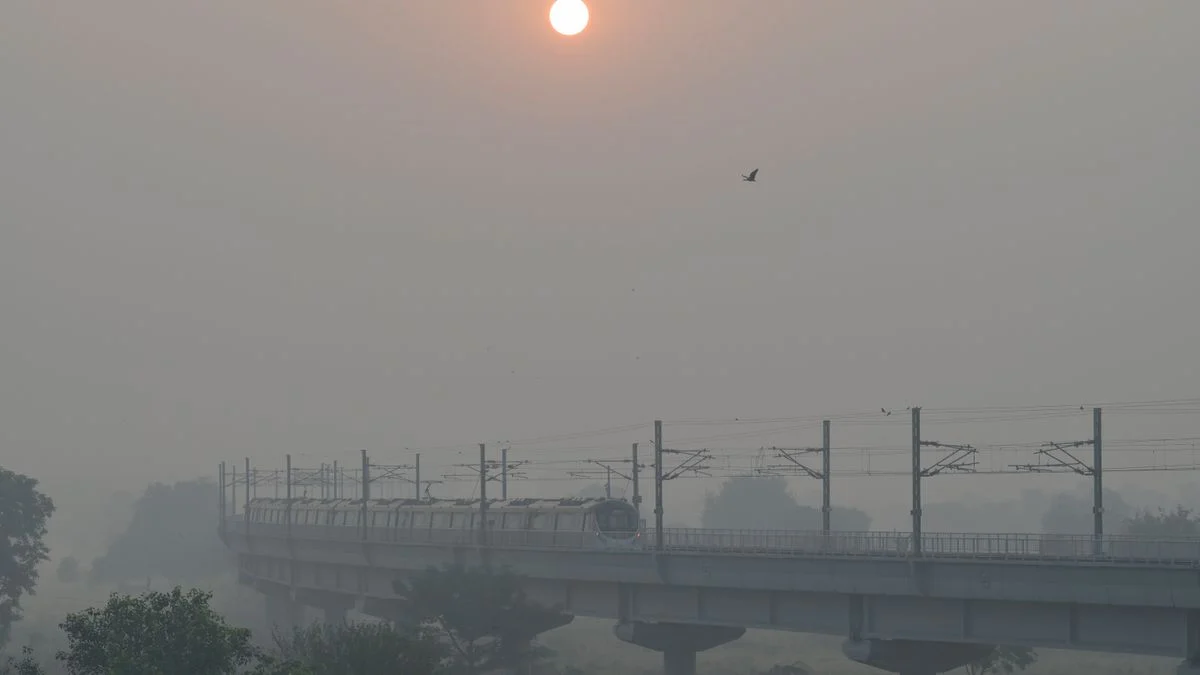
The air in New Delhi has transformed into a lethal cocktail of particulate matter, pushing the Indian capital into a public health emergency of unprecedented proportions. As of Wednesday, air quality monitors operated by IQAir reported PM2.5 levels soaring to a staggering 461 micrograms per cubic meter in several districts. This figure, representing the concentration of fine, carcinogenic microparticles, is more than 30 times the safety threshold recommended by the World Health Organization (WHO). For the 30 million residents living in the greater New Delhi metropolitan area, the act of breathing has become a significant health risk.
The Anatomy of the Crisis: Understanding PM2.5
To understand the severity of the situation in New Delhi, one must look at the nature of PM2.5. These particles, which measure less than 2.5 micrometers in diameter, are so microscopic that they can penetrate deep into the pulmonary alveoli, enter the bloodstream, and travel to vital organs, including the heart and brain. Chronic exposure to these particles is linked to cardiovascular disease, respiratory failure, and lung cancer.
When the concentration hits 461 micrograms per cubic meter, the air is not merely "unhealthy"—it is hazardous. At this level, even short-term exposure can cause significant irritation to the eyes, nose, and throat, and trigger acute asthma attacks in vulnerable populations. For the millions of residents who lack the luxury of air purifiers or the ability to stay indoors, the current climate is a slow-motion public health catastrophe.
Chronology of a Recurring Nightmare
The current spike in pollution is not an isolated event; it is the climax of a seasonal phenomenon that has plagued Northern India for decades.
- Late September – Early October: As the monsoon rains retreat, the air begins to stagnate. Farmers in the neighboring states of Punjab and Haryana begin clearing their fields of crop residue, often resorting to stubble burning to prepare the land for the winter sowing season. This massive influx of smoke is the first major contributor to the capital’s smog.
- Mid-October: The drop in temperatures and the onset of "thermal inversion"—where cold air traps pollutants close to the ground—begin to squeeze the city. The PM2.5 levels start their steady climb from "moderate" to "very poor."
- The Current Week: The accumulation of vehicular exhaust, industrial output, and the secondary reactions of agricultural chemicals push the Air Quality Index (AQI) into the "severe" category.
- The Upcoming Diwali Threat: Looming over the current crisis is the Hindu festival of Diwali, scheduled for this coming Sunday. Despite sporadic bans on firecrackers, the tradition of lighting pyrotechnics remains a deeply ingrained practice. Historically, the night of Diwali marks the absolute peak of pollution levels for the year, as the smoke from fireworks becomes trapped in the already saturated atmosphere.
A Multifaceted Culprit: Beyond Simple Emissions
While the public often points to car traffic and industrial smoke as the primary villains, the reality of New Delhi’s pollution is far more complex. According to data provided by the Indian Ministry of Environment, roughly 27 percent of the city’s particulate load is the result of a chemical reaction. When exhaust from vehicles, industrial smokestacks, and the burning of biomass mix in the atmosphere, they create a secondary layer of toxic smog.
However, a less-discussed but equally significant contributor is the agricultural sector. Science journalist and author Jacob Koshy has highlighted the role of intensive farming practices in the hinterlands surrounding the capital. The massive quantities of nitrogen-based fertilizers applied to crops release significant amounts of ammonia. Once airborne, this ammonia reacts with other pollutants to form secondary particulate matter. This suggests that the city’s air quality cannot be improved by addressing traffic alone; it requires a radical overhaul of regional agricultural policies.
Official Responses and Administrative Hurdles
The authorities in New Delhi have not remained idle, though the effectiveness of their measures remains a subject of intense debate. In response to the rising AQI, the Commission for Air Quality Management (CAQM) has triggered the Graded Response Action Plan (GRAP).
Key measures currently in place include:
- Construction Bans: A prohibition on all non-essential construction and demolition activities to prevent dust suspension.
- Traffic Restrictions: Increased checks on heavy-duty vehicles and the potential restriction of older diesel vehicles from entering the city limits.
- Water Sprinkling: The deployment of municipal water tankers to spray roads and construction sites to settle dust.
Critics, however, argue that these measures are reactive rather than proactive. Environmental activists maintain that the "Band-Aid" solutions—such as deploying smog towers or temporary traffic bans—fail to address the structural issues, such as the reliance on coal-fired power plants in the National Capital Region and the lack of an integrated public transport network that spans the entire metropolitan area.
The Long-term Implications for Public Health
The long-term health toll of New Delhi’s air is becoming increasingly difficult to quantify due to its sheer scale. Medical practitioners in the city report a year-round increase in respiratory ailments, particularly among children and the elderly. Pediatricians have noted that many children born in Delhi show reduced lung capacity compared to their peers in less polluted regions.
Beyond the immediate physical risks, there is an economic burden. The loss of productivity due to illness, the rising costs of healthcare, and the potential for a "brain drain"—where professionals choose to leave the city to protect their families—are all silent taxes imposed by the smog.
The psychological toll is also mounting. The "gray veil" that hangs over the city for months at a time contributes to a sense of malaise and environmental anxiety. For a city that aspires to be a global economic hub, the inability to provide breathable air for its citizens represents a significant barrier to sustainable development.
A Path Forward?
Solving the crisis in New Delhi requires a level of political coordination that has historically been elusive. Because the pollution is a regional problem, policies must transcend state borders. Farmers in Punjab cannot be expected to bear the economic cost of sustainable farming practices alone; they require financial subsidies to adopt machinery that manages crop residue without burning. Similarly, the transition to electric mobility and cleaner industrial energy must be accelerated with federal backing.
The science is clear: the current trajectory is unsustainable. As the city braces for the Diwali festivities, the atmosphere is already at a breaking point. Without a fundamental shift in how the region manages its agricultural waste, energy production, and urban planning, the people of New Delhi will continue to be hostages to the air they breathe.
The WHO guidelines exist for a reason—to protect the fundamental human right to health. Until New Delhi brings its PM2.5 levels within a range that does not threaten the lives of its inhabitants, the city remains a cautionary tale of modern urbanization. For now, the millions of residents of the Indian capital can only wait for the winds to change or for the monsoon to return, hoping that the next day brings at least a glimpse of the blue sky they have largely forgotten.