Leipzig, Germany – November 5, 2026: In a decisive move to address the mounting tide of litter generated by the city’s thriving "to-go" culture, the City of Leipzig has officially launched a comprehensive "Mehrweg-Offensive" (Reusable Offensive). The initiative, which seeks to transform how residents and visitors consume food and beverages on the move, focuses on voluntary participation and system-wide integration, explicitly rejecting the controversial implementation of a dedicated packaging tax.
The campaign, supported by a coalition of local stakeholders including the Leipzig Chamber of Industry and Commerce (IHK) and the German Hotel and Restaurant Association (DEHOGA) Saxony, represents a pivotal shift in the city’s environmental policy. By prioritizing incentives over taxation, Leipzig aims to achieve a significant reduction in single-use plastic and paper waste that has increasingly cluttered the city’s public spaces.
Main Facts: The Scope of the Initiative
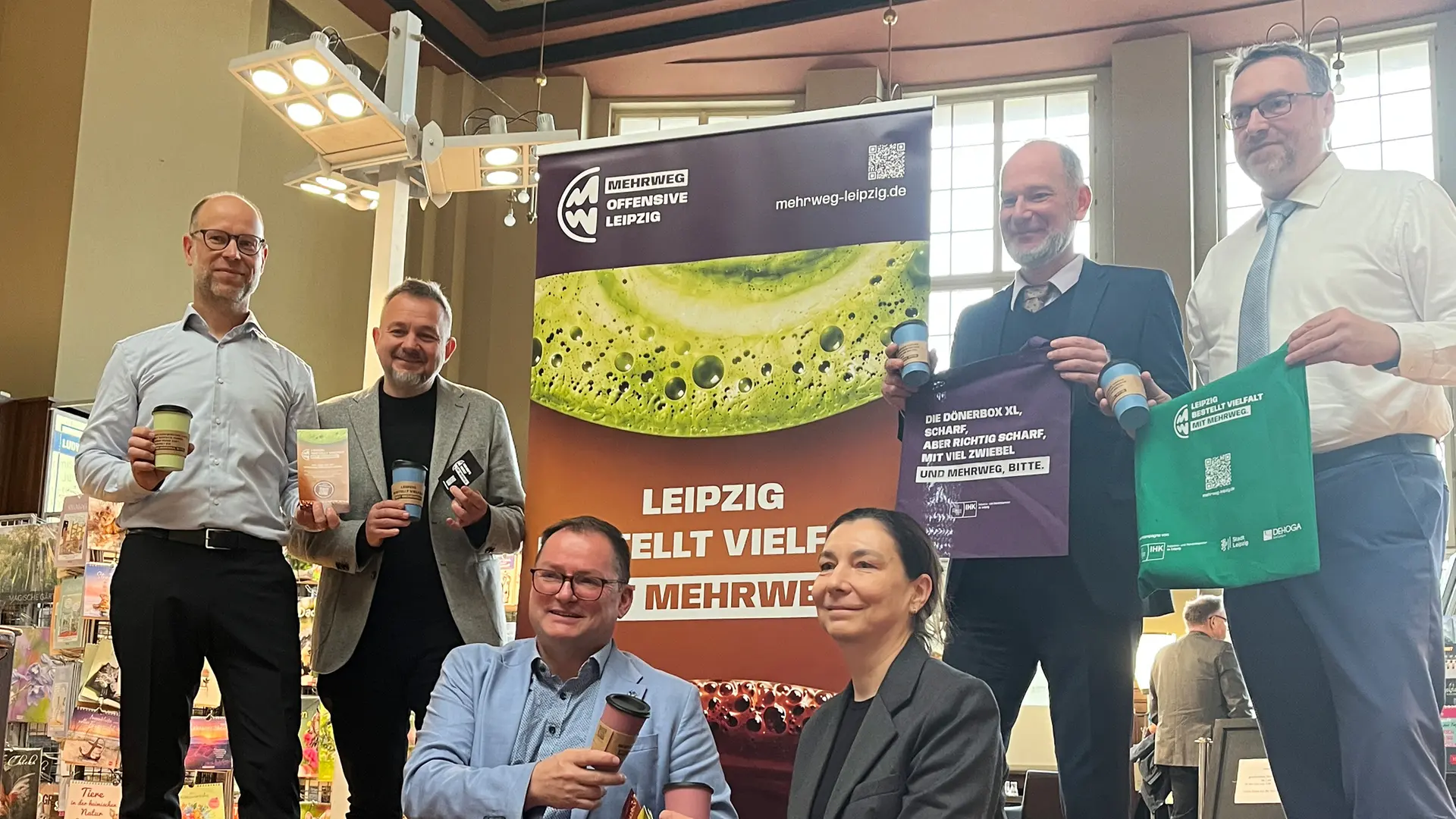
The "Mehrweg-Offensive" is a multi-faceted project designed to make sustainable consumption the path of least resistance for both business owners and consumers. The core objective is to integrate reusable packaging systems into the daily operations of bakeries, cafes, and snack bars throughout the city center and the central railway station.
Unlike other German cities that have experimented with municipal packaging taxes—levies charged on disposable containers—Leipzig has chosen a collaborative approach. The initiative aims to onboard 60% of currently non-participating food service businesses into existing, interoperable reusable container networks.

Key features of the initiative include:
- System Interoperability: A move toward unified return systems, allowing customers to return containers at various locations regardless of where the purchase was made.
- Financial Support: DEHOGA has pledged to assist smaller businesses in the logistical and financial transition to reusable systems.
- Visibility and Branding: Participating establishments will display standardized stickers, and a digital "Mehrweg-Finder" map has been launched to help consumers locate outlets and return stations.
- Strategic Infrastructure: A high-profile, system-agnostic return machine is planned for the Leipzig Central Railway Station, aiming to capture waste from commuters and tourists.
Chronology: From Legislative Debate to Implementation
The road to this initiative was marked by significant policy friction.
- May 2026: The Leipzig City Council held a heated debate regarding the potential introduction of a local packaging tax, similar to models seen in other German cities. Following intense lobbying from the local hospitality sector, which warned of bureaucratic burden and potential loss of competitiveness, the council officially rejected the tax proposal.
- June 2026: Recognizing that the rejection of a tax did not solve the underlying waste problem, the Leipzig business community, led by the IHK and DEHOGA, took the initiative to develop a voluntary alternative.
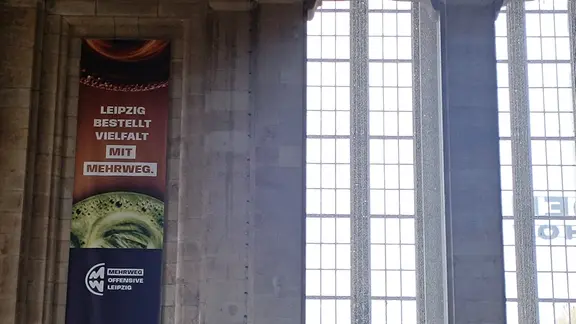
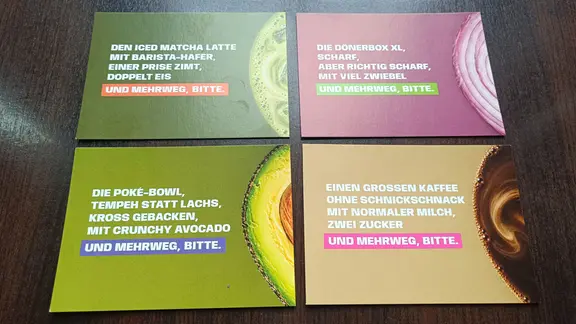
- November 1, 2026: The official launch of the marketing campaign. This included the deployment of promotional posters in the Central Station, the release of the "Mehrweg-Finder" digital tool, and the rollout of branded postcards featuring the campaign’s slogan: "One kebab, extra spicy, and please in a reusable container."
Supporting Data: The Scale of the Problem
The motivation for the initiative is backed by stark evidence. An analysis of public waste bins in the city center revealed that disposable to-go packaging accounts for a staggering 40% of the total refuse collected.
Dr. Gert Ziener, Managing Director of Fundamental Issues at the IHK Leipzig, emphasizes that the goal is not merely symbolic. The initiative aims to reduce the volume of single-use plastic and paper cups by 15% within the first two years of the program. This projection is based on the success of similar voluntary systems and the anticipated ease of use provided by the planned automated return infrastructure at the central transit hub.
In neighboring regions, the data has been compelling. In the city of Konstanz, for instance, the implementation of a structured system led to a reduction of approximately one million to-go coffee cups within just nine months. Leipzig officials are hopeful that by creating a "frictionless" return process, they can replicate or exceed these efficiency gains.
Official Responses and Stakeholder Perspectives
The initiative has garnered support from a broad coalition, though industry leaders remain cautious about the long-term feasibility of voluntary compliance.
Axel Klein, Managing Director of DEHOGA Saxony:
"Our primary focus is on the businesses that are not currently under a legal mandate to offer reusables. We are not just asking them to change; we are providing the financial and logistical scaffolding to make it happen. Visibility is our greatest tool. When a customer sees that a shop is part of the ‘Mehrweg-Offensive,’ it creates a positive social pressure that benefits everyone."
Clemens Schülke, Mayor for Economy, Labor and Digitalization:
"We are choosing the path of partnership. By working with the IHK and DEHOGA, we ensure that the system is designed by the people who actually have to run it. A city that is clean and sustainable is a city that is more attractive to both its residents and its tourists."
The sentiment among local business owners is mixed. While many express environmental concern, there is an underlying anxiety regarding the cost of washing, storing, and managing the logistics of thousands of reusable containers. The "financial injection" promised by the initiative’s organizers is viewed as a necessary, if modest, starting point to mitigate these operational costs.
Implications: The Lessons from Other German Cities
Leipzig’s decision to avoid a tax is heavily informed by the "Rolle rückwärts" (reversal) experienced by other German municipalities.

The Freiburg Lesson
Freiburg, which integrated a packaging tax with a reusable system in May 2025, serves as a cautionary tale. The city was forced to abandon the tax after facing intense backlash from the restaurant industry. Owners argued that the complexity of the tax, combined with the difficulty of explaining the surcharge to international tourists, created an administrative nightmare.
The Tübingen Model
Conversely, Tübingen has been cited as a successful pioneer. Having introduced a packaging tax back in 2022 alongside a robust subsidy program for reusable infrastructure, the city managed to stabilize its system. The key difference in Tübingen was that the tax was clearly marketed as a tool to fund the transition, rather than a punitive measure.
The Emerging Standard
The national trend is clearly moving toward a hybrid approach. Potsdam, which implemented a tax in 2026, has simultaneously launched a state-funded program to subsidize the purchase of reusable equipment. Leipzig’s experiment will be closely watched by urban planners across Germany; if the city can achieve a 15% reduction in waste without the friction of a tax, it could become the new blueprint for mid-to-large-sized German cities.
Conclusion: A Test of Voluntary Responsibility
The "Mehrweg-Offensive" in Leipzig is more than just a waste-reduction campaign; it is a test of the efficacy of voluntary business regulation in an era of environmental urgency. By focusing on the "consumer experience"—specifically the convenience of returning items at transit hubs—the city is banking on the idea that modern citizens are willing to change their habits if the infrastructure supports them.

The next 24 months will be critical. If the 60% participation target is reached and the 15% reduction goal is met, Leipzig will have proven that municipal environmental goals can be achieved through cooperation rather than coercion. However, if participation remains sluggish, the conversation regarding a municipal packaging tax will almost certainly return to the City Council floor. For now, the city is betting on the power of community, visibility, and a little bit of nudging to keep the streets of Leipzig clean.