Berlin, Germany – November 5, 2026 – Hubert Aiwanger, the prominent Bavarian Minister of Economic Affairs, Deputy Minister-President, and long-standing leader of the Freie Wähler (Free Voters) party, has died suddenly at the age of 55 in a Berlin hotel. The news, confirmed by government circles to the ARD-Hauptstadtstudio and initially reported by Bild-Zeitung, has sent shockwaves through Germany’s political landscape, leaving a profound void in Bavarian governance and national discourse.
Aiwanger, a figure known for his distinctive blend of populist appeal and pragmatic policy-making, was reportedly in the capital for the opening of his party’s new Berlin office. His unexpected passing has prompted a formal death investigation by the Berlin public prosecutor’s office and the state criminal police, a standard procedure for unexplained deaths.
The Tragic Discovery: A Timeline of Events
The circumstances surrounding Hubert Aiwanger’s death paint a poignant picture of sudden loss. According to initial reports, Aiwanger was in Berlin to participate in a significant event for his party: the inauguration of the Freie Wähler’s new office in the federal capital. This event underscored the party’s growing national ambitions and Aiwanger’s pivotal role in that expansion.
On the day of the planned opening, Wednesday, November 4th, Aiwanger reportedly felt unwell and did not attend the scheduled ceremony. Concern grew when subsequent attempts to reach him proved unsuccessful. Later that evening, he was discovered lifeless in his hotel room. The precise cause of death has not yet been publicly disclosed.
Following the discovery, the Berlin public prosecutor’s office, in conjunction with the homicide commission of the Landeskriminalamt Berlin (State Criminal Police Office), initiated a death investigation procedure. It is crucial to note that in Germany, such an investigation is a routine measure whenever a death occurs under unexplained circumstances, and does not automatically imply foul play. Its purpose is to meticulously ascertain the cause of death and rule out any criminal involvement. The thoroughness of this process reflects the gravity of the situation, given Aiwanger’s high political office.
The news began to circulate late Wednesday night, initially through media outlets, before official confirmations started to emerge from government and party channels. The speed with which the political world reacted underscored Aiwanger’s central role and the immediate sense of loss felt across party lines.
A Life Dedicated to Bavarian Politics: A Career Overview
Hubert Aiwanger’s political journey was deeply intertwined with the rise of the Freie Wähler, a party that transitioned from its municipal roots to become a significant force in Bavarian state politics and a growing voice at the federal level. Born in 1971, Aiwanger was a quintessential Bavarian, deeply connected to the rural and small-town communities that formed the bedrock of his party’s support.
His political career began at the local level, where the Freie Wähler traditionally thrived, championing local interests and pragmatic solutions. This grassroots approach proved highly effective, and Aiwanger quickly distinguished himself as a dynamic and articulate leader.
In 2008, Aiwanger led the Freie Wähler into the Bavarian State Parliament (Landtag) for the first time, a historic breakthrough that fundamentally altered the state’s political landscape. Upon their entry, he immediately assumed the crucial role of faction leader, guiding the nascent parliamentary group and establishing the party as a credible alternative to the long-dominant Christian Social Union (CSU).
A decade later, in 2018, Aiwanger achieved another significant milestone. Following the state elections, the CSU, under Minister-President Markus Söder, formed a coalition government with the Freie Wähler. In this landmark alliance, Aiwanger was appointed Minister of Economic Affairs, Regional Development, and Energy, and, crucially, Deputy Minister-President of Bavaria. This elevation cemented his status as a key player in state politics and gave the Freie Wähler unprecedented executive power.
For nearly 20 years, Aiwanger served as the state chairman of the Freie Wähler, shaping its identity, expanding its reach, and refining its political platform. He was widely regarded as the party’s most recognizable and, at times, most controversial figure, embodying its populist, pro-Bavarian, and often unconventional approach to politics. His leadership was instrumental in transforming a collection of local voter groups into a formidable state-level party, capable of governing alongside the established powers.
The Rise of the Freie Wähler: A Unique Political Phenomenon
The Freie Wähler, under Hubert Aiwanger’s stewardship, represented a unique and fascinating development in German politics. Unlike traditional political parties with a strong ideological foundation, the Freie Wähler originated from a diverse collection of non-partisan voter groups at the municipal level. Their appeal lay in their focus on local issues, community engagement, and a pragmatic, solution-oriented approach, often positioning themselves as an alternative to the perceived rigidities of mainstream parties.
Aiwanger masterfully leveraged this grassroots strength, transforming it into a cohesive state-level political force. He articulated a vision for Bavaria that resonated with many, emphasizing regional identity, economic self-reliance, and a degree of skepticism towards federal or European dictates that often endeared him to a segment of the electorate feeling overlooked by Berlin. His direct, often blunt communication style, devoid of much political polish, was seen by supporters as authentic and relatable.
The party’s success, culminating in its entry into government, showcased Aiwanger’s strategic acumen and his ability to unite disparate local interests under a broader Bavarian banner. He cultivated an image as a champion of the "common man" and a defender of Bavarian distinctiveness, often clashing with environmental activists or federal regulations in the name of economic development and local autonomy. This approach allowed the Freie Wähler to carve out a distinct political space, often drawing votes from both the more conservative wing of the CSU and disaffected voters from other parties. His leadership was the driving force behind their transition from a purely municipal presence to a vital partner in Bavaria’s state government.
The "Flugblatt-Affäre": A Defining Moment of Controversy
Hubert Aiwanger’s career was not without its significant challenges and controversies, none more prominent than the "Flugblatt-Affäre" (leaflet affair) in the summer of 2023. This episode threatened to derail his political career and cast a long shadow over his public image.
The controversy erupted when a newspaper reported on an antisemitic leaflet that had circulated in Aiwanger’s high school in the late 1980s. The anonymous leaflet, filled with hateful and derogatory content targeting Jews, sparked immediate outrage and condemnation across Germany. Aiwanger was accused of having authored or at least distributed the document, leading to intense public scrutiny and calls for his resignation.
Initially, Aiwanger categorically denied authoring the leaflet. The allegations plunged Bavarian politics into crisis, just weeks before a crucial state election. Minister-President Markus Söder, Aiwanger’s coalition partner, faced immense pressure to dismiss his deputy. The national media, Jewish community organizations, and opposition parties demanded a full and transparent explanation.
In the midst of the escalating crisis, Aiwanger eventually admitted to having copies of the leaflet in his school bag but maintained he did not write it. The situation took a dramatic turn when Aiwanger’s older brother, Helmut Aiwanger, came forward and publicly claimed authorship of the controversial document, stating he had written it as a teenager and Hubert had merely found it.
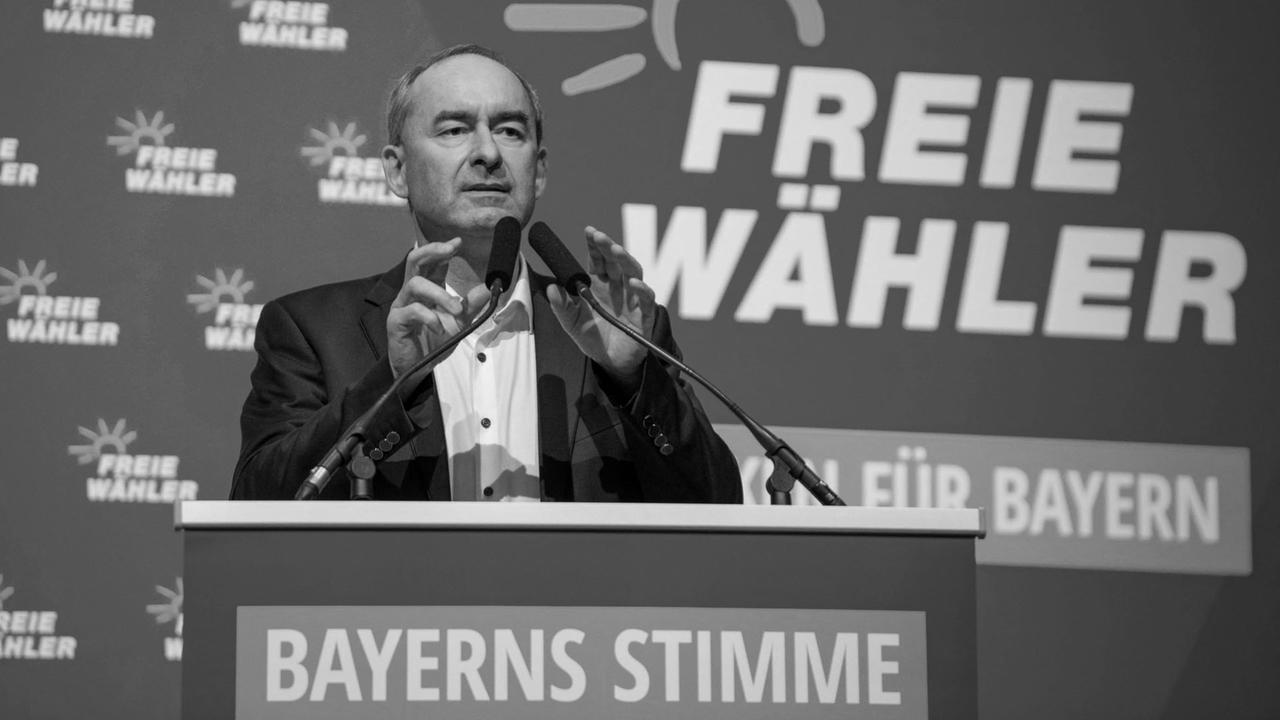
Despite the brother’s confession, questions lingered about Hubert Aiwanger’s handling of the situation and the initial delay in a clear statement. However, Minister-President Söder ultimately decided to retain Aiwanger in his post, citing a lack of conclusive evidence against Hubert Aiwanger himself and emphasizing the need for governmental stability. This decision, though controversial, allowed Aiwanger to survive the political storm. The affair highlighted Aiwanger’s resilience and the deep political capital he held within his party and with Söder, but also underscored the enduring sensitivity around historical issues in Germany. For many, it remained a dark chapter in his public life, while for his supporters, it solidified his image as a man unfairly targeted but ultimately vindicated.
Recent Electoral Successes and Political Momentum
In the wake of the "Flugblatt-Affäre," many political observers predicted a decline in the Freie Wähler’s fortunes. However, under Aiwanger’s continued leadership, the party demonstrated remarkable resilience and even managed to achieve significant successes in subsequent elections.
Most notably, the Bavarian municipal elections held in the spring prior to his death saw the Freie Wähler perform exceptionally well. Under Aiwanger’s strategic guidance and campaigning, the party made significant inroads, particularly in rural and semi-urban areas. They successfully "snatched" numerous district administrator (Landrat) positions from the traditionally dominant CSU, showcasing their growing appeal and organizational strength at the local level. These victories were a testament to Aiwanger’s enduring popularity and his ability to connect with voters on issues close to their daily lives.
This recent electoral success had further solidified Aiwanger’s position as an indispensable leader within his party and a crucial partner in the Bavarian state government. It also indicated a broader trend of regional parties gaining traction against national giants, with Aiwanger at the forefront of this movement in Bavaria. The momentum generated by these victories was expected to propel the Freie Wähler into future electoral contests with renewed confidence, a trajectory now abruptly halted by his sudden death.
A Wave of Grief and Condolences from Across the Political Spectrum
The news of Hubert Aiwanger’s death triggered an immediate outpouring of shock, sorrow, and condolences from across the German political spectrum, highlighting his profound impact despite his often-controversial stances.
Florian Streibl, leader of the Freie Wähler parliamentary group in the Bavarian State Parliament, expressed the deep devastation felt within Aiwanger’s own party. "Deeply dismayed, with infinitely profound sorrow and horror, we must accept that our Hubert Aiwanger was torn from life far too early," Streibl declared late Wednesday evening in Munich. He added, "Bavaria will be different without him." Streibl further emphasized Aiwanger’s "humanity and philanthropy," his "closeness to citizens," and his "solution-oriented actions," all of which, he said, "will be missed by all of us." His thoughts and prayers, Streibl stated, were with Aiwanger’s children, parents, partner, and relatives.
Bavarian Minister-President Markus Söder (CSU), Aiwanger’s coalition partner, conveyed his profound shock via the platform X. "The sudden death of Hubert Aiwanger is an absolute tragedy," Söder wrote. "We are all deeply shocked. Our thoughts are now primarily with his family and his children." Söder’s words reflected not only a political partnership but also a personal bond forged through years of shared governance.
Alexander Hoffmann, head of the CSU’s state parliamentary group, paid tribute to Aiwanger as a "full-blooded politician" who had left an indelible mark on Bavaria. "The news of Hubert Aiwanger’s sudden death makes one sad and affected," Hoffmann was quoted by the German news agency dpa. "Hubert Aiwanger was contentious, but undeniably a full-blooded politician who shaped Bavaria."
Beyond Bavaria, national political figures also expressed their dismay. Cem Özdemir, Minister-President of Baden-Württemberg (Greens), acknowledged Aiwanger’s distinctive political style. "The sudden death of Hubert Aiwanger deeply saddens me. He was a contentious politician with rough edges who fought for his convictions," Özdemir wrote. "My thoughts are with his family and all who were close to him."
Wolfgang Kubicki, the federal chairman of the FDP (Free Democratic Party), also recognized Aiwanger as a "contentious politician" whose voice and personality would be missed in German politics. "With his unconventional and down-to-earth manner, he shaped and stirred up the political landscape in Bavaria," Kubicki remarked, underscoring Aiwanger’s unique contribution to public discourse.
These numerous tributes underscore that despite his often polarizing positions and the controversies he faced, Aiwanger was widely recognized as a dedicated and influential politician whose presence significantly impacted both Bavarian and, by extension, national political conversations.
The Political Vacuum and Future Implications for Bavaria
Hubert Aiwanger’s sudden death creates an immediate and profound political vacuum, particularly within the Freie Wähler party and the Bavarian state government. His role as Minister of Economic Affairs, Deputy Minister-President, and the undisputed leader of his party for two decades means his absence will be felt at multiple levels.
Immediate Leadership Challenge for the Freie Wähler:
The most pressing issue for the Freie Wähler is the question of succession. Aiwanger was the face, voice, and strategic mind of the party. While the party has a strong network of local politicians and experienced state parliamentarians, none possess Aiwanger’s unique charisma, public recognition, or long-standing authority. Finding a successor who can unite the diverse wings of the party, maintain its distinctive identity, and effectively articulate its message will be a significant challenge. Potential candidates from within the parliamentary group, such as Florian Streibl, the current faction leader, or other prominent state ministers, will likely be considered. However, stepping into Aiwanger’s shoes will be an arduous task, requiring a figure capable of maintaining the party’s populist appeal while navigating complex coalition politics.
Impact on the CSU-Freie Wähler Coalition:
The coalition government between the CSU and the Freie Wähler has been remarkably stable under Söder and Aiwanger. Their partnership, though occasionally strained, was characterized by a shared commitment to Bavarian interests and a pragmatic approach to governance. Aiwanger’s death removes a key pillar of this stability. While Minister-President Söder has expressed deep shock, he will now need to navigate the immediate aftermath and work with the Freie Wähler to ensure a smooth transition. The core policies of the coalition are unlikely to change drastically in the short term, but the dynamic and interpersonal chemistry that defined the Söder-Aiwanger relationship is irreplaceable. The Freie Wähler will need to quickly present a united front and a capable leadership team to reassure their coalition partner and maintain their influence.
Future of Bavarian Politics:
Beyond the immediate reshuffle, Aiwanger’s absence could have longer-term implications for Bavarian politics. The Freie Wähler, under his guidance, had successfully carved out a unique political space, attracting voters who felt unrepresented by the larger parties. Without Aiwanger’s distinct personality and campaigning prowess, the party might struggle to maintain its electoral momentum and prevent its voters from drifting back to the CSU or towards other parties, including the far-right AfD, which often competes for similar voter demographics.
The political landscape in Bavaria could become more fluid. The CSU might find itself without the familiar counterweight and occasional ally that Aiwanger represented. Opposition parties will undoubtedly seek to capitalize on any perceived instability or weakness within the governing coalition.
National Implications:
While primarily a Bavarian force, Aiwanger’s Freie Wähler had increasingly sought a national profile. The opening of their Berlin office was a clear sign of these ambitions. His death leaves the party without its most prominent national voice, potentially hindering its efforts to expand beyond Bavaria and establish itself as a significant player in federal elections.
In essence, Hubert Aiwanger’s death marks the end of an era for the Freie Wähler and a significant turning point for Bavarian politics. The coming weeks and months will reveal how the party and the state government adapt to this immense loss and navigate the challenges of leadership transition and political realignment. His legacy as a "full-blooded politician" who profoundly shaped Bavaria’s political identity will undoubtedly endure, even as the search for his successor begins.