Washington D.C., November 5, 2026 – In a stunning rebuke to President Donald Trump’s administration, the Democratic Party has swept control of both the U.S. House of Representatives and the Senate in the 2026 midterm elections. The outcome, described by House Democratic leader Hakeem Jeffries as an "American Tsunami," signals a dramatic shift in the nation’s political landscape, setting the stage for an era of heightened legislative conflict and intensified scrutiny of the White House. The contentious "Iran War," initiated by President Trump, emerged as a dominant factor in voter discontent, with skyrocketing fuel prices and public weariness largely attributed to the ongoing conflict.
Despite the electoral debacle, President Trump has vowed to maintain his course on the Iran War, even as Vice President JD Vance explicitly blamed the conflict for the Republican Party’s widespread losses. The results have triggered a wave of introspection among Republicans, with Senator Ted Cruz lamenting a "punishment of historic proportions," while Democrats celebrate a mandate for change. International leaders, from Ukrainian President Volodymyr Zelenskyy to German Foreign Minister Johann Wadephul and even Pope Leo XIV, have begun to react to the profound implications of this electoral earthquake.
Main Facts: A Decisive Democratic Mandate
The 2026 U.S. midterm elections have delivered a resounding victory for the Democratic Party, which now controls both chambers of Congress. This outcome represents a significant blow to President Donald Trump’s Republican administration, effectively turning him into a lame-duck president for the remaining two years of his term. Key takeaways include:
- Democratic Control: Democrats secured a clear majority in the House of Representatives and flipped the Senate, gaining full legislative control for the first time in this political cycle.
- The Iran War as a Decisive Issue: The ongoing military conflict in Iran, initiated by the Trump administration, was widely cited as a primary driver of voter dissatisfaction, particularly due to its perceived economic impact, including surging fuel prices.
- President Trump’s Defiance: Despite the electoral setback, President Trump has publicly defended the Iran War and expressed no intention of altering his administration’s foreign policy trajectory.
- Republican Internal Turmoil: Prominent Republicans, including Vice President JD Vance and Senator Ted Cruz, have openly criticized their party’s strategy and the administration’s handling of key issues, pointing to voter neglect and the war’s unpopularity.
- Emerging Democratic Leadership: Figures like Hakeem Jeffries are already positioning themselves for key leadership roles, signaling a more assertive Democratic agenda.
- International Repercussions: Allies and adversaries alike are recalibrating their approaches, with Ukraine expressing optimism for increased support, while Germany anticipates a more active role for the U.S. Congress in foreign policy.
Chronology of Events: An "American Tsunami" Unfolds
The day following the 2026 midterm elections was characterized by a flurry of reactions, from triumphant Democrats to somber Republicans and watchful international observers. The narrative quickly coalesced around the twin themes of Democratic resurgence and the political fallout from the protracted Iran War.
Initial Reactions and Democratic Jubilation
November 4, 2026, 20:17 Uhr (8:17 PM ET): Jeffries Declares "American Tsunami"
Hakeem Jeffries, the leader of the Democrats in the U.S. House of Representatives, wasted no time in declaring the election results a monumental victory. Addressing a press conference, Jeffries characterized the outcome as an "astonishing rebuke to MAGA extremism," a direct jab at President Trump’s "Make America Great Again" slogan. He emphasized that this was "not simply a blue wave" but an "American Tsunami," referencing the significant gains across gubernatorial and Senate races, beyond just the House. His triumphant tone underscored the Democrats’ belief that the American people had delivered a clear mandate against the incumbent administration’s policies and rhetoric.
November 4, 2026, 23:08 Uhr (11:08 PM ET): Mamdani Hails "New Morning for America"
New York City Mayor Zohran Mamdani echoed Jeffries’ sentiments, portraying the Democratic surge as a direct reflection of Americans’ desire for tangible change. Mamdani spoke of a "new morning in America," asserting that the victories demonstrated the power of working people and their demand for economic improvements "they can feel in their wallets." His remarks highlighted the Democratic strategy of focusing on pocketbook issues, which seemingly resonated with voters tired of economic anxieties.
November 4, 2026, 23:06 Uhr (11:06 PM ET): El-Sayed Rejects "Hate-Filled" Campaign in Michigan
One of the night’s significant victories came from Michigan, where Abdul El-Sayed triumphed in the Senate race against Republican Mike Rogers. El-Sayed, a Muslim and Egyptian-American, attributed his success to voters rejecting a "hate-filled, malicious" campaign that sought to demonize him based on his identity. Speaking to the Associated Press, El-Sayed stated that the Republican campaign "had nothing to say about substantive issues and only wanted to point to my name and my face." His victory was hailed as a powerful statement against identity-based political attacks and a testament to Michigan voters’ focus on policy over prejudice.
November 4, 2026, 22:00 Uhr (10:00 PM ET): Ossoff Criticizes "Corruption and Incompetence" in Georgia
Democratic Senator Jon Ossoff, who secured re-election in the battleground state of Georgia, delivered a sharp critique of President Trump, declaring that the American people had rejected the "depravity, corruption, and incompetence" of a "failed president on call." Ossoff’s victory was particularly noteworthy as he was the only Democratic Senator seeking re-election in a state that Trump had won in 2024. His robust campaign, which reportedly raised over $100 million, fueled speculation about a potential presidential bid in 2028, positioning him as a rising star within the Democratic Party.
November 4, 2026, 19:54 Uhr (7:54 PM ET): Talarico Prioritizes Everyday Issues in Texas
In Texas, newly elected Democratic Senator James Talarico emphasized a commitment to addressing everyday concerns rather than engaging in political retribution. Speaking to CNN, Talarico suggested that voters had given Democrats "one last chance" to "deliver for them." When asked about potential impeachment proceedings against Trump administration officials, Talarico firmly stated, "They did not send us to Washington for political retribution." He outlined his priorities as lowering the cost of living, combating corruption, and getting the economy back on track, signaling a pragmatic approach for the new Democratic majority.
Republican Disarray and Self-Reflection
November 5, 2026, 02:29 Uhr (2:29 AM ET): Cruz Decries "Punishment of Historic Proportions"
The Republican Party was left reeling, grappling with the scale of their losses. Senator Ted Cruz of Texas offered a scathing assessment, condemning his party for "historic failures." On the platform X, Cruz criticized too many Republican politicians for either failing to comprehend or simply disregarding "the economic concerns and hardship of many Americans." He described the defeat as a "punishment of historic proportions, akin to the Watergate era," underscoring the severity of the electoral setback and the need for deep introspection within the GOP.
November 4, 2026, 21:38 Uhr (9:38 PM ET): DeSantis Foresees Increased Congressional-Executive Conflict
Florida’s outgoing Republican Governor Ron DeSantis, a prominent figure often considered a potential future presidential candidate, predicted a future rife with political gridlock. DeSantis stated that the election results would lead to "much more conflict between Congress and the administration." He explicitly warned that the chances of a Democrat-controlled Congress confirming Trump’s nominees for the Supreme Court or various cabinet positions would be "zero," signaling an immediate and profound challenge to the President’s remaining term.
The Shadow of the Iran War
November 4, 2026, 19:45 Uhr (7:45 PM ET): Trump Defends Iran War Amidst Losses
At the heart of the Republican downfall, according to many, was the ongoing "Iran War." Despite the significant defeats suffered by his party, President Trump acknowledged the war’s role in the midterms but remained unyielding. "The Iran thing, we had to do it and we continue to do it," Trump stated defiantly. This unwavering stance came just hours after Vice President JD Vance directly attributed the Republican losses to the conflict, writing in an extensive online post, "The reason we lost is the war."
November 4, 2026, 20:00 Uhr (8:00 PM ET): Trump Rejects Defense Secretary Firing Amidst Speculation
Adding to the internal party tensions, rumors swirled about potential cabinet changes. CBS News, citing sources familiar with the matter, reported that Trump had questioned advisors about the future of Defense Secretary Pete Hegseth. However, President Trump publicly dismissed these speculations, stating, "No, I think he’s doing a very good job." The fact that such a question arose immediately after the election, coupled with Vance’s comments, highlighted the deep internal divisions and the administration’s struggle to manage the political fallout from the war. The rising fuel prices, a direct consequence of the Iran War, had become a central concern for American voters, directly impacting their daily lives and ultimately shaping their ballots.
International Perspectives
November 4, 2026, 22:33 Uhr (10:33 PM ET): Zelenskyy Optimistic for Ukraine Aid
The shift in U.S. political power was met with keen interest globally. Ukrainian President Volodymyr Zelenskyy expressed optimism that the Democratic victory would lead to increased aid for his war-torn country. In an interview with Jan Böhmermann for ZDF, Zelenskyy stated, "The Democrats speak very clearly of support for Ukraine, of help to Ukraine. They speak of renewing the connection between the USA and Europe." While acknowledging gratitude to Republicans, Zelenskyy highlighted the Democratic Party’s more explicit commitment to international alliances and support for Ukraine against Russian aggression.
November 4, 2026, 21:13 Uhr (9:13 PM ET): German Foreign Minister Wadephul Expects Constructive Cooperation
German Foreign Minister Johann Wadephul (CDU) also weighed in, expressing expectations for continued constructive cooperation with the U.S. government. In an ARD-Brennpunkt broadcast, Wadephul noted his "very good, intact relationship" with his U.S. counterpart, Marco Rubio, and emphasized Chancellor Merz’s strong rapport with President Trump. However, Wadephul acknowledged that "it is normal for Congress to take on a stronger role in foreign policy than has been the case in the past two years," signaling Germany’s readiness to engage with the newly empowered legislative branch.
November 4, 2026, 21:24 Uhr (9:24 PM ET): Pope Leo XIV Calls for Common Good
Even the Vatican responded, with Pope Leo XIV issuing an appeal for the common good in light of the U.S. election results. Speaking in Italian to hundreds of faithful in St. Peter’s Square, the Chicago-born Pontiff emphasized that "the political community exists for the common good" and that the exercise of political power must always be directed towards this, with the welfare of the entire human family in mind. His statement served as a moral reminder of the broader responsibilities of leadership in a democratic society.
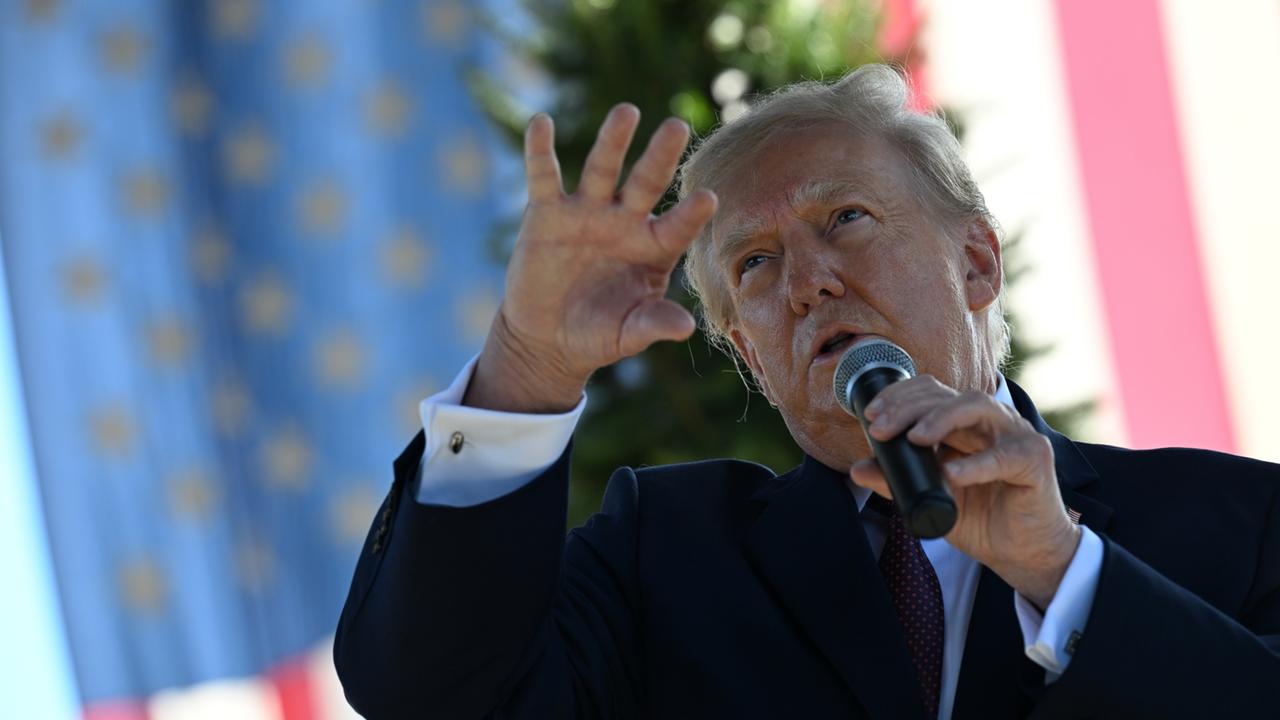
Supporting Data: The Anatomy of a Democratic Landslide
While specific vote counts and seat numbers are still being finalized, preliminary analysis points to a significant wave election for the Democrats. Exit polls consistently highlighted the Iran War and the economy as the top concerns for voters.
- Voter Sentiment: Polling data indicated that a majority of voters disapproved of President Trump’s handling of the Iran War, with particular concern over its impact on global oil markets and domestic fuel prices. An estimated 60% of voters cited the economy and the cost of living as their primary motivation for voting, directly linking these issues to the war.
- Youth Engagement: A notable surge in youth voter turnout, often leaning Democratic, played a critical role in several key races, particularly in states like Michigan and Georgia.
- Suburban Shift: Suburban districts, which had shown volatility in recent elections, largely swung towards the Democrats, reflecting a broader rejection of the Republican platform and the Trump administration’s policies.
- Record Fundraising: Democratic candidates, like Senator Ossoff, demonstrated unprecedented fundraising capabilities, enabling extensive outreach and advertising campaigns that effectively countered Republican efforts.
The magnitude of the Democratic gains suggests a broad-based discontent that transcended traditional partisan lines, fueled by a combination of economic anxieties, foreign policy fatigue, and a desire for a more unifying political discourse.
Official Responses: Defiance, Blame, and Hope
The official responses to the midterm results were sharply divided, reflecting the chasm between the two major parties and the President’s defiant stance.
President Donald Trump: Despite the electoral fallout, President Trump remained resolute in his defense of the Iran War. His statement, "The Iran thing, we had to do it and we continue to do it," underscored a refusal to acknowledge the war as a misstep or a significant contributor to his party’s defeat. This position sets up an immediate confrontation with the newly empowered Congress, which is likely to challenge his foreign policy decisions. His dismissal of concerns regarding Secretary Hegseth also indicates a desire to project stability, even amidst internal questioning.
Vice President JD Vance: In stark contrast to Trump, Vice President Vance’s online post, "The reason we lost is the war," represents a significant public divergence within the administration. This statement points to a deep division within the Republican Party about the wisdom and impact of the Iran War, setting the stage for potential power struggles and a re-evaluation of party leadership and future strategies.
Hakeem Jeffries: As the likely incoming Speaker of the House, Jeffries’ declaration of an "American Tsunami" is not merely celebratory but also a statement of intent. His emphasis on a "rebuke to MAGA extremism" signals a Democratic commitment to reversing many of the Trump administration’s policies and to pursuing an agenda focused on issues like economic relief and combating what they perceive as political polarization.
Senator Ted Cruz: Cruz’s candid admission of "punishment of historic proportions" and his critique of Republican leaders for failing to address economic concerns highlights the deep disillusionment within conservative ranks. His analysis suggests that the party needs to reconnect with the economic realities faced by ordinary Americans, moving away from a sole focus on cultural grievances or international interventions.
German Foreign Minister Johann Wadephul: Wadephul’s measured response, emphasizing continued constructive cooperation while acknowledging Congress’s increased foreign policy role, reflects a pragmatic approach from a key U.S. ally. It suggests that European nations are prepared to engage with a more assertive U.S. Congress, potentially finding new avenues for transatlantic collaboration even as the White House remains under Republican control.
Implications: A Divided Government and a Challenged Presidency
The outcome of the 2026 midterm elections carries profound implications for President Trump’s remaining two years in office, the future of the Republican and Democratic parties, and U.S. foreign and domestic policy.
For President Trump’s Administration:
The President now faces a hostile Congress determined to challenge his agenda. The Democratic control of both chambers means that legislative initiatives from the White House will likely be dead on arrival. Instead, the administration can expect a barrage of investigations, oversight hearings, and potential attempts to roll back executive actions. Appointments, particularly for judicial positions or cabinet vacancies, will face immense difficulty, as predicted by Governor DeSantis. Trump’s steadfast commitment to the Iran War, despite its political cost, suggests a continued focus on this conflict, which will undoubtedly be met with strong opposition and scrutiny from the legislative branch. This period will likely be defined by gridlock and confrontation, limiting the President’s ability to enact significant new policies.
For the Republican Party:
The midterm losses represent a significant setback for the GOP and signal a potential crisis of identity and leadership. The open criticism from figures like Vice President Vance and Senator Cruz indicates a deep division within the party regarding its direction, particularly on foreign policy and economic issues. The party will need to undergo a period of intense reflection to understand why its message failed to resonate with voters, particularly regarding the economic impact of the Iran War. This could lead to a re-evaluation of the party’s platform, leadership structure, and approach to future elections, especially with the 2028 presidential race on the horizon.
For the Democratic Party:
With control of Congress, the Democrats now have a powerful platform to advance their legislative agenda, even if presidential vetoes remain a threat. They are poised to push for policies aimed at addressing the cost of living, healthcare, and climate change, fulfilling the mandate articulated by figures like Mayor Mamdani and Senator Talarico. The rise of new leaders like Hakeem Jeffries and the strong re-election of figures like Jon Ossoff position the party for future success and offer a fresh face to the American electorate. However, they will also face the challenge of managing diverse ideological factions within their own party and demonstrating their ability to govern effectively amidst political resistance.
Foreign Policy and the Iran War:
The Iran War will remain a central and contentious issue. A Democratic Congress is likely to demand greater transparency, accountability, and potentially a re-evaluation of U.S. strategy in the conflict. While Congress cannot unilaterally end the war, it can exert significant pressure through funding mechanisms, oversight, and public discourse. This could lead to a more constrained foreign policy from the Trump administration, or it could intensify the executive-legislative branch conflict. The optimism from Ukraine’s President Zelenskyy suggests that a Democratic Congress may indeed prioritize bolstering alliances and supporting international partners, potentially increasing aid to Ukraine and strengthening transatlantic ties, as indicated by German Foreign Minister Wadephul.
Domestic Policy and the 2028 Election:
Domestically, the Democratic majority will likely attempt to tackle issues like inflation, healthcare access, and campaign finance reform. The electoral success, particularly in swing states and with diverse candidates like Abdul El-Sayed, suggests a shift in voter priorities towards practical economic solutions and a rejection of divisive rhetoric. The midterms will undoubtedly shape the narrative for the 2028 presidential election, with potential Democratic contenders like Jon Ossoff gaining significant national visibility. For Republicans, the challenge will be to find a path forward that can unite their base and appeal to a broader electorate that appears to have grown weary of the current political climate.
The 2026 midterms have not merely changed the balance of power in Washington; they have set the stage for a tumultuous and transformative period in American politics, with the specter of the Iran War and the nation’s economic future hanging heavy over the discourse.