Oleschky, Ukraine – October 30, 2026 – After weeks of arduous negotiations and amidst the ongoing conflict, a crucial humanitarian aid operation has successfully commenced in the Russian-occupied Ukrainian front-line city of Oleschky. A fragile, US-mediated six-day local ceasefire has paved the way for the delivery of desperately needed supplies and the evacuation of vulnerable residents, marking a rare instance of cooperation between warring factions in a humanitarian effort.
The initiative, significantly brokered by former US First Lady Melania Trump, has seen routes cleared of mines and aid convoys begin their journey into the beleaguered city. The truce, which is set to hold until Sunday, offers a fleeting window of respite and hope for the estimated 1,500 residents who remain trapped in Oleschky, a fraction of its pre-war population of 24,000. This breakthrough underscores the immense challenges and vital importance of establishing humanitarian corridors in active conflict zones.
Main Facts
The humanitarian mission in Oleschky is now fully underway, bringing a critical influx of aid and an opportunity for evacuation to a city long cut off by intense fighting and dangerous minefields. The operation is the direct result of a six-day local ceasefire, facilitated by US mediation and personally championed by former US First Lady Melania Trump, which has enabled the safe passage of humanitarian convoys and the preparation for civilian evacuations.
David Arakhamia, the faction leader of Ukrainian President Volodymyr Zelenskyy’s party, confirmed the start of "evacuation and the distribution of humanitarian aid" via Telegram, noting that the US-brokered ceasefire was holding firm. On the Russian side, Human Rights Commissioner Yana Lantratova released video footage depicting groups of people awaiting buses, a testament to the urgent need for safe passage out of the city.
The perilous process of clearing explosive ordnance from the designated aid routes was completed, albeit tragically, with two casualties reported by Lantratova. Both Ukrainian Human Rights Commissioner Dmytro Lubinets and his Russian counterpart, Lantratova, have been instrumental in the cross-border discussions that led to this agreement. They jointly announced the successful demining and the readiness of the "humanitarian convoy for departure," signaling a remarkable, albeit localized, commitment to humanitarian principles amidst a brutal conflict.
The aid package includes dozens of tons of essential goods: staple foods such as flour, grains, sugar, cooking oil, and canned meats and fish, alongside vital hygiene products and fuel for emergency generators. Critically, the central hospital in Oleschky is receiving much-needed medical supplies, including antibiotics and insulin. Furthermore, the mission facilitates the evacuation of several hundred residents who have registered to leave the city, with over 20 buses reportedly on standby. The ceasefire also extends its protective umbrella to the regional capital of Kherson, situated on the opposite bank of the Dnipro River, allowing for the potential for similar humanitarian operations there, previously hindered by drone attacks and mines.
Chronology of a Humanitarian Breakthrough
The successful launch of the Oleschky humanitarian mission is the culmination of weeks of complex, often precarious, negotiations and logistical preparations. The timeline of events highlights the persistent efforts required to bridge the deep chasm of conflict for the sake of civilian lives.
Early October 2026: Initial Outreach and Assessment of Needs
Reports from various international bodies and local sources began to paint an increasingly grim picture of the humanitarian situation in Oleschky. The city, strategically located on the Dnipro River and a focal point of intense fighting, had been largely cut off from external aid for an extended period. Essential supplies were dwindling, medical facilities were struggling, and the civilian population faced dire circumstances. This growing crisis prompted calls for urgent humanitarian intervention.
Mid-October 2026: Emergence of US Mediation and Melania Trump’s Involvement
Against a backdrop of stalled peace talks and persistent hostilities, an unconventional diplomatic channel began to take shape. Former US First Lady Melania Trump, known for her humanitarian initiatives, became a key figure in brokering a potential agreement. Her involvement provided a unique, non-governmental conduit for communication between Ukrainian and Russian representatives, sidestepping more formal, often gridlocked, diplomatic structures. The initial focus was on establishing a localized, temporary ceasefire to allow for humanitarian access.
October 23, 2026: Formal Commencement of Humanitarian Mission Discussions
Ukrainian Human Rights Commissioner Dmytro Lubinets and Russian Human Rights Commissioner Yana Lantratova officially engaged in direct talks regarding humanitarian aid for Oleschky. These discussions, facilitated by the US side, specifically aimed at agreeing upon safe routes, the types of aid to be delivered, and the modalities of civilian evacuation. Lubinets later highlighted the intense and consistent communication between the two commissioners, stating, "Since October 23, the day when the humanitarian mission began, we have been in close contact. We call each other daily." This level of direct and continuous dialogue was critical for building the necessary trust.
October 29, 2026: Agreement on Six-Day Ceasefire and Route Demining
A crucial breakthrough was announced: a six-day localized ceasefire, effective from Tuesday, October 29, until Sunday, November 3, was agreed upon for Oleschky and its environs, including the adjacent city of Kherson. This truce was specifically designed to allow for the demining of humanitarian corridors, a prerequisite for any safe passage. The perilous task of mine clearance began immediately.
October 30, 2026, Morning: Demining Completion and Tragic Loss
The challenging and dangerous process of clearing the designated routes of mines was successfully concluded. However, this success came at a cost, with Yana Lantratova confirming that two individuals tragically lost their lives during the demining operations. This somber detail served as a stark reminder of the inherent risks involved in operating in a war-torn landscape. Despite the tragedy, the completion of demining was a vital step forward. Both Lantratova and Lubinets issued joint statements confirming that "The demining of the routes for the humanitarian mission in Oleschky has been completed."
October 30, 2026, Midday: Aid Convoys Depart and Evacuations Begin
With the routes declared safe, the humanitarian convoy was given the green light. "The humanitarian convoy is ready for departure," announced the human rights commissioners. David Arakhamia subsequently confirmed that "The evacuation and the distribution of humanitarian aid have begun." Russian state broadcaster Vesti released footage of Lubinets and Lantratova meeting briefly in Oleschky, a rare visual demonstration of cross-conflict cooperation. Simultaneously, the process of evacuating registered residents commenced, with buses starting to transport those wishing to leave the city to safer areas. Melania Trump also took to the platform X to confirm the clearance of routes, citing Lubinets and stating, "All jointly agreed routes by Ukraine and Russia have been cleared for safe passage."
The swift progression from agreement to execution underscores the urgent need for aid and the collective determination, however fragile, to alleviate human suffering in Oleschky.
Supporting Data: A City’s Struggle and a Lifeline’s Details
The data surrounding the Oleschky humanitarian mission paints a stark picture of a city ravaged by war and the specific, critical needs being addressed by this relief effort.
Demographic Impact:
Oleschky, once a vibrant community, has seen its population decimated by the conflict. Before the full-scale invasion, the city was home to approximately 24,000 residents. Current estimates suggest that only around 1,500 people remain, representing a staggering exodus and leaving behind a vulnerable and often elderly or infirm population. This drastic reduction highlights the intense pressure and danger that has forced most inhabitants to flee, leaving those without means or ability to depart in increasingly perilous circumstances. The several hundred people who have registered for evacuation represent a significant portion of the remaining population, underscoring the desperate desire for safety and relief. Over 20 buses are standing by, a logistical undertaking to facilitate this mass movement.
Composition of Humanitarian Aid:
The aid convoy is carrying "dozens of tons" of critical supplies, meticulously assembled to address the most immediate and pressing needs of the besieged population.
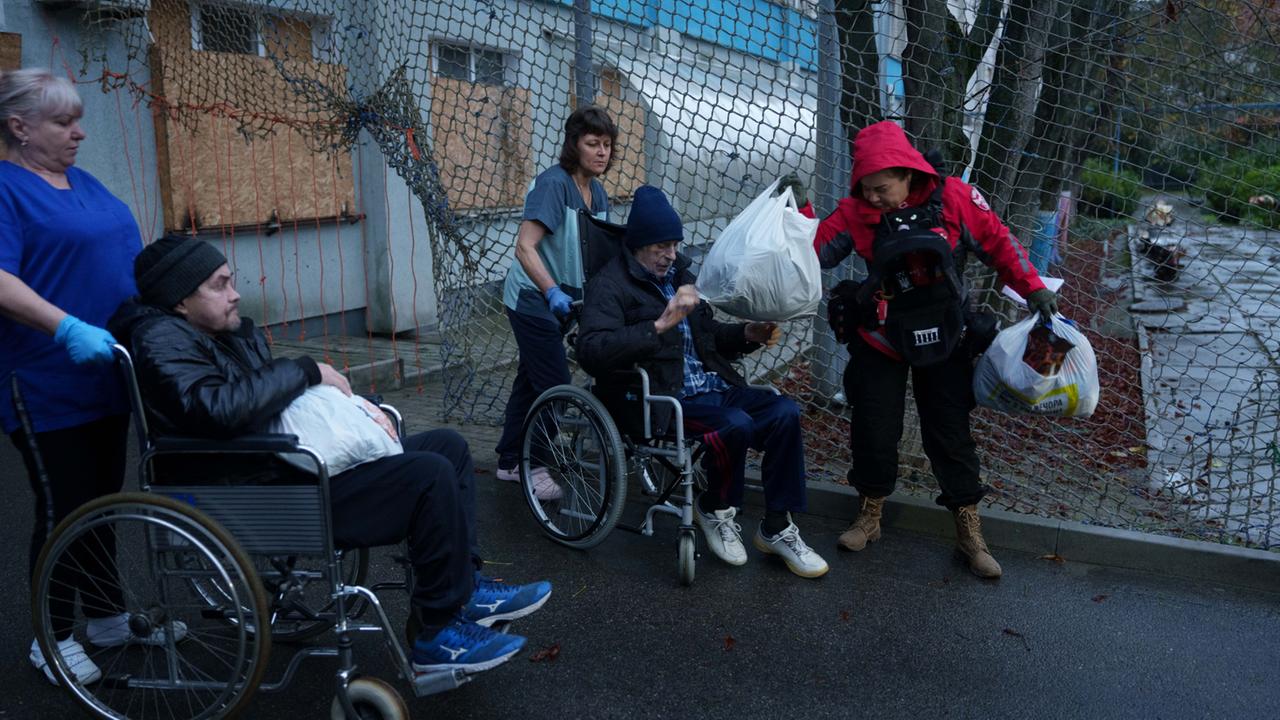
- Food Staples: The core of the food relief includes bulk quantities of flour, various grains, sugar, and cooking oil – fundamental ingredients for sustenance. Additionally, meat and fish preserves are being delivered, providing vital protein sources that are often scarce in conflict zones.
- Hygiene Products: Alongside food, personal hygiene items are crucial for maintaining public health and dignity. These supplies are essential in preventing the spread of disease in conditions where sanitation infrastructure may be compromised.
- Emergency Fuel: Fuel for emergency generators is a critical component, particularly for powering essential services like hospitals and water pumps, especially in an environment where regular electricity supply is unreliable or non-existent.
- Medical Supplies: The central hospital in Oleschky is receiving specialized medical aid. This includes broad-spectrum antibiotics, vital for treating infections common in war-affected areas, and insulin, an indispensable medication for diabetic patients, whose access to such life-saving drugs is often severely disrupted during conflict.
Aid Sourcing and Distribution:
The humanitarian goods have been compiled from various sources, demonstrating a multi-faceted approach to relief. A significant portion was gathered by the team of the Russian Human Rights Commissioner, Yana Lantratova, indicating a direct involvement from the Russian side in organizing the aid. Complementing this, the Russian Red Cross also contributed a substantial amount of goods, leveraging its humanitarian network. The distribution process is planned as a joint effort, with the Ukrainian Human Rights Commissioner Dmytro Lubinets cooperating to ensure equitable and transparent delivery to the residents of Oleschky. This collaborative distribution is a vital aspect of building trust and ensuring the aid reaches those most in need, irrespective of their political alignment.
The Cost of Safe Passage:
The successful demining of routes, a prerequisite for the safe passage of aid convoys and evacuation buses, came at a tragic cost. Yana Lantratova confirmed that two individuals lost their lives during these hazardous operations. This somber detail underscores the extreme dangers faced by those working to clear explosive remnants of war and highlights the inherent risks of humanitarian work in active conflict zones. The sacrifice of these individuals ensures the safety of thousands of others.
Geographical Scope of Ceasefire:
The localized ceasefire extends beyond Oleschky to include the regional capital of Kherson, situated on the opposite bank of the Dnipro River. This broader scope is crucial because both cities have been heavily impacted by drone attacks and landmines, which have previously prevented safe movement and the delivery of essential supplies. By encompassing Kherson, the truce offers a potential lifeline to a wider population and signals a broader, albeit temporary, de-escalation of hostilities in this critical region.
Official Responses and Diplomatic Nuances
The official responses to the Oleschky humanitarian mission highlight a complex interplay of political will, pragmatic cooperation, and the enduring challenges of operating within a conflict. The statements from key figures underscore both the relief at the operation’s launch and the delicate balance required to maintain such an agreement.
Melania Trump’s Unconventional Diplomacy:
The involvement of former US First Lady Melania Trump stands out as an unusual but highly effective element in brokering this agreement. While not holding an official government position, her humanitarian focus and connections provided a unique channel for communication. Her public confirmation on platform X, referencing Ukrainian Human Rights Commissioner Lubinets, that "All jointly agreed routes by Ukraine and Russia have been cleared for safe passage," underscored the US role in mediating the truce. Her ability to cut through traditional diplomatic stalemates suggests that non-governmental figures can play a significant, if unconventional, role in facilitating humanitarian outcomes in intractable conflicts. Her statements served to validate the agreement and reassure international observers.
Ukrainian Confirmation and Commitment:
David Arakhamia, the faction leader of Ukrainian President Volodymyr Zelenskyy’s party, was quick to confirm the commencement of operations. His statement on Telegram – "The evacuation and the distribution of humanitarian aid have begun" and that "The US-mediated six-day local ceasefire holds" – served as an official endorsement from Kyiv. His announcement was crucial for establishing the legitimacy of the operation from the Ukrainian perspective and signaling the government’s commitment to upholding its part of the agreement. The emphasis on the "US-mediated" aspect also highlighted the international support underpinning the fragile truce.
Cross-Border Cooperation: Lantratova and Lubinets:
The most striking aspect of the official responses is the visible cooperation between Ukrainian Human Rights Commissioner Dmytro Lubinets and Russian Human Rights Commissioner Yana Lantratova. Their joint efforts and consistent communication are central to the mission’s success. Lantratova’s video on Telegram showing people awaiting buses provided tangible evidence of the operation from the Russian-occupied side. Both commissioners released joint statements announcing the completion of demining and the readiness of the convoy, indicating a shared commitment to the humanitarian objective.
Lubinets elaborated on their collaboration, stating, "Since October 23, the day when the humanitarian mission began, we have been in close contact. We call each other daily." This ongoing dialogue is critical for resolving immediate issues and maintaining trust. Lantratova, in turn, reaffirmed that "the Russian and Ukrainian sides would fully fulfill their obligations," a crucial pledge given the volatile nature of the conflict. Their meeting in Oleschky, captured by Russian state media, was a rare and powerful visual symbol of direct, albeit limited, interaction between representatives of warring nations for a humanitarian cause. The tragic news of two lives lost during demining, shared by Lantratova, further underscored the sacrifices made to enable this mission, adding a somber yet realistic tone to the official pronouncements.
Broader Context of Humanitarian Law:
The emphasis by both sides on "fulfilling obligations" implicitly refers to international humanitarian law (IHL), which mandates the protection of civilians and the facilitation of humanitarian aid in armed conflicts. While the broader conflict continues to see violations, this localized agreement demonstrates a recognition, however limited, of these principles. The involvement of human rights commissioners on both sides suggests an attempt to frame the operation within a framework of human rights and humanitarian access, even as the political and military dimensions remain deeply contested. This collaborative effort, therefore, represents a pragmatic adherence to IHL, driven by the immediate need to alleviate suffering.
Implications: A Glimmer of Hope in a Shadow of War
The successful launch of the humanitarian mission in Oleschky carries significant implications, both for the immediate future of the besieged city and for the broader dynamics of the ongoing conflict. While it offers a crucial glimmer of hope, it also underscores the fragility of such agreements and the enduring challenges of humanitarian action in a war zone.
Immediate Relief and Psychological Impact:
For the 1,500 residents of Oleschky, the arrival of aid and the opportunity for evacuation are nothing short of life-saving. The delivery of food, hygiene products, medical supplies, and fuel addresses acute shortages that have likely pushed the population to the brink. Beyond the material relief, the mission offers a profound psychological impact. The knowledge that the outside world has not forgotten them, and that a pathway to safety exists, can alleviate immense stress, fear, and despair that have undoubtedly permeated daily life under occupation and constant threat. The sight of aid convoys and evacuation buses can restore a sense of agency and hope in a population long subjected to helplessness.
Precedent for Future Humanitarian Corridors:
This agreement, brokered with US mediation and involving direct cooperation between Ukrainian and Russian human rights officials, sets a significant precedent. It demonstrates that even in the most entrenched and bitter conflicts, humanitarian imperatives can, under specific circumstances, supersede political and military hostilities. If successful and fully respected, the Oleschky model could serve as a template for establishing similar localized ceasefires and humanitarian corridors in other besieged or frontline communities in Ukraine, or indeed, in other global conflicts. It highlights the potential effectiveness of non-traditional diplomatic channels, such as the involvement of figures like Melania Trump, in unblocking humanitarian stalemates.
Fragility and Continued Challenges:
Despite the positive momentum, the six-day ceasefire remains inherently fragile. The success of the mission hinges entirely on the sustained commitment of both sides to uphold the truce and ensure the safety of humanitarian workers and civilians. Any violation, whether intentional or accidental, could swiftly derail the operation, leading to a renewed humanitarian crisis and eroding trust for future endeavors. The tragic loss of two lives during mine clearance serves as a stark reminder of the ever-present dangers and the precariousness of working in a heavily militarized environment. Long-term solutions for the welfare of Oleschky’s residents, including permanent access to services and reconstruction, remain distant prospects, dependent on a broader resolution to the conflict.
Role of Human Rights Diplomacy:
The prominent role played by Human Rights Commissioners Dmytro Lubinets and Yana Lantratova underscores the growing importance of human rights diplomacy in armed conflicts. Their ability to maintain daily contact and negotiate pragmatic solutions, despite the overarching geopolitical animosity, showcases the potential for humanitarian mandates to act as bridges where other diplomatic avenues have failed. This focused approach on civilian protection and basic needs can sometimes find common ground even when broader political agreement is impossible. It suggests a pathway for addressing specific, urgent humanitarian crises without necessarily impacting the wider military objectives, a critical distinction in prolonged conflicts.
Impact on Broader Conflict Dynamics:
While the Oleschky mission is localized, its success could have subtle implications for the broader conflict. It demonstrates a capacity for de-escalation in specific areas for humanitarian purposes, which could, theoretically, open doors for limited dialogue on other issues. However, it is crucial not to overstate this. A localized ceasefire for humanitarian reasons does not automatically translate into a broader peace process or a fundamental shift in military strategies. The conflict’s underlying causes and objectives remain unchanged. Nevertheless, every instance of successful cooperation, however small, introduces a degree of predictability and a shared understanding of humanitarian norms that can, over time, contribute to a more stable environment for civilians.
In conclusion, the humanitarian mission in Oleschky stands as a testament to the power of persistent diplomacy and the shared recognition of human suffering. It is a vital, if temporary, lifeline for a city on the front lines, offering both immediate relief and a potential blueprint for future efforts to protect civilians caught in the crossfire of war. The coming days, until the ceasefire’s expiration on Sunday, will be critical in determining the full extent of its success and its lasting legacy.