For over three decades, a shadow hung over the city of Halle, Saxony-Anhalt. In 1992, in the immediate aftermath of German reunification, a document emerged that sent shockwaves through the newly unified nation. It was a list—a comprehensive, names-based register of approximately 4,500 individuals who had served as Inoffizielle Mitarbeiter (IM), or unofficial collaborators, for the Ministry for State Security (the Stasi) between 1986 and 1989.
While the list itself became a focal point of intense public scrutiny, legal battles, and moral debate, the identity of those who compiled it remained shrouded in mystery. For thirty-two years, the "leak" was an orphan of history. Now, for the first time, the individuals responsible have stepped out of the shadows, revealing the clandestine, high-stakes operation that sought to force a reckoning with a dark past.
The Architecture of Surveillance: The Stasi’s Grip
To understand the significance of the Halle list, one must first grasp the nature of the apparatus it exposed. The German Democratic Republic (GDR) maintained the most pervasive surveillance state in the Eastern Bloc. The Stasi functioned as both a secret intelligence service and the political secret police, acting as the "shield and sword" of the Socialist Unity Party (SED). Its mandate was absolute: to secure the regime’s hold on power, identify potential dissidents, and systematically dismantle opposition.
By the autumn of 1989, the Stasi employed approximately 91,000 full-time officers. However, the true terror lay in the network of unofficial collaborators. Some 189,000 citizens were recruited to report on their friends, neighbors, colleagues, and even family members. Statistically, this meant that in a country of 16 million, there was one informant for every 60 citizens—a density of surveillance that remains unparalleled in modern history.
Chronology: From Dictatorship to Disclosure
The timeline of the Halle leak is inextricably linked to the frantic final months of the GDR and the early, chaotic years of transition.
- November 1989: As the Berlin Wall crumbled, the Stasi began a massive, state-sanctioned destruction of files. Fearing that the secrets of their oppressors would be lost to the shredder, civil rights activists across the country occupied district offices, successfully securing millions of pages of documents.
- 1992: A group of seven activists in Halle, operating with extreme caution, compiled a list of 4,500 names of IMs. They worked through the nights, painstakingly transcribing information from sensitive documents.
- 1992–1994: The list was shared with various ministries and political bodies, but it was the Neues Forum (the central representative body of the civil rights movement) that made the daring decision to provide public access.
- 1994: The German Federal Court of Justice (BGH) prohibited further public access to the list, citing privacy concerns.
- 2000: The case reached the Federal Constitutional Court, which ruled that lower courts had failed to adequately weigh the public’s right to know and the importance of coming to terms with the GDR past.
The Drahtzieher: Who Were the Whistleblowers?
The individuals behind the Halle leak were not rogue agitators, but rather deeply principled members of the opposition. Five of the seven participants—Ulrich Schlademann (a priest and later head of the Halle Stasi-Records Office), Leopoldina archivist Wieland Berg, environmental activist Matthias Waschitschka, pastor Thea Ilse, and printing shop owner Henning Schaarschmidt—have now spoken publicly in the ARD documentary “Der große Stasi-Leak – Helden oder Verräter” (The Great Stasi Leak – Heroes or Traitors).
These individuals were not strangers to the Stasi; they were its targets. Many had been active in the 1980s environmental movement in Halle, protesting the catastrophic industrial pollution in the region’s "Chemical Triangle." Their resistance was creative and dangerous. One of their most famous actions, the 1989 "Show Fishing" protest on World Environment Day, saw them highlighting the biological death of the Saale river while undercover police scrambled to contain the optics of their dissent. The resulting interrogations only steeled their resolve.
The Motivation: Why Leak the Files?
The primary motivation for the compilation of the list was a profound fear of "whitewashing." As Germany moved toward unification, the participants worried that the Stasi apparatus would successfully bury its tracks, and that former collaborators would quietly integrate into the new democratic institutions.
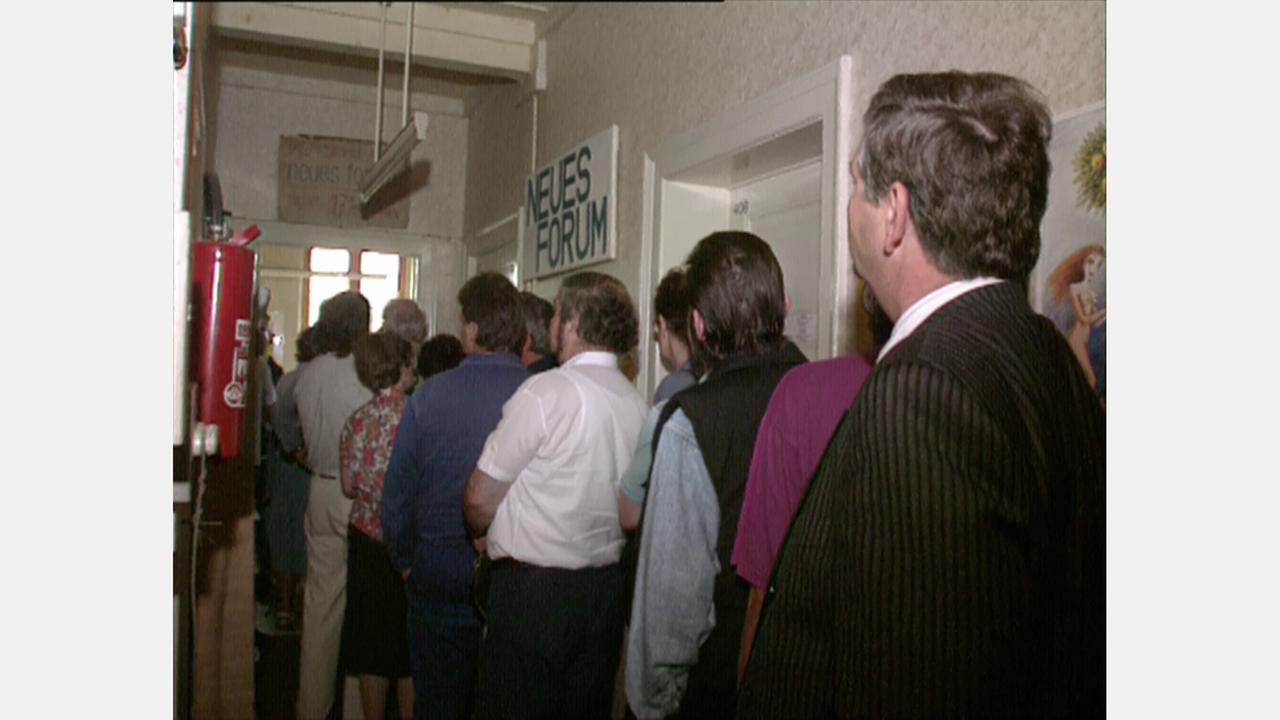
Wieland Berg, who served on personnel commissions at the Martin Luther University of Halle-Wittenberg to screen staff for political entanglement, noted, "We were the only ones who knew of the Stasi ties." For them, the list was a necessary tool for institutional vetting. When they presented it to the Neues Forum, it triggered a societal earthquake. People queued for hours outside the forum’s offices; on some days, 700 appointments were issued to citizens desperate to know if they had been betrayed by someone they trusted.
Official Responses and Ethical Ambiguity
The reaction from the state and the nascent federal authorities was mixed. Joachim Gauck, the first Federal Commissioner for the Stasi Records, initially viewed the list with skepticism. Yet, he famously acknowledged that his own office had never encountered a single case where a person was named on such a list without any factual basis for the suspicion.
However, the list was never a definitive moral verdict. As the compilers themselves acknowledged in the preface, registration as an IM did not always imply active, malicious collaboration. In rare cases, individuals were registered without their knowledge or without ever performing tasks for the Stasi. This nuance created a persistent ethical dilemma: how does a society balance the need for historical truth against the danger of the "trial by public opinion" and the risk of labeling individuals without due process?
The Legal and Societal Implications
The fallout from the publication was profound. It prompted a long-standing legal battle regarding the limits of public disclosure. The prohibition of the list in 1994 by the BGH marked a victory for personal data protection, but critics argued it silenced the victims’ search for justice.
The legacy of the Halle leak goes beyond the names on the paper. It catalyzed a broader, often painful debate about the nature of "guilt" in a totalitarian state. Was the teacher who reported a student a victim of coercion or a willing perpetrator? By forcing these names into the public sphere, the Halle activists effectively ended the era of comfortable silence.
Conclusion: A Lesson for Democracy
Reflecting on the events decades later, Thea Ilse remains steadfast in her belief that the disclosure was a vital step in the healing of the German psyche. "We are strong enough in the Federal Republic to withstand such controversies," she asserts.
The story of the Halle leak is more than a historical footnote; it is a testament to the courage required to hold a mirror up to a society emerging from tyranny. As Ilse notes, the need for individuals who are willing to "follow their conscience and their heart" to defend democracy remains as pressing today as it was in the dying days of the GDR. The architects of the Halle leak were indeed heroes to those who believe that truth, however uncomfortable, is the only foundation upon which a free society can be built.
Reference Note
For further investigation into the specific files and personal accounts of those monitored by the Ministry for State Security, citizens may continue to petition the Stasi Records Archive (Stasi-Unterlagen-Archiv) at the German Federal Archives. The process allows individuals to review their files and understand the extent of the surveillance conducted against them during the period of the German Democratic Republic.