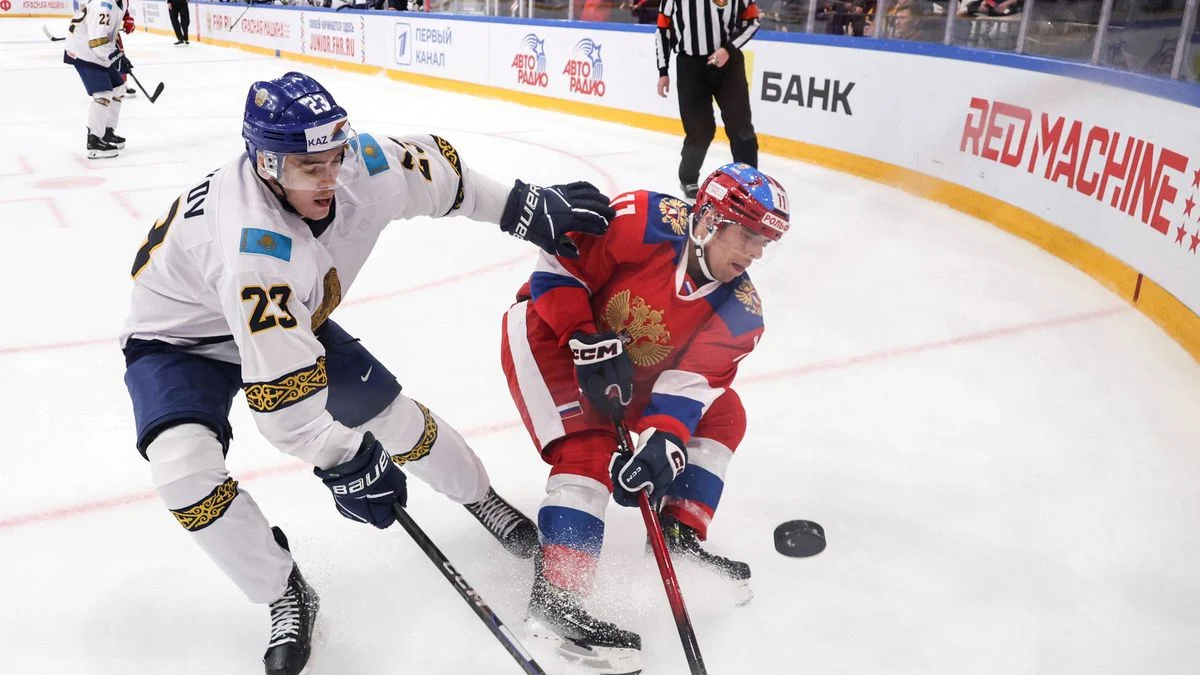
In a landmark ruling that has sent shockwaves through the international sporting community, the Court of Arbitration for Sport (CAS) has overturned the decision by the International Ice Hockey Federation (IIHF) to exclude Russian and Belarusian national teams from its sanctioned events for the 2026/2027 season. The verdict marks a significant pivot in the ongoing debate regarding the intersection of geopolitics and international sport, effectively clearing the path for the potential return of Russian athletes to the global stage.
The Core Verdict: A Lack of Evidence
The CAS decision centers on the justification provided by the IIHF for the initial ban. When the IIHF Council originally moved to bar Russia and Belarus from its competitions—a policy enacted following the invasion of Ukraine—it cited "safety and security concerns" for players, staff, and fans as the primary driver.
However, in its formal ruling, the Lausanne-based arbitration body determined that the evidence presented by the IIHF was insufficient to sustain such a sweeping, multi-year exclusion. According to the CAS panel, the governing body failed to provide concrete, actionable intelligence or documented threats that would justify a total ban on the grounds of participant safety. Consequently, the panel ruled that the exclusion was disproportionate and lacked the necessary legal foundation to be upheld under the current IIHF statutes.
This ruling covers a broad spectrum of IIHF-sanctioned events, including the prestigious Men’s World Championship—which is slated to be hosted by Germany in 2027—the Women’s World Championship in Canada, as well as the various junior (U20) and U18 tournaments that form the backbone of the international hockey calendar.
A Chronology of the Dispute
The road to this ruling has been characterized by escalating tension between the IIHF and the Russian Ice Hockey Federation (RIHF).
- February 2022: Immediately following the invasion of Ukraine, the IIHF Council, acting under emergency powers, suspended all Russian and Belarusian national and club teams from IIHF programs.
- 2023–2025: The ban was extended annually, with the IIHF consistently referencing the ongoing conflict and the need to protect the "integrity of the game" as the primary justifications.
- Mid-2026: As the IIHF looked toward the 2026/2027 season, it moved to formalize the exclusion, leading to a legal challenge filed by the Russian side at the Court of Arbitration for Sport.
- Late 2026/Early 2027: The CAS held closed-door hearings to assess the proportionality of the ban, resulting in the current decision to annul the IIHF’s exclusion order.
Official Responses: Resignation and Dissent
The reaction to the CAS ruling has been starkly divided, reflecting the deep-seated political divisions that continue to influence the sports world.
The IIHF Position
The International Ice Hockey Federation issued a statement expressing profound disappointment with the ruling. While the federation confirmed that it would abide by the legal authority of the CAS, its leadership remained steadfast in its original moral stance.
"The IIHF respects the authority of the CAS and will act in accordance with its ruling," the statement read. "However, the result does not resolve the underlying security concerns that formed the basis of our assessment. We remain convinced that our previous decision was necessary to protect the safety of all participants and to maintain the integrity of our competitions."
The German Perspective: A Crisis for the 2027 World Championship
Perhaps the most vocal opposition has come from the German Ice Hockey Federation (DEB). As the host nation for the 2027 Men’s World Championship, the DEB finds itself in an precarious position. Frank H. Lutz, the Chairman of the Board of the DEB, did not mince words regarding the ruling.
"Our position remains unchanged: We reject the return of Russian national teams to international ice hockey tournaments," Lutz stated. He emphasized that the ruling fundamentally alters the landscape for the 2027 tournament, turning a sporting event into a complex political and logistical minefield.
"The admission of Russia carries significant security-related, political, and economic consequences for us as hosts," Lutz added. The German federation has announced that it is currently in deep consultation with the IIHF to evaluate the next steps, signaling that the hosting rights or the logistical execution of the tournament could face further hurdles.
The Implications: Safety, Politics, and Integrity
The CAS ruling raises fundamental questions about the role of international sporting bodies in the 21st century. Can a federation act as a moral arbiter, or is it strictly bound by the letter of its statutes, regardless of the global political climate?
Safety vs. Exclusion
The CAS ruling highlights a high evidentiary bar for "safety." For the IIHF, the threat was not merely physical but also reputational and environmental. However, for a legal body like the CAS, the definition of safety is more narrow: it requires tangible, imminent threats. By finding that the IIHF could not prove such a threat, the court has effectively signaled that international sports bodies must have empirical data to support bans, rather than relying on general geopolitical tensions.
The Economic and Political Fallout
For host nations like Germany, the implications are profound. A tournament involving Russia would likely face:
- Security Challenges: The potential for protests, security breaches, and the need for significantly heightened police presence, all of which represent a massive financial burden.
- Diplomatic Friction: The presence of Russian athletes creates a diplomatic dilemma for the host government, which may be forced to manage visas and official interactions with representatives of a nation currently under heavy international sanctions.
- Broadcasting and Sponsorship: Several major corporate sponsors of the IIHF have previously expressed reservations about being associated with events featuring Russian teams. A potential boycott or withdrawal of sponsors could jeopardize the financial stability of the World Championship.
The Future of International Competition
While the ruling allows for Russia’s return, it does not guarantee participation in all events. The IIHF noted in a clarification that the ruling pertains to the legality of the exclusion, not the qualification criteria. If Russia has missed several years of competition, their ranking and qualification status for specific tournaments remain points of contention that will require further administrative deliberation.
Editorial Note and Clarification
It is vital to distinguish between "eligibility to participate" and "guaranteed entry." The CAS ruling removed the blanket ban, but it did not automatically place Russia on the ice in every tournament. Questions regarding world rankings, qualification matches, and the logistical integration of Russian teams into the 2027 schedule remain unresolved. The sporting world now watches with bated breath to see how the IIHF balances its legal obligations with the intense pressure from member nations like Germany, who view the presence of the Russian national team as an affront to the values of their organization.
Conclusion
The CAS ruling is a reminder that in the world of professional sports, legal finality does not necessarily equate to social or moral consensus. As the IIHF and the DEB navigate the fallout, the sport of ice hockey finds itself at a crossroads. The upcoming months will be defined by backroom negotiations, potential appeals, and the looming reality of a 2027 World Championship that has become far more than a game—it has become a focal point for the struggle between international law, political sanction, and the desire to keep sport separate from the state.
For now, the ice remains thin, and the path forward is anything but clear. Whether the return of Russian hockey teams will restore the "integrity" the IIHF claims to protect, or whether it will further fragment the international sporting landscape, remains a question that only time—and perhaps further legal battles—will answer.