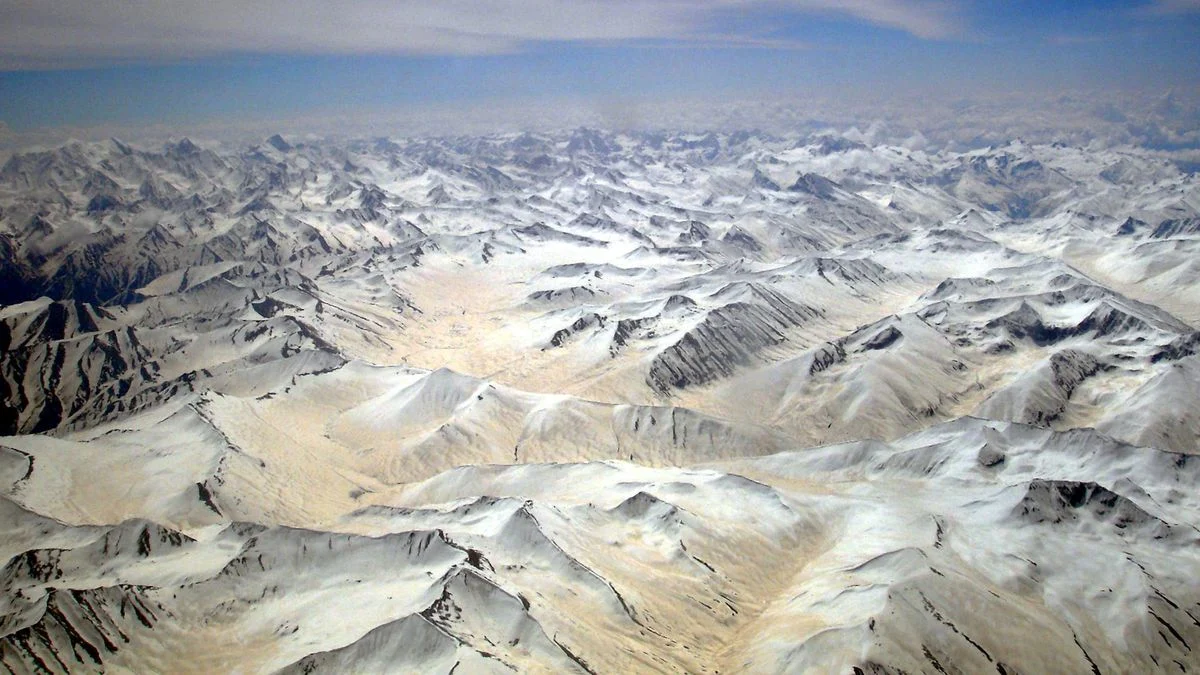
The eternal silence of the Karakoram mountains, a region defined by its jagged, unforgiving peaks and massive, slow-moving glaciers, has recently yielded a secret kept for nearly 40 years. In a poignant narrative that bridges cultures, continents, and generations, the remains of Austrian mountaineer Georg Fellner—who perished during a 1985 expedition—have been recovered, identified, and honored by the very community that witnessed his final days.
For the Fellner family, this discovery is not merely a forensic recovery; it is a profound closure to a chapter of grief that began in the high-altitude wilderness of Pakistan. The story of his rediscovery, facilitated by a chance encounter by a modern-day trekker and the subsequent journey of his brothers to the Gilgit-Baltistan region, serves as a sobering reminder of the transformative power of climate change on our geography and the enduring nature of human compassion.
The Chronology of a Tragedy and a Discovery
The 1985 Expedition: A Life Cut Short
In 1985, 26-year-old Georg Fellner, an ambitious climber from Lambach, Upper Austria, set his sights on the Rakaposhi-East peak in the Karakoram range. The expedition, which promised the thrill of high-altitude exploration, turned into a nightmare during the descent.
According to detailed accounts provided by his climbing partner, Gerhard Haberl, the accident occurred at an altitude of approximately 4,700 meters. As the team navigated a snow-covered ridge, Fellner lost his footing. The ensuing fall was catastrophic; he slid down an icy slope for nearly 100 meters, tumbling violently until he struck a rock formation. The impact caused a severe skull fracture. Despite the desperate efforts of his companions to stabilize him, Fellner succumbed to his injuries during the night. In the harsh, frozen environment, his companions were forced to leave him in a crevasse—a traditional, albeit harrowing, resting place for those lost in the "Death Zone."
Decades of Enshrinement: The Glacial Shift
For thirty-nine years, the glacier served as both tomb and guardian. However, the rapidly warming climate has had a devastating impact on the Karakoram glaciers. As the ice receded, the crevasse that had swallowed Fellner’s remains eventually opened, exposing what had been hidden for nearly four decades.
Two local residents in the Gilgit-Baltistan region discovered the remains and, showing profound respect, interred the mountaineer in a nameless grave in their village. For years, the grave remained a silent monument to an unknown traveler, until a chance encounter in 2025 changed everything.
The 2025 Catalyst
A Tyrolean student, while trekking through the remote region, stumbled upon the grave. Intrigued and moved by the site, the student began to investigate its origins. Through meticulous research and collaboration with the Austrian Alpine Club (Alpenverein), the identity of the occupant was confirmed. The authorities were finally able to contact the surviving family of Georg Fellner in Austria, bridging a gap that had lasted almost forty years.
Supporting Data: The Human and Environmental Context
The Physical Toll of the Karakoram
The accident that claimed Fellner’s life is indicative of the extreme risks inherent in high-altitude mountaineering. At 4,700 meters, the thin air, unstable terrain, and rapidly shifting weather patterns create a environment where a single misstep can be fatal. The account provided by Gerhard Haberl—describing the slide, the impact, and the subsequent passing of his friend—remains a seminal text for the family, providing the "how" that was missing for decades.
Climate Change and the "Yielding" of History
The fact that Fellner’s body was recovered due to glacial retreat is part of a growing trend in mountaineering. As global temperatures rise, glaciers in the Himalayas and the Karakoram are melting at an accelerated rate. This phenomenon is frequently revealing the "lost" of previous generations. Expeditions on Mount Everest and other major peaks have reported similar findings in recent years, turning mountains into archives of twentieth-century exploration history.
Official Responses and Cultural Bridge-Building
When Franz Fellner and his brother finally traveled to Pakistan to visit the grave, they were met with a reception that transcended cultural and linguistic barriers.
"We were received with an unusual level of warmth," Franz Fellner noted in an interview with the Austrian publication Der Standard. "The acute, sharp pain of the loss was forty-one years ago. It wasn’t a sense of relief, but rather a deeply beautiful feeling to finally be there."
A Community United in Respect
The memorial service held at the grave was a testament to the character of the local community in Gilgit-Baltistan. Despite being strangers to the deceased, the villagers treated the site with solemnity. The ceremony was attended by the village elders, the mayor, and two Imams, alongside 70 to 80 local residents.
"It was overwhelming," Franz reflected. "We did not expect that level of involvement and care. They had not only buried him but had honored his memory in a way we never could have imagined."
Perhaps the most startling revelation was that the local community had named a bridge after Georg Fellner. This gesture of naming a permanent structure in his honor elevated his status from a lost mountaineer to a figure remembered by the local people—a permanent part of the region’s landscape.
Implications: A Legacy Reclaimed
The Ethics of Recovery
The case of Georg Fellner raises important questions about the ethics of mountain burial and recovery. In the 1980s, the "crevasse burial" was a standard, albeit tragic, necessity. Today, with increased accessibility and technology, the expectation for repatriation of remains has shifted. However, the Fellner case demonstrates that in some instances, the local culture of the host region provides a level of dignity and permanence that serves the family as well as any formal state-led repatriation could.
A New Perspective on Mortality
For the Austrian Alpine community, this event serves as a stark reminder of the long-term impact of mountaineering tragedies. Families often live with "ambiguous loss"—a state of not knowing the final resting place of a loved one. The closure afforded to the Fellner family highlights the importance of international cooperation in tracking the "missing" of the mountain world.
The Role of Modern Trekking
The role of the Tyrolean student underscores the importance of the modern trekking community. Mountaineering is no longer an isolated activity; it is a global, interconnected network. The curiosity and investigative efforts of individual travelers are now playing a vital role in historical reconciliation and family closure.
Conclusion: The Mountain as a Sanctuary
The story of Georg Fellner is not a tragedy in the traditional sense; it is a story of long-term human connection. While the mountain took his life in 1985, it also preserved his legacy for four decades, eventually leading to a reunion between his family and a community thousands of miles away.
As the glaciers continue to shift and the Karakoram reveals more of its history, the world is reminded that mountaineering is more than just a conquest of peaks. It is a shared human experience that binds the climber to the earth and, occasionally, to the strangers who inhabit the shadow of the mountains. Georg Fellner is no longer just a name on an expedition report; he is a man who was lost, found, and finally brought home—not to Austria, but into the history of the Karakoram itself. The bridge that bears his name now stands as a symbol of the enduring, unbreakable link between a small village in Pakistan and a family in Upper Austria, a testament to the fact that even in the highest, coldest places on earth, the warmth of human kindness remains the most powerful force.