By Tobias Knaack
Updated: October 30, 2026, 09:56 AM
The atmosphere at the Heinz von Heiden Arena is no longer one of anticipation, but of suffocating tension. For Hannover 96, the dream of Bundesliga promotion—a goal that has fueled the club’s ambitious long-term project for years—has been replaced by the stark, cold reality of a relegation battle. Following a 0-2 DFB-Pokal exit at the hands of 1. FC Kaiserslautern on Wednesday night, the crisis at the Maschsee has reached a boiling point, placing the club’s leadership, and specifically Sport Managing Director Jonas Boldt, under intense scrutiny.
The Anatomy of a Failed Launch
In the world of professional football, ambition is a prerequisite for success. However, at Hannover 96, the club’s strategy increasingly resembles a troubled aerospace mission: a project where the countdown is constantly reset, the launchpad remains occupied, and the rocket, despite having the best possible infrastructure, never leaves the ground.
The current campaign, which was meant to be the year of the "take-off," has instead become a masterclass in stagnation. The club currently sits in 16th place in the 2. Bundesliga, occupying the dreaded relegation playoff spot. With only eight points to their name, the "Roten" are currently drifting further away from their targets, with the management team of Jonas Boldt and head coach Sandro Wagner facing mounting pressure from fans, the board, and the club’s hierarchy.
A Chronology of Discontent
The roots of the current instability trace back to a period of frequent structural changes. Following the departure of Christian Titz in mid-September—a move that was met with significant skepticism from the supporters—the club brought in Sandro Wagner to steer the ship. At the time of the coaching change, Hannover sat tenth in the table with seven points. Many felt this was underwhelming, but the subsequent four matches under Wagner have only served to exacerbate the downward spiral.
- Mid-September: Christian Titz is dismissed. The fans, who largely backed the former coach, express their frustration with the management’s decision.
- Late September/Early October: The team struggles to adapt to Wagner’s tactical demands. The 0-2 loss in the Niedersachsen-Derby against Eintracht Braunschweig serves as the first major blow to the project’s credibility.
- Late October: The 0-2 Pokal defeat against Kaiserslautern marks the nadir of the season thus far. The team displays a lack of cohesion and clinical finishing, mirroring their league form.
- Present: Speculation intensifies regarding the future of Jonas Boldt, with reports indicating that the club’s shareholders are considering a separation as early as next week.
Supporting Data: The Transfer Market and Tactical Missteps
The criticism leveled at Jonas Boldt is not merely atmospheric; it is grounded in a series of questionable personnel decisions. When Boldt arrived this summer, he was lauded for his ability to manage long-term sporting development. However, the current reality is a stark departure from that narrative.
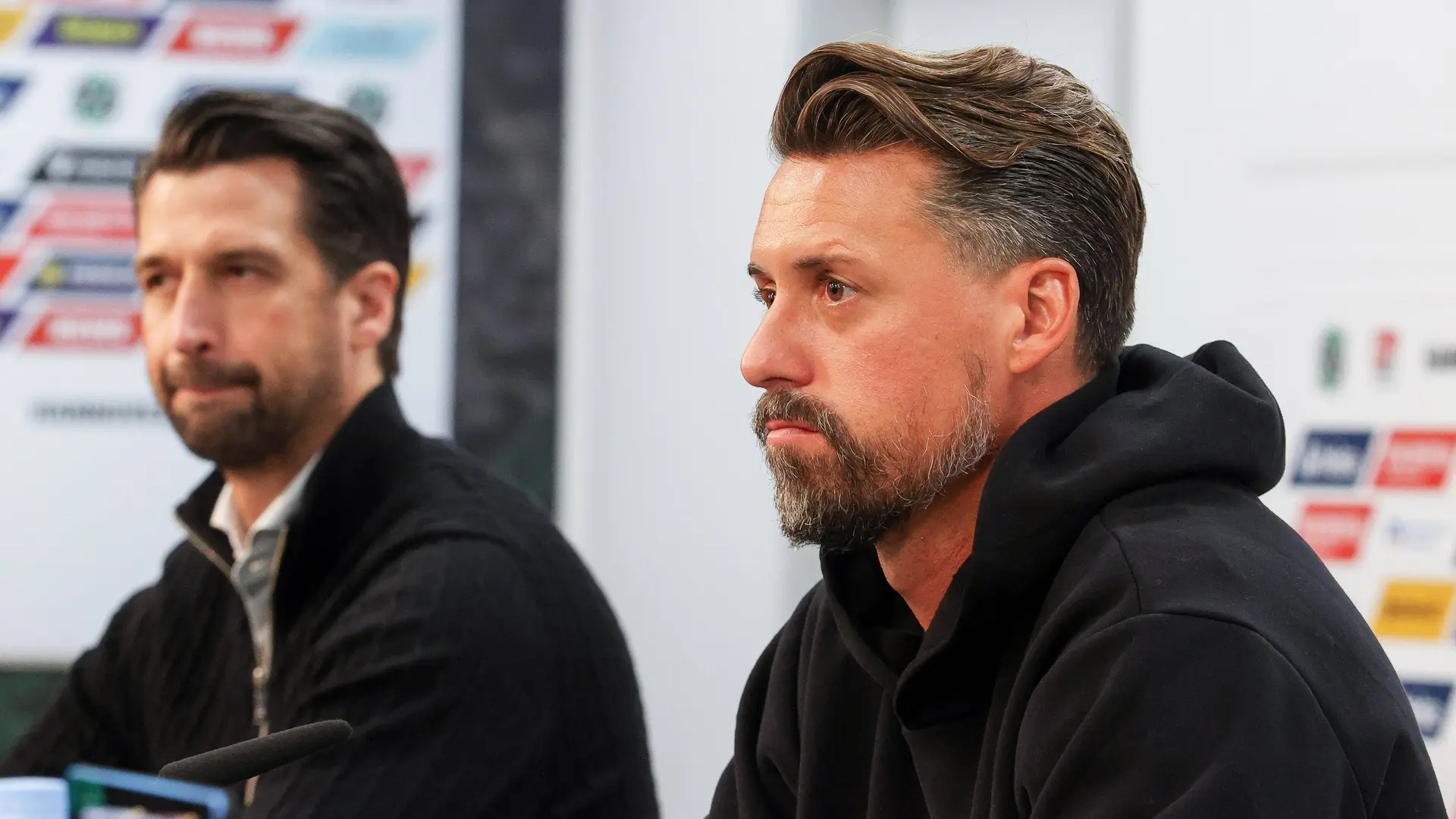
The summer transfer window saw the departure of three high-potential players: Noel Aseko (to Eintracht Frankfurt), Enzo Leopold (to Borussia Mönchengladbach), and Daisuke Yokota (to Glasgow Rangers). These exits have left a void in the squad’s quality. While the previous management under Marcus Mann had successfully built a squad with significant market value and long-term potential, the current crop of arrivals has failed to replicate that success.
Key signings such as 30-year-old Marcel Hartel and 27-year-old Emir Sahiti have struggled to make an impact, offering little in terms of immediate performance or future resale value. Furthermore, the decision to demote goalkeeper Pascal Loretz after only one match day highlighted the uncertainty permeating the squad’s hierarchy.
Official Responses and the "Kind" of Pressure
The tension within the club reached such a level that it has allegedly alienated even the most powerful figure at the club: majority shareholder and Supervisory Board Chairman Martin Kind. Known for his uncompromising stance, the 82-year-old businessman is reportedly furious at the current trajectory.
"We cannot be relegated," Kind stated, emphasizing that he views the club’s sporting health as his life’s work. "If we go down, it would mean 30 years of my work were for nothing. I cannot accept that."
Reports from the Bild newspaper suggest that the relationship between Kind and Boldt has fractured beyond repair. The final straw for many within the organization was Boldt’s decision to take vacation days immediately preceding the high-stakes Derby against Braunschweig—a move perceived by fans and internal staff as a lack of professional dedication.
Despite the rumors, Boldt remains defiant. Following the Pokal exit, he told the NDR that he was unaware of any "misunderstanding" regarding his future. "I was brought here to initiate a realignment," Boldt said. "I accept that responsibility. The unrest is a logical reaction to the results, but we will continue to work."
The Coach’s Dilemma: Sandro Wagner’s Burden
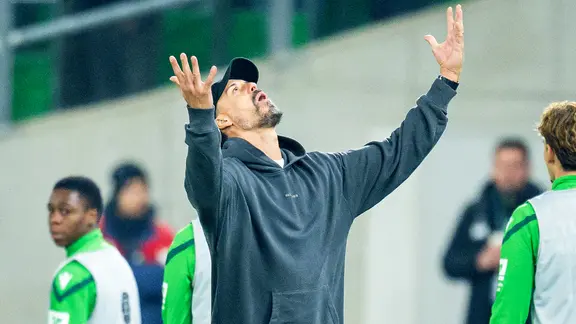
Sandro Wagner, meanwhile, finds himself in a communicative "roundabout." He is tasked with explaining losses that he feels do not reflect the team’s actual performance. During the loss to Kaiserslautern, Wagner maintained that the team played its best football of the season.
"This team has been denied everything for months," Wagner argued, highlighting the mental fatigue of a squad that missed out on promotion under Titz in May. "Today we didn’t take what we deserved, but we will take it on Sunday."
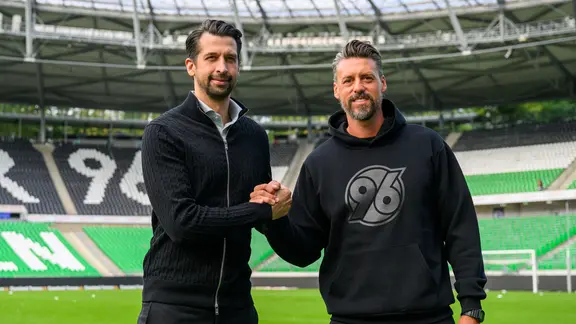
Wagner’s future is explicitly tied to Boldt. When asked about his own position, Boldt was clear: "Wagner stays as long as I am here." This "all-or-nothing" pact has effectively turned the upcoming match against Dynamo Dresden into a survival test for the entire sporting leadership of the club.
Implications for the Future of Hannover 96
The term "Hold, hold, hold!" used in aerospace signifies a forced stop, a safety mechanism to prevent a catastrophic failure during a launch. Hannover 96 is currently in a state of self-imposed "Hold." The question is no longer whether they will fly, but whether they will be forced to abort the current mission entirely.
The implications of a potential relegation are massive. Beyond the financial shortfall of dropping to the 3. Liga, the damage to the club’s brand and the potential loss of the fan base—already evidenced by the protests in the stands—could set the club back by years.
The banner unfurled by the fans during the Kaiserslautern match—"Hyrox and Aperol at the limit, business and squad planning a failure"—was a scathing indictment of what they perceive to be the management’s priorities. It is a sentiment that is spreading rapidly across social media, where calls for "Boldt out" have become the dominant discourse.
Conclusion: A Critical Sunday
As Hannover 96 prepares to face Dynamo Dresden this Sunday at 13:30, the stakes could not be higher. It is a "Kellerduell"—a relegation dogfight—that will define the trajectory of the remainder of the season.
If the team secures a victory, the "Hold" might be lifted, providing a temporary reprieve for both Wagner and Boldt. However, if the result is another defeat, the pressure from the supporters and the dissatisfaction of Martin Kind will likely become an irresistible force, leading to a major housecleaning at the club.
In the history of professional football, few clubs have been as adept at creating their own crises as Hannover 96. Whether this current period of "atmospheric disturbance" leads to a necessary structural change or a complete collapse remains to be seen. What is clear, however, is that for the fans, the players, and the leadership, time is running out. The launchpad is empty, the rocket is stalled, and the window for a successful season is closing rapidly. Sunday’s match is not just another game; it is the moment of truth for a club that has spent far too long chasing dreams while ignoring the reality on the pitch.