DORTMUND, Germany — As the calendar turns toward the pinnacle of the winter sporting season, the German Women’s National Handball team has signaled its intent to maintain its upward trajectory. On October 30, 2026, National Coach Markus Gaugisch officially unveiled his 16-player squad for the upcoming European Championship, scheduled to take place from December 3 to December 20.
In a move that emphasizes stability and the refinement of a proven tactical system, Gaugisch has opted for a roster heavily anchored by the core group that secured a historic silver medal at last year’s World Championship. With 14 of the 16 selected athletes having played integral roles in that successful campaign, the German team enters the tournament not as a developing side, but as a genuine contender with a clear identity.
The Core Philosophy: Stability as a Catalyst
The central theme of this year’s selection is continuity. In a sport often defined by rapid tactical shifts and high-intensity physical demands, Gaugisch argues that the familiarity shared by his core group provides a strategic edge that newcomers often take months to replicate.
"Continuity does us good," Gaugisch stated during the official announcement in Dortmund. "It was a pleasure to put this squad together—to deliberate on who can bring the specific strengths we need to the table. We have a group that understands the rhythm of our game, both defensively and in transition."
For a team that has spent the last two years climbing the world rankings, the decision to retain the "silver core" is a statement of confidence. The squad is built around a defensive structure that has proven difficult for even the world’s elite teams to dismantle, supplemented by a diverse attacking arsenal that allows Gaugisch to adjust his tactics based on the opponent.
New Faces and Tactical Refreshers
While the backbone of the team remains unchanged, the inclusion of two debutants—Right Wing Farrelle Njinkeu and Pivot Ida Petzold—adds a layer of unpredictability to the roster. Their inclusion is a reward for their stellar performances in the domestic Bundesliga and their seamless integration during recent training camps.
For Gaugisch, these additions are not merely for depth; they are strategic assets. Njinkeu offers a different pace on the wing, while Petzold provides a rugged, physical presence on the line, essential for the attritional battles expected in the European Championship’s group stages.
The Smits Factor: A Door Left Ajar
One of the most significant narratives surrounding the squad is the absence of key playmaker Xenia Smits. Following the joyous news of her becoming a mother this past summer, Smits is currently focusing on her recovery and return to elite fitness.
"It’s a wonderful chapter for her and her family, but returning to the court at this level requires time," Gaugisch explained. "The door is absolutely open for her."
While Smits is not in the active 16-player squad, her inclusion in the broader 35-player nomination list leaves the possibility of a late tournament arrival open. Her absence is the only major gap in an otherwise fully healthy squad, following the retirement of veteran defensive specialist Aimée von Pereira.
Tournament Road Map: The Path Through Bratislava
The tournament structure presents a rigorous challenge for the German side. Drawn into a group alongside Sweden, Serbia, and the hosts, Slovakia, the team faces an immediate test of character.
The opening match on December 4 against Sweden is being treated as the most critical hurdle. Success in Bratislava would propel the team into the main round in Katowice, Poland, where the intensity will undoubtedly scale up.
The Objective: Reaching the "Final Weekend"
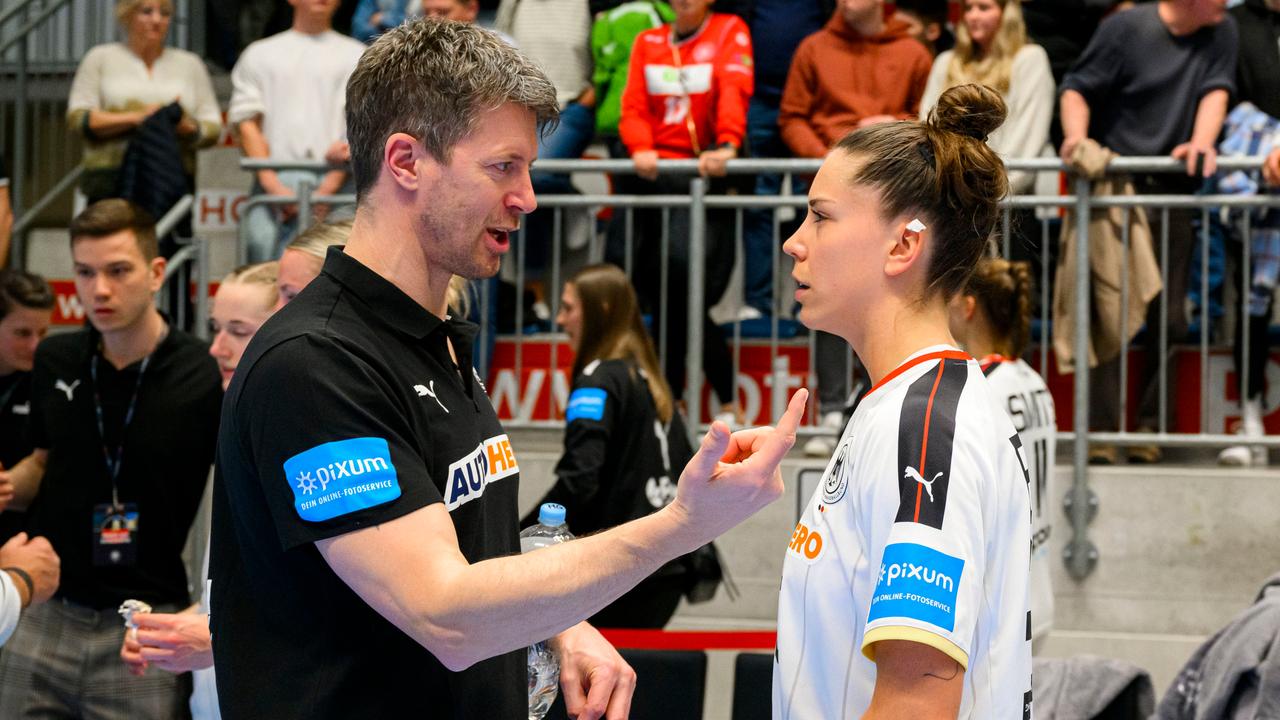
Sport Director Ingo Meckes was candid about the challenges ahead, acknowledging that the tournament is essentially a "black box" until the first ball is thrown.
"There are six nations that are a step ahead of everyone else right now," Meckes noted. "Our ambition is to belong to that elite tier. We have the quality, and we have the chemistry. Now, we must execute."
Gaugisch echoed this sentiment, setting a concrete goal: "We want to reach the final weekend. That includes playing for a top-five finish at the very least. We want to be in the conversation when the medals are handed out."
Current Form and Recent Indicators
The confidence radiating from the camp is not without merit. In a high-profile invitational tournament held just last week, Germany demonstrated why they are currently considered a dark horse for the title.
A commanding 26-21 victory over Denmark—a traditional powerhouse—was followed by a hard-fought 25-25 draw against the Netherlands. These performances underscored the team’s resilience and their ability to stay disciplined under pressure.
Before the European Championship officially commences, the team will face the ultimate litmus test: two final preparatory matches against Olympic silver medalists, France. These games, scheduled for late November, will be the final opportunity for the squad to calibrate their defensive shifts and offensive patterns before the journey to Bratislava.
Full Squad List: Germany’s 16-Player Roster
Goalkeepers:
- Katharina Filter (Team Esbjerg, DEN): A mainstay between the posts, Filter’s ability to anchor the defense is critical to the team’s success.
- Sarah Wachter (Borussia Dortmund, GER): Known for her explosive reflexes, Wachter provides a vital counter-balance to Filter.
Field Players:
- Antje Döll (Sport-Union Neckarsulm): An experienced veteran who provides stability on the left wing.
- Alexia Hauf (HSG Blomberg-Lippe): A dynamic presence capable of quick transition goals.
- Emily Vogel (FTC Budapest, HUN): Bringing international experience from the Hungarian league, Vogel is a key creative engine.
- Nieke Kühne (HSG Blomberg-Lippe): A rising star in the backcourt with exceptional shooting range.
- Alina Grijseels (Borussia Dortmund): The team’s primary playmaker and a central figure in Gaugisch’s offensive system.
- Annika Lott (Brest Handball, FRA): Her defensive prowess combined with backcourt scoring makes her indispensable.
- Mareike Thomaier (Borussia Dortmund): A versatile utility player who can operate across the backcourt.
- Nina Engel (Gloria Bistrita, ROU): Known for her physicality and ability to draw fouls in high-traffic areas.
- Viola Leuchter (Odense Handbold, DEN): A technical specialist who excels in one-on-one situations.
- Jenny Behrend (VfL Oldenburg): Reliable and consistent, Behrend is a cornerstone of the team’s wing play.
- Farrelle Njinkeu (HSG Blomberg-Lippe): One of the two debutants, she brings fresh energy and high-speed maneuvers.
- Lisa Antl (Borussia Dortmund): A dependable pivot who excels in both blocking and finishing.
- Marie Steffen (Rapid Bukarest, ROU): A defensive anchor whose work often goes unnoticed but is vital to team success.
- Ida Petzold (TuS Metzingen): The second newcomer, Petzold is expected to provide rugged competition at the pivot position.
Looking Ahead: The Broader Implications
The selection of this specific squad reflects a deliberate strategy by the German Handball Federation (DHB). By blending the experience of established stars like Grijseels and Filter with the raw potential of newcomers like Njinkeu and Petzold, the staff is aiming to bridge the gap between "consistent contender" and "tournament winner."
The implications of this championship are vast. A strong performance in December would not only bolster the popularity of women’s handball in Germany but also solidify the team’s ranking ahead of future Olympic cycles.
As the team departs for the final leg of their preparation, the message from the training ground is clear: The silver medal from last year was not the finish line, but rather a foundation. The goal is no longer just to participate; it is to dictate the terms of the game. With a balanced, battle-tested squad and a clear vision from the coaching staff, Germany enters the 2026 European Championship as a team that is, for the first time in many years, firmly in control of its own destiny.