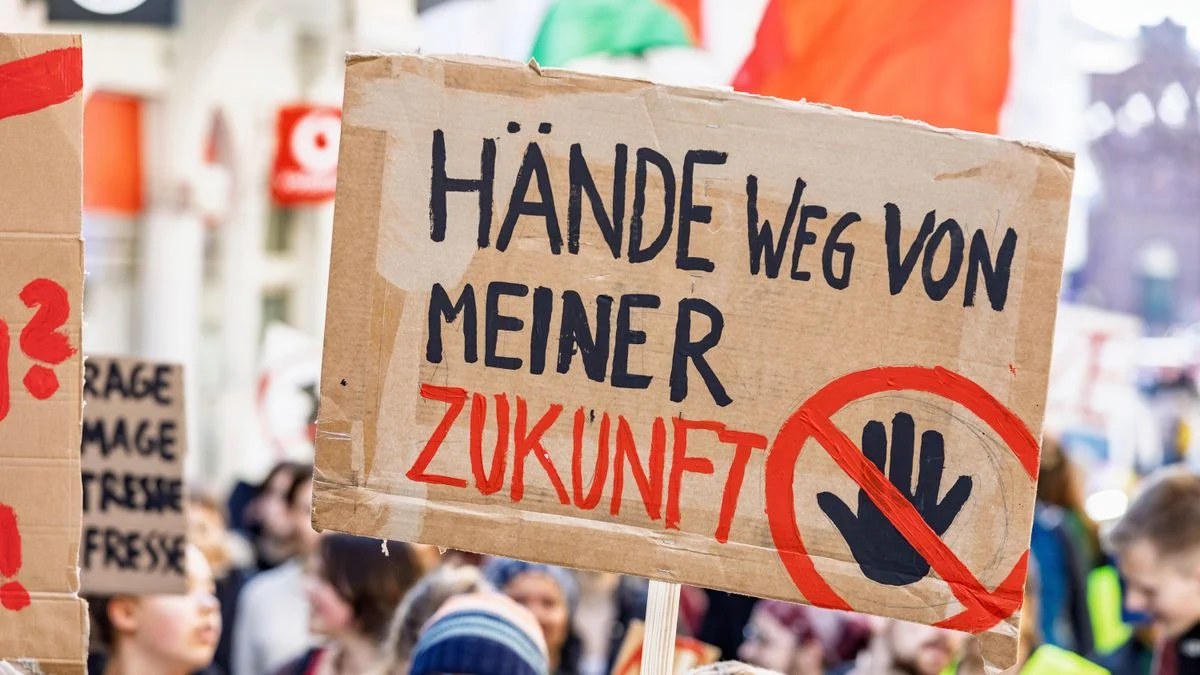
Berlin – As Germany braces for a wave of youth-led demonstrations scheduled for this Saturday, a significant rift has emerged within the movement. The Bundesschülerkonferenz (BSK), the official representative body for students across Germany, has formally distanced itself from the protest initiative known as "Gen Z regelt" (Gen Z Rules). In a calculated move to maintain focus on policy reform while avoiding the volatility seen in recent European protests, the BSK has announced its own, separate demonstration to take place on November 20th in Berlin.
The development underscores a growing desperation among younger generations regarding economic stability, educational infrastructure, and their perceived exclusion from the national political discourse. As tensions mount, the discourse has shifted from the validity of these concerns to the security risks posed by the potential for civil unrest.
Main Facts: A Movement in Flux
The protest landscape is currently bifurcated. On one side stands "Gen Z regelt," an initiative that has organized calls for demonstrations in approximately 30 cities across Germany. Their platform is broad, encompassing demands for more aggressive climate protection, relief from the soaring cost of living, and an explicit rejection of the reintroduction of mandatory military service.
On the other side is the BSK, which, while sharing the underlying grievances of the protest movement, has expressed profound skepticism regarding the "Gen Z regelt" organization. Amy Kirchhoff, the General Secretary of the BSK, summarized the apprehension in an interview with the RTL/n-tv program Frühstart: "We don’t really know who is behind it," she said, citing opaque organizational structures.
The BSK’s response is not a dismissal of the youth’s anger, but a strategic pivot. By scheduling their own event for November 20, they intend to partner with established civil society actors—including the Education and Science Workers’ Union (GEW), the Federal Parents’ Council, and the youth climate group Fridays for Future—to ensure their message remains constructive and focused on systemic change.
Chronology of the Escalation
The build-up to this weekend’s protests has been marked by a rapid escalation in rhetoric from both business interests and political factions.

- Mid-October: "Gen Z regelt" begins coordinating nationwide protests, inspired by recent civil unrest in France and other European nations.
- Late October (The Weekend): The Bundesschülerkonferenz publicly distances itself from the October 31st/November 1st protest calls, citing fears of violence and lack of clear leadership.
- October 29, 2026: The BSK officially announces its own protest date of November 20th in Berlin, seeking to provide a "peaceful, structured" alternative to the spontaneous demonstrations planned for the coming weekend.
- Current Status: Economic associations, including the Handelsverband Deutschland (HDE), have sent formal letters to the Interior Ministry, warning of potential vandalism and looting, while politicians debate whether the focus on security is an attempt to criminalize youth dissent.
The Core Grievances: Why Gen Z is Angry
The anger permeating the current youth movement is not born of a singular event, but of a perceived long-term betrayal by the political establishment. Kirchhoff articulated a sentiment that resonates with millions: "Our generation is angry at those who do not listen to us and who make politics about us, but not with us."
The primary catalysts for this frustration include:
- Economic Anxiety: The traditional "upward mobility" promise—the idea that each generation will be better off than its parents—is crumbling. Younger people today are increasingly pessimistic about their financial future.
- The Pension Crisis: With an aging population, younger workers are rightfully concerned that the current pension system will be unsustainable by the time they reach retirement age.
- Educational Decay: Beyond abstract policy, there is the tangible, daily reality of crumbling school infrastructure. Students are frustrated by a system that requires them to spend their formative years in dilapidated buildings with outdated resources.
- Labor Market Uncertainty: A feeling that the current job market offers little security or fair compensation for the cost of living.
Official Responses and Security Concerns
The specter of the violent unrest seen in France has loomed large over the preparations for this weekend. Several powerful industry associations, including the ZIA (real estate) and the GCSP (retail real estate), have formally written to Interior Minister Alexander Dobrindt (CSU).
In their confidential communication, these groups argued that the current climate is ripe for "violent actors" to exploit peaceful protests. They specifically requested a "visible and sufficiently dimensioned police presence" in major city centers, particularly around shopping malls and high-street retail areas, where they fear property damage, vandalism, or looting.
The Ministry of the Interior, however, has maintained a more measured stance. As of Wednesday, government officials stated that they have seen no credible, specific calls for violence within the German youth protest groups, though they continue to monitor the situation closely.
Political Implications: Kriminalisierung or Legitimate Protest?
The political reaction to these protests has been sharply divided. While conservative figures emphasize the need for law and order, members of the Green Party have cautioned against the risks of "preventive criminalization."

Felix Banaszak, the head of the Green Party, warned that the rhetoric used by the Union (CDU/CSU) to paint all protesters as potential "marauding gangs" is counterproductive. "The rhetoric of the Union, to preventively criminalize these protests and force them into the corner of marauding bands, in case of doubt even drives people toward radicalization," Banaszak stated.
He argued that the government should focus on the substance of the grievances rather than the perceived threat of the protest. "It is a mistake to react to the demands of the protest movement now only with warnings of violence. It is clear that violence must play no role. But the dissatisfaction and frustration of young people are, in my view, absolutely understandable."
Conclusion: A Turning Point for Youth Engagement
The tension between "Gen Z regelt" and the Bundesschülerkonferenz highlights the growing pains of a movement finding its voice in a polarized political climate. While the former represents a spontaneous, urgent, and perhaps more volatile expression of dissent, the latter is attempting to channel that same energy into traditional, institutionalized advocacy.
The events of November 20th will serve as a litmus test for the BSK’s ability to mobilize a coalition of students, parents, and teachers. If they succeed, they may provide a template for how Germany’s youth can demand systemic change without sacrificing their credibility or resorting to the tactics that have alienated public opinion elsewhere in Europe.
Ultimately, the underlying message remains clear: a large segment of the German youth feels abandoned by the status quo. Whether through street protests or organized policy dialogue, the pressure on the government to address the erosion of the "ascension promise" is reaching a boiling point. The coming weeks will determine whether this energy can be converted into meaningful policy, or if it will be dissipated by the friction of tactical disagreements and political posturing.