


By Editorial Staff
Updated: October 29, 2026
As Germany approaches the weekend, security agencies, business leaders, and the political establishment are bracing for a wave of demonstrations scheduled across approximately 30 cities. Operating under the banner of "Gen Z regelt" (Gen Z is in control) or "Gen Z steht auf" (Gen Z rises up), these protests have triggered a heated national debate about the limits of democratic dissent, the influence of radical fringes, and the genuine grievances of a generation feeling increasingly alienated from the traditional political process.
The atmosphere is tense. Following weeks of intense, sometimes violent, civil unrest in neighboring France, Italy, Spain, and Albania, German authorities are working to determine whether the upcoming demonstrations represent a legitimate expression of youth frustration or the precursor to the kind of looting, arson, and violent clashes seen elsewhere in Europe.
The Context: A Continent in Flux
The current wave of European protests is not monolithic, yet it shares a common thread of dissatisfaction. From the cost-of-living crises in Southern Europe to demands for education reform and anti-corruption measures in the Balkans, the youth are making their presence felt. However, the escalation into violence—characterized by burning barricades and direct confrontations with law enforcement—has shifted the narrative from the cause of the protests to the conduct of the participants.
In Germany, the conversation is currently divided. One camp argues that the state must be prepared for the worst-case scenario, citing reports that link the German demonstrations to radical international networks. The other camp, including several political figures, warns that the preemptive framing of these protesters as potential rioters or "marading gangs" is a dangerous rhetorical move that risks pushing peaceful activists toward the very radicalization that officials claim to fear.
Who is "Gen Z Regelt"?
The organizational structure behind the protests remains, by most accounts, highly opaque. The initiative has utilized social media platforms—predominantly TikTok, Instagram, and encrypted Telegram channels—to mobilize participants. However, the movement lacks a formal leadership hierarchy. The group’s website has undergone several changes in its ownership details within a single week, with a Swiss address appearing on the site as of Thursday.
This lack of transparency led the Federal Student Conference (Bundesschülerkonferenz) to formally distance itself from the movement. They have opted to organize their own separate day of action on November 20 in Berlin, promising a broader coalition involving teachers and established youth organizations.
Jannis Julien Grimm, a researcher at the Center for Interdisciplinary Peace and Conflict Research at the Free University of Berlin, views the lack of a clear organizational core as typical for nascent movements. "In the early phases of mobilization, protests often emerge from informal networks, personal contacts, and digital infrastructure," Grimm explains. "A binding organization with clear responsibilities and a coherent political program often takes time to develop—if it develops at all." He points to Fridays for Future as a historical example of a movement that gained structure only after its initial, spontaneous surge.
The Grievances: A Generation in the Crosshairs
While the movement’s structure is fluid, its stated grievances are rooted in a sense of profound political powerlessness. The core concerns include:
- Economic Inequality: The rising cost of living and the widening gap between the wealthy and the working class.
- Educational Neglect: The chronic underfunding of schools and universities.
- The Climate Crisis: The frustration that younger generations will bear the long-term environmental and financial costs of current government policies.
- Security Policy: The debates surrounding rearmament, the potential reintroduction of conscription, and the militarization of European foreign policy.
"We are witnessing a structural generation conflict," says Grimm. "Young people will feel the long-term consequences of today’s decisions most acutely, yet they possess relatively little political weight to influence these decisions."
Chronology and Escalation: A Potential "Halloween" Trigger
Security officials have expressed concern regarding the timing of the protests. By choosing the weekend of Halloween, organizers have selected a date where, historically, large gatherings are already common, and masks are frequently worn. Brandenburg’s Interior Minister, Jan Redmann (CDU), noted that the timing seems like a deliberate attempt to use the "cover of masquerade" to facilitate property damage and assault.
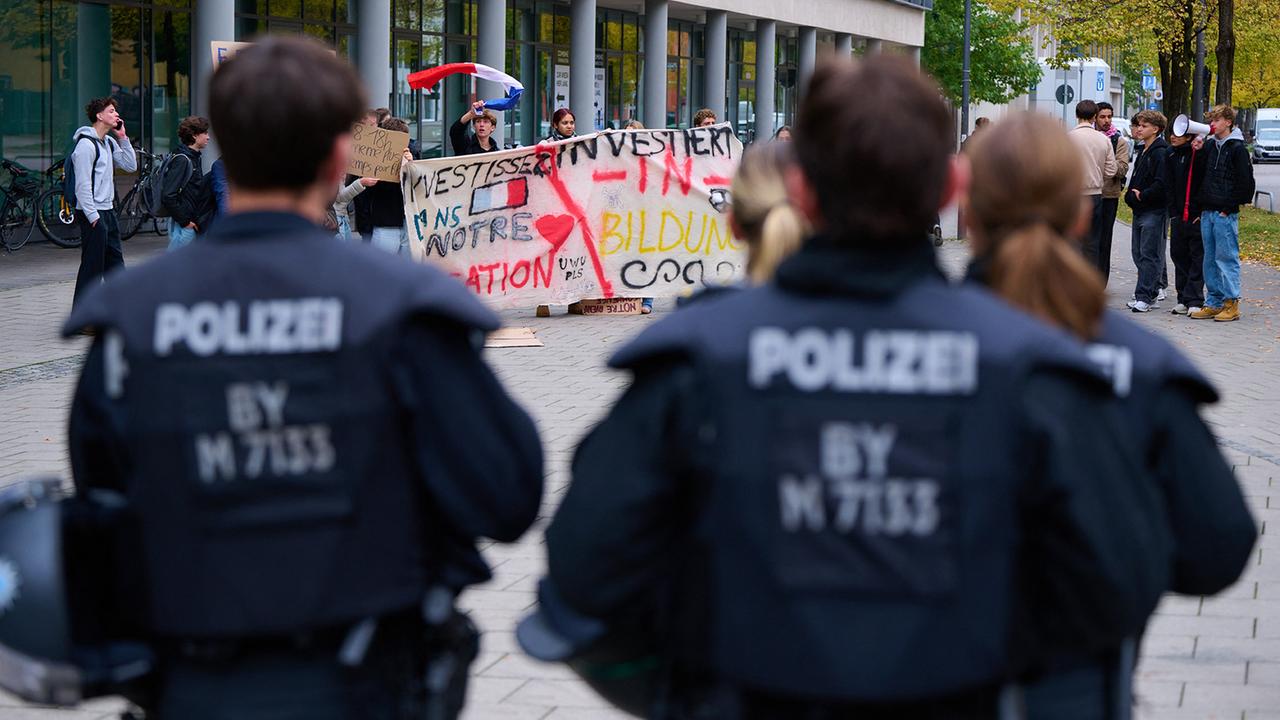
Internal strife has also begun to emerge within the movement. Recent reports indicate that a key spokesperson for "Gen Z regelt" has resigned, citing concerns that the coalition has become too broad and that a "peaceful framework" for the protests can no longer be guaranteed. This, combined with the infiltration of the discourse by more radical actors, has created a volatile environment.
Official Responses and Security Assessments
The response from the German government and law enforcement has been one of "watchful waiting." The Federal Ministry of the Interior has stated that, as of now, there are no concrete, credible calls for violence originating from the core of the movement. However, a spokesperson acknowledged that parts of the left-wing extremist scene—including groups from abroad—have latched onto the protests.
Marc Henrichmann, chairman of the Bundestag’s intelligence oversight committee, warned that the networking of the left-wing extremist scene is international and highly coordinated. "Violent left-wing extremists are crossing borders," he stated. Alexander Throm (CDU) echoed these concerns, suggesting that the demonstrations could be "hijacked" by those seeking to mirror the chaos seen in France.
Despite this, the Berlin Police President, Barbara Slowik Meisel, maintains that while there are calls online attempting to copy the French model of protest, these have not yet resonated with the general public. "There are currently no concrete indications of plans for the kind of widespread looting we saw in France," she noted.
The Economic Perspective: Businesses Brace for Impact
The private sector is taking the threat of disruption seriously. Industry associations—including the German Retail Federation (HDE), the real estate association ZIA, and the shopping center association GCSP—sent a joint letter to Interior Minister Alexander Dobrindt.
The letter, which was not intended for public release, highlights the potential for severe economic damage. Based on an analysis of the French unrest, these groups warn that blockades and demonstrations could severely disrupt inner-city commerce. "Especially worrying is the assessment that attacks on commercial businesses, particularly retail stores and shopping centers, through vandalism or looting, cannot be ruled out," the document reads. The associations are demanding a significant and highly visible police presence at all planned protest sites.
The Moral Dilemma: Radicalization vs. Legitimacy
The debate over how to handle these protests has become a political battleground. Felix Banaszak, a leader of the Green Party, has publicly criticized the rhetoric coming from the Union (CDU/CSU), arguing that labeling the protesters as "marading bands" before they have even taken to the streets is counterproductive. "The rhetoric of the Union, which aims to preventively criminalize these protests, might actually drive people toward radicalization," Banaszak told the Redaktionsnetzwerk Deutschland. He urged the government to engage with the protesters’ substantive demands rather than focusing solely on security threats.
Conversely, the movement itself is experiencing an internal tug-of-war. While the official website for "Gen Z regelt" explicitly states: "Our protest is peaceful, without exception. Violence against people or property contradicts everything we stand for," there are dissenting voices within their own social media sphere. A popular Instagram account associated with the movement recently posted: "While bombs manufactured in Germany are dropped on schools in other countries, we are debating here whether it would be ‘bad’ if a luxury store were expropriated by the masses. Do not promote the narrative of a split between peaceful and violent protesters."
Conclusion: A Defining Weekend for German Democracy
As the nation waits for Saturday, the situation serves as a stark reminder of the fragile balance between the fundamental right to protest and the state’s duty to maintain public order. Whether "Gen Z regelt" remains a platform for legitimate generational grievance or becomes a catalyst for broader social instability will depend on both the restraint of the participants and the de-escalation tactics of law enforcement.
For now, the term "Gen Z" remains a broad and amorphous label for those born between 1995 and 2010—a generation defined by its constant connection to the digital world. This weekend, they will test whether their digital connectivity can translate into a cohesive, non-violent movement that forces the political establishment to address the issues of inequality, education, and the future of the planet. Or, as critics fear, the weekend may simply serve as a dark milestone in the ongoing struggle between an aging political system and a disillusioned, angry youth.


