


A former student is challenging the state of Rhineland-Palatinate, arguing that chronic teacher shortages and systemic classroom absences deprived him of a fair education. As the case reaches the Administrative Court of Neustadt, it threatens to redefine the state’s duty of care toward its students.
The Core Conflict: When Does "Missing School" Become a Legal Grievance?
For most students, the end of high school is marked by the stress of exams, the anticipation of graduation, and the pursuit of a university placement. For Elija Walk, however, the conclusion of his secondary education in Landau, Germany, left behind a lingering sense of systemic injustice. Now a student of social and communication sciences, Walk has taken the state of Rhineland-Palatinate to court, alleging that the persistent, massive absence of instruction during his senior years artificially capped his academic potential.
The case, currently being heard by the Administrative Court of Neustadt, centers on a radical legal question: Does a student have a fundamental, enforceable right to a specific quantity of education? Walk, who graduated with an Abitur (the German university-entrance diploma) grade point average of 2.1, contends that the loss of over 400 scheduled classroom hours fundamentally violated his constitutional rights. He argues that this "education deficit" placed him at an unfair disadvantage compared to peers in regions or schools with more stable staffing, effectively penalizing him for failures within the state’s administrative apparatus.
Chronology of a Failed Education
The narrative of the case is one of attrition. Throughout his final years of gymnasium—the highest tier of German secondary schooling—Walk experienced what he describes as an unsustainable erosion of his learning environment.
- The Accumulation Phase: Over the course of his Oberstufe (senior high school years), Walk documented a consistent trend of cancellations. By his own account, roughly one-third of his total curriculum was never delivered.
- The Critical Failure: The problem was most acute in his Leistungskurse (advanced placement courses). These subjects are the weightiest components of the final Abitur grade. When these courses suffer from chronic teacher absence, the impact on a student’s GPA is not merely cumulative; it is exponential.
- The Administrative Deadlock: After his graduation, Walk filed an formal objection to his examination results. He sought a re-evaluation, arguing that the conditions under which he took his exams were fundamentally non-equivalent to those enjoyed by students who received the full, legally expected curriculum.
- The Judicial Path: Following an initial setback in an expedited legal proceeding, the case has moved to the Administrative Court of Neustadt for a full hearing on the merits. This is no longer just about a single student’s grade; it is a fundamental challenge to how the state justifies its role as an educator.
Supporting Data: The Anatomy of a Systemic Deficit
The case of Elija Walk highlights a broader, nationwide crisis in the German education sector: the chronic shortage of qualified teaching staff. Data consistently shows that the number of hours "lost" due to illness, vacancies, or bureaucratic mismanagement is reaching record highs.
According to various reports from the regional ministry and independent educational observers, the situation in Rhineland-Palatinate is emblematic of a broader national struggle. When hundreds of hours are lost, the "cramming" required to pass the Abitur falls on the shoulders of the students themselves. Walk’s legal team, led by attorney Martin Malcherek, points out that while the state mandates a certain number of hours of instruction, it provides no compensatory mechanism when those hours are not met.
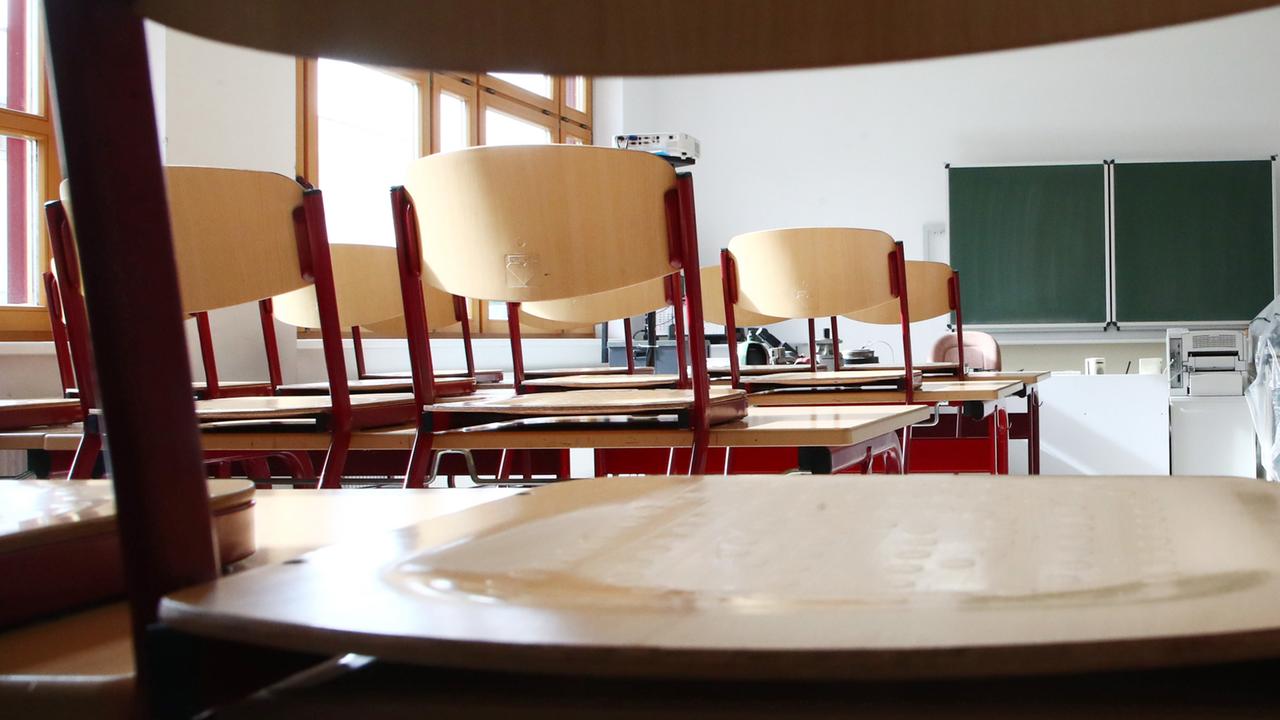
The inequality is stark: A student in a well-staffed, affluent urban school receives 100% of the required input, while a student in a school plagued by vacancies receives perhaps 60% or 70%. Yet, both students are tested against the same national standards. The "playing field" is, in effect, tilted before the first exam is even written.
Official Responses and the State’s Defense
The legal battle is directed against the state of Rhineland-Palatinate, represented in court by the Aufsichts- und Dienstleistungsdirektion (ADD). The ADD acts as the regional supervisory authority, managing everything from school infrastructure to the deployment of teaching personnel.
The state’s defense hinges on a restrictive interpretation of educational law. The ADD maintains that while the state has a general obligation to oversee the school system, there is no "guarantee" of a perfect, 100% execution of the provided timetable. Historically, courts have been hesitant to intervene in the internal organization of schools, citing the state’s broad discretion in managing personnel.
However, the state is now forced to address the argument of "Chancengleichheit" (equal opportunity). If the state provides an exam based on a specific curriculum, does it not have an implied duty to provide the teaching required to master that curriculum? The government argues that teachers are not machines, and illness or vacancies are unavoidable realities of the labor market. They emphasize that the Abitur remains a standardized measurement of knowledge, and that the state cannot arbitrarily adjust grades based on a retrospective "count" of lost hours.
Implications: The Potential for a New Educational Paradigm
If the court rules in favor of Elija Walk, the implications for the German educational system would be seismic.
1. A Financial and Administrative Overhaul
A ruling acknowledging that the state breached its duty of care would likely force the Ministry of Education to implement rigid, legally binding caps on teacher vacancies. It could lead to a system of "compensation" for students, where lost hours must be made up through remedial programs or where exam standards are adjusted to reflect the actual classroom time provided.
2. The Rebirth of "Chancengleichheit"
The case strikes at the heart of the social contract. If the state claims that the Abitur is the "gold standard" for university entrance, it must ensure that every student has an equal path to that standard. Currently, the system relies on the assumption that every student has access to the same resources, which is demonstrably false.
3. The Role of the Judiciary in Education
For decades, the courts have deferred to ministries on educational policy. This case represents a shift: a move toward viewing education as an individual right rather than a state-provided service that can be curtailed at the administration’s discretion. Should the court side with Walk, it would invite a wave of similar lawsuits from across the country, potentially paralyzing the current administrative handling of school staffing.
Conclusion: A Fight for the Future
Elija Walk has stated repeatedly that his motivation is not personal retribution against individual teachers, but a fundamental critique of a broken system. He believes that he is fighting for future generations of students who deserve better than a "lottery" education.
"How should such losses be compensated?" he asks. "How can we ensure that the Abitur remains a fair metric of ability, rather than a metric of which school a student happened to attend?"
As the Administrative Court of Neustadt deliberates, the case has become a lightning rod for broader societal frustrations regarding the quality of public infrastructure. Whether the court ultimately grants a re-evaluation of his results or not, the trial has already succeeded in bringing the issue of classroom vacancy out of the shadows and into the center of the political and legal discourse. It is a reminder that in a modern democracy, the state’s most sacred duty is the education of its youth—and that when that duty is neglected, the foundations of meritocracy itself begin to crumble.


